
How To Open a Restaurant: The Ultimate 2026 Guide
Here’s your ultimate guide to opening a restaurant, from developing a business plan and picking a location, to hiring your staff and everything in between.

Author
 RESOURCE
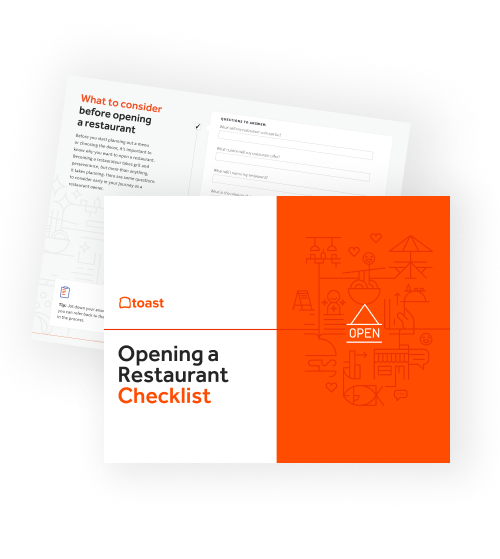
 Opening a Restaurant Checklist
So many things go into opening a restaurant. Use this free PDF checklist to set your new restaurant up for success.
Get Free DownloadAre you thinking about opening a restaurant?
The restaurant industry is as exciting as it is tough. It's full of adrenaline and camaraderie, and it's also an industry where it's very difficult to make money. Once it's up and running, the average restaurant profit margin is typically only 3–5%.
Competition is fierce, but there's nothing like looking around a restaurant full of regulars, or seeing a restaurant team toasting to a busy shift well done.
New restaurant owners, or restaurant ownership dreamers, need to carefully consider all of the variables it takes to open and run a successful restaurant.
To help start bringing your own restaurant dreams to life, we've put together a comprehensive step-by-step guide on how to open a restaurant, including:
A customizable restaurant business plan template to map out your vision
How to secure restaurant financing and capital to make your vision a reality
The licenses and permits you'll need to secure to operate a restaurant business
Tips on how to do restaurant marketing
Additional insights to help make your new restaurant venture a success
Quick Facts
Startup cost range: $175,000–$750,000+
Typical timeline: 6 months to 1 year
Average profit margin: 3–5%
Employee turnover rate: ~80%
Licenses/permits to budget for: 6–9+ depending on concept and location
How to open a restaurant checklist + best practices
10 steps to opening a restaurant | Typical Duration |
Develop concept & business plan | 3–6 weeks |
Secure financing | 4–12 weeks |
Find and lease/buy location | 4–12 weeks |
Apply for licenses and permits | 3–6 months |
Design, build out, and equip the space | 8–16 weeks |
Hire and train your team | Begin 2–3 months before opening |
Develop menu and marketing plan | 2–4 weeks (concurrent) |
Soft opening | 1–2 weeks before grand opening |
Total (typical range) | 8 months–1 year |
1. Decide on a restaurant concept, mission, and values
Diners have endless choices when deciding where to eat. There are well over 700,000 restaurants in the United States, and that's not counting virtual food businesses like ghost kitchens. Choosing a restaurant concept that's unique in your market and appeals to diners in your area is imperative to standing out and getting butts in seats.
It's a good idea for all prospective small business owners to do some market research. Then, you can start to make more business decisions. Here are a few to consider:
What's your restaurant going to look like, and what food, drink, and service elements are going to define it?
Which cuisine will you specialize in?
What types of food are you going to serve? You don't need a full menu yet, but a rough idea helps.
Do you want to be known for using ingredients sourced from local farms, or will you opt for wholesale vendors?
Do you want to run a full-service restaurant, or a grab-and-go takeout place?
Whatever your dream is, put pen to paper and write down all the possibilities. It really helps when narrowing it down.
Then, spend some time crafting your restaurant's mission and core values to fully express who you are and what you stand for as a restaurant business.
Next, you'll need to develop a unique restaurant logo and start imagining the aesthetic for your space, your marketing materials, your takeout containers, and any other elements involved in the dining experience. Laying this groundwork will help you substantially as you make larger business decisions down the line.
Test your concept
A good way to test whether your restaurant idea will stick is to operate as a pop-up restaurant or food truck first. This way, you can have a solid proof of concept, build a repeat customer base, and hammer home to investors that your idea is one worth getting behind.
2. Create a restaurant business plan
A restaurant business plan is a detailed document that maps out your entire vision for your new venture — how it will take shape, how it will operate, and how it will make money. You'll use it to guide your team in the beginning stages and to get funding from potential investors.
A detailed, well-constructed business plan is the roadmap for opening your specific restaurant. Your business plan will outline your entire vision for your new venture, explaining in detail how the new business will take shape and operate once the doors are open.
Here are some of the key elements of an effective restaurant business plan:
Executive summary — including your restaurant name and concept
Company overview — including your business model and service style (quick service, fine dining, fast casual, etc.)
Industry analysis — target market, location analysis, competitive analysis
Marketing plan — how you'll attract and retain guests
Operations plan — staffing needs, customer service policies and procedures, payroll plan, which restaurant point of sale you'll get, which vendors you'll use for produce and laundry and more
Financial analysis — investment plan, financial projections like break-even point, expected cash flow, expected costs
If this is your first time crafting a restaurant business plan that accurately conveys your vision, mission, and goals to investors, it's worth soliciting help from a trusted advisor or restaurant mentor to ensure you're putting your best foot forward.
Start with a template, and make it your own with lots of detail. Allow at least 3–6 weeks to gather all the information you want to include.
3. Secure restaurant financing
Opening a restaurant isn't cheap. Opening a restaurant typically costs between $175,000 and $750,000, depending on your concept, location, and service style. Smaller formats can sometimes launch for under $150,000, while full-service restaurants in major markets can exceed $1 million once build-out, licensing, and staffing are factored in.
Here's how those costs typically break down by category:
Startup Cost Category | Low | Mid | High |
Lease deposits and pre-opening rent | $10,000 | $35,000 | $100,000+ |
Build-out and construction | $100,000 | $250,000 | $500,000+ |
$40,000 | $80,000 | $120,000+ | |
Furniture, fixtures, and smallwares | $15,000 | $30,000 | $50,000+ |
POS, KDS, and restaurant technology | $5,000 | $12,000 | $25,000+ |
Licenses, permits, and inspections | $5,000 | $25,000 | $85,000+ |
$3,000 | $6,000 | $10,000+ | |
Pre-opening payroll and training | $10,000 | $25,000 | $50,000+ |
Marketing and launch promotion | $5,000 | $12,500 | $20,000+ |
Opening inventory | $5,000 | $10,000 | $15,000+ |
Working capital reserve | $30,000 | $75,000 | $150,000+ |
Contingency reserve | 10% of build-out | 10% of build-out | 10%+ of build-out |
Securing a location, investing in new restaurant equipment (especially major items like ovens or walk-in refrigerators), and managing cash flow over the first few months all require a reliable source of funding.
Check out our guide on how much it costs to open a restaurant to get a better idea of the specific restaurant expenses and startup costs you can expect to encounter, as well as the unexpected costs.
For new entrepreneurs opening a restaurant with no money of their own, or for those who just need a little extra funding on top of their savings and personal loans, there are several financing options for restaurant small business loans. Here are the most common:
Crowdfunding: Raise capital from your customer community — especially effective if you already have a pop-up or food truck following. Platforms like Kickstarter or GoFundMe can help you get started.
Equipment and technology loans: Finance kitchen equipment and restaurant technology through your bank or provider. Many point of sale providers, like Toast, offer 0% financing to offset the initial cost of the technology.
Working capital loans: Cover operating costs while your restaurant has more expenses than income. Plan to have 3 to 6 months of burn rate on hand — enough to cover rent, payroll, utilities, supplier invoices, debt service, and insurance — before you expect to reach break-even.
Lines of credit: A revolving credit facility that lets you draw funds as needed. As you pay your balance, you'll have more credit to draw on for future expenses — similar to a business credit card.
SBA loans: U.S. Small Business Administration loans offer favorable terms for qualifying small businesses.
Term loans: A lump-sum loan repaid over a fixed period — useful for large, one-time expenses.
Merchant cash advances: A short-term advance against future sales — higher cost, but fast access to capital.
Equity financing: Bring on investors in exchange for an ownership stake in the business.
Look to commercial banks, credit unions, and your point of sale or payment processing partners — and work with a trusted accountant and lawyer through the process.
4. Choose a restaurant location and plan your design
Choosing the right location for your restaurant is critical. You'll need to do research on the demographics, market, foot traffic, and competition in your location, as well as on the actual restaurant space and its size, visibility, and history. Who else operated there — and why did their businesses fail?
Buy, lease, or build?
You can either build, buy, or lease a commercial restaurant space, a decision that has a major impact on the overall startup cost. Depending on how much capital you have, any of the above options can work well, but it all comes down to choosing the right location.
Here are some additional criteria to focus on when evaluating a restaurant location to decide if it's right for you:
Target market and ideal customer profile
Real estate market conditions
Community
Size of the site
Previous tenants
Licensing and zoning — was it always a restaurant? A commercial kitchen?
Does old restaurant equipment come included?
Work with a commercial real estate agent to make sure you get a good deal, and the process goes smoothly.
Match your concept and location
The location of your restaurant and layout of the space should suit your restaurant concept. If you want to open an elegant steakhouse, you might need your own dedicated building. If you want to serve sandwiches or tacos to beach-goers, maybe a food truck will do.
It's important to keep in mind that your location and available square footage will also play a huge role in your kitchen design and restaurant floor plan.
For example, if you're opening a fast-casual Thai restaurant that makes incredible lunch combos, you'll be able to opt for a much smaller space — but make sure it's very close to where the 9-to-5ers in your city go to work!
5. Apply for restaurant licenses and permits
Acquiring all of the necessary licenses and permits to open a restaurant involves paperwork, money, time, and patience, so get a jump start on procuring them early on in the process. Allow 3–6 months to secure all required licenses and permits — timelines and costs vary by city and state.
Depending on your concept and the city or state where you open your restaurant, the necessary licenses and permits you'll need — and the costs to acquire them — will vary. Some licenses are required for every restaurant, like business licenses, while others depend on your restaurant concept, like a liquor license.
Here are the licenses and permits you'll most likely need:
Business license: Required to legally operate any business in your jurisdiction.
Employer Identification Number (EIN): Identifies your business to the IRS for taxation purposes.
Certificate of occupancy: Confirms your space meets local building and safety codes.
Food service establishment license: Required to prepare and serve food to the public.
Seller's permit: Allows you to collect sales tax on food and beverage sales.
Food handler's license: Required for each employee who handles food.
Liquor license: Required if you plan to serve alcohol — timelines and costs vary significantly by state.
Sign permit: Required in most municipalities before installing exterior signage.
Music license and/or live performance license: Required if you play recorded or live music in your space.
Here's how the timelines typically shake out for each:
License / Permit | What It Covers | Typical Timeline |
Business license | Legal authorization to operate in a municipality | 2–4 weeks |
EIN | Federal tax ID used for hiring, payroll, and tax filings | Same day to 1 week |
Food service permit | Health department approval to prepare and serve food | 2–6 weeks |
Certificate of occupancy | Confirms the building is approved for public use | 2–8 weeks |
Sales tax permit | Allows the restaurant to collect and remit sales tax | 1–3 weeks |
Liquor license | Required to sell beer, wine, or spirits | 2–6 months+ |
Fire department permit | Covers suppression systems, hood ventilation, and occupancy safety | 2–4 weeks |
Signage permit | Approval for exterior signs, awnings, and window signage | 1–4 weeks |
Music/entertainment license | Public performance of copyrighted music (ASCAP, BMI, SESAC) | Varies |
Sidewalk café or patio permit | Required for outdoor dining on public or regulated space. | Varies by municipality |
6. Develop a memorable restaurant menu and beverage program
Brainstorm your menu and beverage program with your chef or bar manager — or, if you're going it alone, run your ideas by industry peers before you hire your culinary team.
Think about how you'll differentiate: what garnishes, sauces, or sourcing set your dishes apart, and how do your prices compare to similar restaurants in the area? Test items as you develop them, and expect to refine further once your chef is onboard.
Pricing comes next — factoring in cost of goods sold, food cost, and profit margins, with inventory management and waste-reduction built in from the start. For more, take our menu engineering course.
Hold off on buying kitchen equipment until your menu is finalized. Ovens, prep stations, and refrigeration needs all follow from what you're actually cooking — buying first often means re-buying later.
Restaurant Opening Calculator
This calculator lays out some of the fundamental financial costs of opening a restaurant, so you can start planning and bring your dream restaurant to life.

7. Invest in your point of sale and restaurant technology
Your point of sale isn't just a payment terminal. It controls menu structure, kitchen timing, reporting, and more. Choosing it after you've already hired and started training staff creates rework: menu testing, kitchen routing, staff training, and your opening-week reports all depend on the system being configured first.
Before you start training your team, your POS, online ordering, payroll, scheduling, kitchen display system, and reporting should all be set up and tested together — not bolted on piecemeal as separate purchases.
"For the health of your business, to know and understand fully what's happening to every dollar coming in and every dollar going out, is really invaluable," shared Joanne Chang, founder of Flour Bakery.
With your core system in place, round out your restaurant technology stack with:
A cloud-based restaurant point of sale (POS) system with handheld devices
Kitchen display screens (KDS) to keep the front and back of house in sync
An online ordering system to capture revenue beyond the four walls
Restaurant reporting and analytics to track what's working
Restaurant inventory management software to protect your margins
Restaurant accounting software and simple scheduling and team communication tools
A restaurant payroll solution
A restaurant loyalty or rewards solution to turn first-timers into regulars
Contactless payment options for faster, frictionless checkout
How Toast fits the opening checklist
Toast Product | Role in Pre-Launch |
Restaurant point of sale with menu management, tableside ordering, payments, and reporting. | |
Commission-free online ordering connected directly to the POS. | |
Payroll and team management tools for onboarding, labor tracking, and tip management. | |
Digital ticket routing for kitchen and expo workflows. | |
Financing access for eligible operators based on sales. | |
Toast Reporting | Sales, labor, menu, and service data operators can use after opening week. |
Restaurant POS Comparison Tool
A free, customizable Restaurant POS Comparison Tool to research and compare point of sale systems in one Excel spreadsheet.
8. Hire top-notch restaurant staff
Your employees are true extensions of your restaurant and its brand. Plan to begin hiring 2–3 months before your target opening date to allow time for training — ideally once your POS and other systems are already configured.
"It's an extremely HR-dependent business. A lot of people that go into opening restaurants are all about the food, but you learn very quickly that it's all about the people," shared Joanne Chang, founder of Flour Bakery.
Find candidates through referrals, industry job boards, culinary school graduate pools, and social media. The restaurant industry has a nearly 80% turnover rate (Source: Bureau of Labor Statistics), and only 34% of employees get employer-provided health insurance — so building meaningful benefits and clear growth paths into your plan from the start is one of your best retention tools.
"If somebody comes here and they decide they love it — we love to figure out how we can give them a little bit more training so that they can move to the next level," shared Joy Zarembka, COO of Busboys and Poets.
Toast resources to help you attract, hire, and retain staff:
9. Create a restaurant marketing plan
Word of mouth can do a lot for spreading the word about an existing, bustling restaurant — but new restaurants need a way bigger marketing push.
Opening a restaurant requires a detailed marketing plan and budget that entice and engage your target customers. Everything from opening day incentives and weekly specials to your restaurant's social media and email marketing plans should be covered in your restaurant marketing plan.
A restaurant marketing plan lays out your marketing activities on a daily and weekly basis across all available channels, including:
Social media (Instagram, TikTok, Facebook) — where your guests already spend time
Email marketing — to build a list and drive repeat visits
SMS marketing — for time-sensitive promotions and announcements
Print advertising — for reaching local audiences
Opening day incentives — to drive trial and create buzz
There's no one-size-fits-all way to market a restaurant. Your marketing plan should prioritize the channels where you have the greatest likelihood of engaging with your target or ideal customer.
Start marketing well before opening day — not after. Waiting until you've opened to begin promotion is one of the most common reasons a grand opening underperforms.
10. Host a soft opening and grand opening
Once your space, menu, and team are ready, it's time to host a soft opening and a grand opening.
A soft opening is your team's first real service, run for a closed guest list — friends, family, staff, neighbors, and vendors — so you can work out kinks before the public shows up. Even well-trained staff are working together as a team for the first time, so expect to give feedback and make adjustments on the fly, all while following food safety and health regulations.
Once the soft opening goes well, start marketing your grand opening — your official public debut. Minor hiccups are normal; a great restaurant manager rolls with them and keeps morale high.
Take photos for social media, and don't forget to save your first dollar!
Common mistakes opening a restaurant
Even well-planned restaurants run into avoidable trouble. Watch out for:
Underestimating startup costs and working capital (aim for 3–6 months in reserve).
Signing a lease before confirming zoning, hood, occupancy, and liquor requirements.
Applying for a liquor license too late — it can take 2–6 months or longer.
Underbudgeting pre-opening payroll, insurance, and permits.
Buying equipment before finalizing the menu.
Running disconnected POS, payroll, online ordering, and kitchen systems.
Skipping mock services or delaying marketing until opening day.
Make your restaurant dreams come true with Toast by your side
"Don't be afraid to start from the very bottom; it builds character. Be consistent. Be authentic. Some days you're going to struggle. Every restaurant does, including the prosperous ones. It's still a rewarding experience to make an impact through food," shared Jasmine Hernandez, Founder of Chicana Vegana.
Opening a restaurant is exciting, and for many, it's their lifetime dream come true. As you get into the day-to-day of running a restaurant, be sure to monitor your business's performance by tracking your restaurant metrics, soliciting guest feedback, and finding opportunities mid-shift to stand back and take it all in. New restaurants on Toast are 12% less likely to close in their first year of business than the average restaurant*. Open and stay open with a proven restaurant POS system.
You're now officially part of the most exciting industry there is to work in. Cheers. And if, down the line, you decide to expand your restaurant business or open multiple locations, you know where to find us.
Opening a Restaurant Checklist
So many things go into opening a restaurant. Use this free PDF checklist to set your new restaurant up for success.
Frequently Asked Questions
How much does it cost to open a restaurant? Startup costs typically range from $95,000 to over $2 million, depending on location, concept, and whether you're building, buying, or leasing your space. Budget an additional 6–12 months of operating costs as a contingency fund.
How long does it take to open a restaurant? Most restaurants take 6–12 months from concept to opening day. Permitting and licensing alone can take 4–8 weeks, and securing financing can take 4–12 weeks.
What licenses do you need to open a restaurant? Most restaurants need a business license, food service establishment license, certificate of occupancy, employer identification number (EIN), food handler's licenses for staff, and a seller's permit. If you serve alcohol, add a liquor license — one of the longest lead-time approvals in the process.
What is a soft opening? A soft opening is a closed, invite-only trial service — typically for friends, family, and vendors — where your team runs a full shift for the first time before your public grand opening. It's how you find and fix operational gaps before they happen in front of paying guests.
What is food cost percentage? Food cost percentage is the ratio of what you spend on ingredients to the revenue those menu items generate. Most restaurants target a food cost percentage between 28–35%. Tracking it from day one is essential to protecting your margins.
What is a restaurant point of sale (POS) system? A restaurant POS system is the central technology platform that processes orders and payments, sends tickets to the kitchen, and generates sales and labor reports. It's the operational backbone of your restaurant.
What's the average restaurant profit margin? The average restaurant profit margin is 3–5% (Toast industry data). Margins vary significantly by concept, location, and how well operators manage food cost, labor, and waste.
*Based on the US National Restaurant Association’s 2015 report citing a 30% failure rate as the norm in the US restaurant industry, compared to Toast restaurants in the US continuing payment processing on Toast 13 months after opening (between January 1, 2022 and April 1, 2023).
Is this article helpful?
DISCLAIMER: This information is provided for general informational purposes only, and publication does not constitute an endorsement. Toast does not warrant the accuracy or completeness of any information, text, graphics, links, or other items contained within this content. Toast does not guarantee you will achieve any specific results if you follow any advice herein. It may be advisable for you to consult with a professional such as a lawyer, accountant, or business advisor for advice specific to your situation.

Subscribe to On the line
Sign up to get industry intel, advice, tools, and honest takes from real people tackling their restaurants' greatest challenges.
By submitting, you agree to receive marketing emails from Toast. We’ll handle your info according to our privacy statement. Additional information for California residents available here.