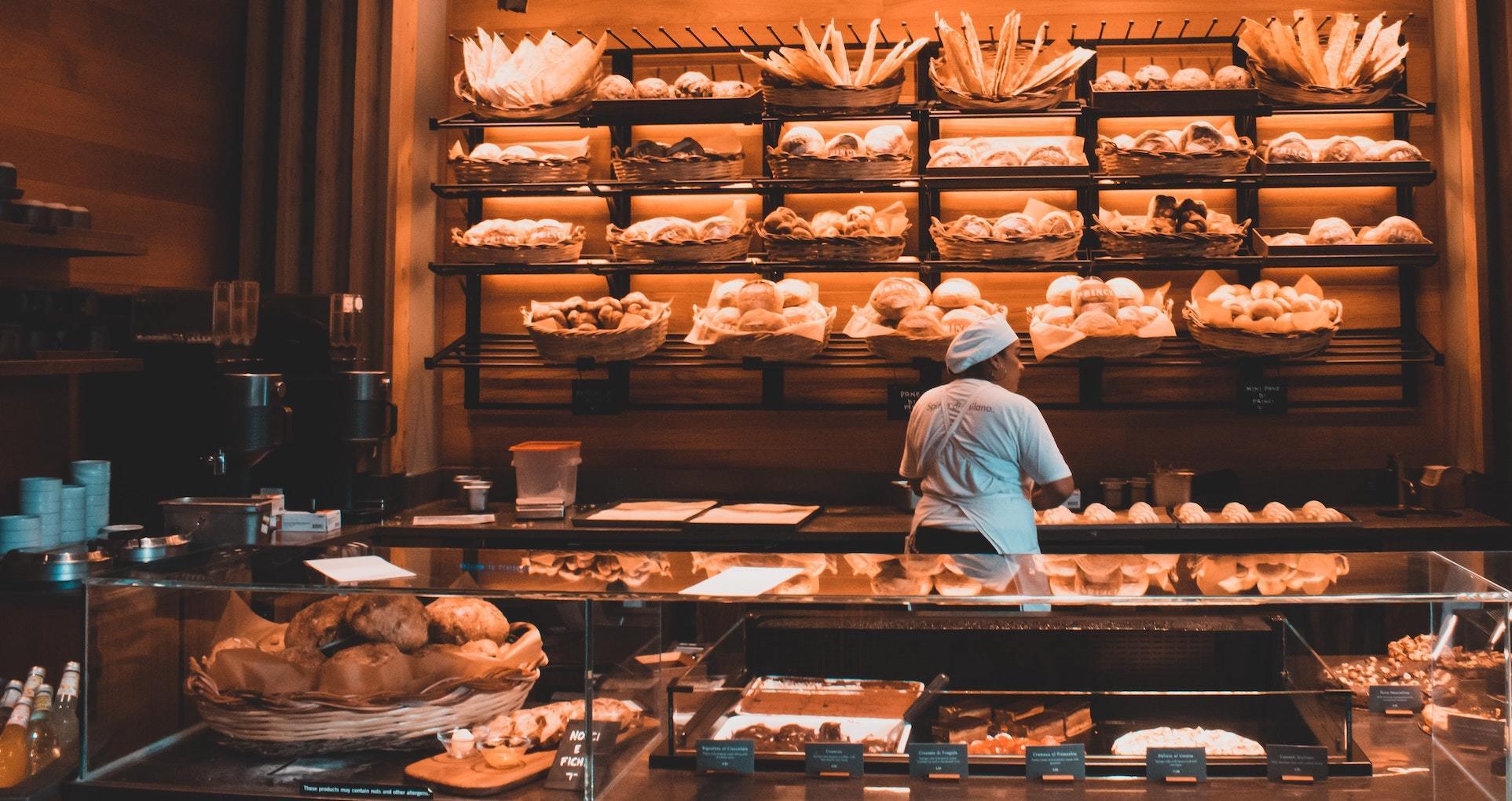
How to Open a Bakery: A 10-Step Guide for 2026
From picking your format to pulling the first tray out of the oven, here are the 13 steps between you and a line out the door on opening morning.

Author
 RESOURCE
Bakery Business Plan Template
Use this free bakery business plan template to easily create a great business plan that organizes your vision and helps you start, grow, or raise funding for your bakery.
Get Free DownloadOpening a bakery starts with a clear concept, a menu you can produce profitably, and a realistic budget. You’ll then need a suitable space, the required approvals, reliable equipment and suppliers, and a team ready to bake and serve.
Part of that preparation is deciding how customers will order and how employees will keep track of it all. Toast’s cafe and bakery POS system connects orders, payments, and kitchen communication, helping your team handle counter purchases and advance pickups while production continues.
Here’s how to plan your bakery, prepare for opening day, and build routines that support the business as it grows.
Key takeaways
Opening a bakery means matching what customers want with what your team can consistently and profitably produce.
Strong sales only support a sustainable business when pricing covers the full workload and the budget leaves room for ongoing bills and unexpected costs.
Starting with a manageable menu and order volume gives you room to build consistency before expanding.
Planning production and customer service together helps the bakery deliver on its promises, from a fresh morning pastry to an on-time celebration cake.
Opening day is a starting point, with sales, waste, and customer feedback helping you improve the business over time.
Opening a Bakery Checklist
So many things go into opening a bakery. With this free PDF checklist, you'll set your new business up for success.

How to open a bakery
1. Choose your bakery concept and customers
Your concept shapes what you bake, who buys it, and how each day runs. A custom-cake business needs time for consultations and decorating; a neighborhood bread bakery needs a production schedule that puts fresh loaves on the shelves when customers arrive. Start by answering three questions:
What will you be known for? Choose a specialty and a manageable supporting menu.
Who will buy from you? Identify the customers, occasions, and price points you want to serve.
How will customers purchase? Decide which combination of walk-in sales, preorders, custom work, catering, and wholesale makes sense.
You don’t have to begin with a full storefront. As Bake Magazine reported about Dozen Bakery, founder Claire Meneely started with a holiday-cookie pop-up, worked from rented commercial-kitchen space, and sold at farmers markets before opening a permanent location.
Different types of bakeries come with different opening requirements, and these models can overlap.
Bakery model | How customers buy | Key opening consideration |
Home-based bakery | Preorders, markets, or other permitted channels | Local rules governing products, production, and sales |
Retail bakery | Counter purchases and pickups | Location, display space, and daily production |
Bakery café | Baked goods, beverages, and possibly prepared food | Seating, beverage equipment, and coordinated service |
Wholesale bakery | Orders from cafés, restaurants, and retailers | Consistent volume, delivery, and account pricing |
2. Write your business plan and startup budget
A business plan turns your concept into an operating blueprint: what you’ll sell, how much you can produce, what it’ll cost, and how sales will support the business.
Build your forecast around realistic production and customer demand. Selling out of a small batch can be encouraging, but you still need to know whether the revenue covers the time and expenses behind it.
Forecast sales: Estimate purchases by channel, average order value, operating days, and seasonal demand.
Price the opening: Include deposits, construction, equipment, permits, insurance, ingredients, packaging, technology, and preopening payroll.
Plan for ongoing bills: Allow for rent, wages, utilities, supplies, and loan payments while sales develop.
Keep a contingency: Leave room for repairs, construction changes, and delays.
Build an opening schedule: Coordinate approvals, equipment delivery, installation, hiring, training, and trial production.
Your startup costs will depend heavily on the premises and production model. Get quotes for the actual space and equipment rather than treating another bakery’s budget as your own.
For eligible existing Toast customers, Toast Capital offers financing that can support equipment purchases or an additional location. Eligibility considers factors including processing volume and time on Toast, so it should not be treated as guaranteed funding for a brand-new business.
Cafe and Bakery POS Comparison Tool
A free, customizable Cafe and Bakery POS Comparison Tool to research and compare point of sale systems in one Excel spreadsheet or editable PDF.
3. Develop your menu and price your products
A good opening menu gives customers enough choice without stretching your equipment, storage, and team too thin. When comparing menu ideas, consider how products fit together in production, not just how they look in the display case.
Standardize recipes: Record ingredient weights, yields, portion sizes, methods, and finishing details.
Include the full workload: Account for mixing, shaping, baking, decorating, packaging, and cleanup.
Allow for waste: Include test batches, damaged products, and items that may remain unsold.
Set custom-order terms: Define minimum quantities, lead times, deposits, and deadlines for changes.
Review earnings and capacity: Consider how much each product contributes after direct costs and how much production time it requires.
Effective menu pricing also needs regular review as supplier prices change. xtraCHEF by Toast digitizes supplier invoices and tracks ingredient and recipe costs, helping you see when a price or portion deserves another look.
4. Find a suitable location and plan the layout
A bakery needs a space that works for customers and production. An attractive storefront can become expensive if it lacks the utilities, ventilation, storage, or approved use your operation requires.
Before committing to a lease, have qualified professionals and the relevant authorities assess the space against your plans.
Customer access: Consider visibility, foot traffic, parking, pickups, and delivery access.
Utilities: Check electrical capacity, gas, water, drainage, and ventilation requirements.
Production flow: Allow room for receiving, storage, mixing, shaping, proofing, baking, cooling, and finishing.
Storage: Include ingredients, packaging, refrigerated products, cleaning supplies, and finished orders.
Customer flow: Plan where people order, pay, wait, sit, and collect purchases.
Equipment access: Confirm that large appliances can enter the building and be serviced after installation.
A practical floor plan gives every stage enough room. Cooling racks, for example, need a dedicated place rather than whatever floor space remains after the ovens are installed. Work through your construction needs before finalizing a budget and opening date.
5. Register the business and secure required approvals
The licenses and permits needed to open a bakery depend on its location, products, premises, and sales channels. Confirm the requirements with the agencies responsible for your specific operation.
Start this work early. In March 2024, the San Francisco Chronicle reported that Saltwater Bakeshop’s storefront remained unbuilt eleven months after its owner signed the lease. That was one unusually difficult project, not a typical timeline, but it shows why approvals and contingency funds belong in the opening plan.
Keep application records, approved plans, inspection dates, and renewal deadlines organized so outstanding items are easy to identify.
Business setup: Registration, tax accounts, and business licensing.
Food approvals: Requirements for the premises, production methods, inspections, and staff training.
Building approvals: Construction, fire safety, occupancy, accessibility, and signage.
Product information: Labeling and allergen requirements for the products and channels you offer.
Insurance: Coverage appropriate to your premises, employees, equipment, deliveries, and contracts.
6. Buy equipment, arrange suppliers, and plan production
Choose equipment around the products and quantities you intend to make. In a Foodservice Equipment & Supplies case study, designer Luke Green chose equipment based on how much the bakery needed to make. For your bakery, that means checking that your mixers, ovens, and cooling space can all handle the amount you plan to bake.
Your equipment and inventory management should support the same production plan. Buying ingredients in bulk only helps when you have the storage, demand, and shelf life to use them.
Match equipment to the menu: Select suitable ovens, mixers, proofers, refrigeration, worktables, racks, and smallwares.
Balance capacity: Check how much each stage can handle and how long products occupy equipment or workspace.
Plan installation: Confirm delivery dates, utility connections, warranties, and service availability.
Compare suppliers: Review ingredient specifications, minimum orders, lead times, and backup options.
Schedule production: Work backward from when products need to be ready for sale or pickup.
Track stock and waste: Record what arrives, what gets used, and what’s discarded.
Bakery Opening & Closing Checklist
The beginning and end of a shift can be frantic. Use this free PDF checklist to set your bakery staff up for success.
7. Hire and train your bakery team
Your staffing schedule may need to cover overnight preparation, early baking, daytime service, decorating, cleaning, and next-day production.
Training needs time, too. Inc.’s reporting on Magnolia Bakery describes a six-week training program for a franchisee, head baker, and general manager preparing for a new location. Franchisee Alex Nessenthaler observed, “So many steps go into making a simple cupcake.”
Your bakery may need a different training schedule, but employees should have opportunities to practice before opening day.
Define responsibilities: Assign baking, decorating, counter service, beverages, cleaning, and supervision.
Plan realistic coverage: Account for production hours, breaks, weekends, and holiday demand.
Teach consistent methods: Use recipes, portion standards, reference photos, and checklists.
Practice customer communication: Train employees to confirm custom-order details and respond appropriately to allergen questions.
Rehearse handoffs: Make sure completed orders reach the right customer with the right items.
Toast Scheduling supports availability, schedules, and shift changes, making it easier to coordinate service coverage.
8. Set up ordering, payments, and kitchen communication
A customer buying a croissant needs a quick checkout. Someone ordering a wedding cake needs confirmed details, a production deadline, and a reliable payment process. Your setup should support both without treating them as the same kind of order. Configure the menu and rehearse each ordering path before opening.
Menu setup: Check product names, sizes, flavors, prices, modifiers, and availability.
Counter service: Toast Go® 3 handhelds let employees take orders and payments away from a fixed terminal when the service setup calls for it.
Made-to-order preparation: Toast Kitchen Display System sends relevant tickets to preparation screens, helping employees coordinate drinks and food.
Pickup orders: Toast Online Ordering connects customer orders with the POS; review menus, ordering hours, and fulfillment settings before accepting orders.
Custom and event work: Toast Catering & Events supports quotes, invoices, order calendars, and preparation lists, helping the team keep larger orders organized.
Connectivity interruptions: Include a plan for handling a POS outage. Toast Offline Mode can support continued order entry and offline card acceptance, but authorization happens after reconnection, and some features are unavailable.
9. Build awareness before opening
Give potential customers a clear reason to visit and an easy way to find you. Early marketing ideas should show what makes the bakery worth trying while setting expectations the team can meet.
Wait until essential approvals and operating milestones are certain before heavily promoting a firm opening date. You can build interest through progress updates without promising an opening you may need to postpone.
Publish accurate information: Keep your address, contact details, opening updates, and ordering instructions consistent.
Show the products: Use clear photos of the items customers will actually be able to purchase.
Offer a taste: Introduce the menu through tastings, markets, or community events.
Meet nearby businesses: Explore office orders, local collaborations, and potential wholesale accounts.
Build a contact list: Invite people to opt in to opening announcements and future menu updates.
Control preorder volume: Accept only the quantities your team can prepare and fulfill reliably.
10. Test the operation, open, and adjust
Before opening, run the bakery as close to a normal working day as possible. A recipe that succeeds in a small test batch still needs to work with commercial quantities, shared equipment, and several products moving through the kitchen. A soft opening gives the team an opportunity to practice with customers and make adjustments.
Test full batches: Check yields, timing, appearance, taste, and consistency.
Follow products through service: Assess cooling, packaging, display quality, and pickup readiness.
Rehearse transactions: Practice counter purchases, modifications, refunds, and advance-order handoffs.
Debrief employees: Identify unclear responsibilities, crowded work areas, and recurring delays.
Review sales and waste: Compare what sold, what ran out, and what remained.
Adjust gradually: Refine batch sizes, schedules, prices, and menu availability before increasing volume.
Turn your preparation into great service
Opening day brings your recipes, team, and planning together. Whether someone stops in for a pastry or collects a celebration cake, keeping the order details organized helps employees deliver the experience you’ve worked toward.
Toast for cafes & bakeries connects ordering, payments, and kitchen communication. That means your team can spend less time passing information around and more time welcoming customers back.
Coffee Shop Standard Operating Procedures Template
Use this free Standard Operating Procedures (SOPs) Template to easily create and outline standard operating procedures, create operational consistency, and easily train employees.
FAQ
Do I need culinary training to open a bakery?
You don’t need a culinary degree to open a bakery. However, you or your team should have practical baking skills, food-safety knowledge, and the ability to produce consistent results at commercial quantities.
Can I run a bakery from home?
You may be able to run a bakery from home if state and local rules allow your products, production setup, and sales channels.
How long does it take to open a bakery?
Opening a commercial bakery can take several months or longer, depending on financing, permits, construction, equipment delivery, and staff preparation.
How much does it cost to open a bakery?
Bakery startup costs depend on the location, premises, and production model. A complete budget covers equipment, approvals, supplies, staffing, and cash for early operating expenses.
What licenses do I need to open a bakery?
Depending on your location and business model, you may need a business license, food establishment permit, tax registration, and building, fire, or occupancy approvals.
What's the hardest part of running a bakery?
One of the hardest parts is matching production to customer demand while maintaining quality, controlling waste, and charging enough to cover expenses.

Is this article helpful?
DISCLAIMER: This information is provided for general informational purposes only, and publication does not constitute an endorsement. Toast does not warrant the accuracy or completeness of any information, text, graphics, links, or other items contained within this content. Toast does not guarantee you will achieve any specific results if you follow any advice herein. It may be advisable for you to consult with a professional such as a lawyer, accountant, or business advisor for advice specific to your situation.

Subscribe to On the line
Sign up to get industry intel, advice, tools, and honest takes from real people tackling their restaurants' greatest challenges.
By submitting, you agree to receive marketing emails from Toast. We’ll handle your info according to our privacy statement. Additional information for California residents available here.