
Restaurant Marketing: 11 Strategies to Attract and Retain Guests
By the end of this restaurant marketing guide, you'll be equipped with the tools and tactics needed to create a following of loyal and loving guests.

Author
 RESOURCE
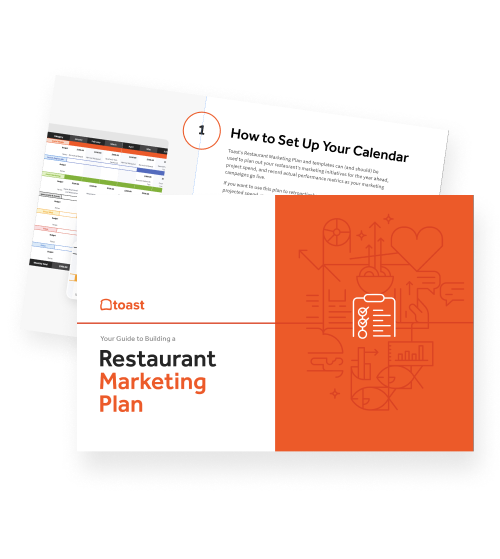
 Restaurant Marketing Plan
Create a marketing plan that'll drive repeat business with this customizable marketing playbook template and interactive calendar.
Get Free DownloadRestaurant marketing helps restaurants create predictable demand by connecting guest acquisition, retention, ordering, loyalty, reviews, and local visibility into one measurable growth strategy.
For many restaurants, the biggest opportunity is turning more first-time guests into regulars. Toast and Resy’s Regulars Report found that up to 50% of restaurant order volume can come from just 7% of guests. Moving a guest into a loyalty program can shift their return rate from a 7% baseline to nearly 30%.
That kind of repeat behavior is easier to build when marketing is connected to guest data. With Toast Marketing, restaurants can use guest and ordering data from Toast POS to send targeted email campaigns, automate follow-ups, promote offers, and measure campaign performance in one place.
This guide covers how restaurant marketing works in practice, including why it matters, how much to budget, low-cost ideas to try first, and the strategies restaurants can use to drive results.
Key Takeaways
Restaurant marketing should connect guest acquisition, retention, ordering, loyalty, reviews, and local visibility into one strategy.
Restaurants should use 3-6% of gross revenue as a starting marketing budget, then adjust spend based on concept maturity, growth goals, and competition.
Low-budget restaurant marketing should prioritize owned channels first, including Google Business Profile, reviews, email, loyalty, direct ordering links, in-store signage, and local partnerships.
Restaurant marketing is most valuable when it promotes a clear guest action, such as placing a direct order, making a reservation, joining loyalty, or returning during a slower daypart.
Toast helps restaurants connect marketing campaigns to guest data through tools for email, loyalty, online ordering, reservations, and more.
What is restaurant marketing?
Restaurant marketing is the process of promoting a restaurant’s brand, menu, offers, and guest experience across digital and in-person channels.
It can include social media, email, SMS, search, reviews, online ordering, signage, events, local partnerships, and community outreach. The goal is to make the restaurant easier to discover, choose, and remember.
Why should you market your restaurant?
Restaurant marketing gives restaurants repeatable ways to create demand, stay visible, communicate value, and turn guest interest into visits. Customers now compare restaurants across search, social media, reviews, delivery options, and direct ordering channels before they decide where to spend.
That matters because a 2026 James Beard Foundation’s report found that restaurants raising menu prices by more than 10% were most likely to report lower profits and expect fewer customers. Meanwhile, 49% of surveyed chefs ranked social media as a top trend expected to affect operations in 2026.
Visibility: Marketing helps restaurants show up across search, social media, reviews, email, and direct ordering channels while guests are deciding where to eat.
Value communication: Marketing gives restaurants a way to promote specials, bundles, menu quality, convenience, and hospitality without depending only on price increases.
Trust: Reviews and owner responses help guests feel more confident choosing a restaurant. BrightLocal found that 85% of consumers are more likely to use a business after reading positive reviews and 80% are likely to use a business that responds to all reviews.
Repeat visits: Use guest data, smart segmentation, and automated campaigns to send more relevant messages that support repeat visits, loyalty, and revenue growth.
Demand protection: Restaurant brands use marketing to protect traffic when consumer spending softens.
How much should restaurants spend on marketing?
A restaurant marketing budget should use 3-6% of gross revenue as a practical starting point, then adjust based on concept maturity, growth goals, local competition, and ROI.
Public restaurant data supports that range. Chipotle spent about 3.1% of revenue on advertising, marketing, and promotional costs in 2025, while Domino’s says U.S. stores generally contribute 6% of sales to fund national marketing and advertising campaigns.
Independent restaurants do not need to copy national chains, but these examples show why 3-6% is a useful planning range.
Established restaurants: Start around 3-6% of gross revenue, then shift spend toward channels that produce measurable orders, visits, or guest signups.
New restaurants: Spend more during launch to build awareness, collect reviews, promote opening offers, and grow owned channels like email and loyalty.
Restaurants with strong word-of-mouth: Spend less on paid ads and more on retention channels like loyalty, email, SMS, gift cards, reviews, and direct ordering.
Restaurants in competitive markets: Budget more for local search, paid social, creator content, photography, and limited-time promotions.
Restaurants using automation: Marketing is the top AI use case among restaurant operators using AI tools. Restaurant Dive reports that 19% of full-service operators and 15% of limited-service operators are using AI for marketing.
Restaurants using Toast: Prioritize measurable campaigns. Toast restaurants using gift cards, loyalty, and email marketing as part of Toast Marketing Suite saw 63% more sales than Toast restaurants that did not use those features.
Low-budget and free restaurant marketing ideas
The best low-budget restaurant marketing ideas use owned channels, local visibility, and guest relationships to drive demand without adding major advertising costs. Small restaurants don’t need a large marketing budget to start building awareness and repeat business. The most affordable tactics usually come from improving what guests already see.
Google Business Profile: Keep hours, menus, photos, ordering links, reservation links, and holiday updates accurate.
Review requests: Ask satisfied guests to leave reviews, respond to feedback, and use common review themes to improve service.
Social media content: Post craveable dishes, staff moments, specials, events, and customer-generated content to stay visible locally.
Email marketing: Build a guest email list and send simple campaigns for new menu items, limited-time offers, loyalty rewards, and events.
SMS marketing: Use text messages sparingly for timely offers, flash deals, and high-intent campaigns.
Loyalty enrollment: Invite guests to join a loyalty program at checkout, online ordering, and through receipts so each visit creates a reason to come back.
Direct ordering links: Add direct online ordering links to your website, Google Business Profile, Instagram bio, email campaigns, and printed materials.
Local partnerships: Team up with nearby businesses, schools, gyms, offices, hotels, and community groups to cross-promote offers.
In-store signage: Use table tents, counter signs, check presenters, receipt messages, and QR codes.
Limited-time offers: Create low-cost campaigns around seasonal specials, bundles, or loyalty-only perks.
Is restaurant marketing worth it?
Restaurant marketing is worth it when it creates measurable demand and helps restaurants turn guest interest into visits, orders, reservations, and repeat purchases. Marketing ROI is strongest when a restaurant promotes a clear reason to visit and then delivers a great guest experience.
Brinker reported that Chili’s comparable restaurant sales increased 31.4% in Q2 fiscal 2025, with traffic up 19.9%. The company said the growth came from advertising that promoted value, brought guests in, and operational improvements that brought guests back.
What are the best restaurant marketing strategies?
The best restaurant marketing ideas help restaurants attract new guests and convert demand into direct orders, reservations, and loyalty signups.
1. Build a restaurant loyalty program
A restaurant loyalty program encourages guests to return by rewarding them for repeat visits, online orders, or total spend. Loyalty is especially valuable because it gives restaurants a direct way to keep guests engaged after their first visit.
According to the National Restaurant Association, more than three-quarters of restaurant customers are more likely to visit a restaurant where they can earn points, even if that restaurant isn’t as convenient.
The same report found that nearly two-thirds of drive-thru, delivery, and takeout customers say belonging to a loyalty program is an important reason for choosing a restaurant.
Toast Loyalty helps restaurants create an integrated loyalty program where guests can enroll, earn points, and redeem rewards through in-store and online ordering channels. That makes loyalty easier to connect to the guest experience instead of treating it as a separate marketing tool.
2. Promote limited-time offers and value deals
Limited-time offers, bundles, BOGOs, off-peak discounts, and member-only deals give guests a specific reason to order now. These campaigns work best when they are tied to clear business goals, such as increasing weekday traffic, boosting online orders, or promoting a new item.
Another National Restaurant Association report found that value deals, including limited-time offers, buy-one-get-one deals, and discounts for ordering on off-peak days or times, resonate with 8 in 10 delivery, takeout, and drive-thru customers.
Toast Email Marketing and SMS Marketing can help restaurants promote timely offers to specific guest segments, such as lapsed guests, VIPs, online-ordering customers, or loyalty members.
3. Drive more direct online orders
Direct online ordering is one of the most important restaurant marketing channels because it captures demand from guests who already want to order. Instead of relying only on third-party marketplaces, restaurants can use their website, Google Business Profile, email campaigns, social media, and loyalty program to direct guests to owned ordering channels.
Off-premise dining is now central to restaurant demand. National Restaurant Association reports that nearly 75% of restaurant traffic happens off-premises, including takeout, delivery, and drive-thru orders.
Toast Online Ordering helps restaurants accept commission-free online orders through direct channels, which means operators can keep more control over guest relationships, menu presentation, and customer data.
4. Optimize your Google Business Profile
A restaurant’s Google Business Profile often acts like a digital front door. Guests use Google Search and Maps to check hours, menus, photos, reviews, ordering links, and directions before deciding where to eat or order.
Google allows restaurants to add custom ordering links, manage online ordering providers, and accept pickup or delivery orders through their Business Profile. Restaurants can also list menu items with descriptions and prices so guests can evaluate the menu directly in Search and Maps.
5. Ask for and respond to reviews
Online reviews influence where guests decide to eat, especially for independent restaurants. A Harvard Business School study found that a one-star increase in Yelp rating led to a 5-9% revenue increase for independent restaurants.
Restaurants should ask satisfied guests for reviews, respond to positive and negative feedback, and use recurring review themes to improve operations. Review management helps convert high-intent guests who are already comparing local options.
6. Use personalized email campaigns
Email marketing works best when it is tied to real guest behavior, not generic blasts. Restaurants can use email to welcome first-time guests, bring back lapsed guests, promote loyalty rewards, announce new menu items, and drive reservations.
The Guardian reported that restaurants are using personalized reservation links, guest tags, and automated messages to drive repeat bookings. One restaurant co-founder said about 10% of first-time guests used a personalized link to make another booking.
Toast CRM automatically builds audiences from guest emails collected through Toast channels like Online Ordering, Loyalty, eGift Cards, digital receipts, the Toast Local app, and Toast Tables. That helps restaurants send more relevant campaigns without manually rebuilding guest lists.
7. Use social media and local creators for discovery
Social media is a restaurant discovery channel, especially for younger diners. Restaurants can use short-form video, creator partnerships, user-generated content, behind-the-scenes clips, and visually distinctive menu items to make guests want to visit.
Business Insider reported that 73% of Gen Z and millennial respondents in a 2025 survey said a social media review led them to visit a restaurant in the past three months. 43.7% said they go to social media first for restaurant recommendations.
The best restaurant social media marketing should show what makes the restaurant worth choosing: craveable dishes, real hospitality, strong value, atmosphere, staff personality, and easy ways to order or book.
8. Sell and promote restaurant gift cards
Gift cards help restaurants generate revenue upfront, attract new guests, and give loyal customers an easy way to recommend the restaurant to friends and family. They are especially useful during holidays, graduation season, local events, and community campaigns.
The National Restaurant Association found that 59% of adults planned to give restaurant gift cards during the holiday season, including 74% of Gen Z adults and 70% of millennials.
Toast Gift Cards lets restaurants sell physical and e-gift cards that guests can use online and in-store, making gift cards a practical marketing tool for both immediate sales and future visits.
9. Market catering and events
Catering and events can turn a restaurant’s food into a higher-ticket revenue stream. Restaurants might market catering for office lunches, private events, holidays, schools, community groups, weddings, and local businesses.
Restaurant Dive reports that more QSR brands are exploring catering because it can deliver larger checks, incremental revenue, and new customer acquisition.
Toast Catering & Events helps restaurants manage catering leads, banquet event orders, estimates, invoices, deposits, calendars, and prep tools in one place. That helps operators turn catering interest into confirmed orders without losing track of details.
10. Create campaign-worthy menu items
A visually distinctive, craveable, timely, or value-driven item gives guests something specific to talk about and gives marketers a stronger story to promote.
Chili’s offers a strong example. The chain’s Triple Dipper became a major sales driver, accounting for 14% of total sales in 2025, helped by social media attention around the item’s cheese pull.
A campaign-worthy item can be a seasonal special, family meal bundle, limited dessert, game-day platter, or loyalty-exclusive menu item. The key is making the offer easy to understand, easy to photograph, and easy to order.
11. Build integrated brand campaigns
An integrated restaurant marketing campaign connects the same message across multiple channels. This approach works because guests often need to see the same offer or brand message more than once before they act.
For example, Five Guys launched its largest integrated brand campaign in 2026, rolling out “Your Burger Guy” across film, social, digital, audio, and in-store channels to position the brand around fresh, generous, and consistent fast food.
For independent and regional restaurants, integrated campaigns may be smaller but still effective: a seasonal menu launch, loyalty rewards, Google ordering links, social content, and in-store signage.
How to build a restaurant marketing strategy with Toast
A strong restaurant marketing strategy starts with a clear goal, the right channels, and a simple way to measure what works. Toast helps restaurants connect marketing to real guest actions, from online orders and loyalty signups to reservations and repeat visits.
Restaurant marketing also doesn’t have to be complicated. Toast IQ Grow combines AI-powered campaign support, marketing insights, and managed help from a Marketing Success Manager so busy operators can plan, launch, and review campaigns without juggling separate tools or agencies.
FAQs about restaurant marketing
What exactly is Toast IQ Grow, and how does it help my business?
Toast IQ Grow is a growth and lifecycle engine that takes the burden of growth off your plate by unifying AI powered by Toast IQ with expert Marketing Success Manager support to help drive traffic, increase retention, and maximize first-party revenue. Instead of managing multiple logins or expensive agencies, you get a single platform that helps find new customers and turn them into regulars.
What is included with Toast IQ Grow?
This premium package includesIntegrated AI: The Toast IQ Marketing Agent for instant campaign planning and asset creation.
Integrated AI: The Toast IQ Marketing Agent for instant campaign planning and asset creation.
Managed Marketing Services: A dedicated Marketing Success Manager to strategize and run your campaigns.
Digital Storefront Pro: Custom websites, commission-free online ordering, and Toast Delivery Services®
Toast Advertising Pro ($500 ad credit included*).
Marketing Essentials: Email and SMS marketing, loyalty, gift cards, and Toast Social Media marketing.
I’m too busy to manage marketing software. How much time will I need to spend on this?
Toast IQ Grow is built specifically for the busy operator. Unlike DIY tools, Toast IQ Grow includes integrated AI and managed support. Your Marketing Success Manager handles the heavy lifting — planning your monthly calendar, drafting copy with Toast IQ, and launching your campaigns. You simply meet to review results and approve the next month’s plan.
How do I know if my marketing campaigns are actually driving sales?
Toast provides closed-loop reporting. Because your marketing is integrated directly with your Toast POS, you can know when a campaign turns into a transaction. You’ll receive monthly performance reports showing your real return on investment (ROI), plus a detailed marketing-driven sales report accessible at all times.


Is this article helpful?
DISCLAIMER: This information is provided for general informational purposes only, and publication does not constitute an endorsement. Toast does not warrant the accuracy or completeness of any information, text, graphics, links, or other items contained within this content. Toast does not guarantee you will achieve any specific results if you follow any advice herein. It may be advisable for you to consult with a professional such as a lawyer, accountant, or business advisor for advice specific to your situation.

Subscribe to On the line
Sign up to get industry intel, advice, tools, and honest takes from real people tackling their restaurants' greatest challenges.
By submitting, you agree to receive marketing emails from Toast. We’ll handle your info according to our privacy statement. Additional information for California residents available here.