
How to Start a Fast-Casual Restaurant: Starting a Fast-Casual Restaurant Checklist (2024 Guide)
Opening a fast casual restaurant takes a lot of money, time, and resources. Here is our guide on how to start a fast casual restaurant, complete with a checklist to get you started today.
Author
 RESOURCE
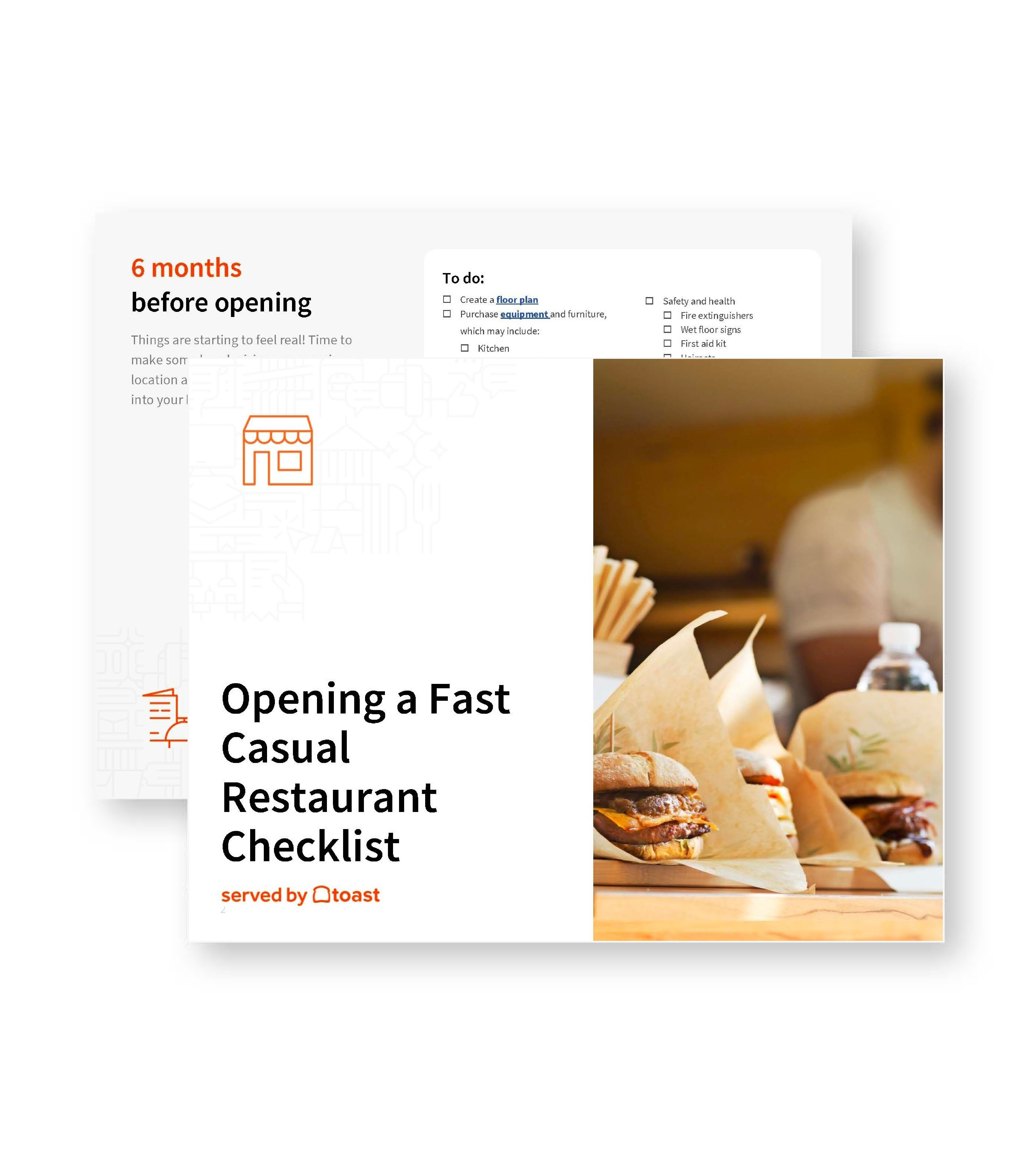
 Opening a Fast Casual Restaurant Checklist
So many things go into opening a fast casual restaurant. With this free PDF checklist, you'll set your new business up for success.
Get Free DownloadThe fast-casual restaurant industry is rapidly expanding, expected to grow by $55.4 billion from 2022 to 2027. This type of establishment offers a mix between fast-food convenience and a casual dining experience with quality food options. It's no surprise that many entrepreneurs are eager to get into the business, but for those who are new to the industry, it can be difficult to know where to begin. This article offers a comprehensive guide to starting a fast-casual restaurant, taking you step by step through the necessary planning and implementation of your new venture.

Subscribe to On the line
Sign up to get industry intel, advice, tools, and honest takes from real people tackling their restaurants' greatest challenges.
By submitting, you agree to receive marketing emails from Toast. We’ll handle your info according to our privacy statement. Additional information for California residents available here.
Choose a Fast-Casual Concept
The first step in starting your fast-casual restaurant is to determine what type of concept you want to create. Fast-casual restaurants offer a unique dining experience that combines the convenience of fast food with the quality and customization of casual dining. This format has gained popularity in recent years, appealing to customers who are looking for quick, affordable, and healthier food options.
When choosing a fast-casual concept, consider the following:
Menu: Decide on the type of cuisine you want to offer and some of the specific dishes that will make up your menu. Fast-casual restaurants often focus on fresh, made-to-order meals, with a variety of choices to cater to different dietary preferences and restrictions. We’ll get more into the details of your menu later, but its a good idea to have a general idea of what you want to serve from the beginning.
Atmosphere: Consider the ambiance and design of your restaurant. Fast-casual establishments typically have a more casual and relaxed atmosphere compared to fine dining restaurants. Decide up front on a concept that that reflects the desired aesthetic and values of your new brand.
Service Model: Determine the service model that fits your concept. Fast-casual restaurants often have a counter or self-service ordering system, where customers can customize their meals and choose their toppings or ingredients.
Choosing the right fast-casual concept is crucial as it will define your target market, brand identity, and overall business strategy. Take the time to research existing fast-casual restaurants, identify gaps in the market, and develop a concept that sets you apart from the competition.
Remember to consider your own passion and expertise when deciding on a fast-casual concept. Creating a restaurant that aligns with your interests and strengths will not only make the business more enjoyable for you but also increase your chances of success.
By carefully selecting a fast-casual concept, you'll lay a solid foundation for your restaurant and have a clear direction for the next steps in starting your business.
Create Your Business Plan
Once you’ve chosen your business format, the next step is to create your business plan. This is a crucial document that will guide you through every stage of opening and operating your fast-casual restaurant.
Your business plan should contain:
Executive Summary: This offers a brief overview of your business plan and should be designed to engage potential investors and partners.
Company Description: This should describe your restaurant's mission, vision, and unique selling points.
Market Analysis: This should include a thorough analysis of your competition, target customer demographics, and regional trends and opportunities.
Service or Product Line: This should showcase your menu and any special additional items you plan to offer.
Marketing and Sales: This should explain how you plan to promote your business and outlines your sales goals.
Funding: A detailed overview of the funding you need for your restaurant. This should include the desired loan amount, repayment terms, and how you will use the funds.
Financial Projections: A forecast of your expenses, revenue, and break-even points.
Pick Your Location
Choosing the right location is crucial for the success of your fast-casual restaurant. It's important to pick a location that's easily accessible, convenient, and visible to your target audience. Consider your target market, competitors, and any city or state regulations that may impact your business. Other things you should consider include available parking spaces, public transportation options, and the overall demographics of the neighborhood.
You’ll also want to look at:
Rental costs
Lease agreements
Space availability and size
Foot traffic
Other nearby restaurants
Neighboring businesses
Apply for Licenses and Permits
After selecting your location, you must apply for the necessary licenses and permits.
Each state and city may have its requirements regarding permits and licenses, so you should do your research and ensure that your restaurant complies with all necessary regulations. Not complying could lead to legal issues down the line, including hefty fines and penalties for non-compliance. It's essential to get it right from the start and to make sure everything is in order.
Taxes, DBA, and EIN
Registering your restaurant with the state and federal government is a legal requirement. You will need to register your business name, obtain a separate tax identification number, and secure any required permits and licenses.
You will also need to apply for a Doing Business As (DBA) name for your restaurant. DBA identifies your business name to the public and your bank.
Finally, you will need an Employer Identification Number (EIN) from the IRS. An EIN identifies your restaurant to the government for federal tax purposes and helps keep your finances organized.
Create a Marketing Plan
Marketing is crucial for attracting customers and building a customer base. Consider all marketing channels, including traditional advertising and marketing, social media, email marketing, and local service offerings.
Some key components to include in your marketing plan:
A target audience
A value proposition
Your competition and how you'll stand out
The channels you'll use to reach potential customers
Your sales and branding messages
Restaurant Opening Calculator
This calculator lays out some of the fundamental financial costs of opening a restaurant, so you can start planning and bring your dream restaurant to life.

Understand Your Finances and Operating Expenses
Once you've secured your funding and financing, it's essential to understand your finances and have a grasp on your operating expenses. Logically, it would help if you were always aware of where your money is going, including the expenses you'll incur to keep your restaurant running.
Some expenses might include:
Rent
Utilities (water, gas, and electricity)
Equipment leases/maintenance
Insurance
Payroll
Inventory Cost of Goods Sold (COGS)
Marketing expenses
Design Your Menu
Designing a menu that will appeal to your target audience is a crucial aspect of any fast-casual restaurant. It's a delicate balance between offering varied and exciting dishes while not being too complicated for customers to make quick decisions when ordering.
Here are some considerations when developing your menu:
Ingredients and ingredients sourcing
Menu structure and flow
Yield or portion sizes per dish
Profit margins for each dish
Menu presentation and marketing materials
Developing a menu pricing strategy is also an important step here. Decide on your pricing strategy based on factors such as the cost of ingredients, competition, and target market. Fast-casual restaurants often provide value for money by offering high-quality food at affordable prices compared to fine dining establishments.
Establish Key Operating Infrastructure
It's essential to have a solid infrastructure established for your restaurant, including such components as:
Establishing these key aspects will help your restaurant run as smoothly as possible, even during peak business hours.
Select Your Equipment and Point of Sale (POS) System
You have your location. You’ve figured out your taxes and expenses, licenses and permits. You’ve created a marketing plan. You have your food products. Now, you just need the right equipment to bring your menu to life.
The tools and appliances you’ll need will depend on the format of your restaurant. But no matter what your business looks like, choosing the right equipment for your restaurant is essential to meeting your kitchen and customer needs.
In addition to kitchen equipment, it’s also important to keep restaurant technology in mind. How will customers place orders, whether in-store or online? How will you keep track of sales, payments, and other data? Take your time exploring your point of sale (POS) system options and choosing the best fit for your fast casual restaurant.
Map Out Your Floor Plan
The floor plan of your restaurant will determine how smooth your restaurant operates and how comfortable your customers will feel while dining. The floor plan you choose should include:
Dining areas
Cooking and prep areas
Restroom locations
Storage rooms or closets
Employee areas
Dishwashing stations
Walkways and serving stations
Build Your Team
Attracting and developing high-quality talent is essential to building a successful fast-casual restaurant. Hiring decisions must be made methodically, with a foundation based on candidate experience and qualifications.
Here are some hiring considerations:
Compile the most comprehensive list of candidate qualifications and responsibilities as possible
Conduct phone screenings and initial interviews
Select candidates to take part in more in-depth interviews or team tryouts
Establish hiring criteria, such as job descriptions, candidate profiles, and overall team roles
***
Opening a fast-casual restaurant takes hard work and quite a bit of planning, but like any business endeavor, it’s not impossible. It requires determination, a can-do attitude, an investment of time and money, and a willingness to adapt to the always-evolving food service and restaurant landscape. Use this guide to set yourself on a path to achieve your dream of starting a fast-casual restaurant. Remember: success is in the details, so be sure to pay attention to them along the way.
Restaurant Business Plan Template
No matter where you’re at in your restaurant ownership journey, a business plan will be your north star. Organize your vision and ensure that nothing is overlooked with this free template.
Is this article helpful?
DISCLAIMER: This information is provided for general informational purposes only, and publication does not constitute an endorsement. Toast does not warrant the accuracy or completeness of any information, text, graphics, links, or other items contained within this content. Toast does not guarantee you will achieve any specific results if you follow any advice herein. It may be advisable for you to consult with a professional such as a lawyer, accountant, or business advisor for advice specific to your situation.
Subscribe to On the line
Sign up to get industry intel, advice, tools, and honest takes from real people tackling their restaurants' greatest challenges.
By submitting, you agree to receive marketing emails from Toast. We’ll handle your info according to our privacy statement. Additional information for California residents available here.