Restaurant Business Plan Template: How to Write Yours in 2026
No matter where you’re at in your restaurant ownership journey, a business plan will be your north star.
Author
 RESOURCE
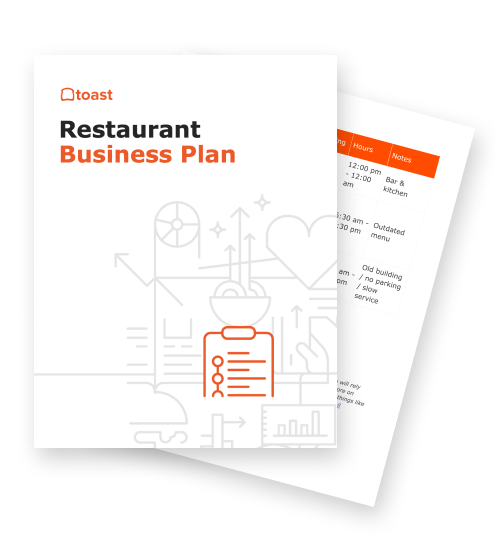
Restaurant Business Plan Template
No matter where you’re at in your restaurant ownership journey, a business plan will be your north star. Organize your vision and ensure that nothing is overlooked with this free template.
Get Free DownloadA restaurant business plan is where your idea meets real numbers. It’s how you test your concept on paper before you sign a lease or buy a single piece of equipment.
To write a restaurant business plan, describe your concept and team, show there’s demand in your market, explain how you’ll attract guests and run service, and lay out the numbers behind it all, from startup costs to your break-even point. A restaurant business plan template makes it easier by giving you a structure to fill in.
This guide walks through each section of a restaurant business plan and what lenders and investors look for, starting with a free template you can use to build your own.
Key takeaways
A restaurant business plan explains what your restaurant will be, who it’s for, and how it will make money.
Lenders and investors use it to decide whether to fund you, so your numbers need to be realistic.
A complete plan covers your concept, menu, market, marketing, operations, financials, and opening timeline.
Restaurant-specific details, like seating capacity, service model, food costs, and break-even point make a plan credible.
A restaurant business plan template gives you a ready-made structure to fill in.
What’s in the free Toast restaurant business plan template
The free Toast restaurant business plan template gives you a ready-to-use structure for every section of your plan, so you can spend your time on your concept instead of formatting. It includes:
A cover page and table of contents
Prompts under each section header that explain what to write, with space for your answers
A management team section with space for headshots and bios
A competitive matrix to compare nearby restaurants by seats, meal periods, pricing, and hours
Prompts for your investment plan and projected profit and loss (P&L) statement
Space for your break-even analysis and expected cash flow
When you’re finished, delete the prompts, and your plan is ready to share, print, or download in your preferred format.
Opening a Restaurant Checklist
So many things go into opening a restaurant. Use this free PDF checklist to set your new restaurant up for success.

What is a restaurant business plan?
A restaurant business plan is a written document that describes your restaurant’s concept, target market, operations, and financial projections, and explains how the restaurant will become profitable.
Writing one is usually one of the first steps in opening a restaurant, securing funding or signing a lease. Owners use it to win over lenders and investors, guide opening decisions, and measure progress once the restaurant is running.
Unlike a general business plan, a restaurant business plan has to account for details specific to the industry: service model, menu pricing and food costs, seating capacity, staffing for peak hours, and the licenses needed to open.
What should a restaurant business plan include?
A restaurant business plan should include an executive summary, company overview, sample menu, market analysis, marketing plan, operations plan, financial plan, and a timeline with supporting documents. Here’s what each section covers and what lenders and investors look for:
Section | What it covers | What investors look for |
Executive summary | A one-to-two-page overview of your concept, team, and funding request | A clear reason to keep reading |
Company overview | Your concept, service model, ownership, team, and design | A concept and team that fit together |
Sample menu and sourcing | Dishes, pricing, food cost targets, and suppliers | Prices that cover costs and leave room for profit |
Market analysis | Your target market, location, competitors, and strengths and weaknesses | Proof of demand where you plan to open |
Marketing plan | How you’ll attract guests before opening and keep them after | A realistic plan and budget to fill seats |
Operations plan | Staffing, service, technology, licenses, and permits | Readiness to run a busy service from day one |
Financial plan | Startup costs, funding, sales projections, P&L, break-even, and cash flow | Realistic numbers and a clear path to profit |
Timeline and appendix | Milestones to opening day, plus supporting documents | Evidence the plan is on track |
Why do you need a business plan for a restaurant?
A restaurant business plan turns your concept into a workable plan and shows lenders and investors that your restaurant is viable.
Your business plan is your guide across every stage of opening a new restaurant. Early on, it helps you work through what you’ll serve and how you want guests to feel. Later, when it’s time to raise money and look at real estate, you’ll keep coming back to it to stay focused.
Here’s how a business plan helps:
It helps you secure financing. Lenders often ask for a business plan with a loan application to see how much funding you need and how you’ll pay it back. Learn more in this guide to restaurant financing.
It shows that you’ve done the work. Your market research, competitive analysis, and realistic numbers show that you’ve thought through the cost and the risks, and how you’ll handle both.
It turns your idea into milestones. Deciding what you’ll serve, who you’ll serve, and what it will cost gives you benchmarks to measure against once your doors are open.
Your plan is also where you first map out how your restaurant will make money. In Toast’s 2026 Voice of the Restaurant Industry Survey, improving profitability was the highest-ranking goal, picked by 37% of operators.
How to write a restaurant business plan, step by step
Writing a restaurant business plan is easier when you take it one section at a time. The steps below follow the same order as the free Toast restaurant business plan template, with a final step for your timeline and supporting documents. Download it to get section-by-section prompts, then use this guide to understand what each section needs to show and why it matters.
Step 1: Write your executive summary
The executive summary is a one-to-two-page overview of your entire restaurant business plan. It’s the first section readers see, and often the one that decides whether they keep reading. If someone reads only this section, they should know what you’re opening, who it’s for, and what you need from them.
What to include:
Concept and mission: Your cuisine, service model, and price point, plus what your restaurant stands for
Target market and location: Who your guests will be and where you plan to open
Competitive edge: What will set you apart from restaurants nearby
Management team: Who’s running the restaurant and the experience they bring
Funding request: How much you need and what it will cover, with a snapshot of your projections
Because it summarizes the whole plan, it’s often easiest to write once the other sections are done. For a deeper look, see this guide to writing a restaurant business plan executive summary.
Tip: Tailor your summary to the reader. A lender wants to know how you’ll repay the loan, but an investor wants to know how they’ll earn a return. Lead with whatever’s most important to the reader.
Step 2: Describe your company overview
The company overview gives investors a fuller picture of your restaurant: your concept, service model, location, management team, and how the space will look and run. It also covers your ownership structure, including the legal entity you’ll register. Your entity affects your taxes and personal liability, so a tax professional or attorney can help you weigh the options.
Restaurant concept and service model
Your concept is what guests experience: the cuisine, the atmosphere, and the price point. Your service model is how that experience is delivered, and it will shape other aspects like your staffing, layout, technology, and costs. Your company overview should show how your concept and your service model fit together.
Service model | How guests order and pay | Staffing needs | Common for |
At a counter, kiosk, drive-thru, or online; pay before eating | Lean team focused on speed and volume | Burgers, sandwiches, coffee | |
At a counter, kiosk, or online; food is often brought to the table | Small front-of-house team, with more prep in the kitchen | Bowls, salads, pizza | |
With a server at the table; pay at the end of the meal | Servers, hosts, bartenders, and a full kitchen team | Casual dining, bars, family restaurants | |
With a server, often through a set or seasonal menu | Large, highly trained front- and back-of-house teams | Chef-driven and special-occasion restaurants |
Design, layout, and seating capacity
Describe how your dining room, kitchen, and décor support your concept and how your team will work during a rush. Be sure to include your seating capacity: it’s one of the inputs behind your sales projections, so the number you plan here carries into your financial plan.
Step 3: Share your sample menu and sourcing plan
Your menu section explains what you’ll serve and what you’ll charge — and how those prices cover your costs.
What to include:
Pricing strategy: How you’ll set prices, and how they compare to similar restaurants nearby
Food cost targets: What you expect to spend on ingredients compared to what you’ll charge
Sample menu: Your planned dishes and drinks, including your beverage program
Suppliers: Where you’ll buy ingredients, with backups for key items
Inventory approach: How you’ll order, store, and track ingredients to limit waste
Roughly a third of restaurant revenue typically goes to cost of goods sold, so your menu prices need to leave room for labor and overhead. To check a dish, use your food cost percentage:
(Ingredient cost per dish ÷ menu price) × 100 = food cost percentage
Pricing data can help you benchmark. Toast’s Menu Price Monitor tracks prices for popular items like beer, burgers, burritos, chicken wings, cold brew coffee, and regular coffee. For example, the median price of a burger at Toast restaurants in September 2026 was $14.80, up 2.2% from 2025.
Plan for costs to keep climbing, too. In Toast’s 2026 Voice of the Restaurant Industry Survey, inflation ranked as operators’ No. 1 challenge — so build room for rising ingredient prices into your plan.
Tip: Cost out your signature dishes. Show investors the ingredient cost, menu price, and food cost percentage for the three to five dishes you expect to sell most.
Step 4: Complete your market analysis
Your market analysis shows that there’s real demand for your restaurant where you plan to open it. It covers the guests you’re targeting, the area you’ve chosen, your restaurant’s strengths and weaknesses, and the restaurants you’ll compete with.
Target market and location analysis
Start with who you’re opening for: their age, income, lifestyle, and how and when they dine out. Then show why your location fits them. Describe the neighborhood’s mix of homes, offices, schools, and attractions, how guests will get to you, and any changes coming to the area, like new development. If you haven’t signed a lease yet, focus on the area you’re targeting and why.
Competitive and SWOT analysis
List the restaurants nearby that will compete for the same guests, especially those with a similar concept or price point. Note what they do well and where there are gaps, like an underserved meal period, a missing cuisine, or limited takeout.
Then summarize your position with a SWOT analysis: your strengths, weaknesses, opportunities, and threats. Use the opportunities to connect your concept to the gaps you found, so investors can see exactly where your restaurant fits.
Toast’s free competitive analysis template includes a matrix and a SWOT template to compare them side by side.
Step 5: Build your restaurant marketing plan
Your marketing plan explains how you’ll get guests through the door before and after you open, from a plan to fill seats to the marketing budget to support it.
Plan for two phases:
Before opening: Build anticipation by sharing your build-out on social media, reaching out to local press, and getting your website and online listings live so guests can find you on day one.
After opening: Turn first-time guests into regulars with email marketing, a loyalty program, local partnerships, and community events.
Regulars can make a big difference. Toast’s Regulars Report found that 7% of guests can drive up to 50% of restaurant order volume. That’s why your plan should cover how you’ll recognize and reward repeat guests, not just how you’ll attract new ones.
Restaurant Marketing Plan
Create a marketing plan that'll drive repeat business with this customizable marketing playbook template and interactive calendar.
Step 6: Lay out your operations plan
Your operations plan explains how your restaurant will run day to day: who works there, how service flows, what systems you’ll use, and how you’ll stay compliant. It shows investors you’ve planned for real service, including the practical considerations needed to bring the concept to life.
Tip: Start writing your operations plan now. From how to receive deliveries to how you handle an allergy order, it’s important to nail down your procedures today so your staff is prepared at opening. Need help? Check out our free standard operating procedures template.
Staffing for peak volume
In Toast’s 2026 Voice of the Restaurant Industry Survey, hiring ranked as operators’ No. 2 challenge, up 6 points from the year before. Outline the front- and back-of-house roles you’ll hire for, how many people you’ll need on your busiest shifts, how you’ll pay them (including your tip policy), and how you’ll train and keep them.
Hiring is a real challenge, but a clear plan for recruiting and retaining employees shows you’re ready for it.
Restaurant POS and technology
Describe the systems that will run your restaurant: taking orders, accepting payments, sending tickets to the kitchen, online ordering, scheduling, payroll, and inventory. This showcases how your tools will work together (like how your restaurant POS will connect them) so your team isn’t re-entering data between systems mid-service.
Restaurant POS Comparison Tool
A free, customizable Restaurant POS Comparison Tool to research and compare point of sale systems in one Excel spreadsheet.
Licenses, permits, and compliance
List the licenses and permits you’ll need to open — like a health permit, a certificate of occupancy, and a liquor license if you’ll serve alcohol — along with when you’ll apply. Some licenses and permits can take months, so build that into your timeline. For everything else on your pre-opening list, here’s what you need to open a restaurant.
Step 7: Put together your financial plan
Your financial plan turns your business plan into numbers: what it will cost to open, how much you expect to sell, and when you’ll start making a profit. This can be an important section for lenders and investors, so keep your estimates realistic and show where each number comes from.
Startup costs and funding sources
List what you’ll spend before opening, including build-out, equipment, furniture, initial inventory, licenses, technology, and pre-opening marketing. The total cost to open a restaurant can range from a few hundred thousand to several million, depending on rent, furniture, construction, and permits. Plan for working capital, too, setting aside enough to get through at least six months of unpredictable or low sales.
Finally, explain how you’ll fund it: savings, loans, investors, or a mix. Not sure what funding you want? This guide to restaurant financing and business loans can help you compare your options.
Sales projections and profit and loss (P&L) statement
Project your sales from your seats, expected guests per day, and average check. Include every revenue stream you plan to offer, like takeout, catering, private events, or packaged goods.
Then, build a projected P&L statement for at least your first year, with realistic monthly expenses like rent, utilities, insurance, and repairs. Add a monthly cash flow projection, too: a restaurant can be profitable on paper and still run short of cash in a month when rent, payroll, and supplier invoices all come due at once.
Restaurant Profit and Loss Statement Template
Evaluate your restaurant's financial strengths and weaknesses with the free P&L and income statement template.
Prime cost and labor cost
Prime cost, your cost of goods sold plus labor, is your biggest controllable expense. Keeping it near 60% of revenue is a widely used benchmark, with labor typically around 30%. The average restaurant profit margin is 3–5%, but both labor and margins vary by restaurant type:
Restaurant type | Typical labor cost (% of revenue) | Typical profit margin |
Quick service | 20–25% | 6–9% |
25–30% | 6–9% | |
Casual dining / full service | 30–35% | 3–5% |
Fine dining | 35–45% | 4–9% |
Note: These are industry reference ranges. Actual figures vary based on market, location, volume, cost structure, and operational model. Use these as benchmarks, not guarantees, and consult a financial advisor for guidance specific to your operation.
How to calculate your restaurant’s break-even point
Your break-even point is the monthly sales you need to cover all of your costs:
Fixed costs ÷ (1 – variable cost percentage) = break-even sales
For example, if your fixed costs (rent, salaries, insurance) are $30,000 a month and your variable costs (food, hourly labor, supplies) are 65% of sales, you’d need about $85,715 in monthly sales to break even. At a $40 average check, that’s about 2,143 guests a month, or 72 a day.
Tip: Check your break-even against your seats. If your break-even point needs more guests than your seats and hours can realistically serve, revisit your concept, costs, or prices before you pitch.
Step 8: Map out your timeline and supporting documents
A timeline shows when each milestone will happen and when you expect to open. Every opening is different, but a typical plan follows this order:
Timeline | Key milestones |
12+ months out | Finalize your concept, write your business plan, and secure funding |
6–12 months out | Sign a lease, hire a designer or contractor, and apply for licenses and permits |
3–6 months out | Order equipment, choose your POS and tech, and start pre-opening marketing |
Final 3 months | Hire and train your team, finalize your menu, and run test service |
Close your plan with an appendix of supporting documents like your sample menu, floor plan, equipment quotes, lease or letter of intent, and team résumés.
Restaurant Profit Margin Calculator
Use this free Restaurant Profit Margin Calculator to see how efficiently you turn sales dollars into profits.
How to present your restaurant business plan to investors
You’ve made it to the meeting — here’s how to prepare:
Know your numbers. Be ready to explain your startup costs, sales projections, and break-even point without looking them up. If a question stumps you, say you’ll follow up — and then actually follow up, quickly.
Build a short pitch deck. Keep it to the highlights: your concept, market, team, financials, and funding request. Leave the details to the full plan.
Practice the hard questions. Investors will push on your riskiest assumptions, like your sales projections or construction budget. Rehearse your answers with someone who’ll challenge you.
Help them picture it. If you can, invite investors to a tasting or a walk-through of your space so they can experience what you’re building. If you can’t do this, sharing photos of your space or the sample menu can help.
Send the full plan afterward. Follow up after the meeting with your complete business plan so investors can review the details.
Common restaurant business plan mistakes to avoid
Even a strong concept can lose an investor’s trust if the plan behind it has gaps. Watch out for these common mistakes:
Projecting sales that are too optimistic. Base your projections on your seats, realistic guest counts, and a gradual ramp-up after opening. Including a slower-case scenario shows you’ve planned for it.
Underestimating what it takes to open. Construction delays and surprise costs are common. Build a cushion into your budget and plan for working capital on top of startup costs.
Glossing over the competition. Claiming you have no competitors is a red flag. Name the restaurants your guests already go to, and explain why they’ll choose you.
Leaving out the team. Highlight your team’s restaurant experience, and show how you’ll fill any gaps with hires or advisors.
Writing a generic plan. Every section should tie back to your concept, your guests, and your neighborhood. If a sentence could describe any restaurant, make it more specific.
Treating it as one-and-done. Your plan should change as your restaurant does. Revisit it as you open, grow, and set new goals.
From plan to opening day: Get your free restaurant business plan template
Opening a restaurant is a big dream, and your business plan is how you start making it real. Work through every section with the free Toast template, then use it to pitch lenders, investors, and partners.
And when it’s time to open your doors, Toast is here to help. From your first order to your busiest night, see how Toast supports new restaurant openings, taking more off your plate so you can focus on your food, your team, and your guests.
Restaurant Business Plan Template
No matter where you’re at in your restaurant ownership journey, a business plan will be your north star. Organize your vision and ensure that nothing is overlooked with this free template.
Restaurant business plan FAQs
How long should a restaurant business plan be?
There’s no required length. The U.S. Small Business Administration notes that traditional business plans can be dozens of pages long. Keep your executive summary to one or two pages, and put supporting details like menus, floor plans, and quotes in an appendix.
What do investors or lenders want to see in a restaurant business plan?
Investors and lenders want proof that your restaurant can succeed and pay them back. That means a clear concept, an experienced team, evidence of demand in your location, and realistic financial projections, including startup costs, a break-even analysis, and a plan for working capital. A specific, well-researched plan shows you’ve thought through the risks.
Where can I find a free restaurant business plan template?
You can download the free Toast restaurant business plan template. It includes prompts for every section of your plan, a competitive matrix, space for your management team, and financial sections for your investment plan, P&L, break-even analysis, and cash flow. Delete the prompts when you’re done, and your plan is ready to share.
What is the 30/30/30/10 rule for restaurants?
The 30/30/30/10 rule is a common rule of thumb that some operators use, splitting restaurant revenue into about 30% for food and beverage costs, 30% for labor, 30% for operating expenses like rent and utilities, and 10% for profit. Actual results vary, and there’s no guarantee that a restaurant will earn at least 10% in profit.
Do you need a business plan to get a restaurant loan?
In most cases, yes. Banks and other lenders often ask for a business plan to see how much funding you need, how you’ll use it, and how you’ll pay it back. Your financial plan, including startup costs and sales projections, is the section they’ll review most closely.
How much does it cost to open a restaurant?
The total cost to open a restaurant can range from hundreds of thousands to tens of millions, depending on rent, furniture, construction, and permits. Your concept, size, and location also play a role.
Can I write a restaurant business plan with no experience?
Yes. A template gives you a structure to follow and research fills in the rest. If you’re new to the industry, bring experienced partners, managers, or advisors onto your team, and show investors how they’ll support your opening. Starting with a limited budget, too? Here’s how to open a restaurant with little or no money.
How often should I update my restaurant business plan?
Review your plan at least once a year, and update it any time something major changes, like a new location, a menu overhaul, or a new round of funding. Comparing your actual results to your projections also helps you spot what’s working and what needs to change.
Is this article helpful?
DISCLAIMER: This information is provided for general informational purposes only, and publication does not constitute an endorsement. Toast does not warrant the accuracy or completeness of any information, text, graphics, links, or other items contained within this content. Toast does not guarantee you will achieve any specific results if you follow any advice herein. It may be advisable for you to consult with a professional such as a lawyer, accountant, or business advisor for advice specific to your situation.
 Trending



Subscribe to On the line
Sign up to get industry intel, advice, tools, and honest takes from real people tackling their restaurants' greatest challenges.
By submitting, you agree to receive marketing emails from Toast. We’ll handle your info according to our privacy statement. Additional information for California residents available here.