
8 Ways To Use QR Codes in Your Restaurant
Learn how restaurant QR codes work, why they boost check sizes by 9%, and how to choose between a basic QR menu and a full mobile order & pay system.
Author
 RESOURCE
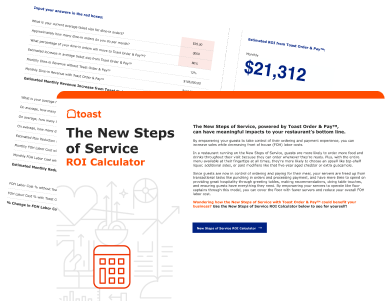
 The New Steps of Service ROI Calculator
Use this calculator to learn how the New Steps of Service can benefit your restaurant and impact your bottom line.
Get Free DownloadRestaurant QR codes are scannable codes that let guests access menus, place orders, pay checks, join loyalty programs, leave reviews, and interact with your restaurant from their own phones.
With the right tools, a QR code strategy can go beyond a simple digital menu. For example, Toast Mobile Order & Pay™ enables guests to scan a QR code, browse an updated menu, view real-time pricing, place an order, and pay directly from their mobile device.
For some restaurants, that kind of guest-led workflow can create meaningful operational benefits. As Zocalo in Sacramento, CA shared:
“With Toast Order & Pay we have faster turn times, fewer comps because the customer is placing the order, a server can handle 30% more tables, and the upsell is baked into the system.”
In this guide, you’ll learn how restaurant QR codes work, why they matter, and how to use them.
Restaurant Operations Manual Template
Use this free template to easily outline all of your operating procedures and make day-to-day operations as consistent as possible.

What are restaurant QR codes?
Restaurant QR codes are scannable codes that direct guests to a digital destination, such as a menu, ordering page, payment screen, loyalty signup, review form, or promotion.
Guests can scan the code with their phone camera and access the online experience without typing in a URL or downloading a separate app. Restaurants use both static and dynamic QR codes:
Static QR codes send guests to one fixed link
Dynamic QR codes can be updated or tracked without reprinting the code.
For restaurants that frequently update menus, specials, pricing, or promotions, dynamic QR codes can offer more flexibility.
QR codes work well in restaurants because they give guests low-friction access from their own devices. Whether someone is seated at a table, waiting in line, picking up takeout, or browsing a window sign, a QR code can connect them to the next step quickly.
How do restaurant QR codes work?
Restaurant QR codes connect a physical code to a digital action. Guests scan the code with their phone camera, then complete the intended task from their own device. When QR code workflows are connected to an integrated POS like Toast, orders, payments, tips, and guest data can flow into one centralized, organized system.
Create the QR code: The restaurant generates a QR code for a specific purpose.
Link it to a digital destination: The code can direct guests to a menu, ordering page, payment flow, loyalty signup, review page, waitlist, or promotion.
Place the code where guests need it: QR codes can appear on table tents, receipts, menus, signage, packaging, or checkout screens.
Let guests scan from their phones: Guests use their phone camera to open the linked experience.
Complete the intended action: Guests can view a menu, place an order, pay a check, join loyalty, or leave feedback.
Connect the action to the POS: Integrated systems can send orders, payments, tips, reporting data, and guest information back into the POS.
Why should your restaurant use QR codes?
QR codes can help restaurants make ordering, payment, and guest engagement faster and more flexible. Instead of relying only on printed menus, staff-led ordering, or traditional checkout flows, guests can use their own phones to access the next step when they need it.
As Christine de Wendel, co-founder of a QR code payment platform, told the U.S. Chamber of Commerce:
“Restaurant operators love it because it’s way more efficient, and guests love it because they’re in control of the situation, and yet the restaurant is still providing a full-service experience… People don’t have to flag their waiter down to get another side of fries, so that’s also a great way to create a smoother experience for the guests… Not everyone is going to add something, but for those who do, it’s top-line revenue that the restaurant wouldn’t have gotten otherwise.”
Faster access to menus and ordering: Guests can pull up the right digital experience without waiting for a printed menu or staff member.
Easier menu updates: Update specials, 86’d items, prices, modifiers, and descriptions without reprinting menus.
Reduced staff bottlenecks: Guests can start orders, add items, or pay without requiring staff to manage every step.
Better order accuracy: Guests can directly enter their own orders.
More payment convenience: Guests can pay when they are ready instead of waiting for the check.
More opportunities to capture guest data: QR codes can support loyalty, email/SMS signup, feedback, and marketing programs.
Support for New Steps of Service: Toast’s New Steps of Service uses QR codes and other technology to give guests more control over ordering and payment.
How to use QR codes in your restaurant
Restaurants can use QR codes for more than digital menus. Depending on where they’re placed and what they link to, QR codes can support ordering, payment, loyalty, marketing, feedback, promotions, and takeout.
1. QR code menus
QR code menus let guests view your menu from their phones.
Digital menu access: Guests can scan a code to view food, drink, specials, happy hour, or seasonal menus.
Easier menu updates: Restaurants can update specials, 86’d items, pricing, modifiers, and menu descriptions without reprinting menus.
Flexible menu formats: QR code menus are useful for restaurants with seasonal items, rotating specials, happy hour menus, or frequent menu changes.
Guest choice: Printed alternatives should still be available for guests who prefer them or have accessibility needs.
2. QR code ordering
QR code ordering technology lets guests scan, browse, order, and send items directly into the restaurant’s ordering workflow.
Guest-led ordering: Guests can order from their own phones without waiting for a server to return to the table.
Flexible service models: QR code ordering can work well for table service, counter service, patios, bars, breweries, food halls, events, and high-volume service periods.
Mobile ordering: Toast Mobile Order & Pay allows guests to order and pay from their phones, helping support more flexible service.
Kitchen coordination: Orders can connect with a Kitchen Display System so the kitchen receives and organizes incoming orders more efficiently.
3. QR code payments
QR code payments let guests pay from their phones when they’re ready.
Faster checkout: Guests can pay without waiting for a server to bring the check or run a card.
Less end-of-meal friction: QR payments can reduce unnecessary trips between the table and POS terminal.
Smoother table turns: Faster payment can help restaurants move guests through service more efficiently.
Flexible payment options: QR code payments can work alongside Toast Go 3 handhelds, giving staff and guests multiple ways to complete checkout.
4. Loyalty signups
QR codes can help restaurants turn in-person guests into repeat customers.
Easy enrollment: QR codes can direct guests to loyalty signup pages.
Useful placements: Add loyalty QR codes to receipts, table tents, packaging, signage, checkout screens, and digital ordering flows.
Repeat visit support: Toast Loyalty can help restaurants capture guest information and encourage customers to come back.
5. Email and SMS signup
QR codes can help restaurants build a marketing list from guests who are already engaging with the business.
List growth: Guests can scan to sign up for email or SMS updates.
Future outreach: Signups can connect to promotions, events, seasonal offers, and re-engagement campaigns.
Targeted marketing: Toast Marketing and Toast Guest CRM can help restaurants use guest data to create more relevant outreach.
6. Online ordering and takeout
QR codes can direct guests to first-party online ordering channels.
Direct ordering: QR codes can point guests to your online ordering page instead of third-party marketplaces.
Useful placements: Add them to flyers, window signage, receipts, delivery inserts, takeout packaging, and local marketing materials.
First-party sales: Toast Online Ordering can help restaurants drive guests toward direct ordering channels.
7. Reviews and feedback
QR codes can make it easier for guests to share feedback while the experience is still fresh.
Review collection: QR codes can send guests to surveys, feedback forms, or review pages.
Guest sentiment: Feedback can help operators understand what guests liked, what frustrated them, and what needs improvement.
Operational insights: Reviews and surveys can reveal service issues, menu opportunities, and repeat guest preferences.
8. Promotions and events
QR codes can help guests quickly access event details, limited-time offers, seasonal menus, and special promotions with ease.
Promotion access: QR codes can link to happy hour menus, event calendars, limited-time offers, catering pages, gift card pages, or seasonal promotions.
Flexible placement: Use them on table tents, posters, window signage, receipts, and event materials.
More engagement: Guests can scan in the moment instead of having to remember a URL or search for the offer later.
Less waiting, more welcoming
QR codes are most useful when they remove small moments of friction from the guest experience. A scan can turn a table tent, receipt, window sign, or takeout bag into a direct path to your menu, ordering page, payment flow, loyalty program, or latest promotion.
That said, QR codes should support hospitality — not replace it. When Wetherspoons founder Sir Tim Martin criticized QR code ordering for reducing the chance for “banter at the bar,” he pointed to a real concern in the industry: convenience matters, but so does human connection.
For most restaurants, the goal is balance. QR codes can help guests move faster and teams work more efficiently, while still leaving room to deliver personal service that makes hospitality feel like hospitality.
SOPs Template
This template will help you create SOPs for your entire business, so you can create consistency and easily train employees.
FAQs
Are QR code menus still popular?
Yes, QR code menus are still popular because they give guests a quick way to view menus from their phones and help restaurants update items, pricing, specials, and availability without reprinting menus.
How do QR code menus reduce restaurant costs?
QR code menus can reduce printing costs by replacing or supplementing disposable and frequently updated paper menus. They can also help restaurants update menu items, prices, and specials digitally instead of paying for new printed materials every time something changes.
What’s the difference between a QR code menu and QR code ordering?
A QR code menu usually lets guests scan a code to view a digital menu, while QR code ordering lets guests browse, place orders, and sometimes pay directly from their phones.


Is this article helpful?
DISCLAIMER: This information is provided for general informational purposes only, and publication does not constitute an endorsement. Toast does not warrant the accuracy or completeness of any information, text, graphics, links, or other items contained within this content. Toast does not guarantee you will achieve any specific results if you follow any advice herein. It may be advisable for you to consult with a professional such as a lawyer, accountant, or business advisor for advice specific to your situation.
 Trending

Subscribe to On the line
Sign up to get industry intel, advice, tools, and honest takes from real people tackling their restaurants' greatest challenges.
By submitting, you agree to receive marketing emails from Toast. We’ll handle your info according to our privacy statement. Additional information for California residents available here.