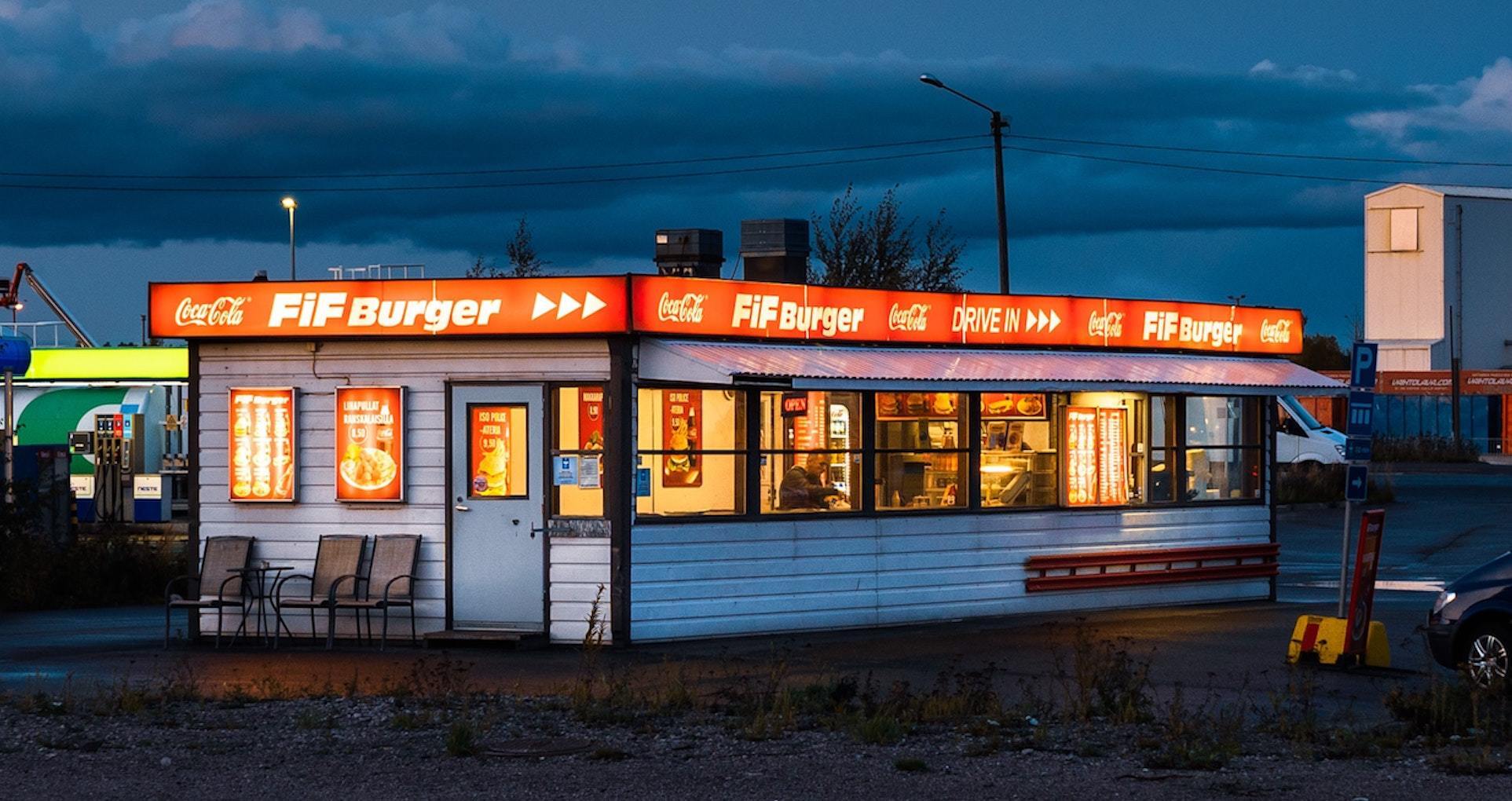
What Is a Quick-Service Restaurant? (+ The Top 50 QSRs)
A quick-service restaurant is built for fast, convenient service. Learn how QSRs work, see the top 50 brands, and explore what it takes to open one.

Author
 RESOURCE
 Opening a Fast Food Restaurant Checklist
So many things go into opening a fast food restaurant. With this free PDF checklist, you'll set your new business up for success.
Get Free DownloadA quick-service restaurant (QSR) prepares and serves food quickly, usually through counter, kiosk, drive-thru, pickup, or digital ordering with limited or no table service. Fast food is the most familiar example, but coffee shops, bakeries, pizzerias, sandwich shops, and other concepts can follow the same model.
Behind that simple guest experience, orders may be arriving from several channels at once. Toast’s QSR POS system brings those orders together with payments and kitchen workflows, helping teams move each transaction from order entry to pickup without managing separate systems.
This guide explains what defines a QSR, how it compares with other restaurant formats, which brands lead the segment, and what it takes to open one.
Key takeaways
A QSR is a limited-service restaurant designed for speed, a model used by fast-food brands, coffee shops, bakeries, pizzerias, and other concepts.
QSRs use streamlined menus, standardized production, and multiple ordering channels to serve high volumes efficiently.
McDonald’s leads QSR Magazine’s latest Top 50 ranking by U.S. systemwide sales.
Opening a QSR requires a focused concept, realistic unit economics, an efficient layout, and repeatable operating systems.
Opening a Fast Casual Restaurant Checklist
So many things go into opening a fast casual restaurant. With this free PDF checklist, you'll set your new business up for success.

What is a QSR?
QSR means “quick-service restaurant.” The term describes a restaurant service model built around speed, convenience, repeatable preparation, and limited interaction between ordering and receiving food.
Within the broader range of restaurant types, QSRs are defined primarily by how they serve customers—not by a particular cuisine or level of food quality. Common characteristics include:
Limited service: Customers generally order and pay before receiving their food.
Fast preparation: Streamlined menus and repeatable processes keep ticket times short.
Multiple ordering channels: Orders may come through a counter, kiosk, app, website, drive-thru, or delivery platform.
Standardized production: Recipes, portions, and kitchen stations are designed for consistency.
High transaction volume: QSRs typically rely on serving many customers efficiently.
Takeout-focused service: Food is usually designed to travel easily, even when dining rooms are available.
Accessible pricing: QSRs often compete on convenience and perceived value, although prices vary by concept.
Quick service vs. fast food, fast casual, and full service
Quick service describes a limited-service operating model, while fast food is its most familiar category. Fast casual uses similar ordering methods but is generally treated as a separate segment with more emphasis on customization, ingredients, or atmosphere.
Restaurant format | How customers order | Table service | Typical experience |
Traditional QSR or fast food | Counter, kiosk, app, or drive-thru | Limited or none | Standardized menu built for speed, convenience, and value |
Fast casual | Counter, kiosk, or digital channel | Usually limited | Greater customization and a more premium dining environment |
Full service | Through a server at the table | Extensive | Hospitality-focused experience with payment after the meal |
These boundaries are not absolute. A fast-casual restaurant may offer a drive-thru, while a QSR may deliver food to customers’ tables after they order at the counter.
The formats also have different technology requirements. POS systems for different restaurant models may prioritize rapid order entry and kitchen routing for QSRs, complex modifiers for fast casual, or table and course management for full service.
Restaurant Metrics Calculator
Use this free calculator to calculate the key restaurant metrics needed to understand the health and success of your business.
Types of quick-service restaurants
Quick-service restaurants can be organized around several ordering and fulfillment methods. These categories often overlap within the same restaurant.
Counter-service restaurants: Customers order and pay at a counter before collecting their food or having it brought to the table. This is common in burger shops, sandwich shops, pizzerias, bakeries, and fast-casual restaurants.
Drive-thru restaurants: Customers order, pay, and receive food without leaving their vehicles. A connected drive-thru system can coordinate order confirmation, kitchen tickets, vehicle sequencing, and speed-of-service data.
Takeout- and delivery-focused restaurants: These concepts prioritize packaging, pickup, and delivery rather than dining-room service. Toast Online Ordering sends direct pickup and delivery orders into the restaurant’s POS and kitchen workflows, reducing the need for employees to reenter them manually.
Kiosk-forward restaurants: Customers place and pay for orders independently, allowing employees to concentrate on preparation and fulfillment. A self-ordering kiosk can guide customers through modifiers and optional additions before sending the completed order directly into the POS and kitchen.
Coffee, bakery, and snack concepts: Coffee shops, bakeries, smoothie shops, and dessert businesses can use the QSR model to serve a focused selection of drinks, baked goods, or snacks quickly.
Advantages and challenges of the QSR model
A QSR can serve a large number of customers through a relatively streamlined service model, but delivering that simplicity requires disciplined operations.
Potential advantages | Common challenges |
High order volume | Intense competition |
Repeatable operating processes | Pressure to balance speed and accuracy |
Multiple ordering channels | Changing food and labor costs |
Easier consistency across locations | Dependence on reliable technology |
Potential for drive-thru, takeout, and delivery sales | Maintaining value as menu prices increase |
Streamlined menus and training | Coordinating several order channels during peak periods |
The kitchen must organize counter, kiosk, online, delivery, and drive-thru orders without losing modifiers or preparing tickets out of sequence. A kitchen display system consolidates incoming orders, routes items to the appropriate stations, and helps employees monitor fulfillment times.
The top 50 quick-service restaurants
Here are the top 50 quick-service restaurants in the United States by U.S. systemwide sales, according to QSR Magazine's QSR 50 report. Rankings below reflect the most recently available data.
McDonald's
Starbucks
Chick-fil-A
Taco Bell
Wendy's
Dunkin'
Chipotle Mexican Grill
Burger King
Subway
Domino's
Panda Express
Panera Bread
Popeyes
Pizza Hut
Sonic Drive-In
Raising Cane's
Dairy Queen
KFC
Wingstop
Jack in the Box
Arby's
Whataburger
Papa Johns
Little Caesars
Jersey Mike's Subs
Jimmy John's
Five Guys
Culver's
Krispy Kreme
Zaxby's
Hardee's
Carl's Jr.
Tropical Smoothie Cafe
Bojangles
El Pollo Loco
Dutch Bros Coffee
Firehouse Subs
Church's Texas Chicken
QDOBA Mexican Eats
Marco's Pizza
Auntie Anne's
Del Taco
Cinnabon
Tim Hortons
Papa Murphy's
Checkers / Rally's
Baskin-Robbins
Moe's Southwest Grill
Smoothie King
Habit Burger & Grill
What does it take to open a quick-service restaurant?
Opening a restaurant takes a focused concept, sufficient startup capital, an efficient location and layout, a repeatable menu, a trained team, and systems capable of handling orders quickly and accurately.
1. Decide between a franchise and an independent concept
The first major decision is whether to develop an original restaurant or open a location under an established brand.
Option | Potential advantages | Important considerations |
Franchise | Established brand, operating model, training, and supplier relationships | Franchise fees, royalties, contractual requirements, and less operating freedom |
Independent | Greater control over the menu, brand, suppliers, and guest experience | The operator must build demand, procedures, training, and vendor relationships independently |
Prospective franchisees should review the franchise disclosure document, speak with existing franchisees, and calculate all upfront and ongoing restaurant franchise costs. The advertised franchise fee represents only one part of the total investment.
Operators planning multiple units must also decide how they will maintain consistency as they grow. Toast Multi-Location Management centralizes menus, location-specific pricing, reporting, kitchen configurations, and operational settings across locations.
2. Create a focused, repeatable concept
Define the target customer, cuisine, value proposition, and reason guests will choose the restaurant. A QSR menu should offer enough variety to attract customers without creating unnecessary ingredients, equipment, training, or preparation steps. Test each item for:
Preparation time
Ingredient and packaging costs
Required equipment and labor
Consistency across employees and shifts
Ability to travel through pickup or delivery
Contribution to the restaurant’s value proposition
Menu engineering compares each item’s popularity and profitability, helping operators identify dishes that complicate production without contributing enough sales or margin.
Current restaurant prices can provide additional context. In June 2026, the Toast Menu Price Monitor recorded median prices of $14.71 for burgers, $13.58 for burritos, and $3.75 for hot coffee. These figures include all restaurant types using Toast and are not QSR-only averages.
Operators also need to track what each item costs as supplier prices change. xtraCHEF by Toast connects invoices, ingredient costs, inventory, recipes, and POS sales data, making it easier to see how purchasing changes affect menu margins.
3. Match the location to the service model
A QSR location must support the ways customers will order and receive food. A drive-thru concept has different property requirements from a walk-up coffee shop or delivery-focused kitchen. Be sure to think about:
Visibility and accessibility
Rent and total occupancy costs
Drive-thru and signage restrictions
Vehicle and pedestrian traffic
Kitchen ventilation and utility capacity
Space for customer lines and order pickup
Delivery and supplier access
Nearby customers and competitors
A lower-rent property is not necessarily a better choice if it restricts the ordering channels responsible for projected sales. The neighborhood and individual site should be evaluated using the same considerations applied when selecting restaurant real estate.
Local performance data can also help operators test their assumptions. Toast Benchmarking provides comparisons for item prices, sales volume, hourly traffic, and market trends among qualifying restaurant groups.
4. Design the restaurant for throughput
QSR design should follow the path of an order. Map how the order enters the restaurant, reaches the kitchen, moves through preparation and assembly, receives a quality check, and reaches the customer. Plan for:
Counter, kiosk, digital, and drive-thru orders
Clear kitchen-station responsibilities
Accurate routing of items and modifiers
Space for packaging and completed orders
Separate pickup points where appropriate
Food-safety and cleaning procedures
Equipment maintenance and backup processes
An efficient restaurant kitchen arranges storage, preparation, cooking, assembly, and handoff areas around the actual movement of food and employees.
The layout should work during the busiest expected period, not only during average demand. The goal is to serve more orders without creating confusion, sacrificing accuracy, or overwhelming the team.
5. Understand startup costs and unit economics
Startup expenses may include the lease deposit, construction, equipment, technology, licenses, professional fees, opening inventory, hiring, training, marketing, and working capital. Franchise operators may also owe initial fees and other pre-opening expenses required by the franchisor.
Understanding restaurant unit economics helps operators estimate how much each order contributes toward fixed expenses and startup costs. Financial projections should include:
Average check
Daily transaction volume
Food and packaging costs
Labor costs
Occupancy and overhead
Franchise royalties, when applicable
Break-even sales
Cash needed before the restaurant becomes self-supporting
A restaurant metrics calculator can help calculate break-even point, overhead, food costs, labor costs, and other financial measures.
6. Build a team around repeatable systems
A QSR needs enough employees to cover ordering, preparation, assembly, handoff, cleaning, and management during expected demand.
Recipes, portions, opening procedures, closing procedures, food-safety standards, and service expectations should be documented so the restaurant does not depend entirely on one experienced employee.
Toast Payroll and Team Management connects employee onboarding, time entries, overtime, payroll, and labor records with the POS. Sling by Toast connects scheduling with sales forecasts and labor data while supporting shift swaps, time-off requests, overtime alerts, and employee communication.
Together, these tools can support a restaurant employee schedule that matches labor coverage with expected demand.
7. Prepare to measure and improve the operation
Use practice services or a soft opening to test ticket times, order accuracy, staffing coverage, equipment, and kitchen capacity before serving full demand. After opening, monitor:
Transactions per hour
Average check
Food and packaging costs
Labor costs
Ticket times
Order accuracy
Sales by ordering channel
Repeat visits
Toast IQ analyzes connected sales, labor, menu, guest, and operating data, helping operators investigate performance trends and identify potential improvements.
Managers can use Toast Now to view live sales, employee activity, and stock status from a mobile device. They can also slow or pause online ordering and third-party delivery channels when the kitchen reaches capacity.
Build a QSR around speed and consistency
Opening a QSR is achievable with a focused concept and an operation built for speed, accuracy, and consistency. The challenge is maintaining those standards as order volume grows.
Toast’s quick-service restaurant POS system gives operators one place to manage service and monitor performance, helping them address bottlenecks and grow with greater control.
Restaurant Operations Manual Template
Use this free template to easily outline all of your operating procedures and make day-to-day operations as consistent as possible.
FAQ
What does QSR stand for?
QSR stands for “quick-service restaurant,” a restaurant designed to serve food quickly with limited or no table service.
What is the difference between QSR and fast food?
Quick service describes the limited-service operating model, while fast food is its most familiar traditional category and does not encompass every QSR concept.
How much does it cost to open a QSR?
Opening costs vary widely based on franchise fees, location, construction, equipment, technology, permits, inventory, hiring, and working capital, so operators need a concept-specific budget.
Are QSR menu prices still rising in 2026?
Yes—the Toast Menu Price Monitor found that median prices rose year over year in June 2026 for common QSR items including burgers, burritos, wings, and hot coffee, although the data covers all restaurant types using Toast.
Is this article helpful?
DISCLAIMER: This information is provided for general informational purposes only, and publication does not constitute an endorsement. Toast does not warrant the accuracy or completeness of any information, text, graphics, links, or other items contained within this content. Toast does not guarantee you will achieve any specific results if you follow any advice herein. It may be advisable for you to consult with a professional such as a lawyer, accountant, or business advisor for advice specific to your situation.
 Trending


Subscribe to On the line
Sign up to get industry intel, advice, tools, and honest takes from real people tackling their restaurants' greatest challenges.
By submitting, you agree to receive marketing emails from Toast. We’ll handle your info according to our privacy statement. Additional information for California residents available here.