
Wholesale vs. Retail: 6 Key Differences Explained Simply
Understanding wholesale vs. retail helps you price smarter and grow strategically. Learn the key differences and how they work together.
Author
 RESOURCE
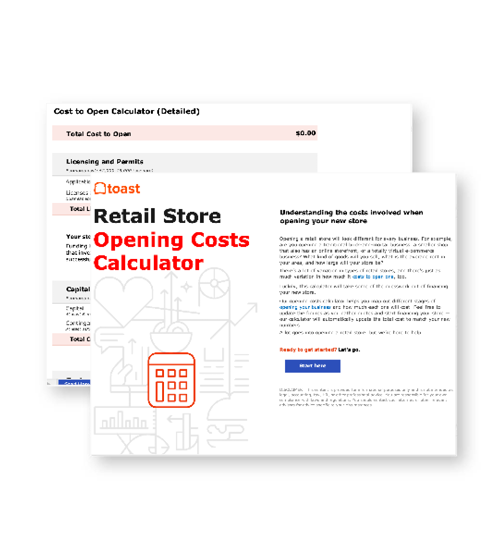
 Retail Store Opening Costs Calculator
This free calculator lays out some of the fundamental financial costs of opening a retail store, so you can start planning and bring your dream business to life.
Get Free DownloadWhether you run a retail store or restaurant, you’re operating somewhere within the wholesale–retail ecosystem. Wholesale and retail are often discussed as opposites, but they serve complementary roles.
Wholesalers supply goods in bulk to businesses, while retailers sell those goods directly to consumers. Together, they form the system that moves products from producers to end customers.
In this guide, we’ll break down how wholesale and retail differ across key business areas, and how they work together.
Key takeaways
Wholesale and retail serve different roles in the supply chain, but they work together to move products from producers to end customers.
Wholesale focuses on selling in bulk to businesses, while retail sells directly to individual consumers.
Pricing, sales volume, and profit models differ significantly between wholesale and retail operations.
Wholesale businesses rely on long-term relationships and volume, while retail businesses prioritize branding and customer experience.
Many restaurants and retailers operate within both models, using hybrid strategies to diversify revenue and support growth.
Retail Store Opening and Closing Checklist
Use this free PDF checklist to set your staff up for success, every shift.

What is wholesale?
Wholesale is a business model in which products are sold in large quantities to other businesses rather than directly to consumers.
Wholesale transactions are business-to-business (B2B). Pricing is typically structured around volume, meaning the more a buyer orders, the lower the cost per unit. Because of this, wholesale margins are usually thinner than retail margins—but revenue is driven by higher order sizes and repeat business relationships. Blake DeWitt, a cost-analysis expert, explains:
“Costco and other warehouse-style retailers look simple at the front end, but behind the scenes, they run lean wholesale machines… Warehouse-style shopping, by volume and quantity, is set up to make you feel like you are really stretching your buck with every swipe of the card. It is true for some items. It is not true for others.”
This highlights an important principle: wholesale economics reward scale and disciplined purchasing. Without careful cost analysis, perceived bulk savings can quickly disappear.
Examples of wholesale
Food distributor selling cases of produce or meat to restaurants
Beverage company supplying kegs or bottled drinks to bars and cafés
Clothing manufacturer selling inventory to boutiques
Specialty food producer selling packaged goods to grocery stores
What is retail?
Retail is a business model in which products or services are sold directly to the end consumer. Unlike wholesale, which focuses on bulk transactions between businesses, retail involves individual sales to customers for personal use.
Retail transactions are business-to-consumer (B2C). Products are typically sold in smaller quantities at a higher per-unit price than wholesale. That higher pricing helps cover operating expenses like staffing, rent, marketing, and customer experience—while generating profit on each sale.
Retail markups can vary significantly depending on the product category and economic conditions. For example, Mashed reported that in 2013 grocers often charged around an 18% markup on produce to cover costs. In more recent years, markups on fruits and vegetables have reportedly ranged between 50% and 75%.
Likewise, a 2007 study found the average markup on cereal to be 28%. Today, name-brand cereals — such as Kellogg’s Corn Flakes — carry markups as high as 44%.
Examples of retail
Restaurant selling meals to guests
Café selling coffee and pastries
Boutique selling clothing to shoppers
Grocery store selling packaged food to households
Key differences between wholesale and retail
While wholesale and retail are both essential parts of the supply chain, they operate very differently. Here’s how they compare across key business areas.
1. Customer type
Wholesale: Sells primarily to other businesses, such as restaurants, grocery stores, boutiques, or distributors.
Retail: Sells directly to individual consumers who purchase products or services for personal use.
2. Sales volume
Wholesale: Focuses on high-volume, bulk orders. Transactions often involve large quantities at once.
Retail: Handles lower-volume, individual transactions. Customers typically buy one or a few items at a time.
3. Pricing structure
Wholesale: Offers lower per-unit pricing because products are sold in bulk. Profit margins per item are usually thinner.
Retail: Charges higher per-unit prices. Margins are typically stronger to account for operating costs like staffing, rent, and marketing.
4. Marketing approach
Wholesale: Relationship-driven and focused on long-term partnerships. Sales cycles can be longer and may involve negotiation, contracts, or recurring agreements.
Retail: Brand-driven and consumer-focused. Marketing emphasizes promotions, loyalty programs, merchandising, and customer engagement.
5. Customer experience
Wholesale: Prioritizes efficiency, reliability, and consistent fulfillment. The experience centers around order accuracy, delivery timelines, and supply dependability.
Retail: Focuses on atmosphere, service, and presentation. For restaurants, this includes hospitality and ambiance; for retailers, it includes store layout, displays, and customer service.
6. Profit model
Wholesale: Revenue is driven by volume. Lower margins are offset by large and repeat orders.
Retail: Revenue is driven by margin. Higher per-unit profits make smaller transactions financially viable.
From bulk to basket
Most restaurants and retailers operate as retailers, selling directly to customers, while relying on wholesalers to supply the products that make those sales possible.
At the same time, many businesses expand beyond just one model. A bakery might sell pastries in its storefront while also wholesaling to local cafés. A specialty food brand might begin at farmers markets before expanding into wholesale distribution with grocery stores.
Whether you’re serving guests directly or supplying other businesses behind the scenes, both models play a critical role in how products move from production to the final customer.
Purchase Order Template
Use this template to create standardized purchase orders for requesting goods or services from vendors.
FAQ
What’s the main difference between wholesale and retail?
The main difference between wholesale and retail is who the business sells to. Wholesale businesses sell products in bulk to other businesses, while retail businesses sell individual products directly to consumers.
Are wholesale profit margins higher than retail?
Wholesale transactions often involve lower profit margins per unit but higher sales volume. Retail typically offers higher margins per item but may involve higher operating costs, such as storefront expenses and marketing.
Can a business operate both wholesale and retail channels?
Yes, many businesses operate both wholesale and retail channels. This approach can diversify revenue streams, but it requires clear pricing strategies and operational systems to manage both effectively.
Which model requires more startup capital?
Retail businesses often require more upfront capital for storefronts, inventory displays, staffing, and marketing. Wholesale businesses may require larger inventory purchases but typically have lower consumer-facing expenses.
How do I decide between wholesale and retail for my business?
The right model depends on your target market, available capital, operational capacity, and long-term goals. Consider whether you prefer selling in high volume to businesses or building direct relationships with customers.

Is this article helpful?
DISCLAIMER: This information is provided for general informational purposes only, and publication does not constitute an endorsement. Toast does not warrant the accuracy or completeness of any information, text, graphics, links, or other items contained within this content. Toast does not guarantee you will achieve any specific results if you follow any advice herein. It may be advisable for you to consult with a professional such as a lawyer, accountant, or business advisor for advice specific to your situation.
 Trending

Subscribe to On the line
Sign up to get industry intel, advice, tools, and honest takes from real people tackling their restaurants' greatest challenges.
By submitting, you agree to receive marketing emails from Toast. We’ll handle your info according to our privacy statement. Additional information for California residents available here.