
Retail Dictionary: 67 Key Terms Every Retailer Should Know
Master terminology with this comprehensive retail dictionary of essential terms. Learn key retail dictionary terms across inventory, pricing, tech, and more.
Author

 RESOURCE
 Press Kit Template
Use this customizable template to craft a polished one-pager that showcases your business’s key details. It condenses essential information into a concise, visually appealing format that’s quick to read and easy to share.
Get Free DownloadWhether you’re opening your first store or onboarding new staff, retail runs on a shared vocabulary. Every brand has its own internal language — for example, Trader Joe’s famously uses nautical titles like crew member, mate, and captain, and labels limited-run items as opportunity buys.
But while individual retailers create their own culture and jargon, the industry as a whole relies on a core set of terms that every team needs to understand. Use this retail dictionary as a quick, easy reference for the foundational concepts that keep modern retail operations running smoothly.
Retail Store Opening and Closing Checklist
Use this free PDF checklist to set your staff up for success, every shift.

Core retail operations terms
Assortment
The mix of products you offer, including categories, variations, and depth of selection. A balanced assortment meets customer demand without overstocking.
Conversion rate
The percentage of shoppers who make a purchase out of everyone who enters the store — a major indicator of sales performance.
Endcap
The display located at the end of an aisle. Endcaps are high-impact spaces often used for promotions, seasonal items, or best sellers.
Front-of-house / back-of-house (retail context)
Front-of-house includes customer-facing spaces like the sales floor and checkout. Back-of-house covers storage, receiving, and employee areas.
Inventory turnover
How quickly you sell through your inventory within a given period. High turnover usually signals healthy sales and efficient ordering.
Merchandising
The strategies used to present products in a way that drives sales — from displays and signage to product placement and promotions.
Planogram
A visual map that shows where products should be placed on shelves or displays to maximize visibility and sales.
POS (point of sale)
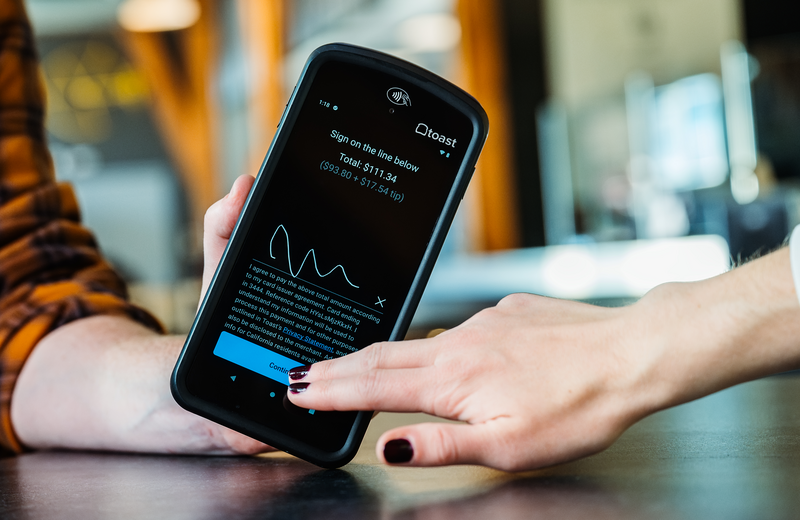
The system where transactions are processed. Modern POS platforms also track inventory, sales trends, employee activity, and customer data.
SKU (stock keeping unit)
A unique identifier for each product or variation in your store. SKUs help track inventory, sales performance, and ordering.
Shrink / shrinkage
Inventory loss caused by theft, damage, spoilage, or administrative errors. Reducing shrink is key to protecting profit margins.
Inventory and ordering terms
Cost of goods sold (COGS)
The direct cost of the products you sell. Reducing COGS through smarter purchasing can significantly improve margins.
Cycle count
A method of checking small portions of inventory regularly instead of doing one large annual count.
Dead stock
Products that aren’t selling and sit in inventory too long, tying up storage space and capital.
Lead time
The time between placing an order and receiving it. Longer lead times require more advance planning.
On-hand inventory
The total amount of product physically in your store at any given time.
Par levels
The minimum quantity you want to keep in stock to meet customer demand. When inventory drops below par, it’s time to reorder.
Reorder point (ROP)
The inventory level that triggers a new order, based on demand, lead time, and safety stock.
Safety stock
Extra inventory kept to prevent stockouts caused by demand spikes or supplier delays.
Seasonal inventory
Products that peak during certain seasons or holidays. Managing seasonal inventory well helps prevent overstocking or waste.
Vendor / supplier
The business you purchase products from. Strong vendor relationships help improve pricing, reliability, and service.
Pricing and profitability terms
Asset protection (AP)
The team or processes responsible for safeguarding inventory, cash, equipment, and people.
Break-even point
The point at which sales cover all costs and the business starts generating profit. Essential for planning promotions and pricing strategies.
Bundling
Selling multiple products together as a package, often at a slight discount, to increase average transaction size.
Cash variance
The difference between how much money should be in the register and how much is actually counted at the end of a shift.
Discounting / promotions
Temporary price reductions designed to drive traffic, clear inventory, or introduce new products.
Gross profit / gross margin
Gross profit is revenue minus the cost of goods sold. Gross margin expresses that profit as a percentage of revenue — a key indicator of financial health.
Loss leader
A product sold at little or no profit to attract customers, with the goal of increasing overall sales.
Markup / margin
Markup is how much you increase the cost of a product before selling it. Margin is the percentage of the final sale that becomes profit. They’re related but not interchangeable.
MSRP (manufacturer’s suggested retail price)
The price a manufacturer recommends retailers charge. Stores may follow it, go higher, or go lower based on strategy.
Price elasticity
How sensitive customers are to price changes. Products with high elasticity see big shifts in demand when prices change.
Customer experience and service terms
Customer journey
The full path a customer takes — from discovering your store to purchasing, returning, or recommending it.
CX (customer experience)
The overall impression customers have of your store, shaped by service, layout, speed, and ease of shopping.
Dwell time
How long customers spend inside the store. Longer dwell time often increases the likelihood of purchases.
Foot traffic
The number of customers entering your store — a key driver of sales opportunities.
Loyalty program
A rewards system that encourages repeat visits through points, discounts, or perks for frequent shoppers.
Omnichannel / multichannel
Multichannel uses several independent sales channels (in-store, online, social). Omnichannel integrates them so customers have a seamless experience across all touchpoints.
Queue management
The strategies used to reduce wait times and keep checkout lines flowing smoothly.
Upselling / cross-selling
Upselling encourages customers to choose a higher-priced option; cross-selling recommends complementary products to increase total purchase value.
Marketing and merchandising terms
Brand standards
Guidelines that ensure consistent look, feel, and messaging across signage, displays, uniforms, and customer interactions.
POP (point of purchase) displays
Signage or product stands placed near checkout areas to promote impulse buys or featured items.
Product placement
Strategically positioning items in the store to drive visibility, impulse purchases, or higher conversion.
Seasonal merchandising
Rotating products, displays, and themes based on holidays, weather, or cultural moments to stay relevant and boost sales.
Store layouts (grid, free-flow, loop, etc.)
Common floor plan designs that shape customer movement — such as grid layouts for efficiency, free-flow for browsing, or loop layouts that guide shoppers through the entire space.
Visual merchandising
The practice of arranging products, displays, and décor to attract customers and increase sales.
Store management and staffing terms
Cash handling procedures
The rules and steps for accepting payments, counting tills, managing refunds, and reconciling registers securely and accurately.
Compliance
Following laws, company policies, safety standards, and industry regulations across all store operations.
Floor set
The process of resetting merchandise and displays according to a new planogram or seasonal direction.
Labor forecasting
Planning staffing levels based on sales trends, foot traffic patterns, and expected demand to ensure proper coverage.
Onboarding
The process of educating new hires on store procedures, service expectations, and product knowledge.
Shift lead
A team member who oversees store operations during their shift, assisting with customer service, delegation, and problem-solving.
SOP (standard operating procedure)
A written guideline that explains how tasks should be completed to ensure consistency and compliance.
Store manager / assistant manager
The leaders responsible for daily operations, staffing, inventory oversight, sales performance, and maintaining store standards.
Technology and retail systems terms
Barcode / QR code
Barcodes store basic product data in a single line of stripes, while QR codes hold more complex information and can be scanned in multiple directions.
E-commerce platform
The online system where customers browse, buy, and interact with a retailer’s digital store.
Inventory management system
A tool that monitors stock levels, tracks movement, and helps automate ordering and replenishment.
Mobile payments
Payment methods made using smartphones or digital wallets, like Apple Pay or Google Pay.
Order management system (OMS)
Software that handles order routing, fulfillment, shipping, and returns across multiple channels.
POS (point of sale) system
The software and hardware used to process sales, manage transactions, and track customer purchases.
RFID
Radio-frequency identification technology that uses tags and scanners to track products more efficiently than barcodes.
Financial and reporting terms
Daily sales report (DSR)
A summary of each day’s revenue, transactions, labor, and key metrics to help managers monitor performance.
Forecasting
Using past sales, trends, and seasonality to predict future performance and plan inventory or staffing needs.
Gross profit
The money left after subtracting the cost of goods sold (COGS) from net sales; a key measure of product profitability.
KPI (key performance indicator)
A measurable metric used to track progress, such as conversion rate, average transaction value, or inventory turnover.
Net sales
Revenue after subtracting returns, discounts, and allowances — a clearer picture of actual income.
Operating costs
The expenses required to run the business day-to-day, such as rent, utilities, payroll, and supplies.
Revenue
The total amount of money a store earns from sales before any deductions.
ROI (return on investment)
A calculation showing how much profit a store earns compared to the cost of an investment, such as marketing or equipment.
Ready to speak retail
Knowing key terms around inventory, merchandising, staffing, tech, and reporting helps teams solve problems faster and create a smoother experience for customers. With these definitions under your belt, you’re ready to make more informed decisions — and explore tools that simplify operations and help your business grow.
Retail Marketing Plan
Create a marketing plan that'll drive repeat business with this customizable marketing playbook template and interactive calendar.
FAQ
What is the difference between a SKU and a UPC?
A SKU is an internal product identifier created by the retailer for tracking inventory and sales. A UPC is a standardized barcode used across the entire supply chain so manufacturers, distributors, and retailers can identify the product universally.
How do I calculate inventory turnover?
Inventory turnover is calculated by dividing cost of goods sold (COGS) by your average inventory for a given period. The result shows how many times you sold through and replenished stock — a key indicator of inventory efficiency.
What’s the difference between omnichannel and multichannel retail?
Multichannel means you sell through multiple individual channels (like in-store, online, or social). Omnichannel connects those channels so customers can move between them seamlessly — for example, buying online and returning in-store.
Why is gross margin important?
Gross margin shows how much profit you make after covering the cost of goods sold. It’s one of the clearest indicators of financial health and helps you evaluate pricing, promotions, and product mix.
How can retailers reduce dead stock?
Retailers can cut down on dead stock by improving demand forecasting, tightening par levels, running targeted promotions, and reviewing assortments regularly to prevent overbuying.
What makes a POS system “cloud-based”?
A cloud-based POS stores data online rather than on a single device. This allows real-time syncing across locations, remote access, automatic updates, and stronger security — all essential for modern retail operations.
Is this article helpful?
DISCLAIMER: This information is provided for general informational purposes only, and publication does not constitute an endorsement. Toast does not warrant the accuracy or completeness of any information, text, graphics, links, or other items contained within this content. Toast does not guarantee you will achieve any specific results if you follow any advice herein. It may be advisable for you to consult with a professional such as a lawyer, accountant, or business advisor for advice specific to your situation.
 Trending

Subscribe to On the line
Sign up to get industry intel, advice, tools, and honest takes from real people tackling their restaurants' greatest challenges.
By submitting, you agree to receive marketing emails from Toast. We’ll handle your info according to our privacy statement. Additional information for California residents available here.