
Wholesale vs. Retail Price: What's the Difference & Why It Matters
Getting pricing right is key to running a profitable store. Learn the difference between wholesale vs. retail pricing and use them to your advantage.
Author
 RESOURCE
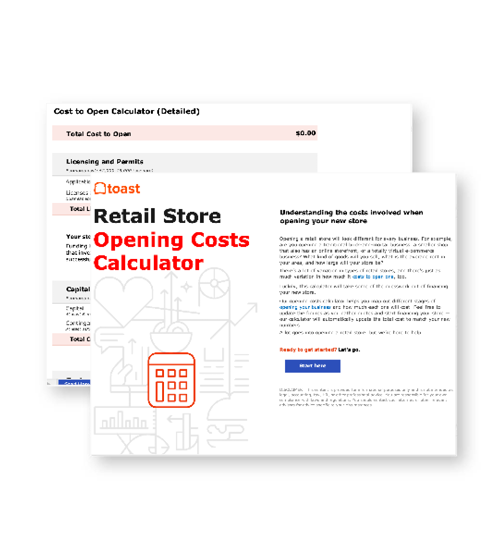
 Retail Store Opening Costs Calculator
This free calculator lays out some of the fundamental financial costs of opening a retail store, so you can start planning and bring your dream business to life.
Get Free DownloadBehind every item on your shelf is a chain of costs and decisions—from how much you paid for it to how much you can sell it for. That’s where understanding the difference between wholesale and retail pricing comes in.
Whether you're just getting started or taking a closer look at your margins, knowing how these two pricing structures work—and how they influence each other—is essential. Let’s break down the difference, and how to use both to your advantage.
Key takeaways
Wholesale and retail pricing serve different roles in the supply chain—one focuses on sourcing costs, the other on consumer-facing value.
Markup and margin aren’t the same thing—and knowing the difference helps you set more strategic prices.
Wholesale costs shape everything from inventory planning to cash flow, making margin awareness essential for profitability.
Retail pricing reflects more than cost—it conveys brand value, customer expectations, and market positioning.
Smart pricing relies on tools and terms—like POS data, supplier agreements, MAP policies, and flexible strategies that evolve over time.
What is wholesale pricing?
Wholesale pricing is the amount a retailer pays to purchase products from a supplier or manufacturer—before adding any markup. These prices are typically lower than retail prices because goods are sold in larger quantities, allowing suppliers to offer discounts in exchange for bulk purchases.
Wholesale pricing is most commonly used in B2B transactions, including retailers buying inventory, distributors supplying goods, and resellers sourcing products to sell under their own brand.
Retail Marketing Plan
Create a marketing plan that'll drive repeat business with this customizable marketing playbook template and interactive calendar.

How to calculate wholesale pricing
There’s no single formula for wholesale pricing, but a basic version looks like this:
Wholesale Price = Cost of Goods + Supplier Margin
The cost of goods includes raw materials, production, and labor. The supplier then adds a margin to make a profit before selling the product to you.
Depending on your agreement, your wholesale price may also include shipping, taxes, or handling fees—so it’s important to clarify terms with your supplier upfront.
What is retail pricing?
Retail pricing is the final price a customer pays for a product—whether it’s in-store, online, or through a mobile checkout. This price is typically higher than the wholesale cost because it includes a markup designed to cover overhead expenses and generate profit.
Retail pricing doesn’t just reflect what something costs—it also reflects your brand. It’s shaped by a combination of factors: customer demand, perceived value, competitor pricing, and your overall market positioning. A boutique clothing store, for instance, might charge a premium to reflect exclusivity, while a discount store might prioritize volume and affordability.
Markup vs. margin
When setting retail prices, it’s important to understand the difference between markup and margin—two related but distinct ways of thinking about profit:
Markup is the amount added to your wholesale cost.
Example: If something costs $50 and you apply a 50% markup, the retail price is $75.
Margin is the percentage of the final selling price that’s profit.
Example: If you want a 50% margin on a $100 product, your cost must be $50.
Knowing the difference helps you price products more strategically and communicate more clearly with vendors, buyers, or financial advisors.
Examples of retail pricing
Journey’s: A footwear retailer that buys wholesale from brands like Adidas and Converse, then marks them up for resale.
Nike outlet stores: Sell products at prices similar to standard retail. However, because they source from excess inventory or use lower-cost manufacturing, they can offer deep discounts while still maintaining strong margins.
How to calculate retail pricing
A simple formula for calculating retail price using markup is:
Retail Price = Wholesale Price + (Wholesale Price × Markup %)
If you're aiming for a specific margin, you can use this formula instead:
Retail Price = Wholesale Price ÷ (1 - Desired Margin %)
Choosing between markup and margin depends on how you plan your pricing strategy—but understanding both gives you greater control over your profitability.
Many retailers also use simple pricing shortcuts. One of the most common is keystone pricing, where the retail price is set at double the wholesale price, or a 100% markup. As noted by researchers at the University of Nebraska’s Institute of Agriculture and Natural Resources:
“Retail price is typically two times the wholesale price, or a 100 percent markup. The occurrence is so common that the term Keystone Pricing has been branded to describe it (though high-end retailers, and others, may use different markup values). Generally, the retail price should reflect the value of a product to customers, and should be set accordingly.”
Keystone pricing can be a helpful starting point—especially for low-overhead businesses—but it isn’t always ideal. If your expenses are higher, or your market is highly competitive, you may need to adjust your markup to maintain both profitability and customer appeal.
Wholesale vs. retail pricing: What’s the difference?
While wholesale and retail pricing are closely linked, they serve entirely different purposes in the supply chain. Understanding the distinction is key to making informed decisions about sourcing, markup, and overall pricing strategy. Here are the key differences:
Price point: Wholesale prices are lower because they reflect the base cost of the product plus the supplier’s margin. Retail prices include additional markup to cover overhead and profit.
Buyer type: Wholesale pricing is used in B2B transactions, where businesses purchase inventory. Retail pricing is aimed at end consumers, who are buying a finished product for personal use.
Volume: Wholesale typically involves bulk purchases—often with minimum order quantities—while retail pricing applies to individual or small-quantity sales.
Strategy: Wholesale pricing focuses on covering production costs and supplier profit. Retail pricing is shaped by customer-facing factors like brand positioning, perceived value, and competitive differentiation.
Why the difference matters
Knowing the difference between wholesale and retail pricing isn’t just a technicality—it’s a foundational part of running a profitable retail business. Whether you’re stocking shelves or building an online store, they shape how you price, plan, and grow. Here’s why it matters:
Informs sourcing and pricing decisions: Understanding your wholesale costs helps you set retail prices that maintain healthy margins without overpricing for your target market.
Affects profitability and cash flow: Misjudging the gap between what you pay and what you charge can quickly eat into your profits. Clear pricing structures help you manage inventory levels, restocking timelines, and available capital.
Strengthens supplier negotiations: When you understand how wholesale pricing works, you’re better equipped to negotiate favorable supplier terms, evaluate volume discounts, and maintain legal compliance.
Beyond pricing mechanics, wholesalers can influence final sale prices by working with retailers on targeted promotions. These promotions—like holiday discounts or BOGO deals—can be planned collaboratively to drive sales while protecting both parties’ margins. Blakeley McShane, a marketing professor at Northwestern University, explained:
“If wholesalers want to affect the price consumers pay, they might want to consider attempting to influence promoted prices rather than regular prices… Wholesalers think a lot about what retailers are going to do in response to their price changes… Arranging offers like these takes the guesswork out of it.”
Retail Store Opening and Closing Checklist
Use this free PDF checklist to set your staff up for success, every shift.
Tips for managing wholesale and retail pricing
Balancing wholesale and retail pricing can feel like a moving target—but with the right approach, you can protect your margins while staying competitive. Here are some tips to keep your pricing strategy on track:
Maintain healthy margins without overpricing: Know your ideal profit margin and review it regularly. High markups might cover costs, but if they drive customers away, you lose long-term revenue.
Understand supplier costs, shipping, and terms: Don’t stop at the sticker price—factor in shipping fees, payment terms, and minimum order quantities. These extra costs can impact your true wholesale price and overall margin.
Adjust for in-store vs. online costs: Brick-and-mortar shops face expenses like rent and staffing, while online stores must account for platform fees, fulfillment, and shipping.
Use POS and inventory tools to track profitability: Leverage your point-of-sale system to monitor margins, top-performing products, and cost fluctuations over time.
Know your MAP policies and MSRP guidelines: Some suppliers set Minimum Advertised Pricing (MAP) rules that limit how low you can promote an item. Others provide a Manufacturer’s Suggested Retail Price (MSRP) to help standardize pricing across sellers. While MAP is typically enforceable, MSRP is usually optional.
Remember, consistent review and small pricing adjustments over time can make a big impact—especially as costs, competition, and customer behavior evolve.
The price is right (when you know the difference)
Understanding the difference between wholesale and retail pricing forms the foundation for every key decision in your retail business—from sourcing and inventory planning to setting profit margins. Without clear pricing structures, it’s easy to erode profitability, mismanage cash flow, or fall behind competitors.
But with the right approach—grounded in margin awareness, supplier insight, and smart tools—you can run a financially sound retail store that protects profits and supports long-term growth.


Is this article helpful?
DISCLAIMER: This information is provided for general informational purposes only, and publication does not constitute an endorsement. Toast does not warrant the accuracy or completeness of any information, text, graphics, links, or other items contained within this content. Toast does not guarantee you will achieve any specific results if you follow any advice herein. It may be advisable for you to consult with a professional such as a lawyer, accountant, or business advisor for advice specific to your situation.
 Trending


Subscribe to On the line
Sign up to get industry intel, advice, tools, and honest takes from real people tackling their restaurants' greatest challenges.
By submitting, you agree to receive marketing emails from Toast. We’ll handle your info according to our privacy statement. Additional information for California residents available here.