
8 Retail Industry Procurement Solutions for Smarter Purchasing
Retail industry procurement solutions help control costs and improve purchasing efficiency. Explore tools that support smarter buying decisions.
Author
 RESOURCE
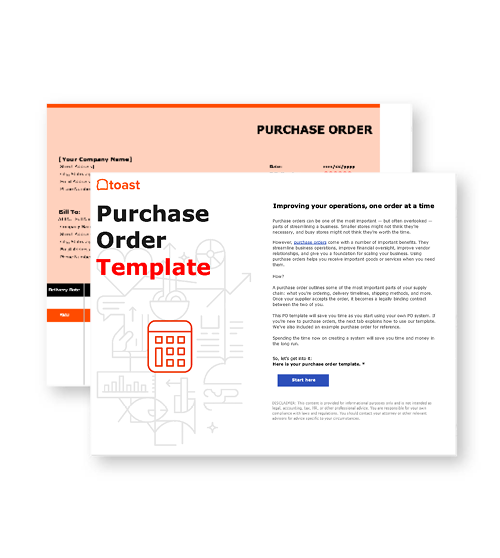
 Purchase Order Template
Use this template to create standardized purchase orders for requesting goods or services from vendors.
Get Free DownloadProcurement plays a critical role in retail operations, influencing everything from product availability to profit margins. As retailers manage more SKUs, suppliers, and sales channels, purchasing decisions become increasingly complex.
Modern procurement solutions are designed to address these challenges by bringing structure, data, and automation into the purchasing process. Increasingly, that includes the use of advanced analytics and AI-driven tools.
Research from Inverto and Boston Consulting Group (BCG) suggests that AI can help retailers reduce procurement costs by up to 15%, highlighting the impact of better data, forecasting, and automation. As Katharina Erfort, Principal at Inverto, notes:
“Our modelling shows that AI can deliver very substantial savings in the retail sector.”
In this guide, we’ll walk through the most common retail industry procurement solutions and how they support better purchasing decisions, stronger supplier relationships, and more scalable retail operations.
Key takeaways
Retail procurement solutions bring structure and visibility to increasingly complex purchasing environments.
Centralized and supplier management tools help reduce inconsistency and strengthen vendor relationships.
Inventory-driven and automated systems align purchasing more closely with real customer demand.
Forecasting and spend analysis tools enable more proactive, strategic procurement decisions.
Integrated platforms connect sales, inventory, and purchasing data to improve efficiency and reduce risk.
Retail Store Opening and Closing Checklist
Use this free PDF checklist to set your staff up for success, every shift.

1. Centralized purchasing systems
Centralized purchasing systems consolidate retail procurement into a single, standardized process. Rather than having individual stores or teams place orders independently, purchasing decisions are managed through one system, creating greater consistency and control across the business.
Reduces price variability: Ordering through the same suppliers at negotiated rates helps maintain consistent pricing across locations.
Prevents duplicate ordering: Centralized workflows eliminate overlapping or unnecessary purchases.
Improves visibility: Teams can track purchasing activity and spending from one place.
Supports operational consistency: Standardized ordering processes reduce errors as businesses grow.
Best for multi-location retailers: Especially effective for brands expanding to new stores or regions.
At scale, centralized procurement also allows purchasing teams to move upstream into commercial planning. Large retailers like Carrefour separate direct (for-resale) and indirect (services, capex, energy) spend so category leaders can influence product specifications, availability planning, and supplier selection—not just pricing.
This structure helps procurement teams anticipate long-lead items, prepare for seasonal demand, and reduce supply risk before contracts are finalized, rather than reacting after issues appear on the shelf.
2. Supplier management solutions
Supplier management solutions give retailers a structured way to organize vendor relationships, pricing agreements, and purchasing terms. Instead of relying on manual tracking or scattered documents, all supplier information is stored and easily accessible.
Centralizes vendor information: Keep contracts, pricing, and contact details in one system.
Maintains approved supplier lists: Ensures teams order from vetted, reliable vendors.
Improves ordering efficiency: Reduces time spent searching for supplier details or verifying terms.
Enhances reliability: Stronger coordination helps suppliers meet delivery and quality expectations.
Protects margins: Consistent purchasing and clearer agreements support better pricing and cost control.
Beyond managing individual vendors, supplier management also enables strategic procurement partnerships that increase scale and resilience. For instance, telecommunications providers Telenor and Vodafone forged a global procurement partnership in 2025.
By aligning their procurement organizations, the partnership aims to leverage joint purchasing power to unlock cost savings, reduce administrative duplication, and strengthen supply chain resilience.
3. Inventory-driven procurement
Inventory-driven procurement uses inventory data to guide purchasing decisions, ensuring products are reordered based on actual sales and stock levels rather than guesswork. By tying procurement closely to inventory performance, retailers can respond more accurately to demand.
Triggers purchasing automatically: Inventory levels signal when it’s time to reorder.
Prevents stockouts: Helps ensure popular items stay available for customers.
Reduces over-ordering: Limits excess inventory that ties up cash and storage space.
Aligns purchasing with sales trends: Orders reflect real customer demand, not estimates.
Improves day-to-day operations: Teams spend less time reacting to inventory issues.
4. Automated reordering tools
Automated reordering tools streamline procurement by replacing manual purchase orders with predefined rules and workflows. Instead of tracking inventory and placing orders by hand, retailers can rely on automation to keep shelves stocked consistently.
Eliminates manual ordering tasks: Reduces time spent creating and managing purchase orders.
Uses reorder points and par levels: Automatically triggers orders when inventory hits set thresholds.
Improves consistency: Ensures products are reordered at the right time, every time.
Reduces human error: Minimizes missed orders and incorrect quantities.
Ideal for fast-moving retail: Especially effective for high-SKU, high-volume, or high-turnover environments.
5. Purchase order (PO) management software
Purchase order management software digitizes the creation, approval, and tracking of purchase orders, replacing paper forms, emails, and spreadsheets. This creates a more transparent and reliable procurement process across retail teams.
Digitizes purchase orders: Standardizes how orders are created and submitted.
Streamlines approvals: Routes POs through clear approval workflows.
Tracks order status: Monitor orders from submission through delivery.
Reduces errors: Minimizes mismatched quantities, pricing mistakes, and lost orders.
Improves accountability: Creates a clear record of who ordered what and when.
6. Demand forecasting and planning tools
Demand forecasting and planning tools help retailers anticipate future inventory needs by analyzing historical sales data and purchasing trends. Instead of reacting to demand, retailers can plan ahead with greater accuracy.
Uses historical sales data: Identifies patterns that inform future purchasing.
Prepares for seasonality: Accounts for predictable demand shifts throughout the year.
Supports promotions and launches: Helps teams stock appropriately for marketing campaigns.
Reduces last-minute ordering: Prevents rushed purchases that increase costs.
Enables smarter procurement decisions: Aligns purchasing with expected demand and business goals.
7. Cost tracking and spend analysis solutions
Cost tracking and spend analysis solutions give retailers visibility into where procurement dollars are going. By organizing spend data across suppliers, categories, and locations, teams can make more informed purchasing decisions and control costs more effectively.
Monitors procurement spend: Track purchasing across categories, vendors, and locations.
Identifies cost leakage: Spot price inconsistencies, duplicate orders, and unnecessary purchases.
Highlights savings opportunities: Reveal areas where renegotiation or consolidation makes sense.
Supports budgeting and planning: Use spend data to forecast future costs more accurately.
Turns data into insights: Helps teams move from reactive ordering to strategic procurement.
8. Integrated POS and procurement platforms
Integrated POS and procurement platforms connect sales, inventory, and purchasing data within a single system. When these tools operate separately, retailers often face delays, data mismatches, and manual workarounds that slow down operations.
Eliminates disconnected systems: Reduces reliance on spreadsheets and manual data entry.
Links procurement to real sales data: Orders are informed by what’s actually selling.
Improves inventory accuracy: Keeps purchasing aligned with real-time stock levels.
Simplifies workflows: Fewer tools mean less switching and faster decision-making.
Supports operational consistency: Creates a smoother experience for retail teams across locations.
During peak retail periods, procurement systems also play a role in operational risk management. Higher transaction volumes, faster ordering cycles, and the rapid onboarding of seasonal staff can strain disconnected tools and manual workflows. As Rex Booth, Chief Information Security Officer at SailPoint, explains:
“Businesses need visibility of who can access what and when – or else an influx of staff coming and going could become a gateway for attackers.”
By consolidating sales, inventory, and purchasing data into a single system, retailers can better manage permissions, track activity, and maintain continuity during high-volume periods.
Smarter buys, fewer sighs
Retail procurement isn’t one-size-fits-all. The right mix of solutions depends on your business size, product complexity, and growth goals. Some retailers may benefit most from centralized purchasing and supplier management, while others need deeper visibility through inventory-driven procurement, forecasting, or integrated systems.
What matters most is building a procurement process that improves visibility, reduces manual work, and supports smarter decision-making over time. As retail operations grow more complex, having the right procurement solutions in place helps teams stay organized, monitor pricing, and respond more effectively to demand.
One Pager Template
Use this easy-to-edit template to create a polished one-pager that highlights the most important details about your business.
FAQ
What is the difference between procurement and purchasing in retail?
Procurement focuses on the full strategy behind sourcing goods and services, including supplier selection, contracts, and cost control, while purchasing is the transactional act of placing and receiving orders.
How much can retailers save with procurement automation?
Procurement automation helps retailers reduce costs by minimizing manual errors, improving supplier pricing consistency, and enabling more informed, data-driven purchasing decisions.
What size retail business benefits from procurement solutions?
Procurement solutions can benefit retailers of all sizes, from small businesses looking to streamline ordering to multi-location brands managing complex supplier networks.
How long does procurement software implementation take?
Implementation timelines vary by system complexity and business size, but many modern procurement tools are designed to roll out in phases to minimize disruption.
Can procurement solutions integrate with existing retail systems?
Most procurement solutions are built to integrate with POS, inventory, accounting, and ERP systems to create a more connected purchasing workflow.
What training is required for procurement software adoption?
Training typically focuses on core workflows like ordering, approvals, and reporting, with many platforms offering intuitive interfaces and guided onboarding to speed adoption.

Is this article helpful?
DISCLAIMER: This information is provided for general informational purposes only, and publication does not constitute an endorsement. Toast does not warrant the accuracy or completeness of any information, text, graphics, links, or other items contained within this content. Toast does not guarantee you will achieve any specific results if you follow any advice herein. It may be advisable for you to consult with a professional such as a lawyer, accountant, or business advisor for advice specific to your situation.
 Trending

Subscribe to On the line
Sign up to get industry intel, advice, tools, and honest takes from real people tackling their restaurants' greatest challenges.
By submitting, you agree to receive marketing emails from Toast. We’ll handle your info according to our privacy statement. Additional information for California residents available here.