
What’s a Purchase Order? A Guide for Business Owners
Learn what a purchase order is, how it works, and why even small businesses benefit from using them. Includes examples, tips, and FAQs for managing POs efficiently.

Author
 RESOURCE
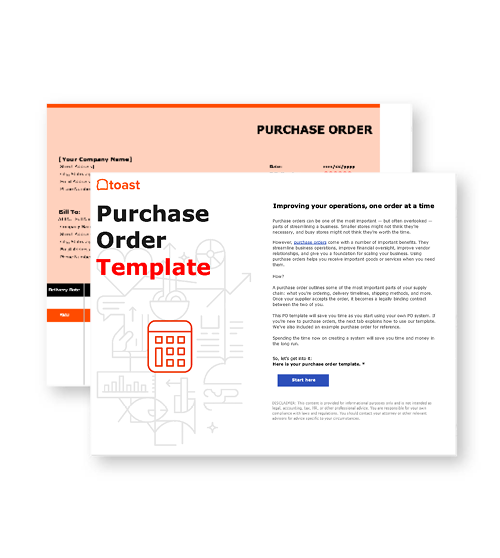
 Purchase Order Template
Use this template to create standardized purchase orders for requesting goods or services from vendors.
Get Free DownloadWhen you're running a business, keeping your operations organized is critical. One key part of that puzzle is managing your supply chain. That’s where purchase orders come in.
If you’ve ever found yourself wondering, “What’s a purchase order, and do I really need to use one?” you’re not alone. Think of it like texting your supplier, but way more official and less likely to get lost between memes and lunch orders.
This guide will walk you through the basics of purchase orders, why they matter, and how they can help streamline your operations and protect your business.
Key Takeaways
A purchase order (PO) is a formal order form document sent by a buyer to a supplier to request goods or services.
It’s a legal document that includes agreed-upon terms like item quantities, prices, delivery dates, and payment terms.
Purchase orders help reduce miscommunication, improve inventory tracking, and protect businesses legally.
Even small businesses can benefit from using POs to stay organized and scale more effectively.
You can create purchase orders using templates, accounting software, or industry-specific platforms.
What’s a purchase order?
A purchase order (PO) is a formal document sent by a buyer to a supplier to request goods or services. It includes specific details about what’s being ordered, such as item names, quantities, prices, and delivery timelines. Essentially, it serves as a legally binding contract once accepted by the supplier.
In plain terms: a purchase order is your business’s way of saying, “Hey, I want to buy 100 of those items, here’s how much I’ll pay, and I need them by this date.”
Purchase order vs invoice: What’s the difference?
It’s easy to confuse a purchase order with an invoice, but they’re very different parts of the procurement process:
Purchase order | Invoice |
Created by the buyer | Created by the seller |
Sent before the transaction happens | Sent after the goods/services are delivered |
Requests specific goods/services | Requests payment for goods/services delivered |
Confirms what’s being ordered | Confirms what has been received and how much is owed |
In short, the purchase order kicks off the purchase, while the invoice wraps it up.
Retail Marketing Plan
Create a marketing plan that'll drive repeat business with this customizable marketing playbook template and interactive calendar.

Why are purchase orders important?
Using purchase orders might seem like overkill if you’re running a small or fast-moving business. But implementing a PO system has several important benefits, even for smaller operations.
1. Avoid miscommunication
When you rely on verbal agreements or informal texts/emails, things can get lost in translation. Purchase orders clearly document:
What you ordered
From whom
When it should arrive
What price you agreed on
This clarity reduces errors and helps both parties stay aligned.
2. Track spending and inventory
Purchase orders help you monitor incoming stock and match it against invoices and delivery notes. This makes it easier to:
Track inventory levels
Forecast future needs
Stay within your budget
They also come in handy during audits or end-of-year reviews.
3. Protect your business legally
A purchase order creates a legally binding agreement once accepted. If a supplier delivers the wrong items, misses deadlines, or bills you for the wrong amount, your PO can serve as proof of the original agreement.
4. Improve vendor relationships
Suppliers appreciate working with organized businesses. Purchase orders signal professionalism, reduce back-and-forth, and set clear expectations from the start.
What should be included in the purchase order process?
A good purchase order request includes the following key information:
PO number: A unique identifier for tracking and reference
Date of issue
Buyer contact information: Your company’s name and contact details
Supplier contact information: The vendor’s name, address, and contact details
Order details: Descriptions, SKUs, quantities, and unit prices
Total cost
Shipping address
Billing address
Requested delivery date
Payment terms (e.g., Net 30, payment upon delivery)
Here’s a basic example:
Purchase order #1025 Date: August 24, 2025 Buyer: Green Valley Grocery 789 Market Street, Denver, CO 80202
Vendor: Fresh Harvest Produce Co. 321 Farm Lane Fort Collins, CO 80521
Item | Sku | Quantity | Unit Price | Total |
Organic bananas | BAN-ORG | 300 lbs. | $0.60 | $180.00 |
Cage-Free Eggs (1 dozen cartons) | EGG-CF12 | 200 | $2.50 | $500.00 |
Whole Milk (1 gallon) | MILK-WH1 | 150 | $3.00 | $450.00 |
Total cost: $1,130 Delivery due date: September 1, 2025 Payment terms: Net 30
Retail Store Opening Costs Calculator
This free calculator lays out some of the fundamental financial costs of opening a retail store, so you can start planning and bring your dream business to life.
Types of purchase orders
Not all purchase orders are created equal. Depending on your needs, you might use one of these types:
1. Standard purchase order
This is the most common type. It’s used when you know exactly what you’re ordering, in what quantity, and at what price.
2. Blanket purchase order
Used for recurring purchases over a period of time. You might not know the exact quantity upfront, but you agree on pricing and terms. Example: ordering cleaning supplies monthly for six months.
3. Contract purchase order
This outlines a long-term agreement between buyer and seller. It sets terms and conditions but doesn’t specify exact items or delivery dates. It’s often followed by release or standard POs.
4. Planned purchase order
Used when you know what you’ll need in the future but haven’t nailed down the schedule. You place firm orders later when the details are confirmed.
Do small businesses need to use purchase orders?
While massive corporations almost always use purchase orders, small business owners may hesitate. But the truth is, if you place regular orders with suppliers, even small ones, POs can help you stay organized and protected.
Here are a few signs your business could benefit from implementing purchase orders:
You have more than one person placing orders
You work with multiple vendors
You’ve experienced miscommunications or billing issues
You want to improve inventory tracking
You’re preparing to scale up operations
If you only make the occasional one-off purchase, a formal PO system might not be necessary. But for growing businesses, it’s a smart move.
How to create a purchase order
Creating a purchase order can be as simple or sophisticated as you need. Here are three common methods:
1. Manual templates
Use a free purchase order template in Excel, Google Sheets, or Word. These are best for very small businesses or one-off purchases. You can find lots of free PO templates online.
2. Inventory or accounting software
Tools like QuickBooks, Xero, and Zoho Inventory offer PO functionality as part of their platform. You can create and track purchase orders, link them to invoices, and sync with your inventory.
3. Retail-specific platforms
If you run a restaurant or retail business, consider industry-specific tools like Toast. And to learn more about Toast Retail, click here!
Best practices for managing purchase order work
If you're ready to implement purchase orders, keep these tips in mind:
Create a clear PO numbering system for easy tracking and referencing
Keep digital records in the cloud to avoid losing paperwork
Match POs with invoices and delivery receipts to catch discrepancies early
Review vendor performance regularly — POs make it easier to identify which suppliers deliver on time and meet expectations
Train your team so everyone knows how and when to create a purchase order
Why purchase orders matter for retail businesses
So, what’s a purchase order? It’s more than just a form; it’s a vital tool & legally binding document that brings structure, accountability, and clarity to your business operations.
Whether you're stocking up on ingredients for your grocery store, ordering packaging for your online store, or securing supplies for your butcher shop, using purchase orders can help you:
Avoid misunderstandings
Improve financial oversight
Strengthen vendor relationships
Scale with confidence
The bottom line: If you're not using purchase orders yet, now is a great time to start.
Looking for a free purchase order template to get started? Download one today and bring more control to your purchasing process. [To add when it’s ready]
Frequently asked questions (FAQs)
Q: What’s the main purpose of a purchase order? A: A purchase order helps document and formalize a request for goods or services. It ensures both buyer and supplier are aligned on what’s being ordered, how much it costs, and when it should be delivered.
Q: Are purchase orders legally binding? A: Yes. Once a supplier accepts a purchase order, it becomes a legally binding contract. This helps protect both parties if disputes arise over the order.
Q: Do I need purchase orders if I’m a small business? A: While not legally required, POs are highly recommended for any business that places regular orders. They help prevent costly mistakes and create a paper trail for accounting and inventory management.
Q: Can I just use email workflows instead of a purchase order? A: While emails can work for very small or informal purchases, they lack the structure and legal protection of a proper purchase order. A PO ensures consistency and clarity with every vendor.
Q: What’s the difference between a purchase order and an invoice? A: A purchase order is issued by the buyer before a transaction to request goods. An invoice is issued by the seller after goods are delivered, requesting payment.
Q: How do I track purchase orders? A: You can assign unique PO numbers and store records digitally using spreadsheets, accounting tools like QuickBooks, or inventory platforms tailored to your industry.


Is this article helpful?
DISCLAIMER: This information is provided for general informational purposes only, and publication does not constitute an endorsement. Toast does not warrant the accuracy or completeness of any information, text, graphics, links, or other items contained within this content. Toast does not guarantee you will achieve any specific results if you follow any advice herein. It may be advisable for you to consult with a professional such as a lawyer, accountant, or business advisor for advice specific to your situation.
 Trending



Subscribe to On the line
Sign up to get industry intel, advice, tools, and honest takes from real people tackling their restaurants' greatest challenges.
By submitting, you agree to receive marketing emails from Toast. We’ll handle your info according to our privacy statement. Additional information for California residents available here.