
How to Run a Successful Restaurant: 8 Smart Strategies
Learn how to run a restaurant with strategies covering food costs, staffing, service systems, and margins — plus the tools that help operators make faster, smarter decisions every day.

Author
 RESOURCE
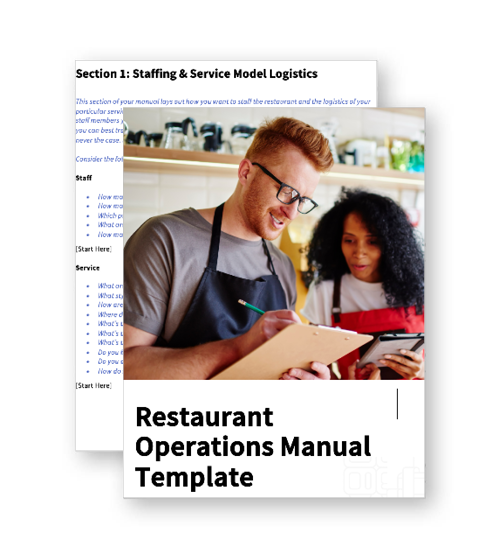
 Restaurant Operations Manual Template
Use this free template to easily outline all of your operating procedures and make day-to-day operations as consistent as possible.
Get Free DownloadRunning a successful restaurant requires balancing hospitality, staffing, food costs, guest expectations, and daily operational challenges — often all at once.
While great food and service matter, long-term success usually comes down to how well a restaurant adapts, manages costs, supports its team, and creates systems that keep things running smoothly under pressure.
In this guide, you’ll learn practical strategies for running a successful restaurant, including how to manage margins, improve service flow, build repeat business, and make smarter operational decisions over time.
Key takeaways
Running a successful restaurant requires balancing margins, staffing, guest experience, and daily operations at the same time.
Strong restaurant operators focus on controlling food and labor costs while building systems that improve consistency under pressure.
Adapting your concept based on customer behavior and market demand can help build stronger long-term loyalty.
Integrated technology and streamlined service systems help restaurants make faster decisions and reduce operational chaos.
Restaurants that continuously improve and stay flexible are often better positioned to build healthier margins and repeat business.
SOPs Template
This template will help you create SOPs for your entire business, so you can create consistency and easily train employees.

1. Learn your numbers and protect your margins
Running a successful restaurant starts with understanding where your money actually goes. While restaurant startup costs are estimated to range from $95,000 to $2 million, long-term success depends more on controlling ongoing operational costs than simply opening the doors.
Many operators underestimate how much of a restaurant’s success depends on financial management rather than just food quality. As Brent Reaves, co-owner of Smokey John’s Bar-B-Q, explained:
“The biggest thing I share with people is, people think, ‘I make a really good fried chicken, and I’m gonna open a restaurant.’ That’s great. Fried chicken is great. The problem is, do you know how to pay your payroll taxes? Do you know cost controls? Do you know how to create pricing for your menu?”
Track operational costs as percentages of revenue: Restaurant costs are typically measured against revenue to evaluate long-term sustainability.
Understand prime cost: Prime cost combines labor and food costs — your two largest operating expenses.
Maintain cash flow discipline: Profitability on paper means little if cash flow problems disrupt daily operations.
Focus on profitable sales, not just busy dining rooms: High revenue does not always translate into strong margins.
Monitor labor cost benchmarks: A good labor cost percentage is around 30% of gross revenue.
Identify where margins are won and lost: Small inefficiencies in labor, food waste, or purchasing decisions can compound quickly over time.
Tracking all of this manually can feel overwhelming and easy to get wrong. That's where Toast IQ comes in: it analyzes every transaction and data point to give you personalized answers to the complex business questions that keep operators up at night.
2. Adapt your restaurant concept based on customer behavior
Successful restaurants evolve over time instead of rigidly sticking to the original concept. Guest preferences, neighborhood demographics, and dining habits change — and operators who adapt are often more likely to build long-term loyalty.
The strongest operators also treat guest feedback as a source of operational insight rather than just customer commentary. As Pedro Uchoa, partner and CEO of Tap, explained:
“The brands winning right now are playing offense, mining feedback for patterns, turning recurring complaints into operational fixes, and turning five-star moments into marketing fuel. We love to think that a single piece of feedback has changed a menu item, inspired a campaign, and motivated an entire team.”
Listen to guest feedback: Reviews, repeat visits, and customer behavior often reveal what matters most to diners.
Adjust menu items and pricing: Successful restaurants regularly refine menus based on demand, profitability, and customer preferences.
Adapt service style: Guest expectations around speed, convenience, and hospitality can shift over time.
Understand neighborhood demand: What works in one market or demographic may not work in another.
Identify what customers return for: Repeat business often depends on consistency, atmosphere, pricing, or signature menu items.
Balance creativity with market realities: Strong concepts still need to align with customer expectations and operational sustainability.
Continuously refine the experience: Successful operators treat restaurants as evolving businesses rather than fixed ideas.
On the explore tab on Toast IQ, you get personalized prompts based on your own data, suggesting anything from menu item changes to marketing opportunities.
3. Create service systems that reduce chaos during shifts
When ordering, payments, kitchen communication, and table service all depend on manual handoffs, small delays can quickly turn into longer lines, slower ticket times, and overwhelmed staff.
Modern service systems help reduce that pressure by giving guests more flexible ways to order and pay, while giving staff better tools to keep service moving.
Implement guest-driven service systems: Toast’s New Steps of Service uses restaurant technology to give guests more flexibility in how they order and pay.
Operate efficiently with fewer staff: Self-service ordering, QR ordering, kiosks, and handheld devices help restaurants serve more guests without relying entirely on additional labor.
Keep staff focused on hospitality: When servers spend less time processing payments or running to terminals, they can spend more time interacting with guests.
Reduce bottlenecks during peak periods: Multiple ordering options help prevent long lines and overloaded ordering stations.
Improve FOH and BOH coordination: Connected systems help orders move more efficiently from guests to the kitchen.
Create more consistent shift execution: Standardized service workflows reduce confusion during busy periods.
Support stronger guest experiences: Faster ordering, smoother payment experiences, and reduced waiting can improve both guest satisfaction and operational flow.
4. Lead your staff like a long-term investment
Strong restaurant leaders also recognize that employee development and accountability go hand in hand. As Kwang Uh, co-owner of Baroo in Los Angeles, explained:
“I won’t ask my team to do anything I’m not willing to do myself. I set clear expectations and will follow up to make sure that things are on track. But I also want my cooks to feel a sense of responsibility for their work and that what they do here is helping them develop.”
Focus on hiring and retention: High turnover creates operational disruption and increases hiring and training costs.
Cross-train employees: Multi-role staff create more flexibility during busy shifts and unexpected staffing gaps.
Prioritize scheduling fairness and transparency: Predictable scheduling improves employee trust and reduces frustration.
Prevent burnout: Consistently overworked teams are more likely to experience turnover and declining service quality.
Support team communication and morale: Clear communication and accountability help restaurants operate more smoothly under pressure.
Maintain leadership visibility during service: Strong managers remain present and engaged during busy shifts instead of operating only behind the scenes.
Support employee growth and consistency: Training and development help teams perform more confidently and consistently over time.
Simplify payroll and scheduling management: Toast Payroll connects scheduling, wages, and tips in one system to help streamline labor management.
Offer payroll flexibility: Toast Pay Card gives employees faster access to earned wages, improving flexibility and employee experience.
Training Manual Template
Use this restaurant training manual template, a customizable Word Doc, to provide your staff with the rules, guidelines, and clarity they need to do their jobs efficiently.
5. Use technology to simplify management decisions
Technology should make restaurants easier to manage — not more complicated. As restaurants juggle dine-in service, takeout, delivery, and online ordering simultaneously, integrated systems help operators make faster decisions with better visibility into daily performance.
Manage multiple ordering channels: Restaurants need systems that support dine-in, takeout, delivery, and online orders together.
Centralize reporting and order flow: Unified systems reduce duplicate work and improve operational consistency.
Improve operational visibility: Real-time access to sales, labor, and ordering data helps operators respond faster during service.
Make faster management decisions: Better reporting allows managers to identify operational problems before they escalate.
Use restaurant-specific technology: Toast POS is built specifically for restaurant operations and handles multiple ordering channels from one system.
Access real-time reporting anywhere: Toast Now gives operators live visibility into restaurant performance directly from their phone.
Surface operational insights automatically: Toast IQ highlights trends and recommended actions without requiring operators to manually dig through reports.
6. Balance food quality with profitability
Successful restaurant operators protect their margins without sacrificing consistency or guest experience. Managing food costs effectively requires balancing ingredient quality, menu pricing, portion control, and purchasing decisions over time.
Use menu engineering: Analyze menu items based on both popularity and profitability.
Understand high-margin vs. low-margin items: Some dishes drive revenue while others quietly erode margins.
Monitor supplier price volatility: Ingredient costs can shift quickly and impact profitability if pricing remains static.
Maintain portion discipline: Consistent portions improve both guest experience and food cost control.
Reduce waste whenever possible: Spoilage, over-prepping, and over-portioning can compound over time.
Improve inventory visibility: Strong inventory systems help operators make more informed purchasing decisions.
Track recipe costing carefully: Understanding the true cost of each menu item helps restaurants price more strategically.
Connect purchasing and sales data: xtraCHEF by Toast blends invoice automation, recipe costing, and POS sales data into one system to improve food cost visibility and decision-making.
7. Market consistently and build repeat customers
Consistent marketing and guest engagement help restaurants stay visible, build loyalty, and maintain traffic over time. It’s not only about attracting new guests, but also giving people reasons to come back.
Improve local discoverability: Local SEO, updated listings, and accurate business information help guests find your restaurant online.
Maintain social media consistency: Regular content keeps your restaurant visible and reinforces your brand identity.
Use promotions and events strategically: Limited-time specials, happy hours, and events can help drive repeat traffic.
Build loyalty programs: Rewarding repeat visits encourages guests to return more frequently.
Stay connected through email and SMS marketing: Direct communication helps restaurants promote offers, events, and updates more consistently.
Manage online reviews and reputation: Guest reviews often shape first impressions and influence repeat business.
Build repeat customer habits: Consistency in food, service, and communication helps turn occasional diners into regulars.
Restaurant Marketing Plan
Create a marketing plan that'll drive repeat business with this customizable marketing playbook template and interactive calendar.
8. Stay adaptable as the restaurant industry changes
Consumer preferences shift, costs fluctuate, staffing expectations evolve, and new technology continues reshaping how restaurants operate. Operators who stay flexible are often better positioned to succeed long term.
Adjust to changing consumer preferences: Guest expectations around convenience, pricing, speed, and experience continue to evolve.
Respond to rising or fluctuating costs: Food, labor, and operational expenses can change quickly and impact margins.
Adapt to evolving staffing expectations: Employees increasingly value flexibility, transparency, and work-life balance.
Embrace operational technology carefully: New systems can improve efficiency and visibility when implemented strategically.
Monitor changing competition: Restaurants constantly compete for attention, convenience, and guest loyalty.
Stay proactive instead of reactive: Strong operators identify problems and trends early instead of waiting for larger operational issues to develop.
Maintain a continuous improvement mindset: Long-term success often comes from making consistent small improvements over time instead of relying on one major change.
Manage every part of your restaurant with Toast
Running a successful restaurant means juggling these 8 strategies, often all at once. Toast IQ is an AI assistant that proactively surfaces insights about your business and local market, so you're not waiting until something goes wrong to act. From the chat interface, you can 86 a menu item, adjust a price, cut a shift, or draft and send a marketing campaign in seconds — without hopping between tools.
Toast Now extends that visibility beyond your four walls. Over 35% of Toast Now users check the app 10 or more times per week* to monitor live sales data, control delivery channels, and stay connected with their management team from anywhere.
Together, these tools give operators a faster, clearer way to make decisions, whether you're on the floor during a dinner rush or checking in remotely.
A recipe for success
Running a successful restaurant is rarely about getting one big thing right — it’s about consistently getting a lot of small things right over time. The strongest operators learn their numbers, support their staff, adapt to customer behavior, and build efficient systems.
As the industry changes, restaurants that stay flexible and keep improving are often the ones that build stronger teams, healthier margins, and more loyal guests over the long run.
FAQ
What are the biggest challenges of running a restaurant?
Many restaurants struggle with rising food and labor costs, staffing shortages, maintaining consistent service, and balancing profitability with guest experience.
What is a typical restaurant profit margin?
Most restaurants operate on relatively thin profit margins, often ranging between 3% and 5%, depending on concept, location, and operating efficiency.
What percentage of revenue should go to labor?
A good labor cost percentage is around 30% of gross revenue, though the current full-service median is closer to 36.5%.
What is food cost percentage and why does it matter?
Food cost percentage measures ingredient costs as a percentage of revenue, helping restaurants evaluate menu profitability and overall operational efficiency.
What technology do restaurants need to run efficiently?
Most restaurants benefit from integrated systems for POS, payroll, online ordering, reporting, inventory management, and kitchen communication.
How do I keep restaurant staff from leaving?
Restaurants can improve retention by offering fair scheduling, competitive pay, strong communication, growth opportunities, and a more supportive work environment.
*Based on average number of Toast Now users that logged in 10 or more times during a week in 4/1/2024 - 4/30/2024.
Restaurant Metrics Calculator
Use this free calculator to calculate the key restaurant metrics needed to understand the health and success of your business.


Is this article helpful?
DISCLAIMER: This information is provided for general informational purposes only, and publication does not constitute an endorsement. Toast does not warrant the accuracy or completeness of any information, text, graphics, links, or other items contained within this content. Toast does not guarantee you will achieve any specific results if you follow any advice herein. It may be advisable for you to consult with a professional such as a lawyer, accountant, or business advisor for advice specific to your situation.
 Trending



Subscribe to On the line
Sign up to get industry intel, advice, tools, and honest takes from real people tackling their restaurants' greatest challenges.
By submitting, you agree to receive marketing emails from Toast. We’ll handle your info according to our privacy statement. Additional information for California residents available here.