
Restaurant PR 101: How to Turn Publicity Into Repeat Business
Local press, social buzz, and word-of-mouth don't happen by accident. Here's a practical playbook for restaurant PR on a real-world budget.
Author
 RESOURCE
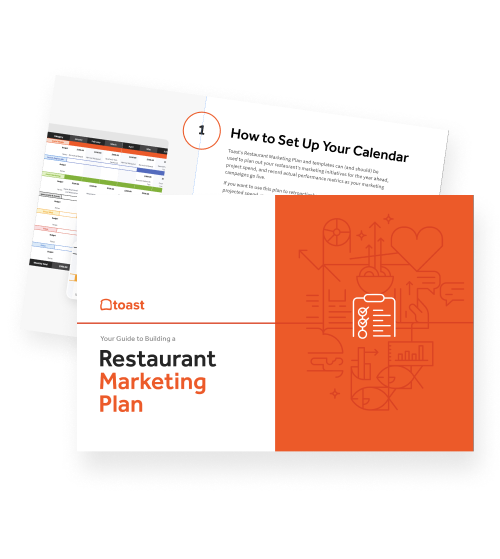
 Restaurant Marketing Plan
Create a marketing plan that'll drive repeat business with this customizable marketing playbook template and interactive calendar.
Get Free DownloadRestaurant PR is how a restaurant earns coverage and builds its public reputation through journalists, creators, events, community relationships, and responses to negative publicity. Unlike advertising, earned PR coverage is not always purchased or fully controlled. It comes from giving other people a credible story worth sharing.
When publicity brings in new guests, the next challenge is keeping the relationship going. Toast Marketing Suite connects guest and ordering data with targeted campaigns and performance reporting, helping operators turn initial attention into repeat business.
This guide explains why restaurant PR matters, how to build an effective strategy, and how to measure whether publicity leads to visits, orders, and returning guests.
Key takeaways
Restaurant PR earns third-party attention through media, creators, events, community relationships, and reputation management rather than paid placement.
Effective PR campaigns begin with a specific objective and a timely, audience-relevant story.
Targeted media lists and concise, personalized pitches are more effective than mass outreach.
Publicity should give potential guests a clear path to visit, order, book, or join a loyalty program.
PR results should combine coverage quality with guest actions and retention rather than relying on impressions alone.
Restaurant Operations Manual Template
Use this free template to easily outline all of your operating procedures and make day-to-day operations as consistent as possible.

What is restaurant PR?
Restaurant PR, or restaurant public relations, includes the activities a restaurant uses to earn attention and shape how the business is understood by the media, creators, community, and potential guests. Common restaurant PR activities include:
Media relations: Pitching stories and responding to requests from reporters.
Restaurant announcements: Promoting openings, new chefs, menu launches, expansions, and milestones.
Events: Hosting press previews, tastings, and creator experiences.
Community relations: Building visibility through partnerships, fundraisers, and local involvement.
Thought leadership: Providing useful commentary on food, hospitality, and industry trends.
Reputation management: Responding to criticism, misinformation, or negative publicity.
PR overlaps with a restaurant’s broader marketing strategy, but the two are not interchangeable.
Approach | How attention is generated | Restaurant’s level of control | Primary purpose |
Public relations | Coverage or conversation is earned through a newsworthy story | Limited | Build awareness, credibility, and reputation |
The restaurant pays to place a message | High | Reach a defined audience with a controlled promotion | |
The restaurant uses owned, earned, and paid channels | Varies | Generate visits, orders, and repeat business |
The three approaches can support one another. PR earns attention, advertising can expand its reach, and marketing helps convert that interest into guest activity.
Why does restaurant PR matter?
Restaurant PR gives other people a reason to talk about a restaurant. That third-party attention can carry more credibility than a message published solely through the restaurant’s own channels. PR can support several business goals:
Local awareness: Introduce the restaurant to people in its immediate market.
Launch momentum: Build interest before an opening, menu release, or expansion.
Brand recognition: Communicate the people, values, and ideas behind the concept.
Search visibility: Generate articles and creator content that remain discoverable.
Community credibility: Show how the restaurant contributes to its neighborhood.
Reputation support: Create communication channels that can become valuable when problems arise.
An unusually successful campaign illustrates the potential impact. Restaurant Business reported that IHOP’s temporary “IHOb” campaign generated more than one million tweets, 27,000 media articles, and 42.6 billion earned impressions while quadrupling burger sales.
Most restaurants do not need national virality, however. A feature in the right local publication or a post from a trusted neighborhood creator may be more valuable if it reaches people who can realistically become guests.
How to create a restaurant PR strategy
A restaurant PR strategy identifies the story the restaurant wants to tell, the people most likely to share it, and the business result that publicity should support.
1. Set a specific PR objective
Start by defining what the restaurant needs PR to accomplish. A vague goal such as “generate buzz” makes it difficult to choose a story, target the right outlets, or measure results. A restaurant might use PR to:
Introduce a new restaurant or location.
Build awareness in a specific neighborhood.
Promote a chef, menu, event, or milestone.
Establish expertise in a culinary category.
Strengthen community recognition.
Correct misinformation or rebuild trust.
Give each campaign one primary objective and connect it to a measurable outcome. Depending on the goal, that could include qualified media coverage, website visits, reservations, online orders, walk-ins, or loyalty enrollments.
2. Define the restaurant’s story
A restaurant story explains why someone outside the business should care. The strongest angles are specific, timely, relevant to the audience, and easy to summarize. Potentially newsworthy stories include:
A restaurant opening, expansion, or major reopening
A chef or founder with a compelling personal journey
A distinctive concept, menu, ingredient, or preparation method
A meaningful connection to local culture or history
A community partnership with a measurable impact
An award, anniversary, or business milestone
Original data or informed commentary about a timely trend
A seasonal event that matters to the outlet’s audience
Restaurant PR specialist Austin Copley explains that a strong story helps media, influencers, and diners connect with a concept and can “make your pitch stand out in a crowded inbox.”
Not every restaurant update needs a press campaign. A routine discount or minor menu change may work better through email or social media unless it connects to a larger, genuinely distinctive story.
The restaurant’s mission, positioning, identity, and voice should remain consistent throughout the campaign. A clear branding framework can help operators identify the central story they want guests and media to remember.
3. Make the restaurant media-ready
Prepare the information and assets a journalist or creator would need before beginning outreach. Delays, missing details, and low-quality visuals can cause a timely opportunity to disappear. A basic restaurant press kit should include:
A concise restaurant description
Confirmed opening dates, hours, address, and contact information
Chef, founder, and leadership biographies
Current menus and prices
High-resolution food, team, and interior photographs
Short videos or B-roll when relevant
Verified awards, milestones, and supporting data
Reservation, ordering, website, and social links
One designated media contact
Select spokespeople in advance and make sure they understand the restaurant’s main messages. Public-facing details should also match across the website, social profiles, reservation platforms, and press materials.
4. Build a targeted media and creator list
A shorter list of relevant contacts is more valuable than a large collection of generic email addresses. Potential contacts include:
Local food and restaurant reporters
Neighborhood and community publications
Business and development reporters
Local television, radio, and newsletters
Travel, lifestyle, and tourism outlets
Writers covering the restaurant’s cuisine or specialty
Food creators with an audience in the restaurant’s market
Review each contact’s recent work before adding them. Record what they cover, where their audience is located, how they prefer to be contacted, and why the restaurant’s story fits.
Apply the same standard to creators. A smaller account with a trusted local audience may generate more useful attention than a larger account whose followers live elsewhere. When selecting food influencers, consider audience relevance, content quality, tone, engagement, and campaign fit—not follower count alone.
Keep earned editorial outreach separate from paid creator partnerships, and make sure sponsored or complimentary experiences are disclosed appropriately.
5. Write a focused pitch
A restaurant media pitch should quickly explain what is happening, why it matters now, and why it belongs in that journalist’s publication. Strong pitches include:
A specific subject line
The strongest news angle first
A clear connection to the outlet’s audience
Essential dates and details
Available interviews, images, or experiences
One simple next step
Relevance matters more than elaborate language. In Muck Rack’s 2026 survey, 47% of journalists said PR pitches were seldom or never relevant to their work, according to PR Daily. Muck Rack also found that 69% preferred pitches under 200 words.
Personalize each message and remove anything the recipient doesn’t need. If the story remains timely, send one respectful follow-up rather than repeatedly filling the reporter’s inbox.
A press release can provide background details, quotes, and approved facts, but it does not replace a focused pitch written for a specific person and audience.
6. Create a strong media experience
When a journalist or creator expresses interest, make the restaurant easy to cover.
Respond promptly to requests.
Offer clear interview, photography, and tasting options.
Prepare the owner, chef, or spokesperson.
Brief employees on the event and expected service.
Confirm dietary needs and logistical details.
Make accurate follow-up materials readily available.
Avoid making access or hospitality conditional on positive coverage.
Operational readiness matters as much as the story. Publicity can raise expectations, so the food, service, ordering experience, and physical space must be prepared for additional attention.
7. Amplify earned coverage
Earned coverage doesn’t need to disappear after its original publication date. The restaurant can extend its reach through channels it controls.
Share the article through social media and email.
Add selected coverage or awards to the restaurant website.
Tag the journalist or publication appropriately.
Reuse approved excerpts in marketing materials.
Give employees simple language for sharing the news.
Thank the journalist and maintain the relationship.
Do not copy an entire article, change the context of a quotation, or suggest that the publication endorsed something it did not.
8. Turn publicity into visits and repeat business
A person who discovers the restaurant through an article or creator post should have an obvious next step. That might be viewing the menu, getting directions, booking a table, placing an order, joining the email list, or enrolling in loyalty. Before coverage appears, confirm that:
Hours, menus, and contact details are accurate.
Reservation and ordering links work.
Social profiles explain what the restaurant offers.
Employees know about any promoted event or offer.
The restaurant can handle the expected increase in demand.
Campaign-specific links or codes are ready when needed.
Toast Local gives nearby diners a place to discover restaurants, book tables, place orders, and access rewards. That creates a direct path from local awareness to a guest action.
Once a first-time guest visits, Toast Loyalty can track rewards across in-store and online transactions. That gives the restaurant a practical way to turn publicity-driven visits into longer-term guest relationships.
9. Measure restaurant PR results
Restaurant PR should be measured against the objective established at the beginning of the campaign. Impressions alone cannot show whether publicity reached the right audience or influenced guest behavior.
Measurement area | Metrics to track | What it helps evaluate |
Media coverage | Number and quality of placements | Whether the campaign earned meaningful coverage |
Audience fit | Geographic and audience relevance | Whether coverage reached potential guests |
Message and reputation | Message accuracy and sentiment | How clearly and positively the restaurant was represented |
Website interest | Referral traffic, menu views, and branded searches | Whether coverage prompted people to learn more |
Creator engagement | Reach, saves, shares, and comments | How audiences responded to creator content |
Guest actions | Reservations, calls, walk-ins, online orders, and offer redemptions | Whether attention contributed to visits or sales |
Guest retention | Email signups, loyalty enrollments, and repeat-visit sales | Whether new attention produced lasting relationships |
Restaurant content strategist Hifsah Ahmed recommends comparing reservations, calls, and walk-ins with campaign timing to measure direct business outcomes, according to Nation’s Restaurant News. Tracking links, referral data, offer codes, and before-and-after comparisons can provide additional context.
PR attribution will not always be exact. A guest may read an article, see several social posts, and visit weeks later, so combining coverage data with restaurant activity provides a more complete picture.
How can restaurants handle negative publicity?
Restaurants should handle negative publicity by verifying the facts, responding calmly, and explaining what they’ll do next. The speed of the response matters, but accuracy matters more. A basic response process includes:
Verify the facts before publishing a statement.
Assign one person to coordinate communications.
Acknowledge legitimate concerns without becoming defensive.
Correct false information with concise, verifiable evidence.
Explain what the restaurant is doing to address the issue.
Protect guest and employee privacy.
Provide updates if the situation continues.
Review the operational or communication failure afterward.
Avoid arguing online, speculating, deleting legitimate criticism, or issuing a broad denial before the restaurant understands what happened.
The Cracker Barrel logo controversy demonstrates how quickly public reaction can affect restaurant traffic. The Associated Press reported that traffic was down 1% before the logo announcement and 8% after the backlash began. CEO Julie Felss Masino acknowledged that guests “see themselves and their own story” in the brand experience.
Individual complaints don’t always require a public-relations response, but they still deserve careful service recovery. When responding to negative restaurant reviews, acknowledge the concern publicly and move personal details or a proposed resolution into a private channel.
Should a restaurant hire a PR agency?
A restaurant does not need a PR agency to earn local coverage. Owners and managers can often handle a focused campaign when they have a clear story, a targeted media list, and enough time to maintain relationships.
Define the scope before signing an agreement and compare the investment with other priorities in your restaurant’s marketing budget. A qualified agency can contribute strategy, relationships, and execution. It cannot guarantee editorial coverage, positive reviews, or a specific business result.
Decision factor | In-house PR may work when | An agency may help when | What to evaluate |
Campaign scope | The campaign targets a local audience or single announcement | The restaurant is launching a major concept or pursuing regional or national coverage | Proposed strategy, scope, and deliverables |
Market familiarity | The team understands the local community and media landscape | The restaurant is entering a new or unfamiliar market | Local knowledge and relevant media relationships |
Restaurant growth | The restaurant operates one location or runs occasional campaigns | The business is opening several locations or managing sustained publicity | Restaurant and hospitality experience |
Internal capacity | Someone has time to research contacts, pitch stories, and manage follow-ups | The team lacks the time or expertise to coordinate outreach | Staffing plan, communication process, and responsiveness |
Measurement | The restaurant can track basic coverage and guest activity | The campaign requires detailed reporting across several channels or markets | Reporting methods and definitions of success |
Reputation risk | The issue is a routine guest complaint or isolated negative review | The restaurant faces serious negative publicity or a developing crisis | Crisis experience, response process, and references |
Cost and control | The restaurant wants to retain direct control and minimize outside expenses | Specialized support justifies the additional investment | Fees, additional costs, contract terms, and ownership of contacts and assets |
Turn restaurant publicity into repeat business
Effective restaurant PR starts with a story worth sharing and succeeds when earned attention leads to visits and repeat business. Focused outreach can introduce people to the restaurant, but a strong guest experience and timely follow-up determine whether that interest lasts.
Toast Marketing Suite helps operators follow up with guests based on their activity and see which campaigns generate sales. That makes it easier to build on a publicity boost with relevant outreach that encourages return visits.
Press Kit Template
Use this customizable template to craft a polished one-pager that showcases your business’s key details. It condenses essential information into a concise, visually appealing format that’s quick to read and easy to share.
FAQ
What does PR mean in a restaurant?
Restaurant PR means earning public attention and managing the restaurant’s reputation through media coverage, creators, events, community relationships, and public responses.
How is restaurant PR different from marketing and advertising?
PR earns third-party attention, advertising pays for controlled messages, and marketing combines multiple channels to generate visits, orders, and repeat business.
What makes a restaurant story newsworthy?
A restaurant story is newsworthy when it is specific, timely, relevant to the audience, and connected to a meaningful opening, person, idea, milestone, or community impact.
How do you pitch a restaurant to the media?
Send a concise, personalized pitch that leads with the news angle, explains why it matters to the outlet’s audience, and offers a clear next step.
How should restaurants measure PR success?
Measure PR using coverage quality and audience relevance, then compare campaign timing with website traffic, reservations, orders, signups, and repeat sales.
Does a restaurant need a PR agency?
Not necessarily, because focused local campaigns can often be handled internally, while agencies may help with new markets, major launches, sustained coverage, or serious reputation issues.
How should a restaurant respond to negative publicity?
Verify the facts, respond calmly, acknowledge legitimate concerns, correct false information clearly, and explain what the restaurant will do next.


Is this article helpful?
DISCLAIMER: This information is provided for general informational purposes only, and publication does not constitute an endorsement. Toast does not warrant the accuracy or completeness of any information, text, graphics, links, or other items contained within this content. Toast does not guarantee you will achieve any specific results if you follow any advice herein. It may be advisable for you to consult with a professional such as a lawyer, accountant, or business advisor for advice specific to your situation.

Subscribe to On the line
Sign up to get industry intel, advice, tools, and honest takes from real people tackling their restaurants' greatest challenges.
By submitting, you agree to receive marketing emails from Toast. We’ll handle your info according to our privacy statement. Additional information for California residents available here.