
What Is a Prix Fixe Menu & How Do You Create One?
A prix fixe menu gives restaurant guests a complete meal at a clear price. Learn how to choose courses, manage costs, and plan smooth service.

Author
 RESOURCE
Restaurant Menu Templates
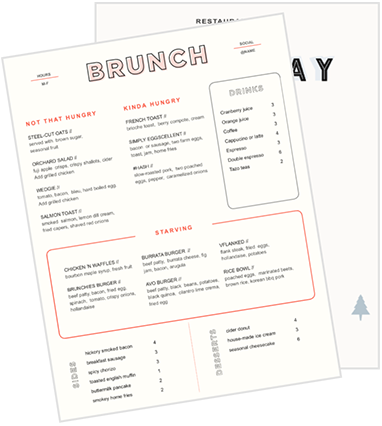
Use these menu templates as a starting point for your menu design or to give your menus a refresh.
Get Free DownloadA prix fixe menu offers a set number of courses for one fixed price, often with a choice of dishes for each course. A common example is an appetizer, an entrée, and a dessert bundled into one meal price.
That simple offer takes coordination behind the scenes. Your team needs to record each guest’s choices, communicate changes, and send courses to the kitchen at the right time. Toast’s fine dining POS system connects ordering, kitchen communication, and payments, making those details easier to manage.
Here’s how prix fixe menus work and how to create, price, and serve one at your restaurant.
Key takeaways
A prix fixe menu offers a set number of courses for one fixed price, often with choices within each course.
A focused menu can simplify purchasing and preparation while creating a cohesive dining experience.
Prix fixe pricing should account for different dish combinations, ingredient costs, labor, and other operating expenses.
Clear menus explain which courses are included and which beverages, upgrades, or other charges cost extra.
Coordinated reservations, POS setup, and course timing help restaurant teams deliver consistent service.
 Start optimizing your menu
Toast Menu Checker
Fresh ideas for your restaurant menu in 3 quick steps.

What is a prix fixe menu?
Prix fixe means “fixed price” in French. Instead of paying separately for each dish, guests pay one stated price for a defined meal.
Some prix fixe menus let guests choose between several appetizers, entrées, and desserts. Others offer the same sequence to everyone. Drinks, premium dishes, tax, and gratuity may cost extra, so the menu should explain what’s included.
In restaurant terminology, prix fixe describes the pricing structure. It doesn’t specify the cuisine, require formal service, or automatically mean a discount. You might see it used for a quick two-course lunch, a holiday dinner, or a full evening of fine dining.
Prix fixe vs. tasting menus vs. à la carte
Prix fixe menus bundle a defined meal at one price, tasting menus emphasize a sequence of smaller courses, and à la carte menus price dishes individually.
These approaches can overlap. A tasting menu can also be prix fixe, and a restaurant can offer a fixed-price option alongside individually priced dishes.
Menu approach | How pricing works | Guest choice | Typical experience |
Prix fixe | One price covers a defined meal | May include choices within each course | A structured meal with a clear starting price |
Tasting menu | Usually one price covers a sequence of smaller courses | Often limited, depending on the restaurant | A progression showcasing the chef’s cooking |
À la carte | Each item is priced separately | Guests select individual dishes | Greater flexibility over the meal’s size and composition |
Benefits and challenges of a prix fixe menu
A prix fixe menu can simplify decisions for guests and planning for your team. The key is using menu engineering to balance appealing choices with costs and service requirements.
Benefits of a prix fixe menu
Anthony Wang, chef-owner of Firstborn in Los Angeles, explained the planning benefit in a February 2026 interview with The Prep: “Narrowing the choice to three items per course gives us a much more controllable product mix.” He described how that focus made ingredient purchasing easier to predict.
Clear pricing: Guests know the starting cost of the meal before ordering.
Focused preparation: Fewer choices can make ingredient purchasing and advance prep more predictable.
A complete experience: You can design courses that complement one another in flavor, portion size, and presentation.
A consistent starting purchase: Each guest orders a defined meal before adding drinks or upgrades.
Challenges of a prix fixe menu
These challenges are easier to manage when you test the menu, prepare employees for common requests, and review which combinations guests actually order.
Uneven ingredient costs: Some combinations cost more to produce, even when guests pay the same price, so you need to cost every option.
Course coordination: The kitchen and service team must manage timing so guests aren’t rushed or left waiting between dishes.
Limited flexibility: Guests may want fewer courses or different options, and dietary accommodations can require additional planning.
How to create and price a prix fixe menu
To create a prix fixe menu, choose the occasion, plan the courses, calculate costs, and test the meal during service. As with building any restaurant menu, the goal is an experience guests want, and your team can deliver consistently.
1. Choose the occasion and service plan
Start by deciding when you’ll offer the menu and what you want it to accomplish. A weekday lunch, holiday dinner, and Restaurant Week promotion each need a different approach. Keep the first version manageable. You can expand the selection or availability once you know how it works in practice.
Purpose: Decide whether you want to attract new guests, fill a slower service, celebrate an occasion, or make prix fixe part of everyday dining.
Availability: Set the dates, hours, and reservation requirements.
Menu options: Choose whether the prix fixe menu replaces or accompanies your regular menu.
Capacity: Match the number of guests and courses to what your team can handle.
Guest expectations: Explain the offer wherever people find the menu or book a table.
2. Build a balanced sequence of courses
Plan the courses as one meal. Three appealing dishes can still feel too heavy or repetitive when served together. A seasonal menu can provide a useful starting point. Look for ingredients that fit the occasion and work across dishes without making every course feel similar.
Consider preparation times, too. If one entrée takes much longer than the others, your team needs a plan for serving everyone at the table together.
Variety: Balance rich and lighter dishes, different textures, and hot and cold preparations.
Portion sizes: Make sure guests can comfortably enjoy the complete meal.
Manageable choices: Offer meaningful options without stretching the kitchen too far.
Shared ingredients: Use ingredients across dishes where it makes sense for both the food and the preparation.
Dietary accommodations: Confirm which substitutions you can offer and how guests should request them.
Advance prep: Identify what can happen before service and what needs last-minute attention.
3. Calculate costs and set your price
Price a prix fixe menu by costing its dishes, estimating which combinations guests will choose, and checking whether the price covers your broader operating needs. A useful starting formula is:
Starting menu price = Ingredient cost per guest ÷ Target food cost percentage
For example, suppose the ingredients cost $18 per guest, and you use an illustrative food cost target of 30%:
$18 ÷ 0.30 = $60
That leaves $42 after ingredients to cover labor and other expenses before any profit. The 30% target is an example, not a recommended percentage for every restaurant. Before choosing your final price, check:
Course combinations: Calculate the costs of different selections, including the most expensive combination.
Premium choices: Decide whether higher-cost dishes need a supplement.
Labor: Account for preparation, plating, and service between courses.
Other expenses: Consider waste, promotional spending, and event participation fees.
Guest value: Make sure the complete experience supports the price.
Higher sales don’t automatically tell you whether the menu is helping your bottom line. In News 12’s February 2025 reporting on Tong, owner Pat Derry reported roughly a 15% sales boost during Restaurant Week while describing smaller margins, rising costs, and participation fees. It’s one restaurant’s experience, but a useful reason to look beyond the sales total.
Keeping recipe costs current makes these decisions easier. xtraCHEF by Toast helps restaurants track ingredient costs and cost recipes as supplier prices change. xtraCHEF customers save on average 1 to 5 hours per week using xtraCHEF.¹
¹Based on a survey of 79 xtraCHEF Pro and Essentials customers from 11/2/24 to 11/29/24. Individual results may vary.
4. Make inclusions and extras clear
Your menu should tell guests what the fixed price covers and which choices cost extra. Clear menu descriptions help people order confidently and give employees fewer details to explain.
Optional upgrades can offer flexibility while preserving the base price. For example, Eater reported in May 2026 that Strata’s opening menu offered five courses for $75, with a $25 supplement for a prime New York steak entrée. Co-owner Dan Phan explained, “We don’t want price to be a barrier to entry.”
Use the same information on printed menus, your website, and reservation pages so guests know what to expect.
Included courses: Explain how many dishes guests receive and what they choose.
Substitutions: State any relevant options or restrictions.
Supplements: Put additional charges beside the dishes they apply to.
Beverages: Say whether drinks or pairings are included.
Other charges: Clearly explain applicable tax, gratuity, or service charges.
Dietary requests: Tell guests how to discuss accommodations with the team.
5. Configure ordering and course timing in the POS
Employees need an easy way to enter the meal, record course choices, apply supplements, and communicate with the kitchen. Practice the whole process, including payment. It’s much easier to fix a confusing selection or incorrect charge before guests are waiting.
Meal setup: Configure the fixed price and available course selections.
Additional charges: Confirm that supplements apply correctly.
Kitchen notes: Make modifications and preparation instructions easy to understand.
Course timing: Decide who sends each course to the kitchen and when.
Practice orders: Test different combinations, substitutions, and upgrades.
Reporting: Check how the prix fixe meal and its selections appear in sales reports.
Toast Point of Sale supports prix fixe configurations using menu items and modifiers, alongside course-firing workflows. Toast Kitchen Display System helps kitchen teams view and coordinate incoming tickets.
6. Plan reservations, test service, and review results
A trial service helps you see whether the menu works as a complete experience. Watch the time between courses, how guests respond to portions, and where employees need extra support. Use what you learn to make specific changes.
Booking details: Share the menu, price, and relevant policies before guests arrive.
Guest needs: Collect dietary requests early where possible.
Arrival times: Pace reservations around realistic kitchen and dining-room capacity.
Trial service: Test preparation, portions, and the gaps between courses.
Team feedback: Ask which choices or handoffs caused confusion.
Results: Review course selections, ingredient costs, waste, guest feedback, and sales after discounts.
Toast Tables connects reservations and table management, helping employees organize arrivals and see upcoming bookings alongside dining-room activity.
Prix fixe menu example
A simple prix fixe menu might offer one appetizer, one entrée, and one dessert for $60 per guest, with two choices for each course.
The menu template below is hypothetical. It shows how to organize the offer, rather than recommending a price or presenting a fully costed menu. Beverages are separate, and any supplements or applicable charges should be clearly stated.
Course | Guest chooses one |
Appetizer | Seasonal soup or mixed greens |
Entrée | Roast chicken or mushroom risotto |
Dessert | Chocolate mousse or seasonal fruit tart |
Bring every course together
A prix fixe menu gives you a chance to shape the whole meal. Clear choices, thoughtful pricing, and well-timed courses help guests settle in and enjoy what you’ve planned.
That’s easier to deliver when your team can keep track of the details throughout service. Toast’s fine dining POS system connects ordering, kitchen communication, and payments, helping employees keep the meal moving and give guests a reason to come back.
FAQ
What is the difference between prix fixe and à la carte?
A prix fixe menu bundles a defined meal at one fixed price, while an à la carte menu prices each dish separately.
How many courses are in a typical prix fixe menu?
Three courses—an appetizer, entrée, and dessert—are common, but restaurants can offer fewer or more.
When should a restaurant offer a prix fixe menu?
Restaurants can offer prix fixe menus for holidays, Restaurant Week, slower services, or everyday dining when a set meal suits their guests and kitchen capacity.
Does a prix fixe menu have to be expensive?
No, prix fixe describes a fixed meal price, which can suit anything from an affordable lunch to a premium dinner.
Is this article helpful?
DISCLAIMER: This information is provided for general informational purposes only, and publication does not constitute an endorsement. Toast does not warrant the accuracy or completeness of any information, text, graphics, links, or other items contained within this content. Toast does not guarantee you will achieve any specific results if you follow any advice herein. It may be advisable for you to consult with a professional such as a lawyer, accountant, or business advisor for advice specific to your situation.
 Trending
Read More

Subscribe to On the line
Sign up to get industry intel, advice, tools, and honest takes from real people tackling their restaurants' greatest challenges.
By submitting, you agree to receive marketing emails from Toast. We’ll handle your info according to our privacy statement. Additional information for California residents available here.