BYOB Liquor License: Does Your Bar or Restaurant Need One?
A BYOB liquor license lets guests bring their own alcohol to your restaurant. Learn if your business needs one and how to stay compliant.
Author
 RESOURCE
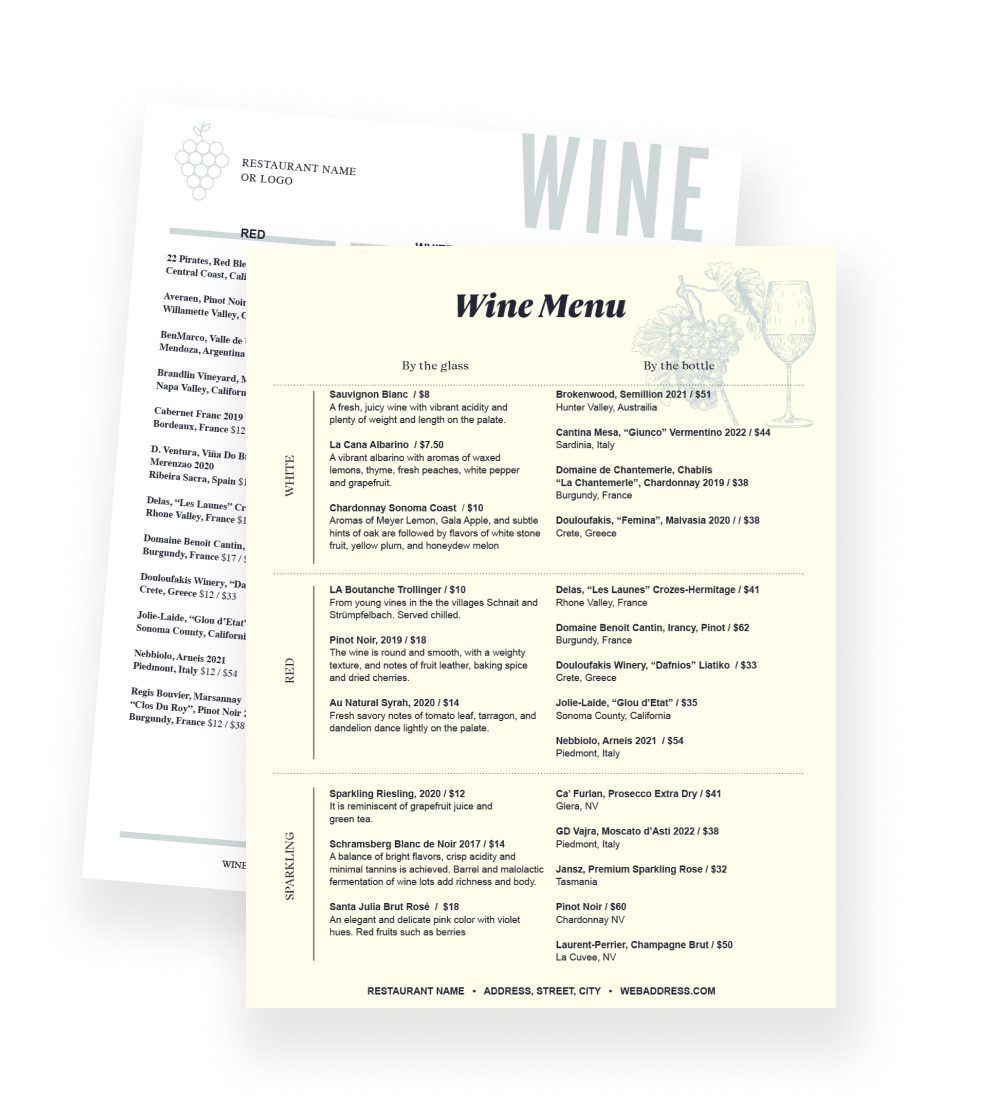
 Wine Menu Templates
Use these wine menu templates as a starting point for your menu design or to give your menu a refresh.
Get Free DownloadRunning a BYOB (“bring your own bottle”) restaurant or bar might sound like a simple way to sidestep liquor licensing—but the legal landscape isn’t always so straightforward. In some states, BYOB is completely off-limits. In others, it’s allowed under specific rules or with a special permit.
Whether you’re looking to cut costs, offer more flexibility to guests, or test your concept before applying for a liquor license, it’s important to know what’s legal in your area. In this guide, we’ll break down when a BYOB liquor license might be required, how different states (and cities) handle BYOB policies, and how to decide if going BYOB is right for your business.
Key takeaways
BYOB laws vary widely by state, and sometimes by municipality, so compliance starts with local research.
Some states prohibit BYOB entirely, while others allow it with specific rules or permits.
Even without a liquor license, your business may still face restrictions on allowing guests to bring alcohol.
BYOB can reduce startup costs but comes with legal gray areas and limited revenue opportunities.
Before offering BYOB, check with your local alcohol control board to avoid fines or future licensing issues.
Do BYOB establishments need a liquor license?
Whether or not your BYOB bar or restaurant needs a liquor license depends on where your business is located. For example, some states almost entirely prohibit BYOB establishments. The Ohio Department of Commerce says:
“BYOB, as it is often called, is illegal in Ohio with very limited exceptions.”
Meanwhile, others make special exceptions, and a few take a more relaxed approach. One example is New Jersey, where unlicensed restaurants are allowed to let customers bring their own beer or wine—no permit required.
Previously, state law even banned these venues from advertising their BYOB policy. However, that restriction was overturned in a 2017 federal ruling, which found the advertising ban violated the First Amendment. As a result, unlicensed restaurants in New Jersey can now legally promote their BYOB policies.
Wine Menu Templates
Use these wine menu templates as a starting point for your menu design or to give your menu a refresh.

How to figure out if you need a BYOB liquor license
Determining whether you need a license or permit to allow BYOB at your establishment depends entirely on your location, and sometimes, your business model. Here's how to navigate the process:
Contact your local ABC office: When in doubt, reach out directly. BYOB laws are often vague or outdated. In fact, in researching this article we noticed some outdated and conflicting information. Fortunately, regulators should be able to give you clear, up-to-date answers specific to your location.
Verify your license status: If your business already has a liquor license, you may not be allowed to let guests bring their own alcohol. And even if you don’t have a license, BYOB may still be restricted. Some states, like California, explicitly prohibit BYOB in unlicensed venues.
Understand what’s allowed: In many states, BYOB is only allowed for beer and wine, not liquor.
Look into corkage and liability: Even if BYOB is legal, you may need liability insurance or staff training to cover your legal responsibilities. Charging a corkage fee may also be restricted in some states.
BYOB liquor license examples
Because BYOB laws can vary so much from state to state, and even from town to town, it would be impossible to cover the nuances of every law in the country. Instead, here are some notable examples of states and municipalities with different types of BYOB liquor licenses:
Arizona has a formal process for BYOB operations. The state refers to BYOB locations as "unlicensed locations" in their liquor laws. Establishments wanting to provide BYOB services must submit an unlicensed location application to the Arizona Department of Liquor Licenses & Control, which will then conduct a site inspection.
In Massachusetts, restaurants without a liquor license can offer BYOB in certain towns that allow it. For example, towns like Brookline have local BYOB permitting systems that outline what’s allowed, and may include rules around staff training or corkage fees.
In New York, customers can bring their own alcoholic beverages as long as the beverage is covered under the establishment's license. For example, a customer cannot bring liquor into a restaurant that is only licensed for wine and beer. Additionally, the customer must remove any unconsumed portion of the alcoholic beverage when they leave the licensed premises.
BYOB is generally permitted in Pennsylvania without obtaining a liquor license, and is also typically allowed in licensed establishments. Businesses can set their own BYOB policies and may charge a corkage fee. However, licensees remain liable for any Liquor Code violations, and local ordinances may impose additional restrictions.
Before offering BYOB, check with your local alcohol control board or licensing authority to ensure you’re in compliance. Violations can result in fines, shutdowns, or loss of your liquor license.
BYOB vs. traditional liquor license: Which is right for you?
Choosing between a BYOB setup and a full liquor license depends on your budget, business model, and long-term goals. While BYOB is ideal for low-overhead concepts and tight margins, a full liquor license makes sense if you're aiming to build a beverage-forward program or maximize per-table revenue.
BYOB liquor license pros
Lower startup costs: No need to invest in a liquor license, which can cost thousands (or even hundreds of thousands) depending on your state.
Simpler operations: No alcohol inventory, purchasing, or staff RBS certifications in most cases.
Appeals to certain diners: Some guests prefer to bring their own wine for special occasions or to avoid high markups.
BYOB liquor license cons
No revenue from alcohol: You miss out on high-margin beverage sales, which are a major profit center for many restaurants.
Limited control: You can’t curate a drink menu or influence pairings, and some guests may bring low-quality products that don’t fit your vibe.
Legal gray areas: Rules vary widely by location, and small missteps can sometimes result in penalties or permit issues.
Traditional liquor license pros
Increased revenue: Alcohol sales can significantly boost check averages and profit margins.
Stronger brand identity: Craft cocktails, wine pairings, and signature drinks help you stand out.
More control over service: You decide what’s served, how it’s priced, and how it complements your menu.
Traditional liquor license cons
Higher costs and regulation: Licenses can be expensive and hard to get. You’ll also face strict compliance rules, inspections, and staff training requirements.
Insurance and liability: Serving alcohol increases your legal and insurance exposure.
BYOB begins with knowing your local liquor license laws
Offering BYOB can be a great way to keep costs low and give guests more flexibility, but it’s not as simple as just letting people bring their own drinks. Depending on your state (and sometimes your city), you may need alcohol-related permits, have to follow specific rules, or be restricted entirely.
Before you move forward with a BYOB policy, be sure to check local laws and reach out to your alcohol control board. Remember, a little research upfront can save you from major headaches down the line!
Is this article helpful?
DISCLAIMER: This information is provided for general informational purposes only, and publication does not constitute an endorsement. Toast does not warrant the accuracy or completeness of any information, text, graphics, links, or other items contained within this content. Toast does not guarantee you will achieve any specific results if you follow any advice herein. It may be advisable for you to consult with a professional such as a lawyer, accountant, or business advisor for advice specific to your situation.
 Trending


Subscribe to On the line
Sign up to get industry intel, advice, tools, and honest takes from real people tackling their restaurants' greatest challenges.
By submitting, you agree to receive marketing emails from Toast. We’ll handle your info according to our privacy statement. Additional information for California residents available here.