
Restaurant Partnership Agreement: What It Is & How It Works
A restaurant partnership agreement defines each partner's roles, ownership, and responsibilities. Learn what it is, how it works, and what yours should include.
Author
 RESOURCE
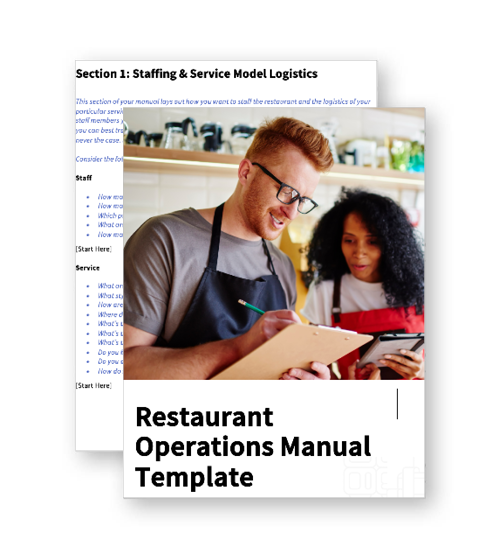
 Restaurant Operations Manual Template
Use this free template to easily outline all of your operating procedures and make day-to-day operations as consistent as possible.
Get Free DownloadStarting a restaurant with a partner can be an exciting way to launch your business. But before you sign a lease or start splitting profits, it’s important to define how your partnership will actually work.
A restaurant partnership agreement lays out ownership, responsibilities, and financial expectations so everyone is aligned from day one. In this guide, we’ll explain when you need one, what it should include, and why it matters for your business.
Key takeaways
A restaurant partnership agreement defines ownership, roles, financial terms, and decision-making between co-owners.
You need a partnership agreement anytime two or more people share ownership and profits in a restaurant.
Without a written agreement, state default laws may determine how your business operates.
A strong agreement helps prevent disputes, clarify responsibilities, and protect personal assets.
Planning for profit distribution, voting procedures, and exit strategies supports long-term stability.
Opening a Restaurant Checklist
So many things go into opening a restaurant. Use this free PDF checklist to set your new restaurant up for success.

What is a restaurant partnership agreement?
A restaurant partnership agreement is a legal document that outlines how two or more owners will share and run a restaurant business. It defines ownership percentages, roles, financial arrangements, and how major decisions will be made.
Think of it as a roadmap for your partnership. When expectations are clearly documented upfront, partners are better aligned — and misunderstandings are far less likely down the road. A restaurant partnership agreement typically:
Defines ownership percentages.
Clarifies roles and responsibilities.
Outlines profit and loss distribution.
Establishes decision-making authority.
Protects all partners legally.
Restaurant partnership agreement vs. operating agreement
The terms “partnership agreement” and “operating agreement” are often used interchangeably — but they apply to different legal structures. Both outline ownership and management terms, but your legal structure determines which document applies.
Partnership agreement: Typically used in general partnerships.
Operating agreement: Used for LLCs.
If your restaurant is structured as a general partnership, you’ll use a partnership agreement. If it’s an LLC, you’ll use an operating agreement — but the purpose is similar: clearly define how the business will be run.
When do you need a restaurant partnership agreement?
You need a restaurant partnership agreement anytime two or more people share ownership of a restaurant business. If multiple individuals are investing money, sharing profits, or making decisions together, a formal agreement is essential. Situations where a partnership agreement is typically needed include:
Two or more co-founders starting a restaurant together.
An investor and operator sharing ownership.
Family members opening a restaurant as joint owners.
Business partners splitting profits and responsibilities.
Why does a restaurant partnership agreement matter?
A restaurant partnership agreement isn’t just a legal formality, it’s a tool for clarity and risk prevention. Clear agreements don’t signal distrust — they strengthen partnerships by setting everyone up with shared expectations from day one.
When ownership terms, responsibilities, and expectations are clearly documented, partners can focus on building the business instead of navigating avoidable misunderstandings. A strong partnership agreement:
Prevents disputes: Clarifies expectations before conflicts arise and reduces the chance of costly disagreements.
Protects personal assets: Defines liability and legal structure so partners understand their individual risk.
Clarifies financial responsibilities: Outlines capital contributions, profit sharing, and ongoing obligations.
Supports long-term stability: Creates a framework for growth, change, and future decision-making.
What can happen without a restaurant partnership agreement?
Without a written agreement, your partnership is typically governed by your state’s default partnership laws. That means decisions about ownership, profit sharing, and responsibility may be determined by legal standards — not by what you and your partner intended.
In most states, partnerships are governed by versions of the Uniform Partnership Act (UPA) or the Revised Uniform Partnership Act (RUPA). These laws provide default rules for how partnerships operate, including how profits are divided and how a partnership may dissolve if a partner leaves.
While these statutes offer structure, they may not reflect your specific financial contributions or business goals. When expectations aren’t clearly documented, small misunderstandings can grow into larger issues. For example:
State default partnership laws apply: Ownership and profit splits may default to equal shares, regardless of who invested more.
Ownership disputes can escalate: Disagreements over control or decision-making authority can disrupt operations.
Profit disagreements can stall operations: Unclear compensation structures can create tension between partners.
Legal costs can increase: Resolving conflicts after the fact is often more expensive than documenting expectations upfront.
What should a restaurant partnership agreement include?
Every partnership agreement will look a little different depending on your business model and legal structure. That said, most restaurant partnership agreements cover a few core areas that define ownership, responsibilities, and financial expectations.
Understanding these common components can help you prepare for productive conversations with your partners and attorney.
1. Ownership structure
The ownership section outlines who owns what — and how that ownership translates into authority and financial rights. It typically includes:
Equity percentages: The exact ownership share for each partner.
Capital contributions: How much money, equipment, or other assets each partner contributes.
Voting rights: Whether voting power matches ownership percentage — and how major decisions are approved.
Clearly documenting ownership from the start helps prevent confusion as the business grows.
2. Roles and responsibilities
Even in equal partnerships, responsibilities are rarely identical. This section defines who does what in the day-to-day operation of the restaurant. It often covers:
Day-to-day management duties: Who oversees kitchen operations, front-of-house, marketing, or vendor relationships.
Hiring authority: Who can hire or terminate employees — and under what conditions.
Financial oversight: Who manages bookkeeping, budgeting, payroll, and reporting.
Defining roles upfront reduces overlap, prevents gaps in accountability, and helps the business run more smoothly.
3. Profit and loss distribution
This section explains how money flows between the business and its owners. Even when ownership percentages are clear, compensation structure should be spelled out to avoid confusion. Key elements often include:
How profits are divided: Whether distributions follow ownership percentages or another agreed-upon structure.
How losses are handled: How financial losses are allocated among partners.
Salary vs. owner draws: Whether partners receive a regular salary, periodic distributions, or both.
Clear financial terms help set expectations and reduce misunderstandings — especially during slower seasons or periods of growth.
4. Decision-making process
Not every decision requires a formal vote — but major business moves usually should. This section defines how authority works within the partnership. It typically outlines:
Major vs. minor decisions: Which decisions require partner approval (e.g., taking on debt, expanding locations) versus routine operational choices.
Voting requirements: Whether decisions require a simple majority, unanimous consent, or weighted voting based on ownership.
Deadlock procedures: What happens if partners disagree and can’t reach a decision.
Establishing a decision-making framework helps keep the business moving forward — even when opinions differ.
5. Exit strategy and buyouts
No one enters a partnership expecting it to end — but planning for change protects everyone involved. A thoughtful exit strategy provides clarity if circumstances shift. Common considerations include:
What happens if a partner leaves: Whether due to resignation, retirement, disability, or other circumstances.
Buyout formulas: How a departing partner’s ownership share is valued and paid out.
Succession planning: How ownership transitions are handled if a partner passes away or steps away from the business.
Planning for transitions doesn’t signal instability — it strengthens the partnership by preparing for the unexpected.
How to develop a restaurant partnership agreement
Creating a restaurant partnership agreement starts with alignment. Before involving attorneys or drafting documents, partners should have honest conversations about ownership, responsibilities, finances, and long-term goals.
A clear discussion upfront makes the formal agreement much easier to build. While every situation is different, the development process often includes:
Start with a detailed partner discussion: Talk through expectations, roles, compensation, and future plans before putting anything in writing.
Document financial contributions clearly: Outline who is investing what — whether cash, equipment, property, or sweat equity.
Consider using a structured template as a starting point: Templates can help organize key sections, though they should be customized to your situation.
Consult an attorney familiar with restaurant businesses: A legal professional can ensure your agreement reflects your state laws and protects all parties involved.
Review and update the agreement as the business grows: Ownership structures and responsibilities can evolve over time — your agreement should reflect those changes.
Strong agreements, stronger relationships
A restaurant partnership agreement helps ensure everyone understands ownership, responsibilities, and how decisions will be made before challenges arise.
When expectations are documented and aligned, partners can focus on building the business instead of resolving misunderstandings. As the co-owners of Garbanzo Mediterranean Fresh in Boston put it:
“Our advice, or words of wisdom, on staying friends throughout the business process is three-fold: don’t forget to have fun, it’s okay to disagree and don’t take anything too personally. Maintaining the laughs and jokes while integrating the business into the equation is essential.”
A strong agreement doesn’t replace trust — it protects it. Taking the time to put your partnership terms in writing sets your restaurant up for smoother operations, stronger collaboration, and long-term success.
Restaurant Business Plan Template
No matter where you’re at in your restaurant ownership journey, a business plan will be your north star. Organize your vision and ensure that nothing is overlooked with this free template.
FAQ
What is a restaurant partnership agreement?
A restaurant partnership agreement is a legal document that outlines how two or more owners will run and share a restaurant business. It defines ownership percentages, financial arrangements, roles, and how major decisions will be made.
Is a restaurant partnership agreement legally required?
Whether a written agreement is legally required depends on your business structure and state laws. However, anytime two or more people share ownership, having a formal agreement in place is strongly recommended to clarify expectations and reduce disputes.
What is the difference between a restaurant partnership agreement and an LLC operating agreement?
A partnership agreement is typically used for general partnerships, while an operating agreement is used for limited liability companies (LLCs). Both documents define ownership and management terms, but the correct document depends on your legal structure.
What happens if one restaurant partner wants to leave?
If a partner leaves, the terms outlined in the agreement typically determine what happens next. This may include a buyout process, valuation formula, transfer restrictions, or other procedures agreed upon in advance.
Can a restaurant partnership agreement be changed after it is signed?
Yes. Partnership agreements can generally be amended if all partners agree to the changes and the updates are properly documented. It’s common to revise agreements as the business grows or ownership changes.
Should a restaurant use a template for their partnership agreement?
Templates can be helpful as a starting point, but they should be customized to reflect your specific business structure and state requirements. Consulting an attorney familiar with restaurant businesses can help ensure your agreement is comprehensive and enforceable.
What should a restaurant partnership agreement include?
Most restaurant partnership agreements include ownership structure, capital contributions, profit and loss distribution, decision-making processes, roles and responsibilities, and exit or buyout terms. The exact details should reflect your business model and long-term plans.


Is this article helpful?
DISCLAIMER: This information is provided for general informational purposes only, and publication does not constitute an endorsement. Toast does not warrant the accuracy or completeness of any information, text, graphics, links, or other items contained within this content. Toast does not guarantee you will achieve any specific results if you follow any advice herein. It may be advisable for you to consult with a professional such as a lawyer, accountant, or business advisor for advice specific to your situation.
 Trending



Subscribe to On the line
Sign up to get industry intel, advice, tools, and honest takes from real people tackling their restaurants' greatest challenges.
By submitting, you agree to receive marketing emails from Toast. We’ll handle your info according to our privacy statement. Additional information for California residents available here.