
Restaurant Service: 8 Simple Ways to Impress Your Guests
Restaurant service shapes every aspect of the guest experience. Learn simple ways to impress your customers and keep them coming back.
Author
 RESOURCE
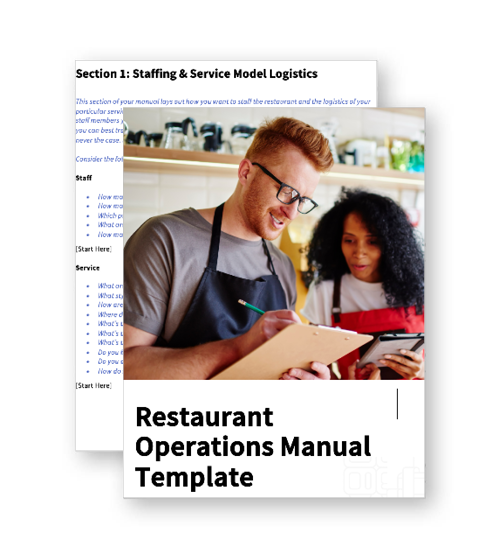
 Restaurant Operations Manual Template
Use this free template to easily outline all of your operating procedures and make day-to-day operations as consistent as possible.
Get Free DownloadRestaurant service refers to how a restaurant delivers hospitality and supports guests throughout their dining experience. From the moment someone walks through the door to the time they pay the bill, every interaction plays a role in how customers perceive a restaurant. As celebrity chef Gordon Ramsay told Mashed:
“The service needs to match the food… That’s called uniting the teams together… I like the joyful introduction. I like the charisma that a maître d’ or waiter gives off. I love hearing the specials, and I love seeing how smart they look in the attire that matches.”
When service runs smoothly and guests feel welcomed and cared for, they’re far more likely to return. In this guide, we’ll explore the key elements of great restaurant service and practical ways your restaurant can deliver a consistently positive guest experience.
Key takeaways
Great restaurant service combines hospitality, clear systems, and strong teamwork to create positive guest experiences.
Well-trained staff help deliver consistent hospitality and make guests feel welcome from the moment they arrive.
Smooth ordering, strong communication, and good service timing help restaurants prevent mistakes and keep service running efficiently.
Technology like POS systems, handheld devices, and reservation tools can streamline operations and support better service.
Restaurants that prioritize hospitality and continuous improvement are more likely to build loyalty and repeat business.
Restaurant Business Plan Template
No matter where you’re at in your restaurant ownership journey, a business plan will be your north star. Organize your vision and ensure that nothing is overlooked with this free template.

1. Train staff to deliver consistent hospitality
Great restaurant service starts with well-trained staff who know how to make guests feel welcome from the moment they arrive. When staff understand service expectations and feel confident in their roles, they’re better equipped to create positive experiences for guests.
Greet guests promptly and warmly: A friendly welcome sets the tone for the entire dining experience.
Make helpful recommendations: Guests appreciate confident guidance when choosing dishes or drinks.
Communicate with guests: Clear communication helps prevent misunderstandings and builds trust.
Handle questions or concerns with patience: Calm, attentive responses help resolve issues before they escalate.
Work together as a team: Coordination between staff keeps service running smoothly during peak periods.
2. Create a smooth ordering experience
Ordering should feel easy and intuitive for guests. Clear menus and reliable ordering systems help prevent mistakes and keep service moving efficiently.
Use easy-to-read menus: Organized menus help guests make decisions quickly and reduce confusion.
Confirm orders to ensure accuracy: Repeating orders back to guests helps catch mistakes before they reach the kitchen.
Enter orders carefully: Accurate POS entries ensure the kitchen receives the correct information.
Manage dietary requests and modifications: Document special requests so the kitchen can prepare dishes safely and correctly.
3. Focus on timing and service flow
When timing is managed well, guests feel attended to without feeling rushed. Strong service flow helps teams deliver food at the right pace and prevents bottlenecks during busy shifts.
Avoid long gaps between courses: Consistent pacing keeps guests engaged throughout the meal.
Monitor tables: Paying attention to refill requests, finished plates, or questions helps prevent delays.
Manage busy periods with organized workflows: Clear roles and responsibilities help teams stay efficient during peak hours.
Maintain steady table turnover: Balancing efficiency with hospitality keeps the dining experience comfortable while supporting revenue.
4. Improve communication between front and back of house
When front-of-house and kitchen teams stay aligned, orders are more accurate and guests receive food faster. Clear communication systems help reduce mistakes and keep everyone working toward the same goal.
Use clear order routing systems: Reliable systems ensure the kitchen receives accurate order information.
Keep communication open: Regular updates help both servers and kitchen staff stay aligned during service.
Use kitchen display systems (KDS): Digital systems help organize tickets and track preparation times.
Confirm special requests and modifications: Clear documentation helps prevent confusion and ensures guest needs are met.
Coordinate during peak service times: Extra communication during busy periods helps prevent delays and mistakes.
5. Use technology to support better service
When used thoughtfully, technology supports staff rather than replacing hospitality. The right tools help streamline operations behind the scenes so staff can focus more on the guest experience.
POS systems: Modern POS systems help ensure orders are recorded correctly and sent to the kitchen quickly.
Handheld POS devices: Mobile devices allow servers to take orders and process payments without leaving the table.
QR ordering options: Digital menus and ordering options give guests more flexibility while reducing wait times.
Reservation and waitlist management tools: Digital systems help manage guest flow and reduce congestion at the host stand.
6. Handle guest issues with professionalism
Even well-run restaurants occasionally face service issues. How your team responds can make a lasting impression on guests. When staff address concerns calmly and respectfully, they can often turn a negative moment into a positive experience.
Listen carefully to concerns: Giving guests the chance to explain their issue helps them feel heard and respected.
Respond quickly and respectfully: Prompt responses show that the restaurant takes guest feedback seriously.
Offer solutions: Small gestures or adjustments can help resolve problems and restore trust.
Empower managers to resolve problems: Managers should have the authority to step in and make decisions when needed.
Collect and implement feedback: Guest concerns can highlight opportunities to improve processes or training.
7. Design your restaurant for efficient service
A well-designed space helps teams work faster and more comfortably. Thoughtful layouts reduce bottlenecks, support communication between teams, and make it easier for staff to focus on guests.
Maintain clear pathways: Open walkways allow servers to move efficiently between tables, service stations, and the kitchen.
Organize service stations: Keeping essentials like utensils, glassware, and condiments nearby helps staff work more quickly.
Ensure tables are spaced for easy access: Adequate spacing allows servers to deliver food and assist guests without disruption.
Position POS terminals conveniently for staff: Easy access to POS systems helps servers enter orders quickly and accurately.
Design smart kitchen workflows: Well-organized prep and cooking areas help kitchen teams maintain steady output during service.
8. Build a culture of hospitality
Great restaurant service is built on more than processes. When hospitality becomes part of a restaurant’s culture, staff are more likely to support each other and go the extra mile for guests.
At Cameron Mitchell Restaurants, leadership emphasizes growth, support, and internal development as part of its hospitality culture. As chief people officer Katie Laudick explains, the company encourages both guests and employees to embrace a service-first mindset:
“We never see one position as the end. We see it as ‘that’s just another feather in their cap’… Succession growth and planning is a huge part of my role, but it’s a huge part of our entire executive team… We feed ourselves on ‘The answer is yes. What’s the question?’ not [just] to our guests, but to our associates.”
Lead by example as a manager or owner: Leadership sets the tone for how teams interact with guests and each other.
Recognize team members: Acknowledging strong performance encourages staff to maintain high standards.
Encourage teamwork and support: Collaboration helps teams stay organized and positive under pressure.
Provide ongoing training and feedback: Regular coaching helps staff continue improving their service skills.
Celebrate wins and positive feedback: Sharing success stories reinforces the importance of great hospitality.
Great service sets you apart
When staff are trained, communication is strong, and operations run smoothly, guests notice the difference. Over time, those positive experiences build loyalty, strengthen your reputation, and keep guests coming back.
As Christopher Holtz, senior relationship manager in Bank of America’s Global Commercial Banking’s Restaurant Group, explains, strong service culture can create a positive cycle for restaurants:
“Restaurants are a people business; your assets walk out the door every day and the way you interact with people makes a tremendous difference… People like to be acknowledged, to be treated well — and that becomes a virtuous cycle. The stores attract more traffic and make more money, so they can hire and retain better quality employees, which enables them to fuel that culture and feed sales, which then makes it possible to pay more.”
Ultimately, when restaurants invest in their teams and create a culture of hospitality, great service becomes a natural part of the guest experience.
FAQ
What is restaurant service?
Restaurant service refers to how a restaurant delivers hospitality and interacts with guests throughout the dining experience. It includes greeting customers, taking orders, serving food and drinks, handling payments, and responding to guest requests.
What are the main types of restaurant service models?
The most common restaurant service models include full-service dining, quick-service restaurants (QSR), fast-casual service, counter service, and buffet-style service. Each model differs in how orders are taken, how food is delivered, and how much interaction occurs between staff and guests.
How do daily operations differ across service models?
Daily operations vary depending on the restaurant’s service model. Full-service restaurants require servers, hosts, and table management, while quick-service and counter-service restaurants rely more on speed, streamlined ordering, and efficient kitchen workflows.
What role does technology play in modern restaurant service?
Technology plays a major role in modern restaurant service by improving efficiency, accuracy, and guest convenience. Tools such as POS systems, online ordering platforms, digital menu boards, and reservation software help streamline operations and reduce errors.
How do I choose the right service model for my restaurant?
Choosing the right service model depends on factors like restaurant concept, target audience, location, and staffing capacity. Evaluating your menu style, expected customer volume, and operational resources can help determine the best fit.
What are key features of successful full-service dining today?
Successful full-service restaurants focus on high-quality hospitality, efficient operations, and memorable guest experiences. Well-trained staff, clear communication, and thoughtful service details help build strong relationships with guests.

Is this article helpful?
DISCLAIMER: This information is provided for general informational purposes only, and publication does not constitute an endorsement. Toast does not warrant the accuracy or completeness of any information, text, graphics, links, or other items contained within this content. Toast does not guarantee you will achieve any specific results if you follow any advice herein. It may be advisable for you to consult with a professional such as a lawyer, accountant, or business advisor for advice specific to your situation.
 Trending

Subscribe to On the line
Sign up to get industry intel, advice, tools, and honest takes from real people tackling their restaurants' greatest challenges.
By submitting, you agree to receive marketing emails from Toast. We’ll handle your info according to our privacy statement. Additional information for California residents available here.