Retail Payment Methods: 11 Types Retailers Should Know
Customers expect fast and flexible checkout options. Learn the most common types of retail payment methods and the pros and cons of each.
Author
 RESOURCE
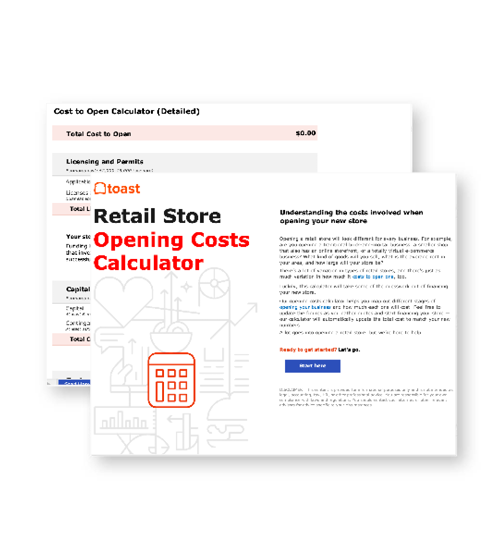
 Retail Store Opening Costs Calculator
This free calculator lays out some of the fundamental financial costs of opening a retail store, so you can start planning and bring your dream business to life.
Get Free DownloadRetail payment methods have evolved far beyond cash and checks. Today’s businesses may accept credit cards, contactless payments, mobile wallets, installment plans, digital gateways, and more. Each option comes with its own advantages, limitations, and operational considerations.
According to Federal Reserve research, retail payments are now dominated by cards, with credit and debit cards accounting for the majority of transactions, while cash represents a significantly smaller share. At the same time, ACH transfers, card payments, digital wallets, and peer-to-peer apps continue to grow in both usage and value.
In this guide, we’ll break down the most common retail payment methods, how they’re used, and the pros and cons of each—so you can determine the right mix for your business.
Key takeaways
Retailers have more payment options than ever, from traditional cash to digital wallets and installment plans.
Each payment method comes with unique pros and cons, including fees, speed, security, and operational complexity.
Offering multiple payment methods helps improve checkout flexibility and meet customer expectations.
Digital and contactless payments are increasingly common across in-store and online environments.
A modern POS system can simplify payment processing, reporting, and integration across all accepted methods.
Retail Store Opening and Closing Checklist
Use this free PDF checklist to set your staff up for success, every shift.

1. Cash
Cash is a traditional payment method where customers pay using physical currency. Transactions are completed immediately without involving a bank or payment processor.
Common uses
Often accepted in brick-and-mortar retail stores, convenience shops, and small businesses, especially for low-dollar purchases.
Pros
No payment processing fees
Immediate access to funds
No reliance on internet connectivity
Accessible for customers without bank accounts
Cons
Requires secure cash handling and storage
Higher risk of theft or loss
Time-consuming reconciliation
Not suitable for online transactions
2. Credit Cards
Credit cards allow customers to borrow funds from a financial institution to complete a purchase and repay the balance later. Payments can be processed via chip, swipe, or contactless tap. According to Capitol One research from January 2026, “83% of shoppers prefer to pay with cards over cash.”
Common uses
Widely accepted in both in-store and online retail environments, particularly for mid- to high-value purchases.
Pros
Convenient and widely used
Supports contactless and online payments
Can increase average transaction size
Integrates with rewards and loyalty programs
Cons
Payment processing fees
Potential chargebacks and disputes
Requires secure POS systems and PCI compliance
Dependence on payment networks and connectivity
3. Debit cards
Debit cards withdraw funds directly from a customer’s bank account at the time of purchase. Like credit cards, they can be used via chip, swipe, or tap-to-pay methods.
Common uses
Common across most retail environments for everyday purchases.
Pros
Fast electronic transactions
Broad customer adoption
Supports contactless payments
Reduces the need for customers to carry cash
Cons
Payment processing fees
Possible declined transactions due to insufficient funds
Dependence on internet and payment networks
Risk of fraud if card information is compromised
4. Contactless payments (tap to pay)
Contactless payments allow customers to complete transactions by tapping a card or device near a compatible payment terminal. This method uses near-field communication (NFC) technology to process payments quickly and securely.
Common uses
Widely used in brick-and-mortar retail stores, quick-service environments, and high-volume checkout settings where speed is important.
Pros
Faster checkout times
Reduced physical contact with payment terminals
Convenient for customers
Supports both contactless cards and mobile wallets
Cons
Requires NFC-enabled payment terminals
Still subject to processing fees
Dependent on internet connectivity
May have transaction limits in some cases
5. Mobile wallets (Apple Pay, Google Pay, etc.)
Mobile wallets allow customers to store payment information on a smartphone or wearable device and complete purchases digitally. Payments are typically made using tap-to-pay technology or online checkout integration.
Common uses
Common in in-store retail environments, mobile commerce, and e-commerce checkout processes.
Pros
Fast and convenient payment experience
Enhanced security through tokenization and biometric authentication
Supports loyalty and rewards integration
Reduces need for physical cards
Cons
Requires compatible devices and payment terminals
Not all customers use mobile wallets
Still subject to card processing fees
Dependent on device battery and connectivity
6. Buy Now, Pay Later (BNPL)
Buy Now, Pay Later (BNPL) allows customers to split purchases into installment payments over time, often without interest if payments are made on schedule. A third-party provider typically pays the retailer upfront and collects payments from the customer.
Common uses
Popular for higher-ticket retail purchases, online transactions, and sectors such as apparel, electronics, and home goods.
Pros
Can increase average order value
Makes larger purchases more accessible to customers
Retailers typically receive funds upfront from providers
May reduce cart abandonment for higher-priced items
Cons
Involves third-party provider fees
Not suitable for all transaction types
Can add complexity to checkout integration
May encourage customer overspending
7. Gift cards
Gift cards are prepaid payment cards that customers can use toward future purchases. They may be physical or digital and are typically branded for a specific retailer.
Common uses
Often sold in-store or online for gifting, promotions, and seasonal campaigns.
Pros
Encourages repeat business
Can increase customer acquisition through gifting
Provides upfront revenue
Supports promotions and loyalty initiatives
Cons
Requires tracking and balance management
Potential for fraud or misuse
May create accounting complexities
Unredeemed balances can complicate reporting
8. Store credit
Store credit is a form of internal payment issued by a retailer, often in place of a refund. Customers can apply it toward future purchases within the same business.
Common uses
Commonly issued for returns, exchanges, or customer service resolutions.
Pros
Keeps revenue within the business
Encourages repeat visits
Simplifies certain refund processes
Can improve customer satisfaction when handled clearly
Cons
Requires proper tracking and system integration
May create customer confusion if terms aren’t clear
Can increase administrative oversight
Limited to use within the issuing business
9. Online payment gateways (for e-commerce)
Online payment gateways securely process digital payments made through a website or mobile checkout page. They connect the retailer, customer, and payment processor to authorize and complete transactions.
Common uses
Essential for e-commerce websites, online ordering systems, and mobile checkout platforms.
Pros
Enables online and remote transactions
Supports multiple digital payment types
Provides encryption and fraud protection
Integrates with e-commerce platforms and POS systems
Cons
Processing and gateway fees
Requires technical setup and integration
Potential downtime or connectivity issues
Must comply with payment security standards
10. ACH / bank transfers (for large transactions)
ACH (Automated Clearing House) payments and bank transfers move funds directly from one bank account to another. These transactions are typically processed electronically without the use of cards.
Common uses
Often used for large transactions, B2B payments, wholesale orders, recurring billing, and high-ticket purchases.
Pros
Lower processing fees compared to credit cards
Suitable for high-value transactions
Reduces reliance on card networks
Supports recurring or scheduled payments
Cons
Slower processing times compared to card payments
May involve manual verification
Limited consumer use in everyday retail settings
Requires accurate bank information to avoid errors
11. Checks (where still accepted)
Checks are paper-based payment instruments that instruct a bank to transfer funds from a customer’s account to a retailer. While less common today, some businesses still accept them.
Common uses
Occasionally accepted in brick-and-mortar stores, specialty retailers, or for higher-value transactions.
Pros
Familiar payment method for some customers
Useful for customers without cards
Can support larger purchases
Cons
Risk of bounced checks
Slower processing and fund availability
Requires manual handling and verification
Less common among modern shoppers
Tap into the future
Offering multiple retail payment methods helps businesses meet customer expectations and create a smoother checkout experience. Industry projections estimate that spending through digital payment methods—including digital wallets, BNPL, and account-to-account payments—could surpass $33.5 trillion by 2030.
That kind of growth signals a clear trend: payment preferences are evolving, and businesses that keep pace will be better positioned to compete.
Fortunately, a modern POS system can simplify transaction processing, centralize reporting, track payment trends, and keep inventory and sales data aligned across channels—making it easier to stay current as payment technology advances.
Purchase Order Template
Use this template to create standardized purchase orders for requesting goods or services from vendors.
FAQ
What are the most popular retail payment methods in 2026?
The most popular retail payment methods include credit and debit cards, contactless payments, mobile wallets, and online payment gateways. Many retailers also offer Buy Now, Pay Later options and gift cards to provide additional flexibility.
How do contactless payments benefit retail businesses?
Contactless payments speed up checkout and improve overall customer convenience. Faster transactions can help reduce lines and enhance the in-store experience.
Should small retailers accept Buy Now, Pay Later?
Buy Now, Pay Later can help increase average order value and make higher-priced items more accessible to customers. However, retailers should evaluate provider fees and ensure the option fits their pricing and checkout strategy.
Is cash still necessary for retail businesses?
While digital payments are widely used, many retailers continue to accept cash to serve customers who prefer or rely on it. Accepting cash can broaden accessibility, especially in certain communities or for low-dollar purchases.
What payment methods should new retailers prioritize?
New retailers should prioritize widely adopted options such as credit and debit cards, contactless payments, and online payment gateways if selling digitally. From there, they can expand into mobile wallets, gift cards, or installment options based on customer demand.

Is this article helpful?
DISCLAIMER: This information is provided for general informational purposes only, and publication does not constitute an endorsement. Toast does not warrant the accuracy or completeness of any information, text, graphics, links, or other items contained within this content. Toast does not guarantee you will achieve any specific results if you follow any advice herein. It may be advisable for you to consult with a professional such as a lawyer, accountant, or business advisor for advice specific to your situation.
 Trending

Subscribe to On the line
Sign up to get industry intel, advice, tools, and honest takes from real people tackling their restaurants' greatest challenges.
By submitting, you agree to receive marketing emails from Toast. We’ll handle your info according to our privacy statement. Additional information for California residents available here.