Restaurant Reservation Software: Features & Cost Comparison
A full dining room doesn't happen by accident. Here's what reservation software actually does for your floor, your host stand, and your regulars — and what those per-cover fees are really costing you.
Author
 RESOURCE
 Restaurant Floor Plan Templates
Use these restaurant floor plan templates to get inspired as you map, or reimagine, the layout and space setup for your restaurant.
Get Free DownloadRestaurant reservation software lets guests book tables online while helping restaurants manage availability, waitlists, seating, table status, and guest information. The right system makes service easier to coordinate without creating unpredictable costs as reservation volume grows.
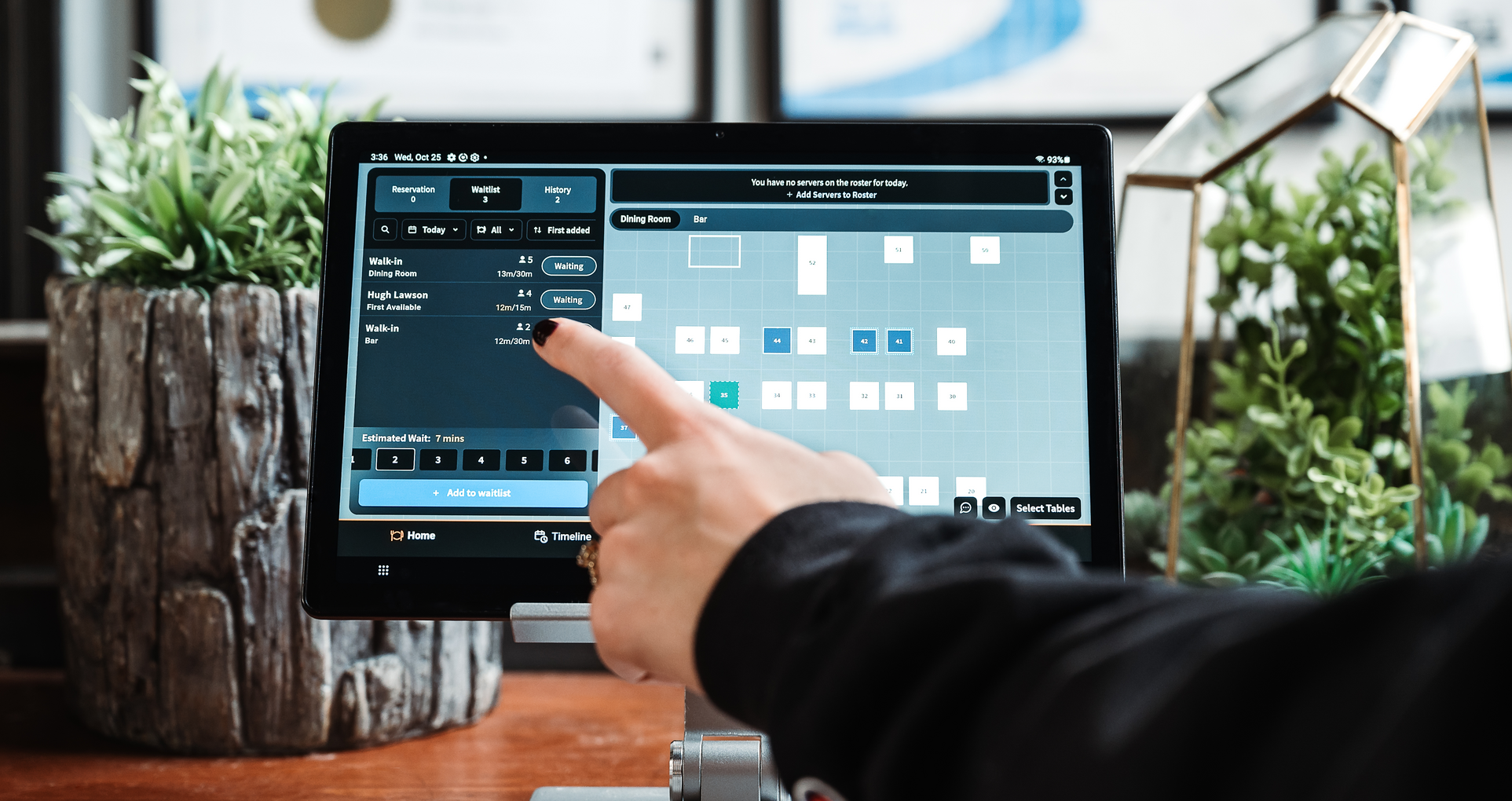
Bookings also need to connect with what happens after guests arrive. Toast Tables® brings reservations, waitlists, table management, and guest profiles into the Toast Platform, helping hosts coordinate seating with live restaurant activity.
This guide explains what reservation software does, how leading pricing models compare, and what restaurants should consider before choosing a platform.
Key takeaways
Restaurant reservation software connects bookings, waitlists, table management, and guest information.
Costs may include monthly subscriptions, per-cover fees, prepayment charges, and add-ons.
Flat-rate plans become less expensive per cover as reservation volume grows.
Toast Tables Plus had the lowest published flat price among the unlimited plans compared.
The right platform should fit the restaurant’s booking sources, host workflow, POS, and guest strategy.
Restaurant Waitlist Template
A template to help your host keep track of walk-ins and provide estimated wait times, keeping guests happy and staff organized.

What is restaurant reservation software?
Restaurant reservation software is a digital system that lets guests reserve tables and helps restaurant teams manage bookings, availability, seating, and service. The term can cover several related functions:
Online reservations: Guests select an available date, time, and party size.
Waitlist management: Employees organize walk-ins, estimate waits, and notify guests when tables are ready.
Table management: Hosts use a digital floor plan to track seating and table status.
Reservation marketplaces: Diners discover restaurants and book through a third-party website or app.
Guest management: Teams record visit history, preferences, notes, and special requests.
Some restaurant reservation apps combine all these functions. Others focus more narrowly on bookings, diner discovery, prepaid experiences, or guest marketing.
What can restaurant reservation software do?
The exact features depend on the platform and plan, but restaurant reservation software can support the guest journey from booking through seating.
Accept online reservations: Let guests book through the restaurant’s website, search engines, apps, or dining marketplaces.
Manage availability: Set booking intervals, table combinations, party-size limits, and reservation pacing.
Coordinate reservations and walk-ins: Give hosts one view of scheduled parties and the active waitlist.
Track table status: Show which tables are available, seated, ordering, paying, or being reset.
Communicate with guests: Send confirmations, reminders, waitlist updates, and reservation changes.
Reduce no-shows: Use reminders, deposits, card holds, cancellation policies, or prepayments.
Build guest profiles: Record visit history, allergies, preferences, celebrations, and VIP notes.
Balance server coverage: Track sections, rotations, and cover counts during service.
Measure performance: Review covers, booking sources, cancellations, no-shows, and table turns.
Connect with the POS: Share table, check, spend, and guest information with the systems employees use during service.
That final connection can make guest data more useful. Toast Guest CRM combines guest profiles with order history and restaurant activity, helping teams recognize regulars and provide more relevant hospitality.
How much does restaurant reservation software cost?
Restaurant reservation software may charge a flat monthly subscription, a fee for each seated guest, prepayment fees, or custom pricing. Some platforms combine several of these charges.
Operators should compare costs using their expected reservation volume instead of relying only on the advertised starting price. “Effective cost per cover” means the monthly software cost divided by the number of reservation covers processed through the platform.
These prices were checked in August 2026 and may change. Remember, subscription prices may not represent the complete cost. A complete quote makes it easier to compare equivalent features, booking volumes, and contract periods.
Platform and plan | Published pricing used | Estimated monthly cost at 1,500 covers | Effective software cost per cover |
$199/month with unlimited direct reservations | $199‡ | $0.13‡ | |
$299/month plus $1 per seated network cover | $299+* | $0.20+* | |
$249/month with no per-cover fees | $249 | $0.17 | |
$289/month with no cover fees on standard reservations | $289† | $0.19† | |
$279/month with annual billing and unlimited covers | $279§ | $0.19§ |
‡Toast Tables Plus requires an active, qualifying Toast POS subscription, which is not included in this comparison. *OpenTable Core charges $1 for each seated diner booked through the OpenTable network. Direct website and phone reservations do not incur that network-cover fee, so the total depends on the restaurant’s booking sources.
†Tock’s 3% prepayment fee and standard payment-processing fees are not included.
Resy and Tock are both owned by American Express and now offer a shared selection of plans. They are listed separately because Resy Platform and Tock Essential use different products, features, and fee structures.
§Yelp Guest Manager Plus costs $279 per month with annual billing; its month-to-month price is $349.
Host Training Checklist
Use this checklist to help streamline your host training process and ensure that your new hosts get off to a great start.
How to choose restaurant reservation software
The best restaurant reservation software is the system that fits how guests book and how employees run service. A less expensive product can create more work if it requires duplicate entry or doesn’t support the restaurant’s booking strategy. Consider the following factors:
Primary goal: Decide whether the restaurant needs to generate demand, manage existing demand, reduce no-shows, sell prepaid experiences, or connect guest data.
Booking sources: Identify how many reservations come from the restaurant’s website, phone, search results, social media, or third-party marketplaces.
Expected cost: Apply subscription, per-cover, prepayment, and add-on fees to realistic monthly booking estimates.
POS integration: Check whether reservations, table status, checks, guest spending, and customer data move between systems automatically.
Host workflow: Test how quickly employees can manage reservations, walk-ins, wait times, floor plans, and table changes.
Booking controls: Look for reservation pacing, table combinations, party-size rules, access rules, and configurable booking intervals.
No-show protection: Determine whether the restaurant needs reminders, deposits, card holds, cancellation fees, or prepayments.
Guest booking experience: Test how easily diners can reserve, modify, cancel, join a waitlist, and contact the restaurant.
Guest-data access: Confirm what information the restaurant receives and how it can be used.
Retention tools: Decide whether reservation activity should support targeted outreach through products such as Toast Marketing and Toast Loyalty.
Scalability: Review multi-location controls, reporting, permissions, and shared guest profiles.
Contract terms: Request a complete quote and understand the commitment before signing.
Integration is especially important because reservations do not operate separately from service. Toast POS can connect reservations with tables, orders, payments, and guest activity, reducing the need for hosts and managers to maintain the same information in several places.
Keep reservations connected with service
A reservation is only the beginning of the guest experience. The real value of the software is how well it helps the team turn expected demand into smoother seating, more prepared service, and fewer surprises during the shift.
Toast Tables® connects reservations, waitlists, table status, and guest profiles with Toast’s POS system. That connection gives employees more useful information during service while helping restaurants create a smoother experience from booking through payment.
Restaurant Operations Manual Template
Use this free template to easily outline all of your operating procedures and make day-to-day operations as consistent as possible.
FAQ
What is restaurant reservation software?
Restaurant reservation software lets guests book tables online and helps restaurants manage availability, waitlists, seating, and guest information.
What is the most used platform for restaurant reservations?
No single reservation platform is the most used in every market because adoption varies by region, restaurant type, and other factors.
What is the best app for restaurant reservations?
The best reservation app makes it easy for guests to view availability and create, modify, or cancel bookings.
What is the best restaurant booking system?
The best system fits the restaurant’s workflow, budget, and technology stack, with Toast Tables offering a leading option for Toast POS restaurants.
How does reservation software reduce no-shows?
Reservation software reduces no-shows through confirmations, automated reminders, deposits, card holds, cancellation fees, and prepayments.
What’s the difference between a reservation system and a waitlist tool?
A reservation system schedules tables in advance, while a waitlist tool organizes guests waiting for the next available table.
Does reservation software integrate with POS systems?
Yes, Toast Tables integrates with Toast POS to connect reservations, table status, guest profiles, orders, and service activity.
How much does restaurant reservation software cost?
Unlimited restaurant reservation plans can cost $199 to $289 per month, while some providers also charge per-cover, prepayment, or add-on fees.
Can small restaurants benefit from reservation software?
Yes, reservation software can help small restaurants reduce phone calls, organize limited seating, manage walk-ins, and prevent no-shows.


Is this article helpful?
DISCLAIMER: This information is provided for general informational purposes only, and publication does not constitute an endorsement. Toast does not warrant the accuracy or completeness of any information, text, graphics, links, or other items contained within this content. Toast does not guarantee you will achieve any specific results if you follow any advice herein. It may be advisable for you to consult with a professional such as a lawyer, accountant, or business advisor for advice specific to your situation.

Subscribe to On the line
Sign up to get industry intel, advice, tools, and honest takes from real people tackling their restaurants' greatest challenges.
By submitting, you agree to receive marketing emails from Toast. We’ll handle your info according to our privacy statement. Additional information for California residents available here.