
10 Largest Grocery Chains in the U.S. Ranked by Revenue
The grocery chains with the most stores aren’t always the most profitable. Discover the 10 largest grocery chains in the U.S. ranked by revenue.
Author
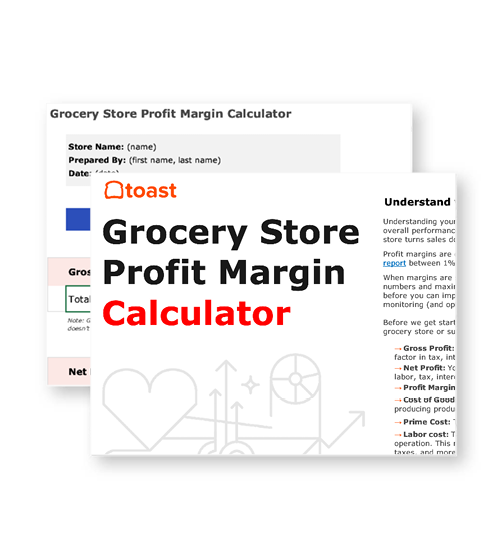
Grocery Store Profit Margin Calculator
Use this free Grocery Store Profit Margin Calculator to help consistently capture and track your profit margin.
Get Free DownloadGrocery retail is a massive business, and some companies are bringing in tens (or even hundreds) of billions in sales every year. While store count matters, it’s not the only way to measure a chain’s impact. In fact, some of the biggest grocery earners in the country don’t have the most locations.
In this guide, we’re ranking the largest grocery chains in the U.S. by revenue to see which retailers dominate when it comes to dollars. From hypermarkets and warehouse clubs to discount grocers and premium organic markets, here are the top grocery chains bringing in the most cash.
Key takeaways
The top grocery chains by revenue aren't always the ones with the most stores.
Warehouse clubs like Costco and Sam’s Club generate massive grocery sales through bulk pricing and membership models.
Traditional supermarkets like Kroger and Publix remain strong players thanks to regional dominance and private-label brands.
Discount grocers like Aldi succeed through extreme operational efficiency and limited-assortment models.
The U.S. grocery market supports a wide range of business models—from high-end organic chains to low-cost, high-volume retailers.
Grocery Store Profit Margin Calculator
Use this free Grocery Store Profit Margin Calculator to help consistently capture and track your profit margin.

1. Walmart
Estimated U.S. grocery revenue: $276 billion
Headquarters: Bentonville, Arkansas
Business model: Hypermarket / Supercenter
Although known for its broad general merchandise selection, over half of Walmart’s U.S. revenue comes from grocery sales. The company operates a mix of Walmart Supercenters, which combine full grocery stores with general merchandise, and Neighborhood Markets, which are smaller stores focused almost entirely on groceries and pharmacy items.
Walmart’s grocery dominance is built on everyday low prices (EDLP), a high-volume supply chain, and private-label brands like Great Value and Marketside.
2. Costco
Estimated U.S. grocery revenue: $101.5 billion
Headquarters: Issaquah, Washington
Business model: Membership-based warehouse club
As a membership-based warehouse club, Costco relies on bulk purchasing and limited selection to drive volume and reduce costs. Shoppers pay an annual fee for access to wholesale pricing across both grocery and general merchandise categories, resulting in extremely high sales per square foot.
Roughly half of the company’s U.S. sales come from its food and sundries category, and private-label brand Kirkland Signature plays a major role in Costco’s grocery success.
3. Kroger
Estimated U.S. grocery revenue: $150.0 billion
Headquarters: Cincinnati, Ohio
Business model: Traditional supermarket (multi-banner)
Kroger operates more than 2,700 stores under a range of regional banners, including Ralphs, Fred Meyer, King Soopers, Fry’s, and Harris Teeter.
As the largest traditional supermarket chain in the U.S., Kroger’s success is driven by its regional diversification, strong private-label offerings (like Simple Truth and Private Selection), and a vertically integrated supply chain that allows for greater control over costs and quality.
4. Ahold Delhaize
Estimated U.S. grocery revenue: $96.7 billion
Headquarters: Quincy, Massachusetts (U.S. operations)
Business model: Multi-banner traditional supermarket group
Ahold Delhaize operates a portfolio of well-known regional grocery brands in the U.S., including Food Lion, Stop & Shop, Giant, Hannaford, and The Fresh Market. The company’s strength lies in local brand recognition, consistent value, and store accessibility across the East Coast and Southeast.
5. Albertsons
Estimated U.S. grocery revenue: $79.2 billion
Headquarters: Boise, Idaho
Business model: Traditional supermarket (multi-banner)
Albertsons operates regional banners like Safeway, Acme, Jewel-Osco, Shaw’s, Vons, and Tom Thumb. The grocer competes through regional familiarity and strong private-label brands, including O Organics, Signature Select, and Open Nature.
6. Publix
Estimated U.S. grocery revenue: $59.7 billion
Headquarters: Lakeland, Florida
Business model: Employee-owned traditional supermarket
Publix is one of the most beloved grocery chains in the U.S., with a strong market share in Florida, Georgia, and surrounding states. Unlike most large grocery chains, Publix is employee-owned, which contributes to a strong internal culture and high standards of hospitality.
7. Sam’s Club
Estimated U.S. grocery and consumables revenue: $56.8 billion
Headquarters: Bentonville, Arkansas
Business model: Membership-based warehouse club
Sam’s Club, a division of Walmart, operates hundreds of warehouse stores across the U.S. and specializes in bulk grocery, household essentials, and general merchandise. Like its rival Costco, Sam’s Club uses a membership model that allows customers to access low prices on large-quantity items.
8. Aldi
Estimated U.S. grocery revenue: $47.7 billion
Headquarters: Batavia, Illinois (U.S. HQ)
Business model: Discount supermarket
Aldi is a discount grocery chain known for its low prices, efficient store design, and heavy use of private-label products. Its business model is built on operational efficiency — from quarter-operated shopping carts to minimal staffing and shelf-ready packaging.
Even its packaging strategy is optimized for space and savings. As Shannon Vissers, an analyst at Merchant Maverick, explains: “For example, Aldi’s chips don’t have the extra puff of air that fills up name-brand chip bags, so they’re able to fit more bags on their shelves.”
9. Target
Estimated U.S. grocery revenue: $24 billion
Headquarters: Minneapolis, Minnesota
Business model: General merchandise retailer with grocery offerings
Target has become a major player in the food retail space, with grocery accounting for roughly 20–25% of the chain’s total U.S. sales. This is thanks to expanded food sections in its standard stores and full grocery departments in larger SuperTarget locations, as well as a growing range of private-label brands like Good & Gather, Favorite Day, and Market Pantry.
10. Whole Foods Market
Estimated U.S. grocery revenue: $20 billion
Headquarters: Austin, Texas
Business model: Natural and organic supermarket
Whole Foods Market is a premium grocery chain focused on natural, organic, and sustainably sourced foods. It caters to health-conscious and environmentally aware consumers, offering high standards for ingredients, labeling, and sourcing practices.
Acquired by Amazon in 2017, Whole Foods occupies the high-end segment of the grocery market, emphasizing quality over discount pricing.
The largest grocery chains are bringing in billions
Some of the top grocery earners on this list, like Costco, Sam’s Club, and Target, don’t operate nearly as many locations as traditional supermarkets. But thanks to high-volume sales, bulk pricing, and integrated general merchandise, they generate billions in grocery revenue each year.
The biggest takeaway? Size doesn’t always mean store count. Whether it’s Walmart’s national footprint, Aldi’s no-frills efficiency, or Whole Foods’ premium pricing strategy, these chains represent diverse paths to grocery success.
Is this article helpful?
DISCLAIMER: This information is provided for general informational purposes only, and publication does not constitute an endorsement. Toast does not warrant the accuracy or completeness of any information, text, graphics, links, or other items contained within this content. Toast does not guarantee you will achieve any specific results if you follow any advice herein. It may be advisable for you to consult with a professional such as a lawyer, accountant, or business advisor for advice specific to your situation.
 Trending

Subscribe to On the line
Sign up to get industry intel, advice, tools, and honest takes from real people tackling their restaurants' greatest challenges.
By submitting, you agree to receive marketing emails from Toast. We’ll handle your info according to our privacy statement. Additional information for California residents available here.