Grocery Store Promotions: 12 Essential Strategies for 2025
Shoppers are watching their wallets, but smart grocery store promotions can boost customer loyalty. Learn key strategies to drive success.
Author

 RESOURCE
 Grocery Store Marketing Plan
Create a marketing plan that'll drive repeat business with this customizable marketing playbook template and interactive calendar.
Get Free DownloadWith prices higher than ever, shoppers are being extra careful about how they spend on groceries. In fact, research from Nielsen IQ shows that nearly nine out of ten shoppers have changed their habits—by shopping at value-focused stores, choosing store brands, buying in bulk, and looking for deals and promotions.
Even though inflation has cooled a bit, customers are still watching their wallets. That makes smart grocery store marketing more important than ever—not just to drive sales, but to show real value.
And while promotions can help bring people in, they don’t always work—about half of all promotional sales would have happened anyway. That’s why it’s so important to carefully develop a plan, use the right tools, and make every offer count.
Key takeaways
Effective promotions begin with clear goals, audience segmentation, and a well-balanced calendar.
AI and data tools help create tailored offers, optimize inventory, and boost engagement.
Focus on key value items and smart signage to make your store feel affordable, without slashing prices across the board.
From in-store tastings to loyalty perks, experiences and personalization drive deeper connections.
The best promotions evolve through measurement, A/B testing, and ongoing optimization.
Unique Grocery Store Promotion Ideas
1. Create a strategic promotional plan
A successful promotional strategy doesn’t start with flashy discounts—it starts with structure. Before rolling out any offers, grocers need to define clear goals and develop a roadmap that aligns with customer needs and business priorities.
By starting with strategy, you can implement the grocery store marketing ideas that work best for your customers and build campaigns that genuinely drive results. Here’s how to build a strategic promotional plan:
Set measurable objectives: Are you trying to increase store traffic? Boost average basket size? Clear out seasonal inventory? Defining your goals upfront helps guide every other decision.
Segment your audience: Identify key customer groups—families, budget-conscious shoppers, health enthusiasts—and tailor promotions to their needs.
Build a promotional calendar: A well-balanced calendar includes a mix of short-term offers (like flash sales or weekly deals) and long-term strategies (like loyalty programs or seasonal campaigns).
Allocate resources across channels: Decide how much effort and budget to dedicate to in-store signage, digital outreach, loyalty campaigns, and community events.
Establish a measurement framework: Track the impact of each promotion using POS data, measuring metrics like sales lift, basket size, and ROI.
2. Leverage AI-powered personalization
Today’s customers expect more than generic coupons; they want relevant, personalized offers that reflect their buying habits. Artificial intelligence makes that possible. Here’s how AI is reshaping grocery store promotions:
Customer behavior analysis: Machine learning tools can sift through purchasing data to identify patterns, like which customers always buy pasta on Sundays or tend to splurge before long weekends. These insights allow grocers to create timely, relevant offers.
Complementary product discounts: AI can recommend discounts on related items, like offering 10% off marinara sauce when someone buys spaghetti.
Inventory optimization: AI doesn’t just personalize promotions—it also forecasts demand. AI can help your store maintain optimal stock levels and avoid overstocking or missed sales opportunities by analyzing historical sales trends, seasonality, and regional preferences.
Dynamic offers: With real-time data, grocers can adjust promotions based on shifting behavior or external events, like a sudden heatwave triggering discounts on grill-ready meats and cold drinks.
One great example of a grocery store chain leaning into AI is Aldi. The supermarket recently partnered with Digital Wave Technology to automate product content creation using AI. The tool extracts attributes from images and packaging to close data gaps, and even writes multilingual product descriptions.
Aldi says this AI-driven approach will help scale content production and improve digital discoverability—key components for engaging online shoppers and expanding efficiently across digital channels. With plans to open over 225 stores in 2025, Aldi’s investment in AI shows how automation can support personalization at scale—both online and in-store.
3. Use price perception tactics
You don’t have to be the lowest-price grocer in town to win over value-conscious shoppers. The key lies in managing price perception—shaping how customers feel about your store’s pricing, even if not every item is a bargain. Here’s how to create a value-driven perception without sacrificing margins:
Promote high-visibility items: Focus your discounts on the essentials customers buy most frequently—think milk, eggs, bananas, or bread. These items form the baseline for how affordable your store seems overall.
Limit deep discounts to strategic SKUs: While offering across-the-board price cuts can hurt margins, a focused approach maintains profitability while still appealing to price-sensitive shoppers.
Use signage to highlight savings: Clear, bold in-store signage can reinforce the idea that your store offers great value, even if most prices remain unchanged.
Communicate value across platforms: Use your weekly circular, app, and website to emphasize budget-friendly deals and bundles.
As Matthew Pavich, Senior Director of strategy and innovation at Supermarket News, explains:
“Not every retailer can or wants to be a Walmart or Aldi when it comes to offering extremely competitive pricing across the entire assortment. But that doesn’t mean you get a free pass from investing in your price perception. Perhaps you can’t offer the lowest prices on everything, but you can offer the most attractive prices on the items your customers care most about… For a lot of retailers, investing in price perception starts with setting their item strategy and identifying key value items (KVIs), i.e., the products consumers care about most.”
4. Pay attention to product placement and visual merchandising
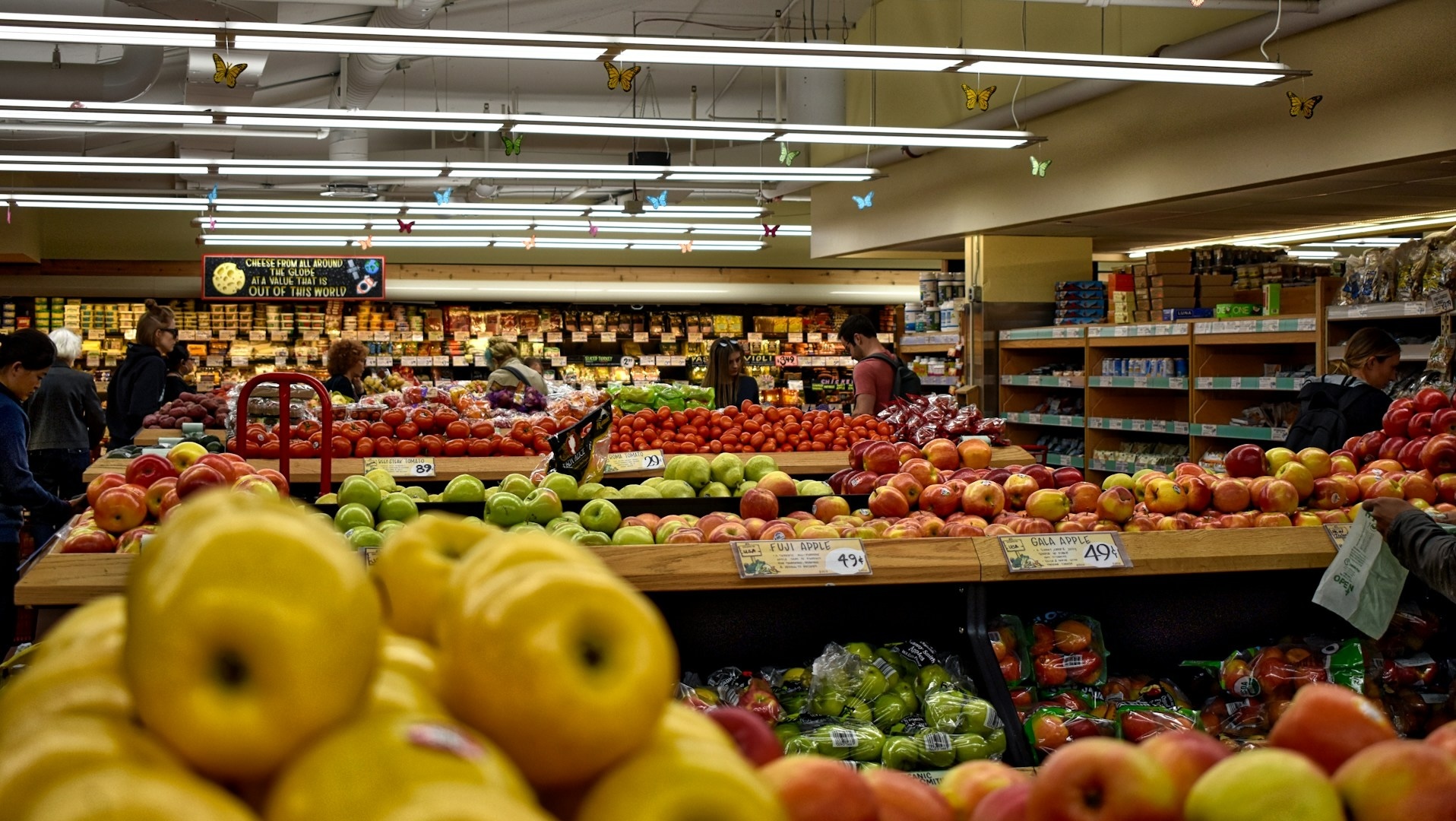
How and where you display products is just as important as what you promote. Smart merchandising turns casual browsing into impulse buying—and great displays make promotions impossible to miss.
The average shopper spends 41 minutes in a grocery store per trip, giving you ample opportunity to guide their attention with strategic displays. Here are the most effective tactics for visual merchandising and placement:
End-cap displays: These high-traffic areas are perfect for seasonal items, high-margin promotions, or featured private-label goods.
Cross-merchandising: Position complementary items together, like pasta with sauce, chips with salsa, or cereal with milk, to encourage bundled purchases.
Eye-level placement: Place high-margin or promotional products where they’re most visible—eye-level shelves get the most attention.
Point-of-sale displays: Feature smaller, tempting items like gum, candy, or seasonal snacks near checkout lanes to spark last-minute impulse buys.
Grocery Store Operations Manual Template
Use this free template to easily outline all of your operating procedures and make day-to-day operations as consistent as possible.

5. Boost basket size with bundling and promotional pricing
Bundling and promotional pricing are time-tested ways to boost basket size and move inventory faster. Done strategically, these tactics don’t just encourage more spending—they simplify the shopping experience for your customers. Here are some effective ways to use bundling and pricing to your advantage:
Meal bundle deals: Group together all the ingredients for a specific recipe—like taco night or pasta primavera—and offer them at a discount. It’s convenient for customers and increases units per transaction.
Complementary pairings: Promote deals on products that naturally go together (e.g., coffee and creamer, wine and cheese, granola and yogurt).
Volume discounts: Encourage bulk buying with offers like “Buy 2, Get 1 Free” or “10 for $10.” These work especially well for staples and non-perishables.
Limited-time offers (LTOs): Creating a sense of urgency drives quicker decisions and boosts short-term sales.
Streamline price changes with tech: Walmart reports that its digital shelf label system (DSL) reduced price update time from two days to a few minutes. “This efficiency means we can spend more time assisting customers and less time on repetitive tasks,” the company noted.
If your supermarket offers discounts for a limited time only, customers are more likely to buy in bulk—especially when the deal feels exclusive or fleeting. The key is to structure these offers in a way that feels like a win for the shopper, while still protecting your margins.
6. Deliver personalized offers through digital channels
In the digital age, one-size-fits-all discounts are quickly becoming obsolete. Shoppers expect offers that reflect their habits and preferences—and they’re more likely to act when promotions feel personally relevant. Here’s how to make digital promotions smarter and more effective:
Mobile app notifications: Trigger real-time offers based on a customer’s past purchases or browsing history.
Email marketing with personalized product picks: Use loyalty program data to curate deals that resonate with each individual shopper.
Location-based offers: Use geofencing to send promotions when a customer is near your store—encouraging unplanned visits and impulse buys.
7. Build an omnichannel loyalty program
Loyalty programs are no longer just punch cards or points—they’re full-fledged marketing tools that drive engagement across in-store and digital channels. By building an omnichannel system, you can deliver consistent value while gathering valuable customer insights. Here are some ways to strengthen your loyalty program:
Reward repeat business: Use a points-based system with clear incentives to encourage ongoing purchases.
Introduce tiered perks: Offer added benefits—like exclusive discounts or early access—as customers reach new loyalty levels.
Personalize offers: Tap into purchase history to deliver meaningful promotions through email, app, or POS.
Create exclusivity: Give members special access to events, deals, or product launches.
8. Host in-store experiences and community events
Creating memorable in-store experiences is one of the most effective ways to build loyalty and increase dwell time. Promotions that go beyond discounts—into education, entertainment, and community—give shoppers a reason to return. Consider these ideas:
Offer tastings and demos: Feature new or seasonal products with sampling stations or chef-led cooking demos.
Run educational events: Host sessions on nutrition, cooking on a budget, or meal planning for families.
Celebrate local culture: Tie in promotions with nearby school events, farmer collaborations, or holiday traditions.
9. Monetize your platforms with retail media networks
Your digital storefront is more than a shopping experience—it’s valuable real estate. As retail media continues to surge, grocery stores can generate new revenue streams by offering advertising space across their websites, apps, and in-store digital displays.
In fact, according to eMarketer, retail media is projected to make up nearly 25% of all U.S. media ad spend by 2028, with spending expected to rise from $54.85 billion in 2024 to $129.93 billion. With that in mind, here’s how to tap into the retail media opportunity:
Feature sponsored products: Let brands pay for premium placement in digital search results or category listings.
Run display ads: Offer ad space in your grocery app, website banners, or in-store screens.
Offer targeted promotions: Use customer shopping behavior to deliver hyper-relevant branded offers.
Monetize communication channels: Let brands sponsor app notifications or email placements tied to their products.
10. Promote private label products
Private label brands offer a double win: value for customers and strong margins for grocers. As shoppers grow more price-conscious and brand-agnostic, store-exclusive products are becoming essential to promotional strategies. Make the most of your private label offerings:
Highlight affordability: Position private label items as quality, budget-friendly alternatives to national brands.
Create exclusive bundles: Pair private label goods with name-brand favorites to increase visibility.
Feature them in seasonal promos: Use themed displays to showcase private label items during key shopping periods.
Build trust with quality: Invest in packaging, taste, and consistency to turn trial into repeat purchase.
11. Lock in loyalty with subscription and membership programs
Subscription-based loyalty programs are gaining traction—and for good reason. When customers commit to a paid membership, they’re not just investing in savings—they’re committing to your store as their go-to. Here’s how to make it work:
Offer premium perks: Free or discounted delivery, exclusive discounts, and priority access to promotions are powerful motivators.
Promote convenience: Subscriptions encourage habitual shopping behavior, especially when paired with recurring orders or delivery.
Create annual plans: Lock customers in for a full year, giving you time to build lasting loyalty and shift shopping habits.
Differentiate with unique value: Include perks like double rewards points, free samples, or member-only events.
One great example is Walmart+, whose members visit an average of 29 times per year—11 more times than non-members.
12. Measure performance and optimize over time
The most effective promotions aren’t set-it-and-forget-it—they evolve. By tracking key performance indicators (KPIs) and continuously testing new approaches, you can sharpen your strategy and maximize impact. Here’s how to stay agile and data-driven:
Track the right KPIs: Focus on metrics like incremental sales lift, promotion ROI, basket size, customer retention, and cross-category sales impact.
Run A/B tests: Try different formats, timing, and messaging to see what resonates best with different segments.
Segment your analysis: Break down performance by shopper type, location, or daypart to uncover new opportunities.
Adapt based on trends: Monitor competitors and seasonal shifts to keep your promotions timely and relevant.
Put the “pro” in grocery store promotions
Promotions are more than short-term sales drivers—they're opportunities to build loyalty, boost engagement, and strengthen your brand. By combining smart strategy with modern tools like AI, personalization, and a comprehensive POS system, you can turn everyday offers into long-term growth.
Start small, stay consistent, and keep testing. With the right mix of creativity and data, your next promotion could be the one that keeps customers coming back!


Is this article helpful?
DISCLAIMER: This information is provided for general informational purposes only, and publication does not constitute an endorsement. Toast does not warrant the accuracy or completeness of any information, text, graphics, links, or other items contained within this content. Toast does not guarantee you will achieve any specific results if you follow any advice herein. It may be advisable for you to consult with a professional such as a lawyer, accountant, or business advisor for advice specific to your situation.
 Trending


Subscribe to On the line
Sign up to get industry intel, advice, tools, and honest takes from real people tackling their restaurants' greatest challenges.
By submitting, you agree to receive marketing emails from Toast. We’ll handle your info according to our privacy statement. Additional information for California residents available here.