
How To Start a Pop-up Shop
Learn how to start a pop-up shop, from budgeting and permits to marketing, and measuring success — all in one complete guide.

Author
 RESOURCE
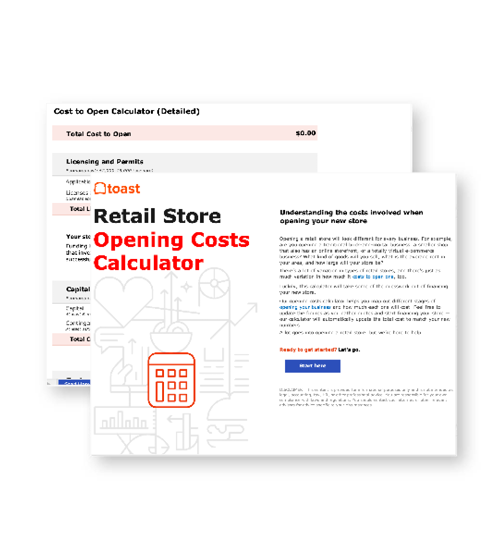
 Retail Store Opening Costs Calculator
This free calculator lays out some of the fundamental financial costs of opening a retail store, so you can start planning and bring your dream business to life.
Get Free DownloadPop-up shops have evolved from quick fixes into strategic retail powerhouses, now generating an estimated $80 billion in annual revenue — with projections to exceed $95 billion by 2025. These short-term storefronts provide brands a flexible, low-risk way to test markets, launch new products, and create buzzworthy customer experiences without the overhead of a permanent location.
Bottom line: A successful pop-up requires more than a great idea. You'll need smart planning, the right permits, strong marketing, and a memorable experience that drives both immediate sales and long-term brand impact.
Understanding the pop-up landscape
Pop-up retail has transformed from a scrappy experiment into a sophisticated marketing strategy. Today, it’s a flexible, low-risk way for brands to test markets, launch new products, and create buzz-worthy customer experiences. In fact, 80% of retailers that have opened a pop-up shop considered it a success, with 58% planning to open another — a clear sign of the model’s effectiveness.
A standout case is Glossier’s Covent Garden pop‑up in London, which reportedly drew over 100,000 visitors in its run and posted the highest average daily sales among all its pop‑ups worldwide. This success helped convince the team to extend the original temporary concept, reinforcing how pop‑ups can validate demand and inform longer-term retail strategies.
Market opportunity and timing
With shifting consumer behavior and rising commercial vacancies, the retail environment is ripe for short-term takeovers.
Here’s why the timing works in your favor:
Mall vacancy rate: 8.7% — a goldmine for temporary tenants
Lease turnover time: 10 to 15 months for most properties
This long vacancy window makes landlords more open than ever to short-term pop-up agreements.
Duration and success factors
Most successful pop-ups fall into the sweet spot of 3 to 14 days — just long enough to build momentum, but short enough to create FOMO.
Key success factors:
Urgency: Short runs drive impulse visits
Exclusivity: Limited-time offerings feel special
Clear goals: Sales, exposure, testing — define what success looks like before launch
A well-timed pop-up can spark excitement, boost visibility, and drive meaningful results in just days.
Financial considerations and startup costs
Understanding the financial requirements helps entrepreneurs plan effectively and avoid unexpected expenses during setup and operation.
Initial investment breakdown
The financial barrier to entry remains relatively low compared to traditional retail. You don’t need a huge budget to get started — 44% of pop-up shops cost less than $5,000 to open, making this an accessible option for emerging brands and established businesses testing new markets.
Costs typically include:
Rent and location fees: Monthly rent for average retail space is $24.53 per square foot, while mall space rents at $34.39 per square foot
Setup and design: Display fixtures, signage, lighting, and branded elements
Inventory: Product stock appropriate for expected duration and foot traffic
Marketing and promotion: Social media advertising, influencer partnerships, and promotional materials
Insurance and permits: Required licenses and coverage for the temporary operation
Cost-saving strategies
Smart location choices and partnerships can significantly reduce startup costs. Here are a few ways to keep overhead low:
Shared spaces: Look for pop-up malls or co-retail environments to split costs
Store-in-store models: Partner with an existing retailer to cut expenses by half
Built-in traffic: Take advantage of established foot traffic and shared resources
Artist Jennie Lennick, founder of the vibrant lifestyle brand Jenny Lemons, highlights how this approach has helped sustain her business, “If I was just doing my own website, I wouldn’t make ends meet. But being on Faire, having a pop-up here and a pop-up there, doing craft fairs, and using other people’s audiences and the work they’ve done to benefit my brand as well as their business—that really helps make a well-rounded business.”
Her experience reflects how pop-ups and shared retail spaces aren’t just about saving money — they’re also about tapping into community and collaboration to build long-term momentum.
Retail Store Opening Costs Calculator
This free calculator lays out some of the fundamental financial costs of opening a retail store, so you can start planning and bring your dream business to life.

Legal requirements and permits
Proper licensing and permit acquisition ensure smooth operations and prevent costly shutdowns or legal issues.
Essential permits and licenses
Before opening your doors — even temporarily — it’s critical to understand the legal requirements for operating in your city or state. Requirements vary by location and business type, but common necessities include:
Business license: Most jurisdictions require temporary business licenses regardless of operation duration
Sales tax permit: Required for businesses selling tangible goods subject to sales tax
Food service permits: Mandatory if selling food or beverages, with specific health department approvals
Signage permits: Required for exterior signs, especially those extending over public spaces
Special permits: Alcohol sales, entertainment, or specific industry requirements
Compliance considerations
Even short-term retail spaces must follow local laws and zoning codes. Before opening, make sure your pop-up meets all local regulations and zoning requirements:
Zoning laws: Confirm your concept is permitted in the chosen space
Use permits: Some spaces require a temporary certificate of occupancy or a change-of-use permit
Building conversions: Extra approvals may be needed when repurposing the space
Insurance requirements
Proper coverage protects you, your customers, and your landlord during your pop-up’s run. Make sure to obtain:
Liability insurance: Required by many locations for temporary operations
Additional insured: Some landlords may require you to name them on the policy
Coverage type: Choose a plan that fits the specific risks of your pop-up
Location selection and lease negotiation
Choosing the right location directly impacts foot traffic, brand visibility, and the overall success of your pop-up venture.
Location research criteria
Successful location selection requires analyzing multiple factors, such as:
Target demographic presence: Ensure your ideal customers frequent the area regularly
Foot traffic patterns: Study pedestrian flow during different times and days
Accessibility: Consider parking availability, public transportation, and walkability
Competitive landscape: Analyze nearby businesses for complementary or competing presence
Cost versus potential return: Balance rental costs with projected revenue opportunities
One creative example of location strategy is Showfields, a curated multi-brand retail space in New York and Miami. It allows emerging brands to rent a section of an experiential store, gaining access to prime real estate, shared foot traffic, and built-in marketing — without the costs of a standalone lease.
Lease negotiation strategies
Pop-up leases differ significantly from traditional retail agreements. Key negotiation points include:
Flexible duration terms: Secure options to extend or terminate based on performance
Utility and maintenance responsibilities: Clarify who handles electricity, water, cleaning, and security
Modification permissions: Negotiate rights to install fixtures, paint, or alter the space temporarily
Performance-based pricing: Some landlords accept revenue-sharing arrangements instead of fixed rent
Early termination clauses: Include provisions for unexpected circumstances or poor performance
Design and setup strategies
Creating an engaging physical environment that reflects your brand while optimizing for sales and customer experience.
Space planning fundamentals
Effective pop-up design balances brand representation with practical sales requirements. Be sure to review:
Traffic flow optimization: Design clear pathways that guide customers through your space naturally
Product placement strategy: Position high-margin or featured items in prime visibility zones
Interactive elements: Include touchable displays, try-on areas, or demonstration spaces
Social media readiness: Create Instagram-worthy backdrops and photo opportunities for user-generated content
Flexibility considerations: Design modular setups that can adapt to different spaces or events
Branding and atmosphere creation
Thoughtful branding transforms your pop-up from a temporary space into a memorable brand experience. Here’s how to bring it to life:
Brand identity: Reflect who you are through visuals and tone
Consistency: Use cohesive color schemes, typography, and design elements
Sensory design: Incorporate music, lighting, and scent to engage the senses
Social appeal: Create Instagram-worthy moments that encourage sharing
A great example is Zuckercreme in Portland, which began as a themed pop-up market and festival space. Founder Dani Cone utilized rotating seasonal décor, local artist collaborations, and nostalgic event concepts to create an immersive, shareable atmosphere that eventually led to a thriving brick-and-mortar café and community space.
Marketing and promotion strategies
Effective marketing maximizes visibility and drives traffic during your limited operating window.
Pre-launch buzz building
Building anticipation before opening creates momentum and ensures a strong initial turnout:
Social media teasers: Use mysterious captions and behind-the-scenes content to generate curiosity
Influencer partnerships: Collaborate with local influencers who resonate with your target audience
Email marketing campaigns: Email marketing campaigns promoting limited-time events see 54% higher open rates than standard promotional emails
Media outreach: Contact local press and bloggers 2 to 3 months before launch for print, 2 weeks for online coverage
Hashtag strategy: Create a unique, memorable hashtag for your event to track engagement and encourage sharing
Real-time engagement tactics
During operation, leverage social media for immediate impact:
Live content creation: Use Instagram Stories, Facebook Live, and TikTok to showcase energy and exclusivity
User-generated content encouragement: Brands that actively engage with user-generated content during pop-up events see a 28% increase in social media engagement
Exclusive offers: Provide social media-only discounts or experiences to drive online-to-offline traffic
Real-time updates: Share inventory updates, special appearances, or spontaneous events to create urgency
Guerrilla marketing opportunities
Go beyond digital with bold, in-person tactics that turn heads and draw crowds:
Street teams: Use brand ambassadors to interact with people and hand out samples or flyers
Mobile displays: Wrap vehicles with branding and park near high-traffic areas
Surprise moments: Plan unexpected stunts or pop-up experiences that spark social sharing
Operational best practices
Smooth daily operations ensure positive customer experiences and maximize sales opportunities during your limited timeframe.
Staffing considerations
The right team can make or break your pop-up experience:
Multitasking skills: Hire staff who can juggle sales, customer service, and setup tasks
Training: Teach product knowledge, brand storytelling, and how to engage on social media
Local hiring: Bring on team members familiar with the area to tap into community connections
Inventory management
Stay lean but prepared to meet demand throughout your pop-up run:
Stock wisely: Avoid over-investing while ensuring enough product to meet expected traffic
Scenario planning: Prepare for low, moderate, and high foot traffic outcomes
Restock strategy: Stay flexible to reorder or replenish popular items quickly
Technology integration
Use smart tools to streamline operations and collect valuable data:
Mobile POS systems: Setups like Toast allow you to accept multiple payment types quickly and easily
Customer capture: Use email sign-up tools and social media integration to grow your audience
Performance tracking: Leverage simple analytics to monitor sales and gather insights for future pop-ups
A compelling local example is Spice Waala, an Indian street-food pop-up started in Seattle’s Fremont and South Lake Union markets. After launching as a pop-up in 2018, the founders meticulously managed operations — from sourcing ingredients and scheduling high-volume prep to deploying mobile payment systems to move lines efficiently. This operational finesse helped them scale into a successful full-service storefront on Capitol Hill by 2019, followed by a second location in Ballard in 2021.
Measuring success and ROI
Establishing clear metrics helps evaluate performance and inform future pop-up strategies.
Key performance indicators
Track multiple metrics to assess overall success:
Sales metrics: Total revenue, average transaction value, conversion rates
Brand awareness: Social media engagement, hashtag usage, press coverage
Customer acquisition: Email signups, social media follows, customer database growth
Foot traffic: Daily visitor counts, peak hour patterns, return visitors
Long-term impact: Post-event sales increases, brand mention improvements, market expansion success
Post-event analysis
Reflect on what worked — and what didn’t — while it’s still fresh. Gather:
Customer feedback: Send surveys or follow-ups to gather insights directly from visitors
Social metrics: Review engagement, hashtag usage, and content performance
Lessons learned: Document takeaways to improve your next pop-up
Charlotte-based brand KIKI Jewelry built a loyal following by appearing at holiday markets and local events like Front Porch Sundays. After each pop-up, the team evaluated customer responses, tracked which products resonated most, and used that data to refine their offerings — ultimately helping them launch a successful permanent storefront in 2025.
Final thoughts
Pop-up shops offer a powerful way to build buzz, test ideas, and connect with customers — all without the long-term commitment of a traditional storefront. With the right planning, location, and creative energy, your pop-up can drive real results and lay the groundwork for long-term growth. Whether you're launching a new product or expanding into new markets, a well-executed pop-up can be the spark that moves your brand forward.
FAQ
How long should my first pop-up shop run?
For first-time pop-up operators, 3 to 7 days provides enough time to test the concept without overwhelming financial commitment. This duration allows you to gather meaningful data while minimizing risk and operational complexity.
What's the minimum budget needed to start a pop-up shop?
While 44% of pop-ups cost under $5,000, you can start with as little as $1,000 to $2,000 for very simple setups in low-cost locations. Make sure to budget for rent, basic fixtures, inventory, permits, and marketing materials.
Do I need the same permits as a permanent retail store?
Most jurisdictions require similar permits regardless of duration, including business licenses and sales tax permits. However, some areas offer streamlined temporary business licenses specifically for pop-up operations.
How far in advance should I start planning my pop-up shop?
Begin planning at least 3 months before your intended opening date. This allows time for location scouting, permit applications, design planning, and marketing campaign development. Permit processing alone can take 4 to 8 weeks in many areas.
Is this article helpful?
DISCLAIMER: This information is provided for general informational purposes only, and publication does not constitute an endorsement. Toast does not warrant the accuracy or completeness of any information, text, graphics, links, or other items contained within this content. Toast does not guarantee you will achieve any specific results if you follow any advice herein. It may be advisable for you to consult with a professional such as a lawyer, accountant, or business advisor for advice specific to your situation.
 Trending
Read More



Subscribe to On the line
Sign up to get industry intel, advice, tools, and honest takes from real people tackling their restaurants' greatest challenges.
By submitting, you agree to receive marketing emails from Toast. We’ll handle your info according to our privacy statement. Additional information for California residents available here.