
Best Toast POS Competitors and Alternatives (2026)
Looking for Toast POS competitors and alternatives? Review a breakdown of the top competitors and how they stack up in 2026.

Author
 RESOURCE
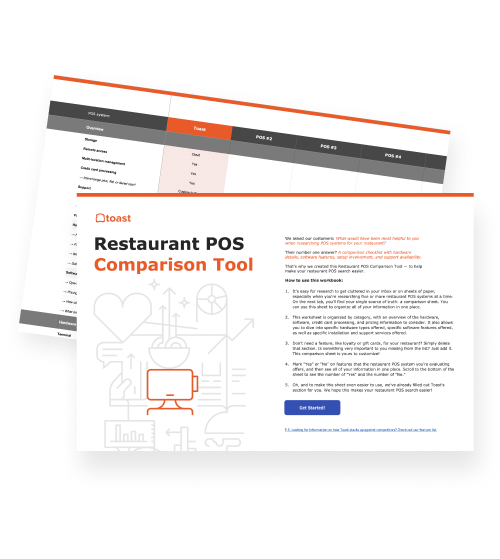
 Restaurant POS Comparison Tool
A free, customizable Restaurant POS Comparison Tool to research and compare point of sale systems in one Excel spreadsheet.
Get Free DownloadChoosing a point-of-sale system is one of the most important technology decisions you’ll make for your business. It shapes how orders flow, how guests pay, how your team operates, and how you grow. So if you’re here, you’re doing the most important homework.
This guide covers the top Toast competitors in 2026, what separates them, and the criteria every operator should use to evaluate any POS before signing on.
If you’re looking for more information, check out our Toast comparison page.
What to look for in a restaurant POS system
Before comparing systems, it helps to know what actually matters. A POS that works beautifully for a coffee truck may fail a 150-seat full-service restaurant and vice versa. Here are the factors that should drive any POS evaluation.
Restaurant-specific features
Generic retail POS platforms often get retrofitted for restaurants, but the seams show. Look for a system built with table management, menu coursing, kitchen display system (KDS) integration, menu modifiers, and ticket routing in mind from day one, not bolted on as an afterthought.
Online ordering and delivery
Dine-in traffic alone no longer sustains most restaurants. Online ordering, direct delivery, and third-party marketplace integrations should come standard.
Your restaurant’s online ordering menu should be as visible as possible. Toast does both: launch a fully branded online ordering app under your restaurant's name in the app store, and reach new guests through Toast Local's shared marketplace.
Reporting and analytics
Your POS generates a wealth of data. The question is whether you can access it in a way that’s useful and clear. Look for real-time reporting on labor cost, menu item profitability, sales by daypart, and channel-level performance (dine-in vs. takeout vs. delivery).
You can also take it a step further, with tools like Toast IQ, which doesn’t just understand what’s happening in your business, it anticipates what’s next in your local market and helps you act on it instantly.
Hardware built for the restaurant environment
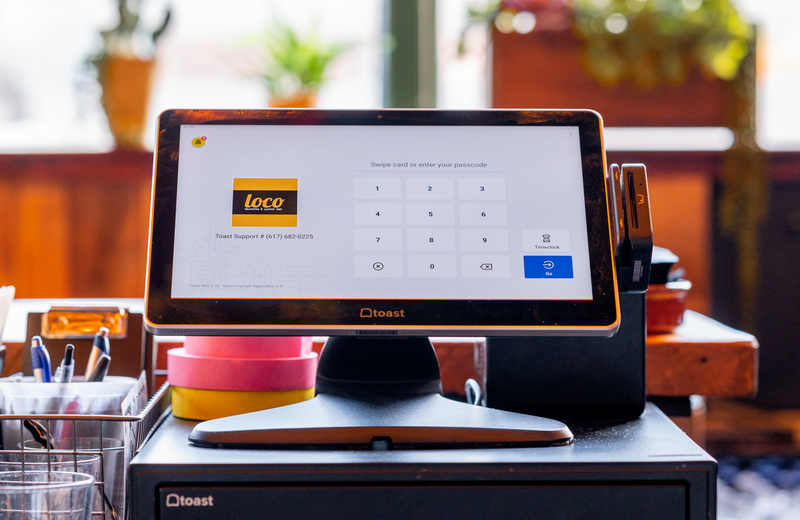
Restaurant kitchens are hot, wet, and fast. Consumer-grade tablets and off-the-shelf terminals weren’t designed for that environment. Restaurant-grade hardware — spill-resistant, high-temperature-tolerant, purpose-built — directly affects reliability during peak service.
Scalability
Whether you’re running one location today or planning for ten, your POS should grow with you. That means centralized menu management across locations, consistent reporting, and pricing that doesn’t punish you for success.
Pricing transparency
Monthly software fees are rarely the full story. Factor in payment processing rates, hardware costs, per-location fees, and the cost of add-ons like online ordering, loyalty, or payroll. Choosing a POS with flexible pricing options is crucial.
Support quality
When your system goes down at 6:30 PM on a Friday, response time isn’t a minor consideration; it’s everything. Evaluate not just whether a vendor offers 24/7 support, but how they deliver it and what the reviews actually say.
Toast offers phone support and 24/7 chat on every plan, offline backup that keeps you running when the internet doesn’t, and hardware built for the restaurant floor.
The Guide to Restaurant Sales
In this Guide to Restaurant Sales, you’ll learn the metrics you need to measure to understand the financial health of your restaurant. Plus, you’ll get tons of great ideas that’ll help you learn how to improve sales in your restaurant.

Toast POS competitors: Head-to-head comparison
The table below covers the most commonly evaluated Toast alternatives in 2026. Pricing reflects publicly available software rates and may not include hardware, processing, or add-ons. This table was last updated in May 2026.
System | Online Ordering | Hardware | Restaurant-Built? |
Toast | Native, included | Proprietary, restaurant-grade | Yes. |
Square | Native, paid tiers | Consumer-grade (iPad) | No — multi-vertical |
SpotOn | Native, included | Proprietary + 3rd party | Yes |
Clover | Included (FSR plan) | Proprietary, flexible lineup | No — multi-vertical |
Lightspeed | Paid add-on | Consumer-grade (iPad) | No — multi-vertical |
* Information current as of June 2026. Always confirm directly with vendors, as rates, plan structures, and features change.
Toast competitors
Square
Square is known for its ease of use and iPad-compatible hardware. For counter-service cafés, food trucks, or concepts just getting started, it’s a common choice.
Where it falls short: Square is a multi-vertical platform, not a restaurant-first one. As your concept grows — adding table management, complex modifiers, KDS integration, or multiple revenue channels — you’ll likely outgrow what Square was designed to do.
Sponsored by Toast
SpotOn
SpotOn has built a strong reputation with restaurant operators and has received many great reviews.
Where it falls short: Toast delivers the same reliable support experience across all products and plans—so you always know when and how to get help. With SpotOn, support availability varies by product, with some tools limited to specific hours.
Clover
Clover’s flexible hardware lineup and commission‑free online ordering give it broad appeal.
Where it falls short: With Toast, all customers have phone support seven days a week, from 7 a.m. to 12 a.m. ET, and tailored onboarding options with a dedicated consultant. Official Clover phone support is only available Monday-Friday, and merchants who do not buy directly from Clover will have support hours that are set by and vary by seller.
Lightspeed
Although Lightspeed has useful tools for restaurants, it’s shifting away from the US restaurant market to focus on retail.
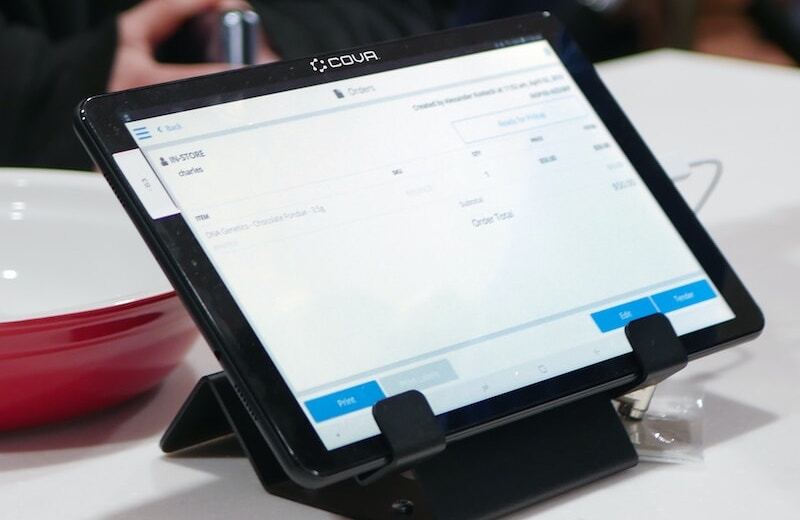
Where it falls short: Toast hardware is built specifically for the rigors of daily operations. From spill-resistant terminals to drop-tested handhelds, it’s built with the intensity of your busiest days in mind. Lightspeed often relies on consumer-grade iPads and iPhones, hardware not specifically designed for the wear and tear of a busy environment.
Understanding where alternatives shine is part of making a confident decision, whichever direction you go.
Why most restaurants choose Toast
Toast was originally built for restaurants. Not salons. Not service businesses. Every product decision, every hardware investment, every feature on the roadmap is made with restaurant operators in mind, and that focus compounds over time.
Why retailers are switching to Toast
Toast recently also entered the retail space. Toast Retail offers hardware that works as hard as you do. From integrated barcode scanners and label printers to weighted scales, every component enables a seamless checkout experience.
Staff can also scan and produce barcodes directly on the Toast Go® 3 handheld device to instantly add items to a purchase — no manual lookups, no extra equipment needed. Fast checkout, wherever you need it.
Retail POS Comparison Tool
This customizable Retail POS Comparison Tool enables you to research, evaluate, and compare point of sale systems side by side in one Excel spreadsheet.
An all-in-one platform
Online ordering, loyalty programs, email marketing, payroll, scheduling, and POS –all under one roof, all sharing the same data. Instead of stitching together five vendors and hoping the integrations hold, Toast operators run their entire business from a single platform.
Hardware built to survive the restaurant environment
Toast hardware is designed specifically for commercial kitchen conditions: spill-resistant, high-temperature tolerant, and built for the pace of a real service rush.
Built to grow with you
Restaurants on Toast average more than 30% greater revenue than the average U.S. restaurant,1 and Toast restaurants are 12% less likely to close in their first year.2 These aren’t coincidences. They reflect what happens when an operator has the right tools, the right data, and a platform that was designed for their success.
Whether you’re running one location or thirty, Toast’s flat-rate pricing and centralized management tools grow with you. Adding a location means replicating what’s already working.
A community, not just a vendor
Toast’s network includes hundreds of thousands of restaurant operators sharing best practices, a robust partner ecosystem, and a product team that ships new features in response to real operator feedback. That community is a resource most competitors can’t replicate.
Toast is built for busy businesses like yours
For the vast majority of restaurants — from independent full-service to growing fast-casual groups — the combination of restaurant-specific features, all-in-one platform depth, and hardware built for the job makes Toast the clear frontrunner. The 171,000+* restaurants that run on Toast aren’t there by accident.
The Restaurant Expansion Checklist
Learn how to expand into your second, fifth, or tenth restaurant location.
FAQs
Is Toast the largest restaurant POS system in the U.S.? Toast holds a significant share of the U.S. restaurant POS market, concentrated specifically in the restaurant segment where it was purpose-built to compete. According to 6sense, Square leads in overall POS market share at 28.12%, with Clover at 6.64% — but overall POS share and restaurant-specific fit are different measures entirely.
What should I look for when comparing Toast to a competitor? Focus on restaurant-specific functionality, integration ecosystem, total cost of ownership (including hardware and processing fees), customer support quality, and the platform's ability to scale with your business. A system that works fine at one location may not hold up at three.
Is Toast better for large or small restaurants? Toast serves independent operators and multi-unit groups alike. The platform is built to grow with your business — so you're not switching systems when you add a second location, a new revenue channel, or a larger team. That scalability is one of its most consistently cited advantages over competitors optimized for only one end of the market.
Where can I compare Toast directly against specific competitors? Toast maintains a dedicated comparison page with head-to-head breakdowns against specific competitors, covering features, pricing, and hardware differences.
Disclaimer: Competitive information and data on this page compiled as of May 2026 and is based on publicly available information. This information is subject to change or update without notice. Toast does not make any representations as to the completeness or accuracy of the information on this page.
1Based on third party market research of average annual revenue of 875K restaurants compared to the average annual GMV of US Toast customers from Jan 1 2023-December 31 2023.
2Based on the National Restaurant Association's 2015 report citing a 30% failure rate as the norm in the US restaurant industry, compared to Toast restaurants continuing payment processing on Toast 13 months after opening (between January 1, 2022 and April 1, 2023).
*As of Q1 2026.
Is this article helpful?
DISCLAIMER: This information is provided for general informational purposes only, and publication does not constitute an endorsement. Toast does not warrant the accuracy or completeness of any information, text, graphics, links, or other items contained within this content. Toast does not guarantee you will achieve any specific results if you follow any advice herein. It may be advisable for you to consult with a professional such as a lawyer, accountant, or business advisor for advice specific to your situation.

Subscribe to On the line
Sign up to get industry intel, advice, tools, and honest takes from real people tackling their restaurants' greatest challenges.
By submitting, you agree to receive marketing emails from Toast. We’ll handle your info according to our privacy statement. Additional information for California residents available here.