
Restaurant Technology Services: A Beginner-Friendly Guide
Restaurant technology services help reduce manual work and improve day-to-day operations. Learn what they are and how to use them in your restaurant.
Author
 RESOURCE
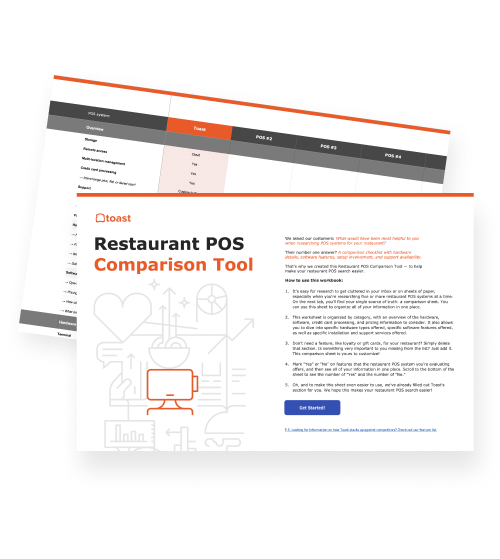
 Restaurant POS Comparison Tool
A free, customizable Restaurant POS Comparison Tool to research and compare point of sale systems in one Excel spreadsheet.
Get Free DownloadRestaurant technology services are the tools and systems that help you run your restaurant, serve customers, and manage day-to-day operations. When everything is connected, your team can move faster, your operations run smoother, and your guests have a better experience.
According to the National Restaurant Association, 76% of operators say technology gives them a competitive edge—yet many also feel they could be doing more to keep up.
In this guide, you’ll learn how restaurant technology services can help you stay competitive and how to use them in your restaurant.
Key takeaways
Restaurant technology services help you manage operations, serve customers, and process transactions more efficiently.
The right tools reduce manual work, improve accuracy, and enhance the overall guest experience.
Restaurants use technology across POS, online ordering, payments, inventory, and marketing to streamline both front- and back-of-house operations.
Signs you need technology include frequent errors, slow workflows, and limited visibility into your business performance.
You get the best results by starting with core systems, choosing integrated tools, and building a setup that can scale with your restaurant.
Restaurant Equipment Checklist
Opening or upgrading a restaurant? Don't miss any essential equipment! Download our free, comprehensive restaurant equipment checklist.

What are restaurant technology services?
Restaurant technology services are the tools and systems restaurants use to manage operations, serve customers, and process transactions. This includes everything from point-of-sale (POS) systems and payment processing to ordering tools, inventory management, and marketing platforms.
Why do restaurants use technology services?
By streamlining workflows and centralizing key tasks, restaurant technology services make it easier to manage day-to-day operations and grow over time. As Pablo Rivero, CEO of Resy, explains:
“Many restaurants don’t have somebody that can spend a lot of time thinking through, dissecting, who is my VIP, and should I send them an email about a special that I’m running next week? They are focused on hospitality, so those [tech] integrations drive that.”
Operational efficiency: Automate tasks like order entry, payments, and inventory tracking to save time and reduce errors.
Improved guest experience: Offer faster service, smoother ordering, and more convenient payment options.
Increased revenue opportunities: Expand into online ordering, upselling, and loyalty programs that drive more sales.
Data and decision-making: Track sales, customer behavior, and performance to make smarter business decisions.
Scalability: Build systems that can grow with your restaurant as you add locations, staff, or new services.
How restaurants use technology services
Restaurants use technology services across both front-of-house and back-of-house operations to streamline workflows, improve service, and make better decisions. Each tool plays a specific role in helping you manage your business more efficiently.
Point-of-sale (POS) systems: Take orders, process payments, and manage transactions in one central system.
Online ordering and delivery platforms: Accept orders digitally and expand your reach beyond in-person dining.
Payment processing solutions: Offer fast, secure, and flexible payment options for guests.
Inventory and back-of-house management tools: Track inventory, manage stock levels, and reduce waste.
Customer engagement and marketing tools (CRM, loyalty, email): Build relationships, drive repeat visits, and run targeted promotions.
Staff management and scheduling software: Schedule shifts, track hours, and manage labor more efficiently.
Reporting and analytics tools: Monitor performance, track trends, and make data-driven decisions.
Should your restaurant use technology services?
Most restaurants can benefit from using technology services, but the impact depends on your size, concept, and current setup. If you’re relying heavily on manual processes, dealing with frequent errors, or lacking visibility into your performance, technology can make a meaningful difference. As Diane Hund, chief marketing officer at US Foods, puts it:
“If someone asks me what operators should be thinking about most, the answer is technology and understanding how to use it in a way that’s going to help you instead of throwing stuff against a wall.”
Applies to most restaurant types: Quick-service, full-service, and multi-location businesses all benefit from more streamlined systems.
Operational inefficiencies: Frequent errors, slow service, or manual workflows signal a need for better technology.
Limited visibility: Not having clear data on sales, inventory, or performance makes it harder to make informed decisions.
Flexible adoption: You don’t need every tool, but most restaurants benefit from a core set of technology services.
How to choose the right restaurant technology services
Choosing the right restaurant technology services starts with understanding your needs and selecting tools that support your operations without adding unnecessary complexity. The goal is to build a setup that improves efficiency, fits your team’s workflow, and can grow with your business.
Identify your biggest pain points: Focus on areas where your operations are slow, error-prone, or difficult to manage.
Prioritize core systems first: Start with essentials like POS, payments, and online ordering before adding more tools.
Look for integrations: Choose systems that work together to avoid manual work and data silos.
Consider ease of use: Make sure your team can learn and use the tools quickly with minimal training.
Evaluate cost vs. ROI: Balance upfront costs with long-term savings, efficiency gains, and revenue potential.
Choose scalable solutions: Pick technology that can grow with your restaurant as you expand or add new services.
Tech your service to the next level
Restaurant technology services make it easier to run your restaurant day to day—from processing payments to understanding what’s driving sales. As tools become more advanced, including AI-powered features for forecasting, marketing, and reporting, restaurants can automate even more of their operations.
Ultimately, when the right systems are in place, things run smoother, errors go down, and your team can focus more on the guest experience.
The New Steps of Service ROI Calculator
Use this calculator to learn how the New Steps of Service can benefit your restaurant and impact your bottom line.
FAQ
What are the most essential restaurant technology services for a small or independent restaurant?
Most small restaurants start with a POS system, payment processing, and online ordering. These core tools help you manage transactions, streamline service, and reach more customers.
How much do restaurant technology services typically cost?
Costs vary depending on the tools and features you choose, but most platforms charge a mix of monthly subscription fees and payment processing rates. The goal is to choose solutions that deliver clear value through time savings, efficiency, and increased revenue.
Do restaurant technology services replace staff?
Technology doesn’t replace staff—it supports them. By automating repetitive tasks and improving workflows, it allows your team to focus more on service and guest experience.
What is the difference between a POS system and restaurant management software?
A POS system handles orders, payments, and transactions, while restaurant management software includes broader tools like inventory, scheduling, and reporting. Many modern platforms combine both into a single system.
How do I evaluate whether a restaurant technology platform is right for my operation?
Start by identifying your biggest operational challenges, then look for tools that address those needs and integrate with your existing systems. Consider ease of use, cost vs. ROI, and whether the platform can scale with your business.


Is this article helpful?
DISCLAIMER: This information is provided for general informational purposes only, and publication does not constitute an endorsement. Toast does not warrant the accuracy or completeness of any information, text, graphics, links, or other items contained within this content. Toast does not guarantee you will achieve any specific results if you follow any advice herein. It may be advisable for you to consult with a professional such as a lawyer, accountant, or business advisor for advice specific to your situation.
 Trending

Subscribe to On the line
Sign up to get industry intel, advice, tools, and honest takes from real people tackling their restaurants' greatest challenges.
By submitting, you agree to receive marketing emails from Toast. We’ll handle your info according to our privacy statement. Additional information for California residents available here.