
Restaurant Prep List: How to Create One and Why It Matters

Author
 RESOURCE
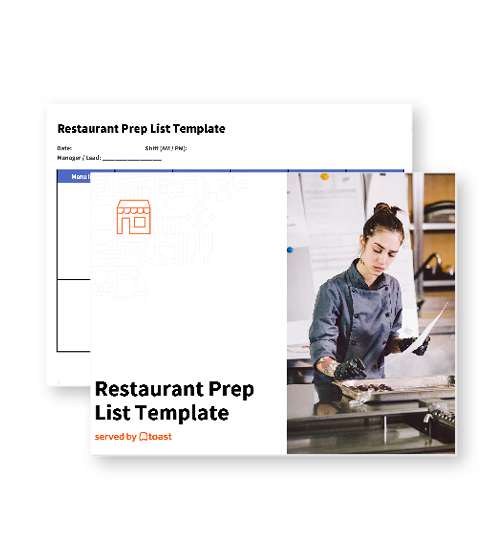
 Restaurant Prep List Template
Use this free template to organize daily tasks for prep cooks, keep your team aligned, and make sure your kitchen runs smoothly from open to close.
Get Free DownloadRunning a restaurant is like orchestrating a symphony: each part has to harmonize to create a great guest experience. And behind the scenes, one of the most important tools that keeps your kitchen running smoothly is the restaurant prep list. Without it, chaos can take over, leading to missing ingredients, delayed orders, and unhappy guests.
In this article, we’ll break down what a restaurant prep list is, why it’s essential for efficiency and profitability, and how to create one that actually works.
Key Takeaways
A restaurant prep list is the backbone of an efficient kitchen, keeping ingredients organized and service flowing smoothly.
Clear details—like quantities, cuts, and par levels—prevent waste, confusion, and inconsistent dishes.
Assigning tasks to specific staff builds accountability and ensures no ingredient or step is overlooked.
Consistent use of prep lists saves labor hours, cuts food costs, and ultimately improves guest satisfaction.
Prep Cook Resume Template
Use this Microsoft Word template to easily showcase your experience and secure your next prep cook role.

What is a restaurant prep list?
A restaurant prep list is a checklist used by the kitchen staff to prepare ingredients and supplies before service. It ensures everything needed for the day—or a specific shift—is ready to go. This includes chopped vegetables, marinated proteins, pre-cooked items, and any specialty ingredients, sauces, or garnishes.
Essentially, it’s the backbone of your mise en place, the French culinary term that means “everything in its place.” A good prep list prevents last-minute scrambling and allows the kitchen to focus on cooking and plating during busy service hours.
Why is a restaurant prep list important?
Celebrity chef George Duran maintains that “being organized makes your cooking process 10 times easier.” How come? Well, a well-organized prep list saves time, reduces waste, and improves communication between team members. Here’s why it’s such a game-changer:
Consistency in dishes - Guests expect the same experience every time they dine at your restaurant. Following a prep list makes sure that all ingredients are available and measured properly so dishes come out consistent in quality and portion size.
Faster service - When ingredients are prepped and ready, cooks can assemble dishes quickly, keeping ticket times short and guests happy.
Better inventory control - Prep lists help keep track of ingredients that are used daily and items that need to be ordered. This reduces over-ordering and minimizes food waste, which can significantly improve profit margins.
Improved team communication - When everyone knows what needs to be prepped (and how much of it)quantity, there’s less confusion during service.
Compliance and safety - With proper labeling storage, and rotation, organized prep work can help ensure food safety standards are met. (Remember FIFO: First In, First Out).
Who should use a restaurant prep list?
From small cafes to fine dining establishments, every restaurant benefits from a prep list. Even food trucks and ghost kitchens need one. It’s especially important for:
High-volume restaurants where speed is critical
Concepts with complex menus requiring multiple components
Newly opened restaurants still ironing out kitchen systems
In short, if you want a smooth service, you need a prep list.
What should be on a restaurant prep list?
While every restaurant’s needs differ, most prep lists include the following:
Date and shift (e.g., morning, lunch, dinner)
Dish name or menu category
Ingredients or components needed
Quantity required
Par level (the minimum quantity to have on hand)
Check column for staff to mark once completed
Initials of the staff member responsible
For example:
Item | Quantity | Par Level | Completed | Initials |
Chopped onions | 3 lbs. | 5 lbs. | ||
Marinara sauce | 1 gallon | 2 gallons | ||
Chicken breasts | 10 lbs. | 15 lbs. |
This format helps your team clearly see what’s needed and what still needs to be prepped.
How to create an effective restaurant prep list
An effective prep list isn’t a random collection of tasks; it’s a structured tool. Here’s how to build one that works for your restaurant:
1. Start with your menu - Go through your entire menu and list every ingredient that needs to be prepped ahead of time. Break it down by dish so nothing gets overlooked.
2. Determine par levels - Par levels are the minimum amount of each ingredient you need on hand for service. Base these on historical sales data, upcoming reservations, and day of the week trends. For example, you might need more guacamole prepped on Taco Tuesday than on a Monday.
3. Assign responsibilities - Assign specific prep tasks to individual team members. This prevents confusion and helps hold staff accountable for their sections.
4. Create a logical flow - Organize the list in the order that makes sense for your kitchen,such as grouping items by station or by cooking method.
5. Make it easy to update - Print the list daily or use a digital kitchen management system so changes can be made quickly if inventory or menu items shift.
Digital prep lists vs. paper prep lists
Traditionally, prep lists were handwritten or printed out. While this still works for many kitchens, digital tools are becoming increasingly popular because they:
Sync across devices for real-time updates
Reduce paper clutter
Allow for historical tracking of prep quantities
Integrate with inventory and ordering systems
If you’re still using paper, consider moving to a digital solution to see hard data and save time.. Prep plans generated by predictive tools ensure fresher food, lower waste and less stress on kitchen teams.
Common mistakes to avoid
Even with the best intentions, some prep lists fall short. Here’s what to watch out for:
Being too vague - “Cut veggies” is unclear. Specify which vegetables and quantities are needed along with what type of cut (e.g. dice, chop, mince, etc.).
Not updating daily - Review the list each day. After all, yesterday’s prep list may not work today.
Ignoring par levels - If you prep too much, you waste food. Too little, and you run out mid-service.
Not training staff on its importance - A prep list is only as good as the people using it.
Tips for making prep lists work in your restaurant
Keep them visible - Post in the kitchen where everyone can see it.
Review at the start of each shift - A quick huddle makes sure everyone knows their tasks.
Cross-check at the end of prep time - Verify that everything is completed before service starts.
Adjust regularly - Seasonal menus or special events may require different prep levels.
Sample daily restaurant prep list
Here’s an example of what a daily prep list for a casual dining restaurant might look like:
Date: Friday Shift: Dinner
Proteins
Marinate 15 lb. of chicken breasts
Portion 12 salmon fillets
Thaw 10 lb. of shrimp
Vegetables
Dice 4 lb. of onions
Slice 2 lb.of bell peppers
Julienne 3 lb. of carrots
Sauces & Dressings
Make 1 gallon of marinara
Prepare 2 quarts of vinaigrette
Whip 1 quart of aioli
Desserts
Portion 12 slices of cheesecake
Prep 20 chocolate lava cakes
This format keeps the list clear and easy to follow.
Why a prep list helps your bottom line
Efficiency in the kitchen translates to profitability. A good prep list:
Reduces labor costs by preventing last-minute scrambling
Minimizes waste by prepping only what’s needed
Keeps service smooth, improving guest satisfaction (and tips)
For many restaurants, implementing a structured prep system can save hours of labor each week—and in an industry with tight margins, that’s a big deal.
Set your restaurant up for success
A restaurant prep list might seem like a small detail, but it’s one of the most powerful tools in your kitchen. It keeps your team organized, reduces waste, and helps ensure guests get the best possible dining experience. Whether you stick to paper or upgrade to digital tools, the key is consistency. Build your prep list, use it daily, and watch your kitchen run like a well-oiled machine.
Restaurant Cleaning Checklist
Download the Restaurant Cleaning Checklist, created in partnership with RestaurantSupply.com, to keep track of the cleaning tasks that need to be completed in your restaurant.


Restaurant Food Inventory Template
Use this free Food Inventory Template to help your business stay organized and manage inventory with ease.
Is this article helpful?
DISCLAIMER: This information is provided for general informational purposes only, and publication does not constitute an endorsement. Toast does not warrant the accuracy or completeness of any information, text, graphics, links, or other items contained within this content. Toast does not guarantee you will achieve any specific results if you follow any advice herein. It may be advisable for you to consult with a professional such as a lawyer, accountant, or business advisor for advice specific to your situation.
 Trending


Subscribe to On the line
Sign up to get industry intel, advice, tools, and honest takes from real people tackling their restaurants' greatest challenges.
By submitting, you agree to receive marketing emails from Toast. We’ll handle your info according to our privacy statement. Additional information for California residents available here.