
Profit vs. Revenue: Understanding the Critical Difference
Understand the key differences between revenue and profit to make better business decisions and drive long-term growth.
Author
 RESOURCE
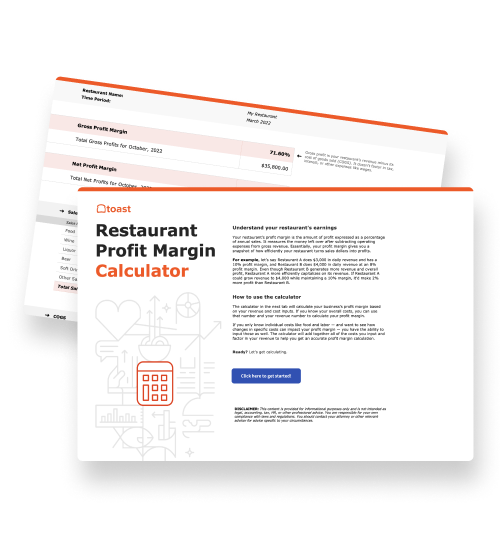
 Restaurant Profit Margin Calculator
Use this free Restaurant Profit Margin Calculator to see how efficiently you turn sales dollars into profits.
Get Free DownloadIn the world of business finance, few concepts are as fundamental yet as frequently misunderstood as revenue and profit. While both metrics measure money flowing into a business, they tell very different stories about a company's financial health and operational efficiency. According to research, 60% of small businesses fail due to poor financial management. This statistic highlights the importance of understanding not only how much money comes into a business (revenue) but also how much remains after expenses (profit). This article explores the critical differences between profit and revenue, how they relate to each other, and why understanding this relationship is essential for business success.
Is revenue the same as profit?
No, revenue and profit are not the same. They represent different aspects of a business's financial performance.
Simply put, revenue is all the money coming into a business before any expenses are deducted, while profit is what remains after all costs have been subtracted from revenue. A business can have substantial revenue but still operate at a loss if its expenses exceed its income.
For example, think of revenue as all the money your lemonade stand collects from selling lemonade. Profit is what you have left after paying for lemons, sugar, cups, and the stand rental.
Restaurant Profit Margin Calculator
Use this free Restaurant Profit Margin Calculator to see how efficiently you turn sales dollars into profits.

Defining revenue
Revenue is the total income a business generates from its primary operations before any expenses are subtracted. It's often called the "top line" because it appears at the top of a company's income statement. Revenue represents the market's demand for a company’s products or services and is a fundamental indicator of a business's size and growth trajectory. However, it doesn’t account for the costs associated with generating that income.
Types of revenue
There are several ways to categorize revenue, including:
Gross revenue
The total amount of money generated from all sales before any deductions.
Net revenue
Gross revenue minus returns, discounts, and allowances. This figure represents the actual amount of money a company retains from its sales after accounting for these direct deductions.
Operating revenue
Income generated from a company's core business activities.
Non-operating revenue
Income from secondary sources not related to the company's primary business, such as interest on investments or rental income from owned properties.
Recurring revenue
Predictable income that a company can count on receiving regularly, such as subscription fees or service contracts.
Defining profit
Profit is the money a business keeps after subtracting all expenses from its revenue. It’s often called the “bottom line” because it appears at the bottom of the income statement and represents a company’s true earnings. Profit is the ultimate measure of a company’s financial success and operational efficiency.
Types of profit
There are several important profit metrics, each providing different insights into a company's financial health:
Gross profit
Revenue minus the cost of goods sold (COGS). This measures the profitability of a company's core production process before accounting for overhead, operating expenses, taxes, or interest.
Operating profit
Gross profit minus operating expenses such as rent, utilities and payroll. This measures a company's profit from its core business operations before accounting for interest and taxes.
Net profit
Operating profit minus taxes, interest and any other expenses not included in operating costs. This is the final profit figure that represents a company's true bottom line.
How revenue affects profit
Revenue and profit are intrinsically linked, with revenue serving as the starting point for calculating profit. However, their relationship is not always straightforward.
The direct relationship
In its simplest form, the relationship between revenue and profit can be expressed as:
Profit = Revenue - Expenses
This formula demonstrates that:
Increasing revenue while keeping expenses constant will increase profit.
Decreasing expenses while maintaining revenue will increase profit.
If expenses exceed revenue, the business will operate at a loss despite generating revenue.
Factors that influence the revenue-profit relationship
Several factors can affect how changes in revenue translate to changes in profit:
Fixed vs. variable costs
As revenue increases, fixed costs (like rent and insurance) remain constant, while variable costs (like raw materials and direct labor) increase proportionally with sales. This means that once a business covers its fixed costs, each additional dollar of revenue contributes more to profit — a concept known as operating leverage.
Pricing strategy
Higher prices may increase revenue per unit but could potentially decrease total revenue if they reduce sales volume. Finding the optimal price point is crucial for maximizing both revenue and profit.
Economies of scale
As businesses grow, they often achieve economies of scale, where increased production leads to lower per-unit costs. This means that revenue growth can lead to improved profit margins as operations become more efficient.
Product mix
Different products often have different profit margins. Changing the mix of products sold can significantly impact profit even if overall revenue remains constant.
Linking revenue growth to profit
Growing revenue is a key goal for any business — but it’s only part of the story. The expenses incurred to drive that growth also appear on the income statement and affect net profit. For revenue growth to be truly profitable, net profit should increase alongside revenue.
Why the difference matters
Understanding the distinction between revenue and profit is crucial for several reasons:
1. Accurate financial assessment
Revenue alone can be misleading. A company might have impressive revenue growth but still be unprofitable due to high costs or inefficient operations. Both metrics must be considered together to get a complete picture of financial health. While revenue shows market demand, profit reveals how well a company manages its expenses.
2. Business strategy development
Different stages of business development may call for different focuses. Startups and growth-stage companies might prioritize revenue growth to gain market share, even at the expense of short-term profitability. In contrast, mature businesses typically focus more on profit optimization, looking for ways to increase efficiency and margins.
3. Investment decisions
Investors evaluate both revenue and profit metrics when deciding whether to invest in a company. Revenue growth demonstrates market potential and customer adoption, while profitability shows the business has a viable economic model and effective cost management.
4. Resource allocation
Understanding which products or services generate the most profit (not just revenue) helps businesses allocate resources more effectively, focusing on high-margin activities. By analyzing profit drivers, companies can make informed decisions about where to invest time, money, and marketing efforts.
Revenue vs. profit across industries
Different industries have distinct revenue and profit profiles:
Retail
Retail businesses often operate on relatively thin profit margins, meaning they convert a small percentage of their revenue into profit. They compensate for this by focusing on high sales volume and efficient inventory management.
For example, Walmart’s net profit margin typically hovers around 2% to 3% despite being one of the world’s largest retailers by revenue, illustrating the challenges of turning high sales into profit.
Grocery Store Profit Margin Calculator
Use this free Grocery Store Profit Margin Calculator to help consistently capture and track your profit margin.
Technology
Technology companies, particularly software and SaaS businesses, typically enjoy higher profit margins due to lower marginal costs after initial development. This allows them to convert a larger portion of each revenue dollar into profit.
For instance, Microsoft reported an operating profit margin of about 42% in 2024, thanks to its software and cloud services that scale easily with low incremental costs.
Manufacturing
Manufacturing companies often face significant upfront costs for equipment and facilities, followed by ongoing raw material and labor expenses. Their profit margins can vary widely depending on their level of automation, supply chain efficiency, and pricing power.
For example, Ford Motor Company reported an operating profit margin of about 6.5% in 2023, driven by increased vehicle sales but challenged by high raw material costs.
Service industries
Service businesses generally have lower overhead than product-based companies but face limitations on scaling since service delivery often requires proportional increases in labor costs.
For instance, Accenture’s consulting business, while highly profitable, saw operating margins around 15% in 2024 — lower than some tech companies — due to the labor-intensive nature of consulting.
Improving both revenue and profit
Businesses should work to optimize both revenue and profit simultaneously whenever possible. Here are strategies for doing so:
1. Revenue growth strategies
Boosting revenue lays the foundation for sustainable profit growth by expanding a company’s customer base and sales potential. Here are some key approaches:
Market expansion: Entering new geographic markets or customer segments.
Product development: Creating new products or services to sell to existing customers.
Pricing optimization: Finding the optimal price points to maximize total revenue.
Marketing and sales improvement: Enhancing lead generation, conversion rates, and customer acquisition processes.
Customer retention: Increasing repeat business from existing customers.
A focus on customer retention not only boosts revenue but also supports profitability by building long-term loyalty. As statistician and management consultant W. Edwards Deming put it: "Profit in business comes from repeat customers, customers that boast about your project or service, and that bring friends with them."
This highlights how investing in customer relationships not only drives sales growth but also strengthens a company’s financial health by turning one-time buyers into long-term sources of profit.
2. Profit enhancement strategies
Increasing profit often requires a combination of smart cost management and strategic business decisions. Here are some effective ways to enhance profitability:
Cost reduction: Identifying and eliminating unnecessary expenses.
Operational efficiency: Streamlining processes to reduce waste and improve productivity.
Automation: Implementing technology to reduce labor costs and increase output.
Supply chain optimization: Negotiating better terms with suppliers or finding more cost-effective alternatives.
Focus on high-margin products: Prioritizing the sale of products or services with higher profit margins.
Streamlining manufacturing processes, sourcing cost-effective materials, or negotiating better supplier contracts can increase profits by reducing production costs.
Real-world examples
Looking at real-world examples helps illustrate the relationship between revenue and profit:
Amazon
For many years, Amazon focused on revenue growth at the expense of profitability, reinvesting heavily in new markets, distribution centers, and technology. This strategy allowed the company to capture market share and build infrastructure that would eventually support profitable operations at scale.
Apple
Apple has maintained both strong revenue growth and industry-leading profit margins by focusing on premium products, vertical integration, and operational efficiency. The company's focus on high-margin hardware and growing services revenue has allowed it to convert a significant portion of its revenue into profit.
Airlines
Airlines typically operate on very thin profit margins, converting only a small percentage of their substantial revenue into profit. This makes them particularly vulnerable to cost increases or revenue disruptions, as seen during economic downturns or global crises.
Common misconceptions
Several misconceptions about revenue and profit can lead to poor business decisions:
1. "High revenue means a successful business"
A business with high revenue but negative profit is ultimately unsustainable without significant changes. Revenue growth must eventually translate to profitability for long-term success.
2. "Profit should always be maximized"
While profit is crucial, extreme short-term profit maximization can come at the expense of long-term growth and sustainability. For example, cutting marketing or R&D spending might boost short-term profit but harm future revenue and profit potential.
3. "Revenue and profit always grow together"
Sometimes, strategic investments to drive future growth will temporarily reduce profit even as revenue increases. Conversely, cost-cutting measures might increase short-term profit while potentially limiting future revenue growth.
The balance: Growth vs. profitability
Finding the right balance between revenue growth and profitability is one of the most challenging aspects of business management. Companies must weigh short-term gains against long-term sustainability to make smart strategic decisions.
Growth Focus
Too much focus on growth without regard for profitability can lead to cash flow problems and unsustainable business models.
Profit Focus
Conversely, focusing too heavily on profit while neglecting growth can result in stagnation and lost market share.
Factors that influence the balance
The optimal balance between growth and profitability depends on several factors, including:
The company's stage of development
Industry dynamics and competitive landscape
Available funding and investor expectations
Market growth opportunities
Long-term strategic objectives
Why it matters
Revenue indicates the size and scale of a business, market demand, market share, sales volume, and growth potential. It attracts investors, secures financing, and provides a foundation for strategizing about future profitability.
Measuring and tracking performance
To effectively manage the relationship between revenue and profit, businesses should use a mix of key metrics, reporting, and analysis.
1. Establish key performance indicators (KPIs)
Track metrics like:
Revenue growth rate: Measures how quickly a company’s revenue is increasing, showing its ability to capture new market share and expand its business.
Gross profit margin: Shows the percentage of revenue left after accounting for the cost of goods sold (COGS), indicating how efficiently a company produces its products or services.
Operating profit margin: Highlights the profitability of core business operations after covering all operating expenses, providing insight into overall operational efficiency.
Net profit margin: Represents the final profitability after all expenses, taxes, and interest are deducted from revenue, offering a clear picture of a company’s financial health.
Customer acquisition cost (CAC): Measures the cost of acquiring a new customer, helping businesses evaluate marketing efficiency and the sustainability of growth strategies.
Customer lifetime value (LTV): Estimates the total revenue a business can expect from a single customer over the duration of their relationship, guiding decisions about customer retention and marketing spend.
Return on investment (ROI) for major initiatives: Assesses the profitability of specific investments or projects, helping businesses prioritize high-value opportunities.
2. Implement robust financial reporting
Develop reporting systems that provide timely, accurate data on both revenue and various profit metrics, broken down by product lines, customer segments, or geographic regions. This transparency allows businesses to identify which areas are performing well and which may need improvement.
3. Conduct regular financial analysis
Regularly analyze the relationship between revenue and profit to identify trends, opportunities, and potential issues before they become significant problems. This helps companies adapt their strategies proactively rather than reactively, improving financial performance over time.
FAQ about revenue and profit
Can a company have high revenue but low profit?
Yes, this is quite common. Companies with high revenue but low profit may be facing challenges such as inefficient operations, high costs of goods sold, intense price competition, or significant investments in growth initiatives that have yet to pay off.
Is it better to focus on increasing revenue or improving profit margins?
There's no one-size-fits-all answer. The optimal focus depends on factors like the company's current financial position, growth stage, industry dynamics, and strategic objectives. Most successful businesses work to improve both metrics over time, though they may prioritize one over the other during specific phases of development.
How do investors view revenue vs. profit?
Investors typically consider both metrics but weigh them differently depending on the company's stage of development:
For early-stage startups, revenue growth and market potential often take precedence.
For mature companies, profitability and consistent earnings growth usually become more important.
The best investment prospects typically demonstrate both strong revenue growth and a clear path to profitability (if not already profitable).
Can a company be profitable with declining revenue?
Yes, a company can maintain or even increase profitability while revenue declines by:
Exiting unprofitable lines of business: Shutting down or selling underperforming divisions allows the company to focus on its most profitable activities.
Implementing cost-cutting measures: Reducing expenses like overhead, marketing spend, or administrative costs can improve the bottom line even if revenue shrinks.
Improving operational efficiencies: Streamlining processes and eliminating waste can lower costs, preserving or even boosting profit margins.
Focusing on higher-margin products or customers: Prioritizing offerings that deliver more profit per sale helps offset revenue declines and sustains profitability.
However, sustained revenue decline eventually becomes challenging to offset with efficiency improvements alone.
How often should businesses track revenue and profit?
At a minimum, businesses should track both metrics monthly to identify trends and make informed decisions. Many companies, especially those with high transaction volumes or seasonal fluctuations, benefit from weekly or even daily monitoring of key revenue and profit indicators.
Final thoughts
Revenue and profit provide complementary insights into a business’s financial performance. Revenue reflects a company’s ability to generate sales and capture market demand, while profit reveals its operational efficiency and overall financial health. Understanding the difference between these metrics — and how they interact — is essential for making informed business decisions, developing effective strategies, allocating resources wisely, communicating with investors and stakeholders, and ensuring long-term sustainability.
By consistently tracking both revenue and profit, business leaders gain a comprehensive view of their company’s performance and can chart a course toward sustainable growth and financial success. Remember, while revenue growth creates opportunities, profitability is what ultimately sustains a business and creates value for its owners and investors.
Is this article helpful?
DISCLAIMER: This information is provided for general informational purposes only, and publication does not constitute an endorsement. Toast does not warrant the accuracy or completeness of any information, text, graphics, links, or other items contained within this content. Toast does not guarantee you will achieve any specific results if you follow any advice herein. It may be advisable for you to consult with a professional such as a lawyer, accountant, or business advisor for advice specific to your situation.

Subscribe to On the line
Sign up to get industry intel, advice, tools, and honest takes from real people tackling their restaurants' greatest challenges.
By submitting, you agree to receive marketing emails from Toast. We’ll handle your info according to our privacy statement. Additional information for California residents available here.