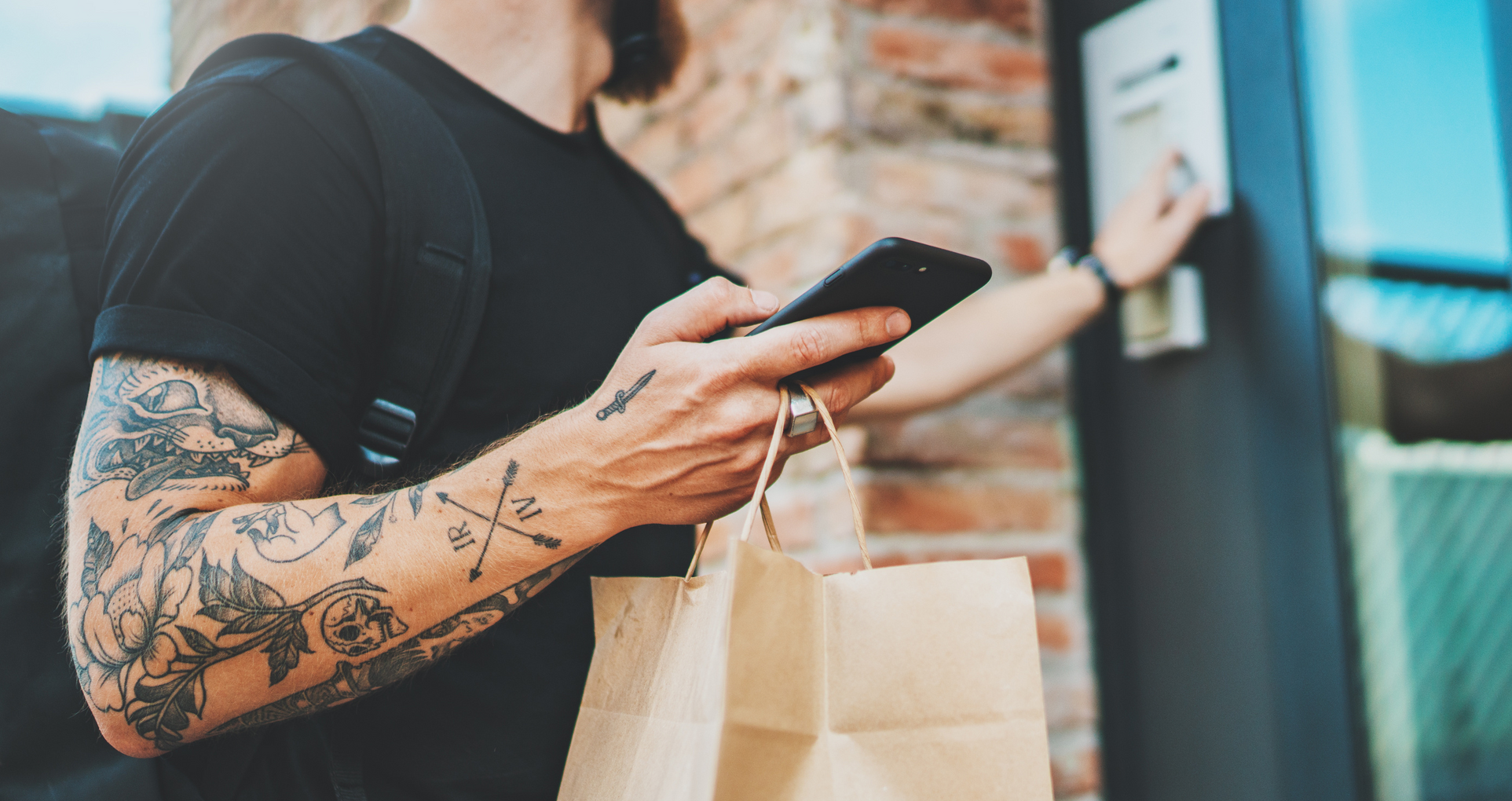
How Much Should You Tip Delivery Drivers? A Complete Guide
Here's what you need to know about delivery driver compensation and how to approach tipping decisions.

Author

 Free Tools
 Tip Pooling Calculator
Calculate your restaurant's tip distribution instantly with Toast's free Tip Pooling Calculator.
Try our Tip Pooling CalculatorYou're about to hit "confirm order" on your food delivery app when you're confronted with the familiar question: How much should you tip? The app suggests 18%, but you're already paying delivery fees and service charges. Maybe $3 is enough? Or should you stick with a flat amount?
The tipping question for delivery drivers has become more complex than traditional restaurant tipping. Unlike servers who work in a restaurant setting, delivery drivers operate in a different economic structure with varying pay models, expenses, and earnings that most customers don't see.
Here's what you need to know about delivery driver compensation and how to approach tipping decisions.
The delivery landscape today
The U.S. online food delivery market is projected to reach $66.54 billion by 2032, up from $28.37 billion in 2023. Over 40% of adults order restaurant delivery or takeout 3-5 times a month, according to Toast data.
Off-premise dining, including takeout, delivery, and curbside pickup makes up 60% of all restaurant traffic, according to the National Restaurant Association. This growth has created millions of delivery jobs across various platforms and payment structures.
How delivery drivers get paid
Delivery driver compensation varies significantly by platform, location, and time. Here's what the numbers show:
Platform earnings vary widely: Uber Eats drivers make approximately $24.68 per hour when bonuses and tips are included, while DoorDash drivers average $18.93 per hour, according to Gridwise. However, these figures don't account for the expenses drivers must cover.
Base pay is often minimal: Research from the Economic Policy Institute found that about 1 in 7 gig workers earned less than the federal minimum wage on an hourly basis, and 29% earned less than their state minimum wage.
Tips make a significant difference: UC Berkeley Labor Center research found that California delivery workers earned a median wage of $4.98 without tips and $11.43 with tips. As a Maryland DoorDash driver explained to Vice: "The majority [of my income] is tips. The other week, I had a good week. I brought in $1,000. DoorDash was $326, customer tips [were] $643. But that doesn't account for gas, or miles."
The costs drivers absorb
Most delivery drivers work as independent contractors, meaning they cover expenses that traditional employees don't face:
Vehicle expenses are substantial: The IRS standard mileage rate for 2025 is 70 cents per mile for business use, reflecting gas, maintenance, insurance, and depreciation costs. AAA data shows total vehicle ownership costs reached $12,297 annually for new vehicles in 2024.
Additional business costs add up: Drivers pay for their own health insurance, handle higher self-employment taxes, and cover business expenses like phone bills and delivery equipment.
Parking and navigation challenges create additional costs: Drivers often face paid parking situations and time-consuming navigation through apartment complexes, adding to their expenses and reducing effective hourly earnings.
Where delivery fees actually go
The various fees customers see on delivery apps don't necessarily translate to driver compensation. When The Washington Post ordered the same meal through DoorDash, Grubhub, and Uber Eats, they found that each platform allocated funds differently between restaurants, drivers, and company operations.
Service charges and delivery fees largely flow to the platforms rather than directly to drivers. This fee structure means that what customers pay in fees and what drivers receive in compensation operate on separate tracks.
Current tipping patterns
Toast research shows that roughly 50% of customers tip for delivery when ordering online, 49% when ordering by phone, and 43% when ordering through third-party apps. For drivers who do receive tips, those tips often make up over 50% of their total earnings from delivery work.
The impact of tipping on driver income can be dramatic. Mark, a delivery driver from Georgia who's been working for Pizza Hut for roughly three months, told Newsweek: "Some nights I make good in tips, well good for me is over 30 dollars in tips, but a lot of slow nights I make 5 to 10 dollars for 7 to 10 deliveries... Not getting a tip and having to drive 10 miles round trip really affects people."
Tipping guidelines and considerations
Based on driver input and industry research, here are common tipping approaches:
Base amount: Many drivers consider $3-5 a reasonable minimum for standard deliveries, with $5 being more widely preferred.
Distance factor: Drivers often suggest $1.50-2.00 per mile for longer deliveries, recognizing higher costs and time commitments.
Percentage approach: 15-20% works well for larger orders, with 15% being standard and 20% for exceptional service or challenging conditions.
Special circumstances: Weather conditions, complex delivery instructions, large orders, or difficult-to-find locations typically warrant higher tips.
Order size consideration: Smaller orders might benefit from flat amounts rather than percentages, while larger orders often make percentage-based tipping more appropriate.
Additional guidelines by region
Some cities have implemented minimum wage laws for delivery drivers. New York City established a $17.96-per-hour minimum wage for delivery drivers, rising to $20 per hour in April 2025. However, this led platforms to adjust their fee structures and tipping interfaces.
Seattle has similar protections for app-based workers. These local regulations create different economic environments that may influence appropriate tipping practices in those areas.
What factors to consider
Rather than following rigid rules, consider what makes sense for your specific situation. A $3 tip on a $15 order from two blocks away differs from a $3 tip on a $60 order delivered five miles in bad weather.
Many customers find success with hybrid approaches: using percentage-based tipping for larger orders and flat amounts for smaller ones, always considering distance and circumstances.
When deciding on tip amounts, consider:
Service complexity: Simple drop-offs versus navigating apartment buildings or special instructions
Weather conditions: Rain, snow, or extreme temperatures
Order timing: Peak hours versus off-peak delivery
Distance: Longer trips involve higher driver costs Order size: Both value and physical complexity of the delivery
Looking ahead
The delivery economy continues evolving, with platforms testing different compensation models and cities exploring various regulatory approaches. These changes may affect how tipping practices develop over time.
For now, understanding the economic realities drivers face can help inform your tipping decisions. Whether you choose percentage-based tipping, flat amounts, or situation-specific approaches, knowing how driver compensation actually works provides a foundation for making choices that work for your budget and values.
Is this article helpful?
DISCLAIMER: This information is provided for general informational purposes only, and publication does not constitute an endorsement. Toast does not warrant the accuracy or completeness of any information, text, graphics, links, or other items contained within this content. Toast does not guarantee you will achieve any specific results if you follow any advice herein. It may be advisable for you to consult with a professional such as a lawyer, accountant, or business advisor for advice specific to your situation.
 Trending

Subscribe to On the line
Sign up to get industry intel, advice, tools, and honest takes from real people tackling their restaurants' greatest challenges.
By submitting, you agree to receive marketing emails from Toast. We’ll handle your info according to our privacy statement. Additional information for California residents available here.