
Grocery Store Operations: 10 Steps to Operational Excellence
From inventory to checkout, every detail matters in grocery store operations. Explore pro tips for streamlining workflows and maximizing profitability.
Author
 RESOURCE
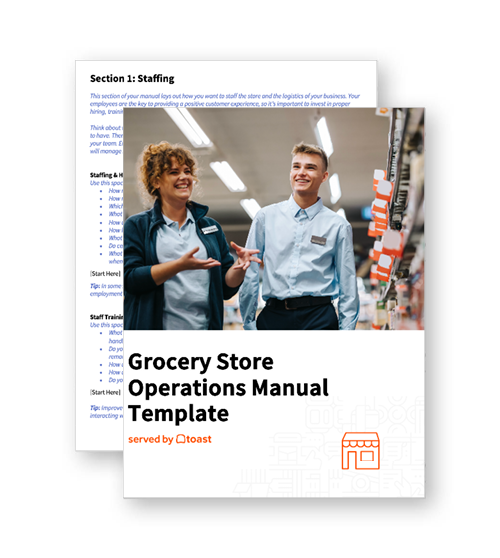
 Grocery Store Operations Manual Template
Use this free template to easily outline all of your operating procedures and make day-to-day operations as consistent as possible.
Get Free DownloadWith an average store size of 48,575 square feet, often dozens of employees to manage, and notoriously low net profit margins of just 1.6%, operating a grocery store is no easy task. Every detail—from how products are stocked to how quickly checkout lines move—impacts efficiency, customer experience, and overall profitability.
This guide breaks down the key components of grocery store operations, providing practical strategies to increase efficiency, improve customer satisfaction, and boost profitability. Whether you’re opening a small grocery store or running a huge supermarket, these best practices will help you build a store that runs like a well-oiled machine!
Key takeaways
A strong business plan, clear financial goals, and performance tracking are essential for efficient grocery store operations.
Proper stock management, vendor coordination, and shrinkage prevention reduce waste and ensure product availability.
A well-designed store layout, efficient checkout process, and strong customer service keep shoppers satisfied and coming back.
Smart scheduling, cross-training, and retention strategies improve productivity and keep labor costs under control.
Online ordering, curbside pickup, and eco-friendly initiatives can help your grocery store meet customer expectations and reduce costs.
Grocery Store Opening Costs Calculator
Use this free PDF checklist to set your staff up for success, every shift.

How to Develop Grocery Store Operations
1. Business planning and performance management
Successful operations start with a strong grocery store business plan and ongoing performance management. Establishing clear goals, financial strategies, and key performance indicators (KPIs) ensures smooth day-to-day operations while driving long-term growth. Use these key strategies for effective business planning:
Set clear operational goals: Define targets for sales, profit margins, inventory turnover, and customer satisfaction to measure success and guide decision-making.
Monitor KPIs: Regularly review sales trends, labor efficiency, shrinkage rates, and customer traffic patterns to optimize grocery store operations.
Adapt to the market: Stay ahead of industry shifts by analyzing shopping behaviors, expanding online grocery options, and adjusting product selections based on demand.
Develop a budget and financial plan: Manage costs effectively by tracking expenses, setting competitive pricing, and forecasting revenue based on historical sales data.
Speaking about the increased competition traditional faced from superstores like Walmart and Costco, Matt O’Grady, president of the Americas for retail analytics firm Dunnhumby, said:
“They’re going to be hyper-focused on getting price right, getting promotions right, promoting the right things, and, most importantly, having those touch points with [their] shopper so they continue to come back… Pricing and the concern about pricing and promoting products is here to stay. It’s how you do it that’s going to differentiate who wins and who loses.”
2. Inventory management
An effective inventory system ensures that essential products are always available while minimizing waste and shrinkage. Be sure to implement and refine these grocery store inventory management strategies:
Implement real-time tracking: Use an advanced POS system with inventory tracking to monitor stock levels and automate reordering processes. This reduces manual counting errors and prevents overstocking or stockouts.
Use FIFO for perishables: Implement the First In, First Out (FIFO) method to sell older stock before newer arrivals. This helps reduce waste, especially for dairy, produce, and fresh meats.
Demand forecasting: Analyze historical sales data and seasonal trends to adjust stock levels accordingly. This prevents unnecessary overstocking during slow periods.
Shrinkage prevention: Implement loss prevention strategies, including theft monitoring, waste reduction initiatives, and inventory audits.
3. Supply chain and vendor relations
Efficient supply chain management reduces stock shortages, ensures fresher products, and prevents costly delays. Remember these best practices for vendor coordination:
Establish reliable supplier partnerships: Work with vendors that provide consistent quality and timely deliveries to avoid disruptions.
Automate order management: Use digital procurement tools to track vendor performance and streamline reordering processes.
Diversify supplier options: Have backup suppliers for essential items to mitigate supply chain disruptions.
Schedule deliveries strategically: Coordinate delivery times to ensure smooth restocking without disrupting operations.
Conduct quality audits: Regularly inspect incoming inventory to verify product freshness, packaging integrity, and compliance with food safety regulations.
4. Store layout & merchandising
Your grocery store layout should allow for efficient stocking, easy navigation, and increased sales opportunities, ensuring a smooth operational workflow. Here’s how to optimize your store layout for efficiency:
Design for flow: Arrange aisles and checkout lanes to guide customer movement and minimize bottlenecks. Common strategies include a racetrack layout (a perimeter path guiding shoppers through key sections) or a grid layout for quick and organized browsing.
Strategic product placement: Encourage customers to explore the entire store by placing high-demand products like milk and eggs at the back. Position impulse items like candy and small drinks at checkout areas to promote last-second purchases.
Endcap and seasonal displays: Endcap displays—those located at the ends of aisles—are prime real estate for promotions and high-margin items. Rotating these displays based on seasons and sales events gives customers a reason to return.
Cold chain management: Properly maintain refrigeration zones to ensure perishable goods remain fresh. Organize cold sections for easy restocking to reduce food spoilage.
Keep this in mind from Anne Mezzenga, co-CEO of retail podcast OmniTalk and a former Target executive:
“If I’m going to come in the store, you need to know me as well as you know me online, so that you can personalize that shopping experience in-store for me and make me feel like it’s just as convenient as me ordering ahead and picking up curbside.”
5. Checkout and POS efficiency
A streamlined checkout process minimizes wait times, reducing customer frustration and increasing transaction volume during peak hours. Keep these tips in mind to optimizing your store’s checkout process:
Use a grocery-specific POS system: A POS system tailored to grocery stores supports barcode scanning, automated price updates, real-time inventory tracking, and more.
Self-checkout: Faster checkout options improve the customer experience. With 96% of grocery stores offering self-checkout, it’s a must-have to keep up with the competition and meet customer expectations.
Mobile and contactless payments: Customers expect your grocery store to accept a variety of payment methods, including mobile payments (Apple Pay, Google Pay) and contactless credit cards.
Checkout line management: Use express lanes for small purchases and digital queue management to direct customers to the next available register.
Efficient bagging areas: Design checkout stations with adequate space for bagging and organized bagging stations to keep lines moving quickly.
6. Employee management
Optimizing staff scheduling and properly managing your team ensures employees are productive while keeping labor costs under control. Consider these strategies for effective staff management:
Establish Standard Operating Procedures (SOPs): Develop resources like opening checklists and closing procedures to simplify onboarding and ensure consistency.
Align staffing with peak hours: Use sales and foot traffic data to schedule employees based on peak and off-peak times.
Cross-train employees: Train staff to handle multiple roles—stocking, cashier duties, and customer service—to improve operational flexibility.
Implement digital tools: Use workforce management software to create and adjust schedules, track attendance, manage shift swaps, and run payroll.
Reduce overtime costs: Monitor labor expenses by balancing full-time and part-time employees to prevent unnecessary overtime and ensure cost efficiency.
Enhance employee retention: Offer competitive wages, incentives, and career growth opportunities to improve job satisfaction and reduce turnover.
7. Customer service
Providing excellent customer service is key to building loyalty, increasing repeat business, and enhancing customers’ overall shopping experience. Consider implementing these ideas to turn one-time shoppers into regulars:
Provide customer service training: Ensure staff is friendly, knowledgeable, and responsive to customer inquiries and concerns. Train staff on greeting customers, handling complaints, and providing assistance.
Speed and efficiency: Minimize checkout wait times, keep shelves stocked, and have staff available to assist customers quickly.
Loyalty programs: Implement customer loyalty programs that offer discounts, cashback, or personalized offers based on purchase history.
Customer feedback and resolution: Encourage feedback through surveys and social media, and address complaints (both in-person and online) promptly.
In-store experience enhancements: Maintain a clean, well-organized store with clear signage, ample lighting, and an inviting atmosphere.
For example, the supermarket chain Schnucks offers their Good For You program, which tallies up the healthy products shoppers buy on their receipts, suggests healthy item swaps, and provides discounts for members. Allison Primo, the chain’s health and wellness strategy manager, explains why this is effective:
“Having this group of customers that has identified themselves as either healthy individuals or wanting to be healthy — it offers a lot of opportunity for us to target them and provide more personalized information about what we are doing as a company… It’s taking something like health that seems like such a hassle and trying to break down those barriers but then also make it fun.”
8. Food safety and compliance
Strict adherence to food safety standards protects customers, avoids costly fines, and builds trust in your grocery store’s commitment to quality. Key food safety practices include:
Proper storage and temperature control: Maintain correct temperatures for perishable items to prevent spoilage.
Regular health and safety inspections: Conduct routine sanitation checks and store audits to ensure compliance with all local, state, and federal health regulations.
Employee food handling training: Require employees to follow strict food safety procedures, including handwashing, glove use, and preventing cross-contamination.
Expiration date monitoring: Implement a system to check and remove expired products from shelves to ensure product freshness and safety.
Recall and incident response plan: Have a clear product recall protocol in place to quickly remove contaminated or mislabeled items and notify customers.
Alcohol sales compliance: If your store sells alcohol, ensure compliance with local liquor laws, proper licensing, strict ID-checking policies, and adherence to sale hour restrictions.
9. E-commerce and order fulfillment
Between 2022 and 2024, the use of grocery delivery services increased by 56%, demonstrating how critical e-commerce and order fulfillment have become to grocery store operations.
Whether you’re offering curbside pickup, local delivery, or third-party app integration, an efficient system ensures smooth operations and keeps customers satisfied. Think about how you can implement these effective strategies:
Seamless online ordering system: Use a dedicated grocery e-commerce platform or integrate with third-party services to provide an easy shopping experience.
Inventory synchronization: Ensure your online inventory is updated in real-time to prevent customers from ordering out-of-stock items.
Efficient order picking and packing: Train staff to quickly and accurately pick and pack online orders while following food safety guidelines.
Curbside pickup optimization: Designate clear pickup zones and streamline notification systems so customers can collect their orders with minimal wait time.
Delivery logistics management: If you’re offering local delivery, work with third-party services or use an in-house fleet to ensure on-time deliveries while maintaining product quality.
10. Energy and sustainability management
By investing in sustainable operations, your grocery store can lower long-term operational costs, reduce environmental impact, and enhance brand reputation among eco-conscious shoppers. Consider using these energy-efficient practices and waste reduction strategies to ensure a more sustainable operation:
Energy-efficient appliances: Upgrade to LED lighting, smart refrigeration systems, and motion-sensor controls to reduce energy consumption.
Waste reduction and food donations: Minimize food waste by partnering with local food banks and composting programs for unsold perishables.
Sustainable packaging: Offer reusable bags, biodegradable containers, and bulk refill stations to reduce plastic waste.
Water and utility conservation: Implement low-flow faucets, water recycling systems, and energy-efficient HVAC systems to cut utility costs.
Eco-friendly sourcing: Prioritize local, organic, and sustainably sourced products to support environmentally friendly supply chains.
Optimize your grocery store operations and stock up on success
Running a grocery store isn’t easy. Fortunately, implementing the right strategies can streamline your operations, helping you create a store that people trust and rely on.
Ultimately, success isn’t about doing one thing perfectly—it’s about getting a lot of things right, consistently. Put the right systems in place, adapt when you need to, stay committed to excellence, and the results will follow!
Is this article helpful?
DISCLAIMER: This information is provided for general informational purposes only, and publication does not constitute an endorsement. Toast does not warrant the accuracy or completeness of any information, text, graphics, links, or other items contained within this content. Toast does not guarantee you will achieve any specific results if you follow any advice herein. It may be advisable for you to consult with a professional such as a lawyer, accountant, or business advisor for advice specific to your situation.
 Trending


Subscribe to On the line
Sign up to get industry intel, advice, tools, and honest takes from real people tackling their restaurants' greatest challenges.
By submitting, you agree to receive marketing emails from Toast. We’ll handle your info according to our privacy statement. Additional information for California residents available here.