
The Rise of Gourmet Grocery: Trends Shaping Premium Food Retail
Specialty markets are becoming more popular. Here's what's driving the rise of gourmet grocery, and what it takes to run one profitably.

Author
 RESOURCE
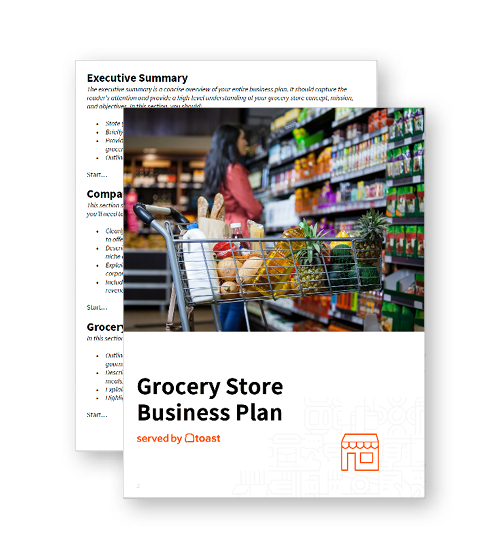
 Grocery Store Business Plan Template
Use this free template to easily create a great business plan that organizes your vision and helps you start, grow, or raise funding for your grocery store.
Get Free DownloadWalk into a well-run gourmet grocery, and you'll notice something a conventional supermarket can't replicate well: people lingering.
Shoppers browse the cheese counter without a list, ask the butcher what to do with a wagyu bavette, and leave with things they didn't come in for. Shoppers are constantly discovering new brands and packaged goods. That experience is turning specialty food retail into one of the most interesting businesses in the food industry.
According to Fortune Business Insights, the global gourmet food market size is projected to grow to $931.15 billion by 2034. Here's what's driving it.
Gourmet grocers in 2026
Social media influence
Social media has fundamentally altered how gourmet grocers attract customers, curate their offerings, and build brand identity. Platforms like Instagram and TikTok have turned grocery shopping into a lifestyle statement worth sharing. And, for a new generation of specialty retailers, that shift has become a growth strategy in its own right.
For example, Meadow Lane, a Tribeca gourmet grocery store, has crafted an outstanding, authentic social media presence. The store documented its entire opening process on TikTok, turning the ordinary chaos of launching a new business — delayed deliveries, last-minute resets, opening-day nerves — into content that resonated with viewers and drove foot traffic before the shelves were even fully stocked.
Nude Miami, an organic grocer located in Brickell, Miami, has built social momentum through influencer marketing. Influencer Alix Earl, who attended college in Miami and carries a following that skews toward the city, posted about the store's offerings, putting the brand in front of a large but locally relevant audience.
It's the kind of exposure that a traditional ad buy rarely replicates: trusted and targeted.
Meanwhile, Los Angeles' newly opened Laurel Supply is already generating its own social buzz through the customers themselves, who have flooded TikTok with walkthroughs of its modern, design-forward interior and in-store offerings.
The shopping experience doesn't start or end at the door. When a grocer gets the atmosphere and the curation right, customers become its most effective marketers.
The goods flying off the shelves
In an era when any product can be found online and delivered overnight, gourmet grocers are leaning into the one thing that can't be replicated: the experience of discovery.
The specific inventory on the shelves and stocked in the fridges are larley contributing to the demand here. The displays are too beautiful, the labels too interesting, the concepts too novel to pass by without picking something up. Across the board, certain product types have emerged as consistent drivers of foot traffic.
Probiotic yogurts have become a flagship category, with The Coconut Cult leading the charge. The brand's cult following, fitting, given the name, has made its small-batch coconut yogurt a staple of gourmet refrigerator sections nationwide, priced at a premium that shoppers are clearly willing to pay. It's part of a broader wave of functional dairy and dairy-alternative products that promise as much for the gut as they do for the palate.
The spreads aisle has undergone a revolution of its own. Pistachio cream spread, granola butter, sunflower seed butter, and a rotating cast of small-batch alternatives have turned what was once a utilitarian shelf into one of the most browsed sections in the store. These products travel well on social media, as they’re colorful, stackable, and giftable, and can draw in newcomers who first encounter them online and visit specifically to find them.
Prepared foods, meanwhile, have become a serious differentiator for grocers looking to compete with both restaurants and fast-casual chains. Gourmet chicken nuggets, composed salads, artisan sandwiches, and fresh sushi programs signal to shoppers that the store is a destination for a full meal, not just ingredients. Done well, a strong prepared foods section can make a grocer a daily habit rather than a weekly errand.
Perhaps no category has evolved more dramatically, though, than beverages. The functional drinks boom has filled refrigerator cases with canned adaptogen tonics, prebiotic sodas, and mushroom-infused elixirs that would have seemed fringe just a few years ago.
But it's the in-store beverage bars that have become a true draw. Happier Grocery's menu features a Bone Broth Hot Chocolate. Erewhon, of course, set the template with its viral smoothie collaborations, turning a blender behind a counter with in-store inventory into one of the most talked-about fixtures in American retail.
Grocery Store Marketing Plan
Create a marketing plan that'll drive repeat business with this customizable marketing playbook template and interactive calendar.

The market moment
Specialty Foods market size is expected to grow to $510.14 billion in 2030, fueled by consumer demand for premium, health-conscious, and globally inspired products. That's not a niche. That's a structural shift in how Americans think about food.
Consumer Edge's transaction data also shows that consumers aren’t simply spending less; they’re becoming more selective and shifting dollars toward retailers that offer strong value or a more differentiated shopping experience. Selective spending, it turns out, tends to favor quality over convenience.
Blurring the line between grocery and restaurant
One of the most consequential trends reshaping the category is the collapse of the distinction between cooking at home and eating out. The National Restaurant Association's 2024 State of the Restaurant Industry report noted that consumers are actively blurring this line, and gourmet grocers are uniquely positioned to benefit.
For many specialty retailers, house-made charcuterie, composed salads, and ready-to-heat restaurant-quality proteins are now among the highest-margin, highest-traffic parts of the store. According to a survey conducted by Toast, 59% of respondents selected grab-and-go items as a top product category.
This hybrid model—part grocery, part restaurant—is becoming the standard operating model for premium food retail.
Grocery and Food Inventory Template
Use this Excel spreadsheet template to stay organized and manage your store's inventory with ease.
The economics are different here
Gourmet grocery operates on fundamentally different unit economics than conventional retail, and understanding that difference matters for anyone building or running one of these businesses.
Gourmet grocery stores typically generate annual revenues between $1 million and $10 million per location, with gross margins of 40-50% and net profit margins of 2-5%.
What makes the model particularly interesting is where the ceiling sits. Gift baskets, corporate catering, and curated food boxes extend a grocer's reach well beyond foot traffic — and can carry strong margins of their own. For operators who build these channels deliberately, they're a meaningful part of the economics.
Operational complexity is the hidden challenge
The sourcing side of gourmet grocery is where things get genuinely complicated. Unlike conventional grocery, which runs on large broadline distributors, specialty retailers typically manage relationships with small regional producers, specialty importers, and independent artisan makers — often simultaneously.
For operators running both a retail floor and a prepared foods counter, technology that unifies inventory, sales, and labor under one system isn't a luxury — it's how the margins hold together. Capabilities like AI invoice scanning (which can automatically create and update items from supplier invoices), PAR-level alerts for perishable SKUs, and AI-powered sales insights make the difference between knowing what's working and finding out too late.
Loyalty is the long game
The economics of gourmet grocery depend on a particular customer behavior: the first-time discovery shopper who becomes a weekly regular.
That conversion doesn't happen by accident. It requires meaningful engagement — loyalty programs that reward frequency, SMS and email promotions that feel personal rather than automated, and a consistent in-store experience that earns repeat visits.
The customer who came in to try the new aged Gouda and left with a bottle of natural wine and a jar of house-made mostarda is the customer worth keeping. Building the systems to keep them is where smart operators are investing.
Grocery Store Opening Costs Calculator
Use this free PDF checklist to set your staff up for success, every shift.
Technology and operations
Running a gourmet grocery efficiently requires the right operational infrastructure, and for most operators, the gaps show up fast. A delivery arrives at the loading dock with a dozen SKUs from three different small-batch suppliers. The prepared foods counter needs to be rung up separately from the retail floor. A $40/lb wagyu cut disappears into shrinkage without a trace. These are the moments where disconnected systems cost real money.
For operators running both a retail floor and a prepared foods counter, managing two businesses from disconnected systems is where momentum stalls. Toast Retail brings it all under one login — inventory, sales, loyalty, and more — so operators can focus on the floor, not the back office.
Key operational priorities for gourmet grocery operators, and how the right platform addresses them:
Perishable inventory tracking by SKU — PAR levels and low-stock alerts ensure a $40/lb wagyu cut or a limited-run artisan cheese doesn't run out mid-week or disappear into shrinkage unnoticed
SmartScan for fast receiving — take items from the loading dock to the shelf in seconds, not hours, keeping backstock from backing up during busy delivery windows
AI Invoice Scanning — automatically creates and updates items directly from supplier invoices, which is critical when you're managing dozens of small-batch and imported suppliers at once
Toast IQ — AI-powered insights that surface your top-sellers and flag margin risks without requiring manual reporting, so you can make smarter buying decisions week over week
Built-in loyalty tools — including points-based programs, SMS promotions, and email campaigns with AI-assisted creation — to turn first-time discovery shoppers into the weekly regulars that keep a specialty store thriving
Online ordering and local delivery — to extend reach beyond foot traffic and capture the growing segment of premium shoppers who want restaurant-quality ingredients at home
From checkout to inventory, grocers can do so much more with Toast. Get back hours of your time with a POS that simplifies inventory, frees up staff, and lets you focus on the customer experience.
FAQs
Does Toast support barcode scanners?
Yes, we support a variety of scales and barcode scanners. You can also use SmartScan to scan any item right from your phone.
What is the difference between a gourmet grocery store and a regular supermarket? A gourmet grocery store focuses on premium, artisan, and specialty products, often sourced from small producers or imported, and competes on curation and expertise rather than price and volume. A conventional supermarket prioritizes breadth of selection and competitive pricing across everyday staples.
Are gourmet grocery stores profitable? Yes, when managed well. Gourmet grocers typically achieve higher per-unit margins than conventional grocery stores, particularly on prepared foods, cheese, and specialty imports. Profitability depends on tight inventory management, strong sourcing relationships, and a well-trained staff that can drive attachment sales.
What products are typically sold in a gourmet grocery store? Common categories include artisan cheeses, charcuterie and cured meats, premium proteins (wagyu, heritage breeds, dry-aged cuts), imported pantry staples, fine wines and craft beverages, specialty condiments, and house-made prepared foods.
How do gourmet grocery stores compete with online specialty food retailers? Physical gourmet grocers compete through experience — the ability to taste before buying, receive expert recommendations, and discover new products in person. Many also offer local delivery, catering, and gifting services to extend their reach beyond the store floor.
Is Toast just for restaurants?
No, Toast is designed to work for retail, food service, or the increasing number of concepts that include both.
While you’ll currently find Toast in 171,000+* restaurants, we’ve also served thousands of retail stores (and counting!). Our experience in the restaurant industry has allowed us to create a retail platform that meets the evolving needs of stores that also offer some form of food or beverage service, from wine tastings to sandwiches, to coffee, to full-blown restaurants.
I offer a combination of retail and food service. Can Toast handle both?
Yes, Toast allows you to serve both retail shoppers and diners all on the same platform, eliminating the need for multiple POS systems or separate terminals. That means guests can check out anywhere, no matter what they’re purchasing, and you can have all your data in one place.
Is this article helpful?
DISCLAIMER: This information is provided for general informational purposes only, and publication does not constitute an endorsement. Toast does not warrant the accuracy or completeness of any information, text, graphics, links, or other items contained within this content. Toast does not guarantee you will achieve any specific results if you follow any advice herein. It may be advisable for you to consult with a professional such as a lawyer, accountant, or business advisor for advice specific to your situation.

Subscribe to On the line
Sign up to get industry intel, advice, tools, and honest takes from real people tackling their restaurants' greatest challenges.
By submitting, you agree to receive marketing emails from Toast. We’ll handle your info according to our privacy statement. Additional information for California residents available here.