
What Is a Food Manager Certification & Do You Need One?
What is a food manager certification and do you actually need one? Get clear answers on requirements, who qualifies, and how to get certified fast.
Author
 RESOURCE
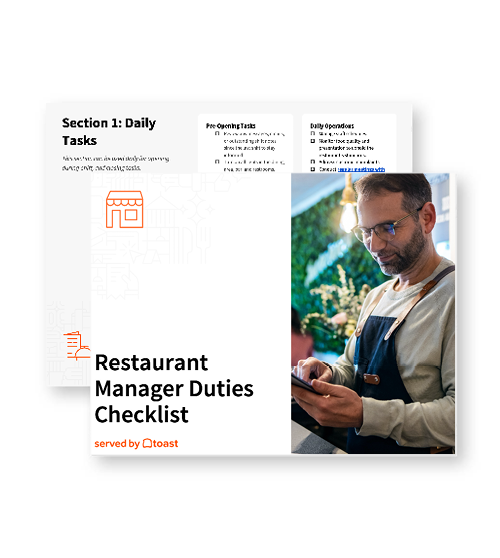
 Restaurant Manager Duties Checklist
Use this free checklist to help streamline daily tasks, make sure weekly duties get completed, and ensure your manager stays organized.
Get Free DownloadOpening a food business is exciting — but before you serve your first customer, you need to make sure your operation meets food safety requirements. One of the most common requirements across the country is a food manager certification.
This credential ensures that someone on your team understands how to safely handle and oversee food operations. If you’re opening a restaurant, launching a food truck, or renewing a permit, you may be required to have a Certified Food Protection Manager (CFPM) on staff.
In this guide, we’ll break down what the food manager certification is, who needs it, how to get it, and why it matters for your business.
Key takeaways
Most food businesses are required to have at least one Certified Food Protection Manager on staff.
A food manager certification is a supervisory-level credential, not the same as a basic food handler card.
Certification demonstrates advanced knowledge of food safety, risk prevention, and regulatory compliance.
Becoming certified typically requires passing a proctored exam through an ANSI-accredited program.
Requirements vary by state and city, so always confirm your local health department’s rules before enrolling.
Restaurant Manager Resume Template
Get hired for that dream manager job with the restaurant manager resume template, a customizable Word doc that outlines skills, education, and more.

What is a food manager certification?
A food manager certification is an accredited food safety credential designed for supervisors or managers who are responsible for overseeing safe food handling practices. It verifies that the person in charge understands how to prevent foodborne illness, manage temperature control, enforce hygiene standards, and maintain compliance with health regulations.
Food manager certification vs. food handler permit
A food handler permit typically covers basic food safety principles for employees who handle food. It’s designed for frontline staff and usually involves a short course with a basic knowledge check.
A food manager certification, on the other hand, is a higher-level credential. It requires passing a proctored exam and demonstrates a deeper understanding of food safety systems, risk management, and regulatory compliance.
The certified manager is responsible for overseeing safe practices, training staff, and ensuring the operation meets health department standards. In short:
Food handler permit: Entry-level food safety training.
Food manager certification: Supervisory-level accountability and oversight.
Who needs a food manager certification?
In most states, at least one Certified Food Protection Manager (CFPM) is required for each food establishment. A handful of states — including Arizona, Maryland, Missouri, Nebraska, Nevada, North Dakota, Oklahoma, South Carolina, and Wyoming — do not have a statewide requirement, but certification is often still required at the county or city level.
Why does food manager certification matter for your business?
Food manager certification isn’t just about checking a regulatory box — it’s about protecting your business. When someone on your team understands food safety at a deeper level, you reduce risk, improve consistency, and create a stronger foundation for daily operations:
Reduces the risk of foodborne illness.
Improves inspection outcomes.
Builds customer trust.
Supports staff training and accountability.
May lower liability risk.
How to get a food manager certification
Though specific requirements can vary by state or county, in most cases, you’ll complete an accredited certification program and pass a proctored exam. Once you pass, you’ll receive a Nationally Accredited Food Protection Certificate, confirming that you’ve successfully completed an approved food safety and sanitation course.
Certification programs must be accredited by the ANSI National Accreditation Board (ANAB), which maintains a directory of approved food protection manager programs. Different formats are available, including online courses with in-person or remote proctoring.
Before enrolling, it’s always a good idea to confirm your local health department’s specific requirements to ensure you select the right certification program for your business. Here’s what the process usually looks like:
Choose an ANSI-accredited food protection manager certification provider.
Complete a training course.
Pass a proctored certification exam.
Submit your certificate to your local health department (if required).
Renew your certification before it expires (often every five years).
Pass the test and protect your guests
A food manager certification is the foundation of safe, consistent operations. When someone on your team understands food safety at a supervisory level, your business is better prepared for inspections, staff training, and everyday decision-making.
Requirements may vary by state or city, but the goal is always the same: protecting your customers and your business. Before enrolling in a program, check your local health department’s specific rules to ensure you’re meeting all requirements in your area.
FAQ
Is a food manager certification the same as a ServSafe certification?
ServSafe is one example of a nationally recognized food protection manager certification program. A food manager certification refers broadly to an accredited credential, and ServSafe is one of several approved providers.
Can I get a food manager certification online?
Many certification programs offer online training courses, but the final exam typically must be proctored. Some providers allow remote proctoring, while others require in-person testing, depending on local requirements.
Does a food manager certification expire?
Yes. Food manager certifications generally expire after a set period, often around five years. Renewal requirements vary by jurisdiction, so it’s important to confirm with your local health department.
What happens if my food establishment doesn’t have a certified manager on-site?
In many jurisdictions, at least one certified food protection manager must be designated for each establishment. If this requirement isn’t met, your business could face inspection violations, permit delays, or required corrective action.
Do I need a food manager certification if I own but don’t work in the kitchen?
Requirements vary by location. In many areas, the certification is required for the person in charge of food safety operations, which may or may not be the owner. If you don’t oversee food handling directly, another designated manager may need to be certified.
Is a food manager certification recognized in all states?
Most states require a certified food protection manager, and many recognize certifications from nationally accredited programs. However, specific requirements can vary by state and local jurisdiction, so it’s important to verify with your local health authority.


Is this article helpful?
DISCLAIMER: This information is provided for general informational purposes only, and publication does not constitute an endorsement. Toast does not warrant the accuracy or completeness of any information, text, graphics, links, or other items contained within this content. Toast does not guarantee you will achieve any specific results if you follow any advice herein. It may be advisable for you to consult with a professional such as a lawyer, accountant, or business advisor for advice specific to your situation.
 Trending



Subscribe to On the line
Sign up to get industry intel, advice, tools, and honest takes from real people tackling their restaurants' greatest challenges.
By submitting, you agree to receive marketing emails from Toast. We’ll handle your info according to our privacy statement. Additional information for California residents available here.