
CPG Meaning: What Does CPG Stand For?
A complete guide to Consumer Packaged Goods (CPG) — including categories, supply chain, and 2025 trends to watch.
Author
 RESOURCE
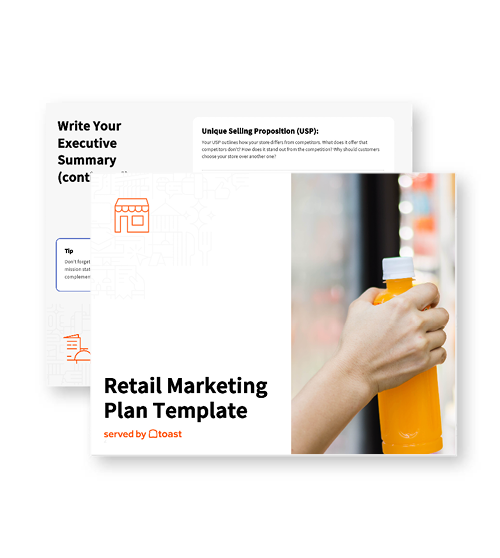
 Retail Marketing Plan
Create a marketing plan that'll drive repeat business with this customizable marketing playbook template and interactive calendar.
Get Free DownloadIn today’s fast-changing retail and food service landscape, the acronym CPG — short for Consumer Packaged Goods — appears everywhere from industry reports to grocery shelves. In North America alone, the CPG market was valued at $1.59 trillion in 2023, with projections estimating growth to $2.32 trillion by 2035. In this article, we’ll break down the definition of CPG, how it differs from other product categories, why it’s vital to the economy, and what trends are shaping its future, especially within the food and beverage industry.
The definition of CPG
Consumer Packaged Goods are products people use regularly and replenish frequently. These are everyday items that are consumed quickly and replaced often.
Common examples of CPGs include:
Food and beverages
Personal care products (e.g., shampoo, toothpaste)
Cleaning supplies (e.g., detergent, paper towels)
The term "packaged" refers to how these products are wrapped and presented to consumers, with packaging designed to capture attention on store shelves and provide product information.
Consumer packaged goods describe merchandise that has to be restocked frequently, as opposed to items that can be replenished after longer durations.
This distinguishing characteristic sets CPGs apart from durable goods, such as:
Washing machines
Furniture
Electronics
These items are purchased less frequently and typically last for years, while CPGs are used up within days or weeks.
Retail Marketing Plan
Create a marketing plan that'll drive repeat business with this customizable marketing playbook template and interactive calendar.

CPG vs. durable goods
The key difference between consumer packaged goods and durable goods lies in their expected lifespan and consumption patterns. Durable goods, such as computers or washing machines, are more expensive and last many years, while CPG products are typically used up quickly.
To better understand the distinction:
Consumer Packaged Goods (CPG):
Short lifespan: These products are consumed within days or weeks.
Low cost per unit: CPGs are typically affordable and budget-friendly.
Frequent repurchase cycle: Consumers buy them often to replenish the supply.
Examples: Items like food, beverages, toiletries, and cleaning supplies.
Durable Goods:
Long lifespan: Designed to function for several years.
Higher cost per unit: These are considered long-term investments.
Infrequent purchases: Consumers replace them only occasionally.
Examples: Items like appliances, furniture, and electronics.
The importance of CPG in the economy
The CPG industry is a vital component of the global economy. Valued at approximately $2.13 trillion in 2022, the global consumer packaged goods sector is projected to grow to $3.17 trillion by 2032, reflecting its expansive reach and essential role in everyday consumer life.
Despite economic fluctuations, CPG products maintain relatively steady demand. Consumers continue to purchase consumer packaged goods even during economic downturns, though they may opt for more affordable brands or alternatives. This resilience makes the CPG sector a relatively stable investment area compared to more volatile sectors like tech or luxury goods.
As Laurent Freixe, CEO of Nestlé, notes: “Packaged foods are very, very important for mankind. They have brought safe foods to many. They preserve the quality of the food. They allow us to fight food waste.”
His words highlight the broader social impact of CPGs — from food security to sustainability — underscoring why this industry plays such a critical role across global markets.
Common categories within CPG
Consumer packaged goods cover a broad spectrum of products across multiple categories. Here are the primary segments:
Food and beverages
The food and beverage sector covers a wide range of consumer packaged goods that touch every part of our daily lives. This includes:
Packaged foods: Cereals, snacks, canned goods
Beverages: Bottled water, soft drinks, juices
Dairy products: Milk, cheese, yogurt
Frozen meals: Ready-to-heat entrées and sides
Baked goods: Bread, pastries, packaged desserts
Restaurants and food service businesses often incorporate CPG products into their operations. Toast Retail is designed to enable convenience stores, bottle shops, and grocery stores to operate faster and more efficiently, modernize inventory management, and create delightful guest experiences.
Personal care items
This category includes products used to support daily hygiene, grooming, and appearance:
Cosmetics and skincare: Makeup, moisturizers, and sunscreen
Oral care products: Toothpaste, mouthwash, and floss
Hair care products: Shampoo, conditioner, and styling items
Deodorants and perfumes: Fragrance and body odor control
Shaving products: Razors, shaving cream, and aftershave
Household products
These are CPG items designed for cleaning, freshening, and maintaining the home:
Laundry detergents: For washing clothes and linens
Surface cleaners: For kitchens, bathrooms, and floors
Air fresheners: Sprays, plug-ins, or scented candles
Paper products: Toilet paper, tissues, and paper towels
Dishwashing products: Soap, pods, and rinse aids
Over-the-counter medications
This category includes non-prescription medications and supplements that consumers can purchase without a doctor's prescription:
Pain relievers: Acetaminophen, ibuprofen, and aspirin
Cold and flu medicines: Decongestants, cough syrups, and throat lozenges
Digestive aids: Antacids, laxatives, and anti-nausea treatments
Vitamins and supplements: Daily multivitamins, probiotics, and immune boosters
CPG vs. FMCG: Understanding the difference
The terms CPG and FMCG (Fast-Moving Consumer Goods) are often used interchangeably, but there are subtle differences.
The short answer:
CPG stands for consumer packaged goods — products that include the most common and frequently purchased items.
FMCG is a subset of CPG, referring specifically to the fastest-moving items.
FMCG brands, which manufacture and sell products like deodorant, toothpaste, and toilet paper, tend to have:
A shorter shelf life
A higher turnover rate
Lower costs per unit
While all FMCG products are CPG products, not all CPG products qualify as FMCG.
The CPG supply chain
The CPG industry operates through a complex multi-step supply chain that brings products from manufacturers to consumers:
Manufacturing: CPG companies produce goods in large quantities to achieve economies of scale.
Distribution: Products are shipped to warehouses and distribution centers.
Retail: Items are sold through various channels, including grocery stores, convenience stores, and increasingly, e-commerce platforms.
Consumer: The end user purchases and consumes the product.
For modern CPG brands, the regulations governing food marketing, formulation, manufacture, and distribution are outdated and ambiguous, leaving companies to proactively develop custom compliance programs without clear guidance.
One innovative example of supply chain adaptation is Procter & Gamble’s collaboration with Loop, a reusable packaging platform that enables products like Tide detergent to be shipped in durable, refillable containers. These containers are picked up, cleaned, and refilled — creating a closed-loop system that reduces waste and rethinks traditional distribution models. It’s a forward-thinking approach that blends sustainability with logistical innovation, addressing both environmental concerns and consumer convenience.
Current trends in the CPG industry
The CPG industry is constantly evolving to meet changing consumer demands and market conditions. Here are some key trends shaping the industry in 2025:
Health and wellness focus
More than ever, consumers are prioritizing personal well-being — 82% of U.S. consumers now consider wellness a top or important priority in their everyday lives. This focus is fueling demand for products with added health benefits, transparent sourcing, and cleaner ingredient lists. One standout example is yuzu, a sour citrus fruit native to Japan, which is gaining popularity in the U.S. for its antioxidant-rich profile and bright flavor. It’s showing up in beverages, salads, and desserts as both a functional and trendy ingredient.
Sustainability and eco-conscious packaging
Concerns over climate change and environmental impact are prompting CPG brands to rethink packaging and production methods. Nestlé, for instance, has committed to making 95% of its packaging recyclable or reusable by 2025, with mono-materials playing a key role. This aligns with a broader market shift: the global biodegradable packaging market is projected to reach $25.3 billion by 2025, growing at a CAGR of 17% as consumers increasingly seek out sustainable alternatives.
Digital transformation and e-commerce
The pandemic fundamentally changed the way consumers shop for everyday goods, accelerating the shift to online purchasing. In 2020 alone, online food and beverage sales — including groceries and restaurant delivery — jumped 125% to $106 billion. And the habit is sticking: according to McKinsey, 28% of consumers now shop online for groceries weekly, while 21% do so more than once a week. An additional 43% say they plan to continue online grocery shopping even as in-person options return.
Major CPG companies have adapted quickly to this shift. For example, PepsiCo launched two direct-to-consumer platforms — Snacks.com and PantryShop.com — in 2020 to reach consumers stuck at home during lockdowns. These platforms not only allowed PepsiCo to move inventory directly to consumers but also provided valuable data on shopping behavior and preferences, helping the company strengthen its e-commerce strategy in a rapidly evolving market.
Plant-based and alternative products
Health, environmental, and ethical considerations are driving the continued rise of plant-based alternatives. The Guardian estimates 79 million people now identify as vegan, a trend that is reshaping food and beverage innovation. In the U.S., Gen Z is leading the charge — 19% report embracing plant-based eating habits, making them a prime audience for new CPG offerings in dairy-free, meatless, and functional food categories.
One notable example is Unilever’s acquisition of The Vegetarian Butcher, a Netherlands-based brand focused entirely on plant-based meats. Since acquiring the company in 2018, Unilever has expanded its reach globally and partnered with Burger King to supply the plant-based Whopper in Europe. This strategic move illustrates how CPG giants are adapting to the rise in plant-forward eating by investing in specialized product lines that appeal to health-conscious and sustainability-minded consumers.
Private label growth
With inflation and economic uncertainty lingering into 2025, price sensitivity remains high. Grocery costs are the #1 financial concern for most Americans, and more shoppers are turning to private label options for relief. In fact, 70% of consumers report choosing private label brands more frequently. The shift is global as well — private label products accounted for 19.4% of all FMCG value sales worldwide in 2023, signaling a continued erosion of traditional brand loyalty.
One standout example is Target’s private label brand, Good & Gather, which surpassed $2 billion in sales within its first year. By focusing on affordability, high-quality ingredients, and appealing packaging, Target successfully positioned Good & Gather as a go-to brand for budget-conscious consumers without sacrificing quality — illustrating how private labels are becoming formidable competitors in the CPG space.
CPG in the food service industry
The relationship between consumer packaged goods (CPG) and food service businesses is becoming increasingly intertwined. As restaurant models evolve and customer expectations shift, CPG products are playing a more visible role in how food and beverages are sourced, marketed, and served.
Restaurant and retail convergence
According to a recent Toast study, more than half of food and beverage retailers offer some form of foodservice. This blurring of traditional boundaries creates new opportunities and challenges as businesses look to meet consumer demand for convenience and quality. In fact, 56% of consumers now consider convenience stores as viable options for made-to-order food over fast food restaurants, according to Intouch Insight's 2024 Third-Party Delivery Report.
Beverage programs and CPG
An extensive wine list is not a new concept in the restaurant industry, but during the past decade or so, there has been an increased emphasis on the restaurant beverage program. Developing a beverage program — a thoughtfully curated list of drinks you serve, alcoholic or otherwise — can make your restaurant stand out and increase profits.
The "sober curious" movement has sparked a revolution in sophisticated non-alcoholic beverages. The non-alcoholic drinks market is projected to reach $30 billion by 2025, creating new opportunities for restaurants and food service businesses to expand their beverage offerings.
FAQ about CPG
What is the difference between CPG and retail?
CPG refers to the products themselves and the companies that manufacture them, while retail refers to the businesses that sell these products to consumers. CPG manufacturers create the products, while retailers provide the channel through which these products reach consumers.
Are all food products considered CPG?
Yes, most food products sold in packaged form are considered CPG. However, fresh, unpackaged produce or meats might not always be categorized as CPG in the strictest sense, though they are still consumer goods.
How do CPG companies measure success?
CPG companies typically track metrics like market share, brand awareness, distribution coverage, sales velocity, and profit margins. Consumer loyalty and repeat purchase rates are also important indicators of success.
What role does packaging play in CPG?
Packaging serves multiple functions in CPG: it protects the product, communicates brand identity and product information, attracts consumer attention, and increasingly, meets sustainability expectations. Consumer packaged goods get their name from their wrappings, which are designed to be easily recognized and to capture attention on store shelves.
How is e-commerce changing the CPG industry?
E-commerce has transformed how consumers discover, purchase, and receive CPG products. This shift has necessitated changes in packaging, marketing strategies, and distribution networks. It has also enabled direct-to-consumer models that bypass traditional retail channels.
Final thoughts
Consumer Packaged Goods represent more than just items on a shelf — they’re essential products that shape how we eat, clean, care for ourselves, and live our daily lives. As consumer values shift and technologies evolve, the CPG industry continues to adapt, offering new product formats, sustainable packaging, and direct-to-consumer innovations. Whether you’re a retailer, food service operator, or consumer, understanding the role and evolution of CPG helps illuminate the broader story of how goods move through our world.
Is this article helpful?
DISCLAIMER: This information is provided for general informational purposes only, and publication does not constitute an endorsement. Toast does not warrant the accuracy or completeness of any information, text, graphics, links, or other items contained within this content. Toast does not guarantee you will achieve any specific results if you follow any advice herein. It may be advisable for you to consult with a professional such as a lawyer, accountant, or business advisor for advice specific to your situation.
 Trending


Subscribe to On the line
Sign up to get industry intel, advice, tools, and honest takes from real people tackling their restaurants' greatest challenges.
By submitting, you agree to receive marketing emails from Toast. We’ll handle your info according to our privacy statement. Additional information for California residents available here.