
Can You Take Alcohol To Go From a Restaurant?
Can you legally take alcohol to go from a restaurant? Here's what U.S. laws say in 2025.
Author
 RESOURCE
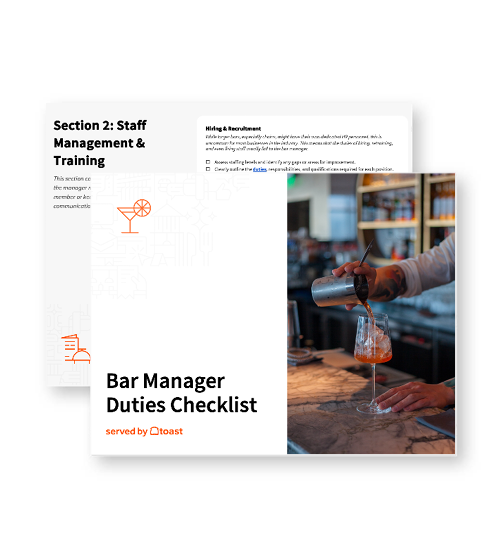
 Bartender Training Checklist
Use this free Bartender Training Checklist to help streamline your training process and set your new bartenders up for success.
Get Free DownloadThe ability to take alcohol to-go from restaurants varies significantly across the United States, with rules that have evolved dramatically since the COVID-19 pandemic began. What was once largely prohibited has become a permanent fixture in many states' hospitality landscapes.
Reflecting this shift, a 2020 CivicScience survey found that 15% of U.S. adults aged 21 and over who consume alcohol reported they are more likely to order takeout if alcohol is also available. This guide breaks down which states allow alcohol to-go, the rules you need to follow, and how restaurants and consumers are navigating this post-pandemic change.
The current landscape of to-go alcohol
As of 2025, the majority of U.S. states now allow some form of alcohol to-go from restaurants. According to the Distilled Spirits Council, 26 states and the District of Columbia have enacted laws to permanently allow cocktails to-go, while several others have temporary provisions in place.
States with permanent to-go alcohol laws:
Arizona, Arkansas, Connecticut, Delaware, Florida, Georgia, Hawaii, Indiana, Iowa, Kansas, Kentucky, Louisiana, Maine, Michigan, Missouri, Montana, Nebraska, Ohio, Oklahoma, Oregon, Rhode Island, Texas, Virginia, Washington, West Virginia, Wisconsin, and the District of Columbia.
A few others have temporary laws still in effect, with expiration dates on the horizon:
California: Expires Dec 31, 2026
Colorado: Expires July 1, 2025
Illinois: Expires Aug 1, 2028
Massachusetts: (expired April 1, 2024)
New Jersey: End date TBD
New York: Expires April 9, 2025
Vermont: Expires July 1, 2025
Note: Always check local regulations, as individual cities or counties may have stricter rules.
Why did to-go alcohol become legal?
The shift in to-go alcohol laws wasn’t random — it was born out of necessity.
During the COVID-19 pandemic, restaurants across the country faced forced closures and strict dining restrictions. In response, many states introduced temporary to-go alcohol laws as a lifeline to help restaurants generate revenue and survive.
What started as a quick fix turned into a fan favorite.
Customers loved the convenience, and restaurants saw a noticeable boost in sales. That popularity — paired with ongoing economic challenges like inflation, food cost hikes, and staffing shortages — pushed many states to make these changes permanent.
While dining restrictions are no longer in place, to-go alcohol remains a valuable revenue stream, helping restaurants offset rising costs and increase average check sizes.
Bartender Training Checklist
Use this free Bartender Training Checklist to help streamline your training process and set your new bartenders up for success.

Rules and restrictions
Yes, to-go alcohol is legal in many places — but that doesn’t mean it’s a free-for-all. Rules vary by state, and restaurants must follow specific guidelines to stay compliant.
While to-go alcohol is now widely permitted, it comes with various restrictions that differ by state.
Food requirements
Most states require alcohol to-go to be accompanied by food purchases. For example, Texas law states: "All alcohol to-go orders must be accompanied by a food order."
Container requirements
Alcoholic beverages typically must be in sealed containers. In New York, to-go alcoholic drinks must be sold "in a container with a secure lid or cap sealed in a manner designed to prevent consumption without removal of the lid or cap by breaking the seal."
Quantity limits
Many states limit how much alcohol can be sold in a single to-go order — this can vary based on type (beer, wine, spirits).
Delivery options
Some states allow third-party delivery services (like DoorDash or Uber Eats) to deliver alcohol; others limit delivery to restaurant employees.
Transportation rules
Several states have regulations about how alcohol must be transported in vehicles after purchase. Customers may be required to store alcohol in the trunk or back seat of the vehicle — open container laws still apply even if the drink is sealed.
Why can't you take alcohol to-go in some places?
Even with growing support for to-go alcohol laws, some states and local governments are holding back. Here’s why:
1. Public health and safety concerns
Opponents of to-go alcohol cite concerns about increased alcohol consumption and the potential for impaired driving. There are also worries about making alcohol more accessible to minors through delivery services that may have less rigorous age verification processes than in-person establishments.
2. Opposition from package stores
Liquor and package store associations have been vocal opponents in many states. NPR reported that "wholesalers and liquor stores are pushing back against more permissive laws because they're concerned about losing business as restaurants get more leeway."
Rob Mellion, executive director of the Massachusetts Package Stores Association, argued that extending to-go policies went too far: "During the first year and a half of the pandemic, it was understood we needed to make restaurants whole. Restaurants are whole now. Now, it's about additional profitability."
3. Regulatory complexity
The United States follows a three-tier system for alcohol distribution (producers → distributors → retailers) that dates back to the end of Prohibition. This creates a regulatory landscape that can be difficult to modernize due to entrenched interests at each tier of the system.
4. Local control
In some states, alcohol rules are set by cities or counties. That means one city might allow to-go drinks while the next town over doesn’t — creating a confusing patchwork of regulations.
The future of to-go alcohol
The trend toward making to-go alcohol permanently legal continues to gain momentum. Colorado, Indiana, Maryland, Massachusetts, North Carolina, and Virginia enacted permanent laws in 2024, and New York extended its temporary provisions for another five years to 2030.
These changes represent one of the most significant shifts in American alcohol policy since the end of Prohibition. Mike Whatley, a lobbyist for the National Restaurant Association, stated: "Honestly, without the pandemic, it would have taken five to 10 years or more to have this many states pass laws that change alcohol policy so significantly."
As more states assess the economic and cultural impact, to-go alcohol is likely to remain a key part of the restaurant industry’s business model for years to come.
Checking your local rules
Because laws vary widely by state, city, and even county, it’s important to check your local rules before ordering to-go alcohol. Here’s how:
Check your state’s Alcoholic Beverage Control (ABC) website: Most states list current rules for takeout alcohol, including container types, food requirements, and delivery restrictions.
Ask the restaurant directly: Staff will know whether they’re licensed to sell alcohol to-go — and what the rules are.
Look for signage or online notices: Restaurants that offer to-go drinks often advertise it on their menus, websites, social media posts, window signage, order pages, and third-party delivery apps.
These listings often include any restrictions or requirements that apply to the purchase — like food pairings, pickup-only rules, or container guidelines.
Tip: If in doubt, don’t assume — rules can change depending on where you are and how the alcohol is packaged or delivered.
Looking ahead
The ability to take alcohol to-go from restaurants has evolved from a temporary pandemic relief measure into a permanent feature of the hospitality landscape in much of the United States. While restrictions vary by location, the overall trend continues toward greater flexibility and consumer choice, balanced with appropriate safeguards to ensure responsible service and consumption. Whether you’re grabbing a cocktail with your takeout or stocking up for a dinner party, just be sure to check the rules — and raise a glass responsibly.
Is this article helpful?
DISCLAIMER: This information is provided for general informational purposes only, and publication does not constitute an endorsement. Toast does not warrant the accuracy or completeness of any information, text, graphics, links, or other items contained within this content. Toast does not guarantee you will achieve any specific results if you follow any advice herein. It may be advisable for you to consult with a professional such as a lawyer, accountant, or business advisor for advice specific to your situation.
 Trending

Subscribe to On the line
Sign up to get industry intel, advice, tools, and honest takes from real people tackling their restaurants' greatest challenges.
By submitting, you agree to receive marketing emails from Toast. We’ll handle your info according to our privacy statement. Additional information for California residents available here.