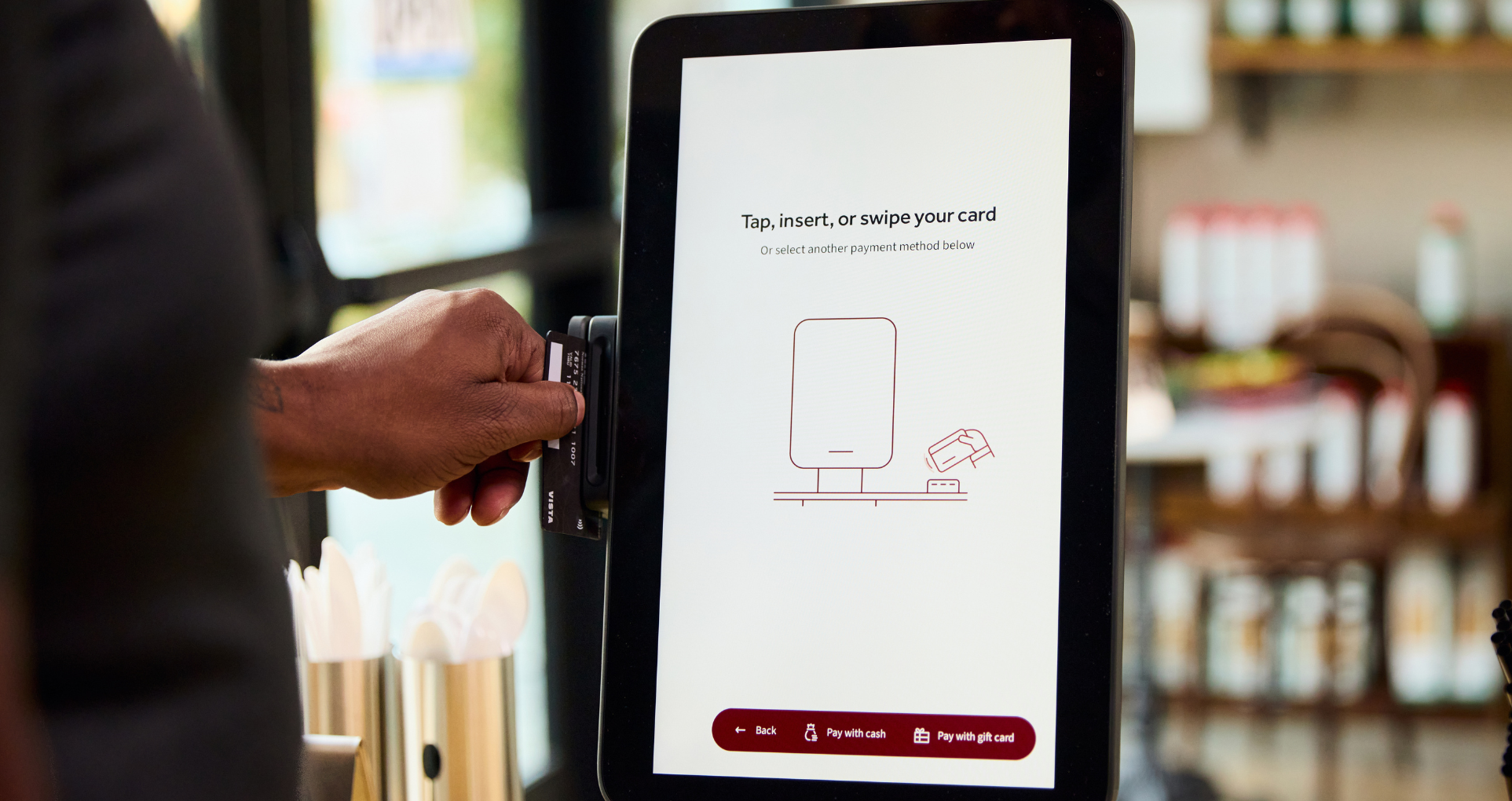
AI Ordering System: How It Works & When to Use One
An AI ordering system helps businesses handle orders faster and more accurately across channels. Learn how it works and when to use one.
Author
 RESOURCE
 AI Prompt Library for Restaurants
Use these AI prompts to help get the specific, practical guidance your restaurant needs.
Get Free DownloadAn AI ordering system is a technology that uses artificial intelligence to take and process customer orders across channels like kiosks and online ordering. As orders come in from multiple channels at once, businesses need a way to capture them accurately, route them correctly, and keep things moving without slowing down.
As AI ordering moves from experimentation to real-world use, reliability has become the key differentiator. As Roy Baharav, cofounder and CEO of Hi Auto, explains:
“The biggest difference is reliability at scale… Earlier systems struggled in real environments and required constant tuning. Today, advances in real-time inference, better training on messy audio and tighter integration with restaurant systems mean the technology behaves predictably. That predictability is what turns a pilot into an operational tool.”
AI ordering systems are no longer just experimental tools—they’re becoming a practical way to improve everyday operations. In this guide, you’ll learn what AI ordering systems are, how they work, and how to decide if they’re the right fit for your business.
Key takeaways
An AI ordering system uses artificial intelligence to take and process orders across channels like kiosks, phone, and online ordering.
Businesses use AI ordering systems to improve speed, accuracy, and consistency while handling higher order volume.
AI ordering systems follow a simple workflow from capturing customer input to sending structured orders to POS and fulfillment systems.
These systems are especially useful for high-volume, multi-location, or understaffed businesses that need operational support.
The right AI ordering system should integrate with your POS, handle customizations accurately, and fit your existing workflows.
What is an AI ordering system?
An AI ordering system uses artificial intelligence to take and process customer orders through channels like voice, chat, or self-service interfaces. Instead of relying entirely on staff, these systems can understand customer requests, input orders, and send them directly to your POS and fulfillment systems.
Why are businesses using AI ordering systems?
Businesses are using AI ordering technology to make the ordering process faster, more consistent, and easier to manage across different channels. These systems help teams handle high demand while improving accuracy and efficiency during day-to-day operations.
A 2023 poll by the Bipartisan Policy Center and Morning Consult found that 83% of small business owners using AI say it has helped improve systems, increase efficiency, and free up time for higher-value tasks, while 54% report a positive impact on business growth.
Speed up ordering and reduce wait times: AI can take orders quickly without delays, especially during peak hours.
Reduce errors and improve order accuracy: Orders are captured and sent directly to the POS, minimizing miscommunication.
Handle high order volume: AI systems can manage multiple orders at once without slowing down.
Lower labor strain: Staff can focus on fulfillment, service, and support instead of taking every order manually.
Improve upselling and increase order value: AI can suggest add-ons and upgrades consistently.
Provide 24/7 availability: Phone and online ordering can continue even when staff are unavailable.
Deliver consistent service across locations: AI follows the same process every time, regardless of location.
Generate data and insights: Ordering data can be used to track trends and improve operations.
Who should consider using an AI ordering system?
AI ordering systems are especially useful for businesses that need to handle high order volume, maintain consistency, or support limited staff. While not every operation needs one, they can be a strong fit where speed, accuracy, and efficiency are critical.
Quick-service restaurants (QSRs): Especially those with drive-thru volume where speed and accuracy directly impact throughput.
High-volume businesses: Restaurants or retailers with frequent rush periods that need to manage large numbers of orders at once.
Multi-location brands: Businesses looking to standardize ordering and maintain consistency across locations.
Businesses facing staffing challenges: Teams that need support handling orders without adding more labor.
How do AI ordering systems work?
AI ordering systems follow a simple process that turns a customer’s request into a completed order. While the technology behind them can be complex, the workflow is designed to be fast and easy to follow.
Customer places an order: The customer speaks or types their order through a drive-thru, phone, kiosk, or online system.
AI processes the request: The system interprets the order using voice or text recognition.
Order is structured: The AI converts the request into a clear, itemized order with any customizations.
Order is sent to the POS and fulfillment system: The system routes the order directly into your POS and operational workflow.
Order is confirmed: The AI repeats or displays the order so the customer can confirm accuracy before it’s finalized.
Types of AI ordering systems
AI ordering systems come in different formats depending on how customers place orders. Most businesses use one or a combination of systems across their ordering channels.
For instance, Papa Johns recently launched a unified AI ordering system powered by Gemini that works across mobile apps, websites, phone orders, kiosks, and in-car systems. As chief digital officer Kevin Vasconi explains, the goal is to make ordering more conversational and reduce friction—especially for larger or more complex orders:
“Let’s say you have to order pizza for your kid’s soccer team, and you need to figure out how much to get, preferences, food allergies, etc., and the AI agent is built to walk you through all of that. It might ask ‘how many people are on the soccer team?’ and then come back with suggestions. Because of the conversational nature of it, you can add food allergies or say that someone doesn’t like mushrooms, and it won’t include those ingredients.”
Voice AI: Used in drive-thru lanes, phone ordering, or call centers to take spoken orders and keep lines moving.
Chat-based AI: Handles orders through websites, mobile apps, SMS, or chat interfaces.
Kiosk AI: Powers self-service kiosks that guide customers through ordering and suggest add-ons.
Hybrid systems: Combine AI with human support, allowing staff to step in when needed.
How to choose an AI ordering system
Choosing an AI ordering system starts with understanding how it will fit into your existing operations. The right system should integrate smoothly with your workflows while improving speed, accuracy, and consistency.
POS integration: Make sure the system connects directly to your POS so orders flow seamlessly into your fulfillment workflow
Ease of use: Choose a system that’s intuitive for both staff and customers across all ordering channels
Accuracy and customization handling: Ensure it can correctly process customizations, special requests, and complex orders
Customization: Look for flexibility to match your menu, catalog, pricing, and operational workflows
Support and human fallback: Make sure staff can step in when needed and that support is available if issues arise
Smart tech, human touch
AI ordering systems can be powerful tools, but they’re not the right fit for every business. The goal isn’t to replace the human element of service—it’s to support it by improving speed, accuracy, and consistency where it matters most.
Whether through ordering, inventory tracking, or demand forecasting, AI works best when it enhances your operations while still giving customers the personal touch they expect.
FAQ
What is an AI ordering system?
An AI ordering system is a technology that uses artificial intelligence to take and process customer orders through channels like voice, chat, or self-service interfaces. It captures orders, structures them, and sends them directly to your POS and fulfillment systems.
How accurate are AI ordering systems?
AI ordering systems can be highly accurate, especially when trained on your menu and workflows. Accuracy improves over time, but performance can vary depending on menu complexity, audio quality, and system setup.
Do AI ordering systems integrate with POS systems?
Yes, most AI ordering systems are designed to integrate with POS systems. This allows orders to flow directly into your operational workflow without manual entry, reducing errors and improving efficiency.
How much does an AI ordering system cost?
The cost of an AI ordering system varies depending on the provider, features, and level of customization. Pricing may include setup fees, monthly subscriptions, or usage-based costs.
Will guests accept AI ordering?
Many guests are already comfortable with AI ordering through kiosks, apps, and voice systems. Acceptance is highest when the experience is fast, accurate, and easy to use, with the option for human support if needed.
Can independent restaurants use AI ordering systems?
Yes, independent restaurants can use AI ordering systems, especially as more accessible and scalable solutions become available. These systems can help smaller teams handle higher order volume without adding labor.
Is this article helpful?
DISCLAIMER: This information is provided for general informational purposes only, and publication does not constitute an endorsement. Toast does not warrant the accuracy or completeness of any information, text, graphics, links, or other items contained within this content. Toast does not guarantee you will achieve any specific results if you follow any advice herein. It may be advisable for you to consult with a professional such as a lawyer, accountant, or business advisor for advice specific to your situation.
 Trending

Subscribe to On the line
Sign up to get industry intel, advice, tools, and honest takes from real people tackling their restaurants' greatest challenges.
By submitting, you agree to receive marketing emails from Toast. We’ll handle your info according to our privacy statement. Additional information for California residents available here.