Restaurant Event Management Software: 11 Essential Features
Learn what restaurant event management software does, which features matter most (BEOs, e-signatures, payments), and how to choose the right platform for your operation.
Autor
 RESOURCE
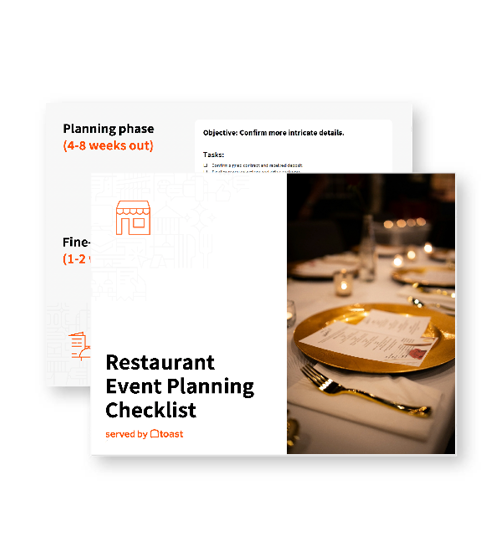
 Restaurant Event Planning Checklist
Download our easy-to-use checklist to help you stay organized, on-track, and calm through every step of the restaurant event planning process. From early prep weeks out to the day-of, this checklist is built to make your events shine.
Obtener descarga gratisRestaurant event management software helps restaurants organize leads, event details, contracts, payments, preparation, and fulfillment in one connected workflow. While catering and events can create valuable revenue, they also introduce more moving parts than an everyday reservation or takeout order.
As event volume grows, restaurants need a reliable way to keep customer requests, deadlines, kitchen instructions, and payment details organized. This is where top restaurant event management software and tools come into play.
In this guide, we’ll explain how restaurant event management software works and explore how it can simplify catering, large orders, and other revenue-generating events.
Key takeaways
Restaurant event software keeps leads, payments, and event details in one place.
BEOs, calendars, and task tracking help teams avoid missed details.
Online ordering and invoicing simplify catering and large-event sales.
POS integration connects event revenue with everyday restaurant operations.
Guest data can turn event customers into repeat business.
Restaurant Event Agenda template
Download this template to stay organized during your restaurant's events.

What is restaurant event management software?
Restaurant event management software is a digital platform that helps restaurants organize the complete event lifecycle, from capturing a lead to collecting final payment and fulfilling the order.
It can support:
Private dining
Restaurant buyouts
Corporate meals
Weddings
Rehearsal dinners
Birthday parties
Holiday gatherings
Ticketed experiences
Off-site catering
Large pickup or delivery orders
How does restaurant event management software work?
Unlike generic event software, restaurant-focused platforms account for both customer planning and food production. They can connect event information with the restaurant’s POS, reservations, online ordering, payments, kitchen workflows, and guest data.
Event stage | What restaurant event management software can manage |
Lead capture | Inquiry forms, contact information, event requests, and follow-up |
Planning | Menus, guest counts, BEOs, room details, quotes, and contracts |
Confirmation | Customer approvals, deposits, invoices, and payment status |
Coordination | Emails, tasks, deadlines, event statuses, and calendars |
Preparation | Prep lists, kitchen sheets, labels, and packing documents |
Execution | Pickup, delivery, room setup, service, and fulfillment details |
Reporting | Event sales, payment activity, order history, and revenue |
1. Capture and manage event leads
Restaurant event software gives teams one place to collect inquiries, contact details, event requests, and follow-up tasks. That helps prevent potential bookings from getting lost across emails, phone messages, and spreadsheets.
Because 65% of surveyed diners visit restaurant websites to make reservations, event inquiry forms should also be easy to find and complete online. Toast Catering & Events provides embeddable lead forms and tracks prospects throughout the planning process.
2. Collect event details and create BEOs
Banquet event orders, or BEOs, organize the menus, guest counts, timelines, dietary needs, room layouts, and service instructions required to execute an event.
Restaurants using Toast Catering & Events can start with a BEO template or build custom forms for different event types, giving teams consistent information without forcing every catering order or venue buyout into the same workflow.
3. Create quotes, contracts, and customer event pages
Quotes and contracts clarify pricing, menus, deposits, deadlines, cancellation terms, and service expectations before the restaurant commits resources.
Toast Catering & Events helps operators create estimates, include contract terms, collect customer approvals, and present event details through EventView, a branded webpage customers can reference throughout the planning process.
4. Keep customer communication organized
Event details often change several times before the service date, so customer communication should remain connected to the event record rather than scattered across individual inboxes.
Toast Marketing lets teams email customers within the Toast platform, making messages and event details visible to employees who may need to answer questions or manage the event later.
5. Coordinate private dining and restaurant events
On-premise events require restaurants to coordinate tables, private rooms, seating preferences, arrival times, and regular dining-room traffic alongside the broader event plan.
Large parties can also generate significant checks: Toast found that parties of eight or more averaged approximately $162 per transaction in Q4 2023. Toast Tables helps restaurants manage reservations, floor plans, and bookable experiences alongside event operations.
6. Accept catering and large orders online
Catering orders may require dedicated menus, longer lead times, larger minimums, custom branding, and group ordering options that do not fit a standard takeout workflow.
About 30% of Toast’s year-over-year catering transaction growth in Q4 2023 came through Catering Online Ordering. Toast supports specialized catering orders, while Toast Online Ordering connects the restaurant’s broader direct-ordering activity with its POS and kitchen.
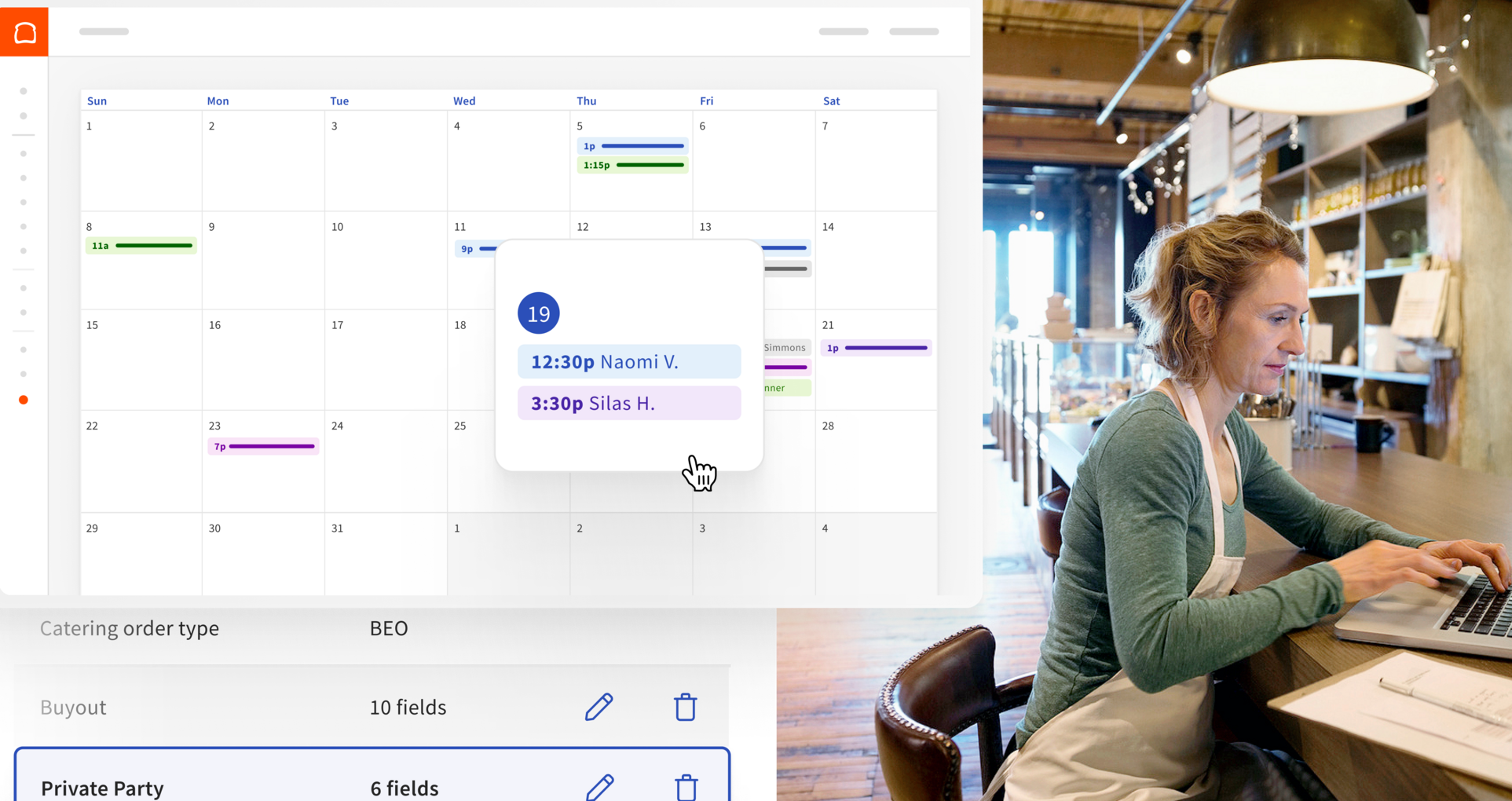
7. Manage tasks, statuses, and event calendars
Shared tasks, statuses, and calendars show teams which events are approaching, which details still need confirmation, and which payments or production steps remain incomplete.
This visibility matters because catering demand can follow a different rhythm than regular service. Toast found that catering orders were 25% above the weekly average on Tuesdays and 26% above average on Wednesdays in Q4 2023. Toast Catering & Events lets teams track tasks, statuses, orders, invoices, and payments through shared calendar views.
8. Collect deposits, invoices, and payments
Digital invoicing makes it easier to collect deposits, set payment deadlines, monitor balances, and give customers a convenient way to pay.
Toast Catering & Events connects quotes and event details with online invoicing and payment-status tracking. This helps operators identify outstanding balances without comparing separate spreadsheets, payment tools, and email threads.
9. Prepare, pack, and fulfill event orders
Restaurant event management doesn’t end when a contract is signed. Kitchen and fulfillment teams still need accurate quantities, production instructions, packing details, labels, and pickup or delivery information.
Toast Catering & Events converts event information into printable prep lists, pack sheets, labels, and BEOs, carrying the customer’s order from planning into preparation and fulfillment.
10. Connect events with everyday restaurant operations
Event sales use the same menus, employees, kitchens, payments, and reporting systems as everyday restaurant service, so they shouldn’t operate in a separate data silo.
When Toast Catering & Events connects with Toast POS, restaurants can manage catering and event activity alongside regular orders, payments, menus, and sales reporting. That reduces duplicate entry and gives operators a clearer view of how events contribute to total revenue.
11. Turn event customers into repeat guests
A catering client or private-dining host may also become a regular diner, online-ordering customer, or future event customer. Centralized guest data helps restaurants recognize and build on those relationships.
Toast data suggests that just 7% of guests can generate up to 50% of restaurant order volume. Toast Guest CRM brings orders, visits, reservations, and feedback into centralized profiles, helping teams personalize follow-up and identify future opportunities.
Manage every event through one connected platform
Catering and events can create valuable revenue beyond everyday restaurant service. However, growth introduces more leads, customer requests, contracts, deadlines, payments, and fulfillment details to manage.
Restaurant event management software centralizes that complexity. It gives sales teams a better way to track opportunities, gives customers clearer proposals and payment options, and gives kitchen and service teams the documents they need to execute the event.
Toast Catering & Events helps you manage that event lifecycle, and Toast POS ties activity back to the systems teams already use every day. Together, the Toast platform connects event planning with restaurant execution, helping operators develop new revenue streams without separating them from the rest of the business.
Restaurant Banquet Event Order (BEO) Template
This free BEO template can help your restaurant optimize incoming catering requests and streamline documentation.
FAQ
What is restaurant event management software?
Restaurant event management software helps restaurants manage leads, BEOs, contracts, payments, preparation, and fulfillment.
How is event management software different from a reservation system?
Event software manages complex planning and fulfillment, while reservation systems focus on bookings, tables, waitlists, and seating.
Does event management software integrate with restaurant POS systems?
Yes, POS integration can connect event orders, payments, menus, and revenue with everyday restaurant operations.
What size restaurant benefits most from event management software?
Any restaurant managing frequent catering orders, private events, large parties, or multiple locations can benefit from event software.
How much does restaurant event management software cost?
Pricing varies by provider, features, locations, and order volume, so operators should request current quotes based on their needs.
Can event management software help with marketing events to guests?
Yes, connected guest data can help restaurants personalize follow-ups and promote future events to relevant customers.


¿Es útil este artículo?
AVISO LEGAL: Esta información se proporciona solo con fines informativos generales y su publicación no constituye un aval. Toast no garantiza la precisión ni la integridad de la información, el texto, los gráficos, los enlaces y otros elementos que incluye este contenido. Toast no garantiza que alcanzarás ningún resultado específico si sigues los consejos que aparecen aquí. Te recomendamos consultar con un profesional, como un abogado, contador o asesor comercial, para recibir asesoramiento específico para tu situación.

Subscribe to On the line
Sign up to get industry intel, advice, tools, and honest takes from real people tackling their restaurants' greatest challenges.
Al enviar, aceptas recibir correos electrónicos de marketing de Toast. Trataremos tu información de acuerdo con nuestra declaración de privacidad. Información adicional disponible para residentes de California aquí.