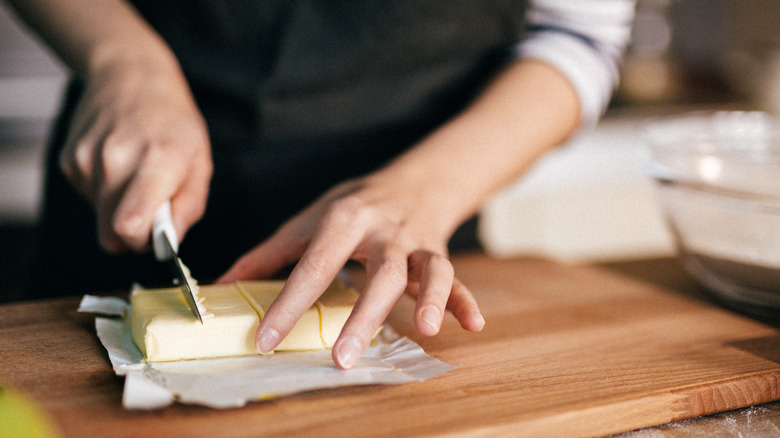
State of Butter Prices: Wholesale Restaurant Food Cost Trends
See trends and fluctuations for wholesale restaurant butter prices based on proprietary Toast data.

Autor
 RECURSO
 Guía de control de costos para restaurantes
Usa esta guía para obtener más información sobre los costos de los restaurantes, cómo realizarles un seguimiento y las medidas que puedes tomar para maximizar tu rentabilidad.
Obtener descarga gratisButter is the fat-of-choice for tons of baked goods. It’s a popular lubricant to grease cooking surfaces and can add more flavor than typical vegetable oils — especially if you toast those milk solids to create brown butter.
Given how popular an ingredient butter is, disruptions in the restaurant supply chain and fluctuations in butter prices can impact food costs across nearly all restaurants.
Informe de estadísticas para operadores de restaurantes
Consulta las estadísticas de operadores de restaurantes reales que pueden ayudarte a comparar la infraestructura tecnológica actual y planificada de tu restaurante con la de tus competidores de cara al 2024 y en adelante.


Subscribe to On the line
Sign up to get industry intel, advice, tools, and honest takes from real people tackling their restaurants' greatest challenges.
Al enviar, aceptas recibir correos electrónicos de marketing de Toast. Trataremos tu información de acuerdo con nuestra declaración de privacidad. Información adicional disponible para residentes de California aquí.
Toast is the point of sale system built for restaurants.
We're able to calculate the average monthly prices that eating establishments pay for butter by using proprietary data from xtraCHEF by Toast, our invoice automation and recipe costing tool.
The average national price that restaurants paid for a pound of butter is $3.72 in August.
Here's a breakdown of historical data on wholesale restaurant butter prices in the last year.
Restaurant butter prices have been steady over the past year — fluctuating only $0.21 since February.
Here's a breakdown of recent month-over-month fluctuations in the price of butter for restaurants:
While butter prices are steady, they’re up 5% MoM in August and at their highest price in the past seven months.
Commodities experts weigh in on butter prices
We were able to speak with some experts in the food commodities space to understand their analysis on butter price trends and the impacts on restaurants.
Question
What’s the relation between butter and other dairy prices — and how should restaurant owners expect wholesale butter prices to trend into 2024?
Butter prices are currently strong, and we expect that to continue as milk prices move higher. This is a result of food wholesalers stocking up in anticipation of heavy demand and the likelihood of less milk supplies this winter. Composed of a rich concentration of cream, which commands a premium over other dairy products, butter varies from other products as it is highly seasonal. It is in high demand over the holidays and throughout the winter months. This is obviously a sharp contrast to ice cream which has a high summertime demand.

Tim Luginsland
Wells Fargo Agri-Food Institute
What is butter?
Butter is a dairy product produced by separating the cream from fresh milk and churning it until it reaches a solid state. It is often used in cooking and baking, as a spread on bread, and as a flavoring agent.
Butter is composed mostly of butterfat, milk proteins, and water, and its taste, nutritional value, and quality can vary based on the milk source, production process, and storage conditions.
Where does most butter used in America come from?
Most of the butter consumed in the United States restaurant supply chain comes from domestic butter production.
In 2020, the United States produced approximately 4.2 billion pounds of butter, making it one of the world's top butter producers.
According to the USDA, Wisconsin is the leading butter producing state in the US, followed by California, Texas, and Iowa.
Informe de estadísticas para operadores de restaurantes
Consulta las estadísticas de operadores de restaurantes reales que pueden ayudarte a comparar la infraestructura tecnológica actual y planificada de tu restaurante con la de tus competidores de cara al 2024 y en adelante.
Impact of milk prices on butter prices
Milk prices have a direct impact on butter prices, as butter is produced from milk's cream.
When milk prices increase, it becomes more expensive to produce butter, and this can lead to higher prices for consumers.
Fluctuations in milk prices can be influenced by several factors, including supply and demand imbalances, global market dynamics, farm management practices, and weather patterns.
Choosing between butter vs margarine
Butter and margarine are often compared as substitutes in cooking and baking.
Butter has a richer flavor and contains more natural ingredients, but is also higher in saturated fat.
Margarine is made from vegetable oils and is lower in saturated fat, but may contain more processed ingredients.
When it comes to cooking and baking, the choice between butter and margarine may depend on the dish being prepared and individual preferences.
Understanding baking season and forecasting potentially higher prices
Baking season, which typically falls between November and January, can impact butter prices due to increased demand. As consumers bake more during the holiday months, the demand for butter can increase, potentially leading to higher prices.
Forecasting butter prices during baking season can help restaurant owners and operators plan ahead and adjust their butter purchasing strategies accordingly. Working with economists or consulting market reports from sources like the Consumer Price Index (CPI) can help make informed decisions when it comes to managing butter prices.
Managing butter prices can be complex due to various factors such as milk production, dairy market dynamics, and international events. Restaurant owners and operators should consider their options, plan ahead, and use reliable sources to guide their decision-making when it comes to managing their butter purchasing strategy.
Restaurant Invoice Automation Guide
Use this guide to learn more about your restaurant invoices, the value within, and how to consistently and accurately tap into it to make smarter decisions.
Start tracking butter prices today
Restaurant operators don’t want their profits to melt like butter. That’s why they should consider having a strong back-of-house foundation built on invoice automation.
Invoices are the single source of truth for restaurant costs — pinpointing prices and fluctuations for individual ingredients as well as paper goods, non-alcoholic beverages, and more.
With accurate and up-to-date ingredient prices from invoices, operators can start calculating plate costs. Plate costing is a detailed exercise that zooms into the recipes and/or individual ingredients that make up a dish — requiring detailed recipe costs and portion costs for ingredients.
Costing exercises can help show how each component is contributing to the overall profitability of a dish or drink. And recipe costing software can help make it easier to calculate and achieve an ideal balance between portions and profits.
Methodology
Toast analyzed monthly invoice items for butter from restaurants using xtraCHEF by Toast. Items are weighted by the frequency of orders, not quantity. A standard unit of measure is determined so that an average price can be calculated across all invoice inclusions of the ingredient.
Related Restaurant Opening Resources
¿Es útil este artículo?
AVISO LEGAL: Esta información se proporciona solo con fines informativos generales y su publicación no constituye un aval. Toast no garantiza la precisión ni la integridad de la información, el texto, los gráficos, los enlaces y otros elementos que incluye este contenido. Toast no garantiza que alcanzarás ningún resultado específico si sigues los consejos que aparecen aquí. Te recomendamos consultar con un profesional, como un abogado, contador o asesor comercial, para recibir asesoramiento específico para tu situación.
Subscribe to On the line
Sign up to get industry intel, advice, tools, and honest takes from real people tackling their restaurants' greatest challenges.
Al enviar, aceptas recibir correos electrónicos de marketing de Toast. Trataremos tu información de acuerdo con nuestra declaración de privacidad. Información adicional disponible para residentes de California aquí.