Restaurant Inventory Sheet Template: How to Use a Daily Food Inventory Sheet
Implementing a daily food inventory sheet can help restaurant operators streamline inventory practices and increase count accuracy.

作者
 资源
资源 Restaurant Inventory Sheet Template: How to Use a Daily Food Inventory Sheet
Successfully managing inventory is crucial for restaurant operations. Consistently counting inventory using restaurant food inventory sheets is the foundation of effective inventory control — which is critical for cost controls.
Taking control of food costs requires accurate inventory counts and effective inventory management practices. By forecasting customer demand, tracking menu items, and controlling cost fluctuations, restaurants can improve their bottom line and profitability.
Investing in restaurant inventory management software takes inventory control to the next level. Real-time tracking, POS integration, and comprehensive inventory reports enable operators to make data-driven decisions, automate processes, and improve overall operational efficiency.
In this article, we will explore the importance of restaurant inventory sheets, shelf-to-sheet inventory, and the concept of first-in, first-out (FIFO). Additionally, we will delve into how accurate inventory counts and practices can take control of food costs, reduce food waste, and the benefits of investing in restaurant inventory management software.
餐厅成本控制指南
使用本指南,您可以了解更多有关餐厅成本、如何跟踪成本以及如何最大限度地提高盈利能力的信息。


Consistently counting inventory is the foundation of successful restaurant inventory control
Inventory control is an essential restaurant management practice. It enables operators and managers to define par inventory levels for particular ingredients and ensure that there’s enough on hand or that it’s included on upcoming supplier order guides.
Successfully managing inventory in the back of house can be time-consuming and complex. However, it is an essential aspect of restaurant operations.
Streamlining restaurant inventory control is an ongoing process that requires dedication and attention to detail. By adopting best practices and utilizing technological solutions, operators can optimize their inventory management, reduce costs, minimize waste, and ultimately drive the success of their restaurant business.
Regular inventory counts and food inventory sheets are key to successful food inventory management. These sheets help businesses track a variety of inventory-related data, including inventory levels, beginning and ending inventory, and unit of measure.
What are restaurant food inventory sheets?
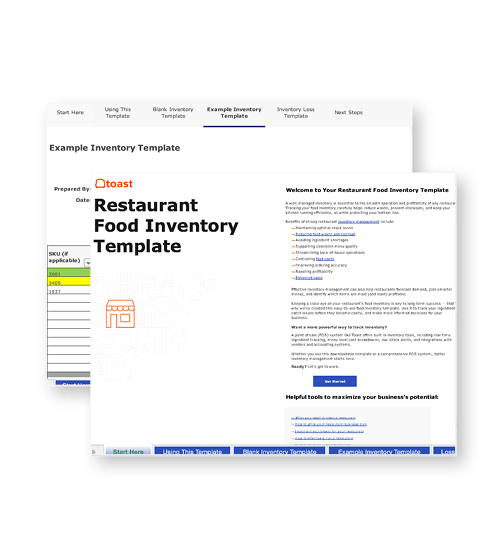
To streamline this process, restaurant owners and operators can utilize excel templates specifically designed for food inventory management. These templates allow for easier data entry, seamless organization, and analysis of inventory data.
With food inventory sheets, the inventory process becomes more efficient, enabling businesses to make data-driven decisions based on accurate information.
Restaurant food inventory sheets serve as a central repository for recording and tracking inventory data. They allow operators to monitor stock levels, both in storage areas such as walk-ins and dry storage, as well as on-hand inventory for food service. By consistently updating these sheets, restaurant owners gain insights into their inventory levels and can make informed decisions about ordering and menu preparation.
Excel templates are a popular choice for creating restaurant food inventory sheets. These templates provide a structured format that makes it easy to organize inventory data, calculate totals, and detect any discrepancies between the physical inventory and recorded quantities. Moreover, utilizing food inventory sheets allows for better inventory control, reduces waste, and ensures restaurants have the necessary ingredients to meet customer demand.
What is shelf-to-sheet inventory?
Shelf-to-sheet inventory is a method that streamlines the tracking of food items from storage areas to inventory sheets. With this approach, items are recorded on the sheet as they are placed on the shelves, and any usage or movement is immediately updated. By implementing shelf-to-sheet inventory, restaurant operators can minimize discrepancies and ensure accurate inventory counts.
This method is particularly valuable in large or busy establishments where inventory turnover is high. By continuously updating the inventory sheet as items are added or removed from storage areas, restaurant operators can maintain accurate stock levels. This reduces the likelihood of overstocking or understocking, streamlines the inventory process, and optimizes overall restaurant operations.
What is first-in, first-out (FIFO)?
First-in, first-out (FIFO) is a method employed to minimize food spoilage and maximize inventory turnover. It entails using the oldest products first, ensuring that perishable items are utilized before their expiration dates. This approach reduces the risk of sitting inventory and potential waste.
FIFO is particularly important for restaurants dealing with ingredients that have limited shelf life, such as fresh produce or dairy products. By adopting this practice, restaurant owners can optimize their inventory turnover, reduce food waste, and maintain high-quality standards. Moreover, FIFO improves customer satisfaction by ensuring that the ingredients used in menu items are fresh and at their best.
定期自动补货库存表模板
借助这份可定制的定期自动补货库存表模板,无缝跟踪库存。
Taking control of food costs with accurate inventory counts and practices
Cost of goods sold (COGS) is a critical component of a restaurant's profitability. By taking accurate inventory counts and implementing effective inventory management practices, restaurant owners can gain better control over their food costs and improve their bottom line.
With that in mind, all team members in the back of house can be trained to count inventory — tracking total quantities, understanding different units of measure across products, and updating order guides.
Forecasting customer demand and tracking menu items are essential for effective inventory management. By analyzing historical data and considering factors such as seasonality and customer preferences, restaurants can plan their inventory levels accordingly. This reduces the likelihood of overstocking or running out of essential ingredients, thus minimizing unnecessary expenses.
Fluctuations in food cost percentages can significantly impact a restaurant's bottom line. By regularly monitoring and analyzing these fluctuations, operators can identify areas for restaurant cost control. Adjusting portion sizes, negotiating prices with suppliers, and finding alternative ingredients can help mitigate cost fluctuations and improve profit margins.
Reducing food waste with an efficient inventory tracking template
To minimize food waste, implementing an efficient inventory tracking template and embracing inventory turnover analysis can significantly reduce waste and optimize sustainability practices.
Food waste is a significant challenge in the restaurant industry. Effective inventory tracking, coupled with an efficient inventory tracking template, can help minimize waste and improve sustainability practices.
An efficient inventory tracking template provides a structured framework for recording inventory data, including stock levels, usage, and expiration dates. By consistently updating this template, restaurant owners can identify potential sources of food waste, such as spillage, spoilage, or sitting inventory.
Implementing a first-in, first-out (FIFO) system is crucial for reducing food waste. By utilizing the oldest ingredients first, restaurant operators can minimize the risk of spoilage and ensure that perishable items are used before they expire. Furthermore, analyzing inventory turnover and adjusting stock levels based on shelf life and usage frequency helps prevent waste due to excessive ordering.
Restaurant Invoice Automation Guide
Use this guide to learn more about your restaurant invoices, the value within, and how to consistently and accurately tap into it to make smarter decisions.
Investing in restaurant inventory management software
Whether it’s shelf-to-sheet, Excel spreadsheets, or any other combination of processes, inventory management is meant to help keep food costs down and can track your profitability.
Managing inventory is a crucial aspect of running a successful restaurant. Consistently counting inventory forms the foundation of effective restaurant inventory control. By optimizing the inventory process, restaurant owners and operators can improve their bottom line and better meet customer demand.
Restaurant inventory management software provides real-time tracking of inventory levels, integration with point of sale (POS) systems, and comprehensive inventory reports. This allows restaurant owners to make data-driven decisions, automate reordering processes, and negotiate better deals with suppliers.
The benefits of using restaurant inventory management software extend beyond inventory control. Such software enables businesses to optimize operations, streamline processes, and improve overall efficiency. With centralized data storage and analysis, operators can gain a holistic view of their inventory, sales, and costs, enabling them to make informed decisions to maximize profitability.
That’s why Toast and xtraCHEF by Toast combine to offer an automated inventory management solution that’s based on a strong data foundation via invoice automation.
xtraCHEF combines invoice processing automation and inventory management in a single platform to help you spend less time flipping between platforms and more time running your restaurant and growing your business.
Learn more about the power of Toast and xtraCHEF by Toast today.
 TOAST TECH
 Built for restaurants just like yours.
Toast’s restaurant technology includes point of sale, kitchen display screens, online ordering, loyalty, analytics, payroll, and more.
这篇文章有帮助吗?
免责声明:此信息仅作为一般性参考,发布并不构成认可。Toast 不保证本内容中包含的任何信息、文本、图形、链接或其他项目的准确性或完整性。Toast 不保证如果您遵循本文的任何建议,就能取得任何特定结果。您可能需要咨询专业人士,如律师、会计师或商业顾问,以获取针对您情况的具体建议。
 趋势
趋势
