
Restaurant Meeting Agenda Template: Complete Guide for 2025
Get free restaurant meeting agenda templates for manager meetings, staff meetings, and pre-shift huddles. Improve communication, accountability, and operational efficiency in 2025.

Autor
 RESOURCE
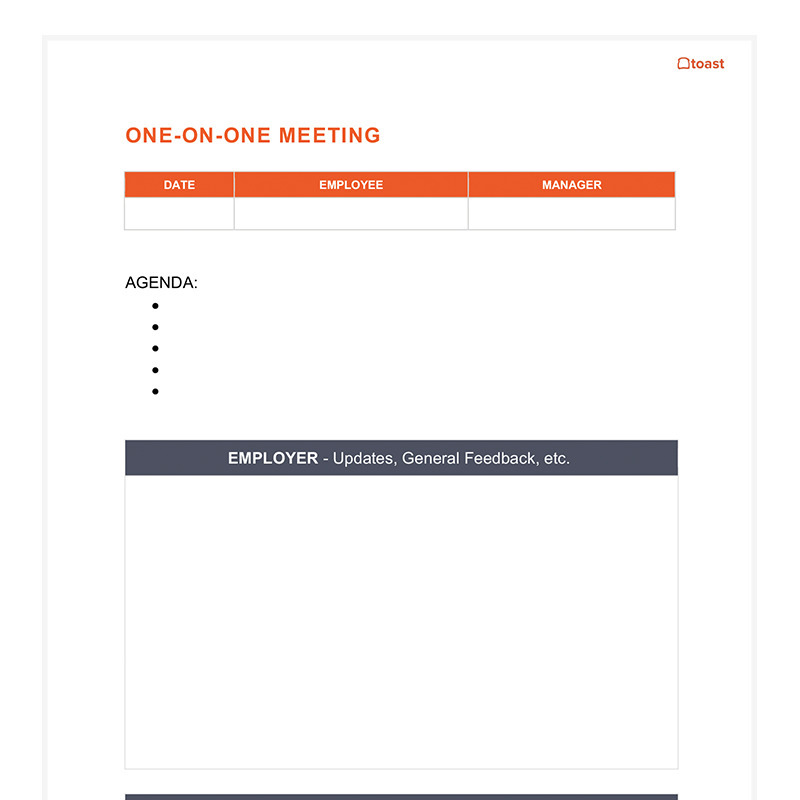
 One-on-One Meeting Template
Make weekly, biweekly, or monthly check-ins with employees productive with this customizable Word doc for your one-on-one meeting agendas.
Obtener descarga gratisEffective restaurant meetings drive operational success, but 51% of restaurant operators name staffing as a top challenge, making structured communication more critical than ever. With turnover rates near 80% and training costs up to $15,000 for new managers, well-organized meetings can significantly improve team retention and performance. A structured agenda ensures every meeting delivers value while respecting your team's time.
Why restaurant meeting agendas matter
Restaurant meetings without clear agendas often become unproductive time-wasters that generate employee frustration.
For meetings between the management team and other key stakeholders, agendas help maintain focused conversations. This approach ensures everyone can contribute meaningfully while preventing meetings from becoming lengthy discussion sessions that lose participant attention.
The pre-shift meeting can also be an effective tool to motivate restaurant staff, focusing collective energies toward delighting guests and creating memorable dining experiences. These brief but structured interactions set the tone for successful service periods. Again, agendas keep these meetings focused and efficient.
Manager meeting agenda template
Weekly manager meetings require comprehensive agendas covering operational, financial, and strategic topics. Before the meeting, all relevant information and data must be collected, including financial reports, operational metrics, employee issues, and marketing data from consistent analytics software.
Here is an example of a restaurant management team meeting agenda:
Meeting Details
Date: [Insert Date]
Time: [Insert Time]
Duration: 60-90 minutes
Attendees: Management team
Location: [Insert Location]
Agenda Items
Opening remarks (5 minutes)
Welcome and introductions
Review of previous meeting action items
Overview of meeting objectives
Financial performance review (15 minutes)
Sales figures compared to forecasts and historical data
Cost analysis and budget variances
Labor cost percentage and efficiency metrics
Key performance indicators discussion
Operational updates (20 minutes)
Inventory levels and supply chain status
Equipment maintenance and repair needs
Health and safety compliance matters
Customer feedback and service quality metrics
Staff and training matters (15 minutes)
Employee performance reviews and recognition
Training needs and development opportunities
Scheduling challenges and solutions
Staff retention and recruitment updates
Marketing and promotions (10 minutes)
Current marketing campaign effectiveness
Upcoming promotional activities
Social media engagement and online reviews
Community partnerships and events
Action items and next steps (10 minutes)
Assign specific responsibilities with deadlines
Set priorities for the upcoming week
Schedule follow-up meetings if needed
Document key decisions and commitments
One-on-One Meeting Template
Make weekly, biweekly, or monthly check-ins with employees productive with this customizable Word doc for your one-on-one meeting agendas.

Pre-shift meeting agenda template
Pre-shift meetings should include areas for improvement and general reminders for your team, while maintaining a positive tone that sets the mood for the entire shift. These meetings typically last 10-15 minutes and focus on immediate operational needs.
Here is an example of a restaurant pre-shift meeting agenda:
Meeting Details
Time: 15 minutes before shift start
Attendees: All shift staff
Led by: Floor manager and kitchen manager
Daily briefing (3 minutes)
Weather and expected customer volume
Reservations and special events
Staffing levels and role assignments
Daily sales goals and targets
Menu and specials (4 minutes)
Today's specials and pricing
Menu changes or 86'd items
Ingredient allergies and dietary restrictions
Tasting of new items if applicable
Operational focus (4 minutes)
Service standards and expectations
Equipment updates or maintenance notices
Health and safety reminders
Special requests or VIP guests
Recognition and motivation (3 minutes)
Acknowledge previous shift successes
Recognize individual achievements
Share positive customer feedback
Set positive energy for the shift
Questions and clarifications (1 minute)
Address any staff concerns
Clarify procedures if needed
Final reminders and encouragement
Monthly all-staff meeting agenda template
Comprehensive monthly meetings address broader organizational topics and strategic initiatives. The foodservice industry is forecast to reach $1.5T in sales in 2025, making it essential to keep all team members informed about industry trends and company performance.
Here is an example of a monthly all-staff meeting agenda:
Meeting Details
Duration: 45-60 minutes
Frequency: Monthly
Attendees: All restaurant staff
Format: Include food/refreshments
Company updates (10 minutes)
Monthly financial performance summary
Achievement of goals and milestones
Industry trends affecting the restaurant
Upcoming changes or initiatives
Training and development (15 minutes)
New procedures or policy updates
Skills development opportunities
Safety training and certifications
Technology updates and training
Team building and recognition (10 minutes)
Employee of the month recognition
Team achievements and successes
Customer compliments and positive reviews
Anniversary and milestone celebrations
Operational improvements (10 minutes)
Process improvements and efficiency gains
Equipment updates and maintenance schedules
Menu changes and seasonal offerings
Customer service enhancement initiatives
Open forum and feedback (10 minutes)
Staff questions and concerns
Suggestions for improvements
Schedule requests and availability
Team building activity announcements
Best practices for effective restaurant meetings
Preparation is essential. To make restaurant manager meetings worthwhile, each attending manager should be thoroughly prepared by gathering necessary data, setting clear goals, and creating detailed agendas. This preparation ensures productive discussions and informed decision-making.
Start and end on time. Respect your team's schedule by beginning meetings promptly and adhering to planned durations. For a short 10-15 minute meeting, aim to spend a couple of minutes each on business updates, restaurant practices, teaching or demonstrations, and praising staff.
Document everything important. Document key decisions and assigned action items within the agenda for clear tracking and future reference. This documentation ensures accountability and provides reference material for future meetings.
Follow up consistently. Successful meetings require follow-through on action items and commitments. Regular check-ins on progress maintain momentum and demonstrate that meeting discussions lead to real results.
Keep meetings focused. Regular meetings ensure consistent information flow, with all managers receiving the same information to reduce miscommunication. Staying on agenda prevents meetings from becoming unfocused discussion sessions.
Frequently asked questions
How often should restaurant managers hold formal meetings? Weekly manager meetings work best for most restaurants, while pre-shift meetings should occur daily before service. Monthly all-staff meetings provide opportunities for broader communication and team building. The key is consistency rather than frequency.
What's the ideal length for restaurant staff meetings? Pre-shift meetings should last 10-15 minutes maximum to maintain energy and focus. Manager meetings typically require 60-90 minutes for comprehensive coverage, while monthly staff meetings work well at 45-60 minutes with food provided.
How can I get staff to actually pay attention during meetings? Keep meetings short, relevant, and action-oriented. Include recognition and positive feedback, provide food when possible, and ensure every meeting item directly impacts their work. Avoid reading information they can access elsewhere.
Should front-of-house and back-of-house staff meet separately? Daily pre-shift meetings often work better with combined teams to ensure service coordination. However, department-specific issues may require separate meetings. Use your judgment based on the topics being discussed.
How do I handle resistant employees who complain about meetings? Focus on meeting value by demonstrating how discussions directly improve their work environment, resolve problems, and provide recognition. Keep meetings brief, well-organized, and consistently valuable to reduce resistance over time.
¿Es útil este artículo?
AVISO LEGAL: Esta información se proporciona solo con fines informativos generales y su publicación no constituye un aval. Toast no garantiza la precisión ni la integridad de la información, el texto, los gráficos, los enlaces y otros elementos que incluye este contenido. Toast no garantiza que alcanzarás ningún resultado específico si sigues los consejos que aparecen aquí. Te recomendamos consultar con un profesional, como un abogado, contador o asesor comercial, para recibir asesoramiento específico para tu situación.
 Tendencias


Subscribe to On the line
Sign up to get industry intel, advice, tools, and honest takes from real people tackling their restaurants' greatest challenges.
Al enviar, aceptas recibir correos electrónicos de marketing de Toast. Trataremos tu información de acuerdo con nuestra declaración de privacidad. Información adicional disponible para residentes de California aquí.