How Are Tips Taxed? A Guide to 2026 Tax Rules for Filing in 2027
Clear tip records make payroll and tax season easier for your team. Learn how tips are taxed for 2026 and what to report when filing in 2027.

작성자
 RESOURCE
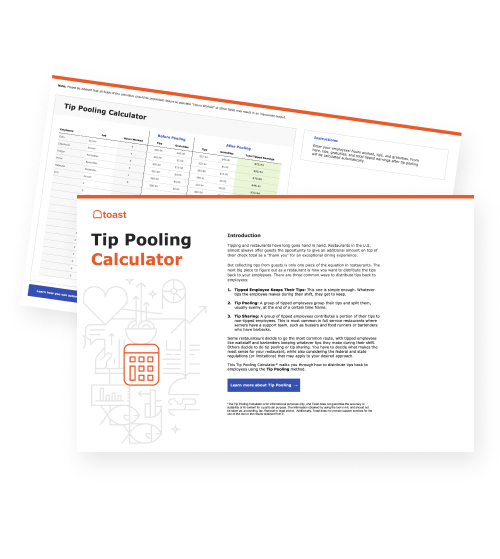
Tip Pooling Calculator
Use the Tip Pooling Calculator to learn how to distribute tips back to your restaurant’s employees using the tip pooling method.
무료 다운로드 받기Tips count as income and are generally subject to income and payroll taxes. For tax years 2025 through 2028, eligible workers can deduct up to $25,000 in qualified tips from federal taxable income. Reporting requirements and applicable payroll taxes still apply.
For restaurants, clear records make it easier to track what employees earn and prepare payroll. Toast Tips Manager helps calculate each employee’s share using your restaurant’s rules, so your team spends less time splitting tips by hand.
Here’s how tips are taxed, how the deduction works, and what employees and restaurants need to report.
This article provides general information about U.S. tax rules for 2026 and is not tax or legal advice. Consult a qualified tax professional about your circumstances.
Key takeaways
Eligible workers can deduct up to $25,000 in qualified tips per return from federal taxable income for tax years 2025 through 2028.
The deduction does not remove tip-reporting requirements or applicable Social Security and Medicare taxes.
Employees should keep daily tip records and report the tips they retain after pooling or tip-outs.
Mandatory service charges paid to employees are wages and do not qualify for the tips deduction.
Restaurant Metrics Calculator
Use this free calculator to calculate the key restaurant metrics needed to understand the health and success of your business.

How are tips taxed?
Tips can be subject to several taxes through restaurant payroll. The amount an employee owes depends on their earnings, filing status, and where they live or work. Here’s how the main taxes generally apply in 2026:
Tax | How it applies to tips |
Federal income tax | Tips are included in income. Eligible workers can claim the qualified tips deduction to reduce federal taxable income. |
Employees and employers each generally pay 6.2% on covered wages and tips, up to the $184,500 annual wage base. | |
Medicare tax | Employees and employers each generally pay 1.45% on covered wages and tips, with no wage cap. Additional employee Medicare tax can apply at higher earnings. |
State and local income taxes | Treatment varies by jurisdiction, including whether it follows the federal tips deduction. |
Two details are worth keeping in mind:
State rules need a separate check. For example, California does not allow the federal tips deduction, so an employee may still owe state income tax on tips deducted from federal taxable income.
Withholding is a payment toward the tax bill. The amount taken from a paycheck may differ from the final amount owed when the employee files their return.
How does the “no tax on tips” deduction work?
The qualified tips deduction reduces the income used to calculate federal income tax. It does not remove tip-reporting requirements or applicable Social Security and Medicare taxes. The main requirements are:
Tax years: The deduction applies to qualified tips received in tax years 2025 through 2028.
Annual limit: The maximum is $25,000 per return, including a married couple’s joint return.
Income limits: The deduction phases out above modified adjusted gross income of $150,000, or $300,000 for joint filers.
Eligible tips and work: Tips must meet the qualification rules, come from an occupation on the IRS list, and be properly reported.
Personal requirements: Workers need a Social Security number valid for employment. Married taxpayers must file jointly.
Filing: Eligible taxpayers claim the deduction using Schedule 1-A with their federal return, whether they itemize or take the standard deduction.
Employees should keep records that support the amount they claim. Having access to recorded tip amounts and year-end tax documents makes those figures easier to check when filing.
Restaurant Labor Cost Calculator
Unlock the power of data-driven labor management with our free Restaurant Labor Cost Calculator. Stop guessing and start optimizing your staffing decisions today.
Which payments count as tips?
Voluntary tips and required service charges have different tax treatment. Whether the customer can choose to pay—and decide how much—is a key distinction.
Cash, card, and digital tips
Cash, card, and digital tips all belong in an employee’s tip records. For the federal deduction, “cash tips” includes more than bills and coins. Common payment methods include:
Cash and checks: Tips handed to an employee or left for them.
Credit and debit cards: Voluntary tips added to a customer’s payment.
Electronic payments: Voluntary tips sent through digital payment methods.
Each payment still needs to meet the other requirements for the deduction. A mandatory charge doesn’t become a qualified tip because the customer pays it by card.
Property given as a tip, such as event tickets, follows different rules. The value of these noncash tips is reportable income, but it does not qualify for the cash-tip deduction and is not subject to Social Security or Medicare taxes as tip income.
Pooled tips and tip-outs
Employees report the tips they receive and keep after tip pooling or tip-outs. For example, a server receives $200 in tips and distributes $50 to eligible coworkers under the restaurant’s policy. The server keeps $150, and the coworkers report the shares they receive. The records should show:
Tips received directly from customers.
Tips received from coworkers through a pool or tip-out.
Tips passed to other employees, including the amounts and recipients.
Tips received through mandatory or voluntary tip-sharing arrangements can qualify for the deduction when the other requirements are met.
Automatic gratuities and service charges
Mandatory automatic gratuities are service charges. When the restaurant distributes that money to employees, it counts as wages and does not qualify for the tips deduction.
For example, a required 20% charge for a large party is a service charge. An optional tip the customer chooses to add is treated differently. Calling a required charge a “gratuity” on the receipt doesn’t change its tax treatment. To keep the categories clear:
Label required charges clearly on menus and receipts.
Record them separately from voluntary tips.
Explain how they appear in employee pay, especially when both are collected during the same shift.
How should employees track and report tips?
Employees should keep a daily tip record, report tips to their employer when required, and include reportable tip income on their tax return. Comparing those records with paystubs and timesheets can help catch missing or incorrect amounts.
Record tips each workday: Include cash tips, card tips, shared tips received, and amounts passed to coworkers.
Report monthly totals when required: Under tip-reporting rules, cash and charged tips totaling at least $20 from one employer in a calendar month must be reported in full by the 10th of the next month. Weekend and legal-holiday deadlines move to the next business day.
Include reportable tips on the tax return: Tips below the $20 monthly employer-reporting threshold still count as income, although they generally aren’t subject to Social Security and Medicare taxes. Form 4137 may be needed for tips that weren’t reported to the employer.
Claim the deduction if eligible: Use Schedule 1-A and supporting records to calculate the allowable amount.
Review federal withholding when needed: The 2026 W-4 deductions worksheet can help eligible employees account for qualified tips when adjusting federal income tax withholding.
Restaurant Profit Margin Calculator
Use this free Restaurant Profit Margin Calculator to see how efficiently you turn sales dollars into profits.
How can restaurants manage tip reporting and payroll?
Restaurants can manage tip reporting by checking POS reports, reviewing employee allocations, and sending approved amounts into payroll. A consistent process gives managers a chance to catch missing information before it affects a paycheck.
Review tip records before running payroll
Check tip records while the details of each shift are still easy to confirm. Before approving payroll, review:
Declared cash tips: Has each employee submitted the required information?
Card tips and pool distributions: Do recorded amounts match the allocations?
Roles and hours: Were employees assigned to the right jobs and shifts for the restaurant’s pooling rules?
Service charges: Are mandatory charges recorded in the correct earnings category?
Toast Tips Manager calculates distributions using the restaurant’s configured rules. Managers can review the results and send approved tip amounts to Toast Payroll, reducing the need to enter those figures again.
Toast IQ can also explain tip-pooling settings and how a distribution was calculated. That helps managers investigate an unexpected amount before payroll runs.
Withhold taxes and keep pay records clear
Employers must continue to withhold and report applicable taxes on tips, even when employees qualify for the deduction. Tips already paid outside payroll still appear in payroll records for tax reporting.
Explaining that distinction can help an employee understand why a tip amount appears on their pay statement. In Toast’s 2025 employee survey, 28% of tipped respondents were unsure how much of their pay came from tips.¹ Keep the payroll process focused on three things:
Correct tax handling: Withhold applicable employee taxes, pay the employer share, and make required deposits and filings.
Clear earnings records: Show wages, tips already received, tips paid through the paycheck, and taxes withheld.
Accessible supporting information: Keep tip reports and payroll records available to answer questions and resolve differences.
Toast Payroll connects recorded hours and tips with payroll and supports payroll-tax calculations and filings. Auto Payroll can flag issues that need attention before processing. Jason Tschida, owner of DeGidio’s Restaurant & Bar, described what happened when he forgot to send tips:
“One day I forgot to send tips, and Auto Payroll automatically cancelled and I got a notification. It worked perfectly. That part is very valuable – if there is an issue, it lets us know so we can address it before we send the payroll. It’s a no-brainer to leave it on.”²
Restaurants that meet the IRS definition of a large food or beverage establishment also have Form 8027 and allocated-tip reporting requirements.
Prepare for the 2026 W-2 reporting changes
For 2026 W-2 reporting, employers need to review two tip-related fields:
Box 12, code TP: Reports the total cash tips reported to the employer, including reported card tips.
Box 14b: Reports the employee’s Treasury Tipped Occupation Code or codes.
The code TP amount doesn’t automatically equal the employee’s deduction. The employee still needs to apply the eligibility rules, income limits, and annual cap.
Review year-to-date payroll reports to check earnings and tax totals before preparing year-end forms. Resolving differences early gives your team more time to make corrections.
The general deadline to provide 2026 Forms W-2 to employees and file them with the Social Security Administration is February 1, 2027.
Make tip reporting easier
Keeping up with tip records throughout the year makes payroll and tax season easier. Track what employees earn, keep tips separate from service charges, and check the numbers before each payday.
Toast Tips Manager helps you split tips using your restaurant’s rules, check each employee’s share, and send approved amounts to Toast Payroll. That means less time calculating tips by hand and entering the same numbers again when it’s time to pay your team.
¹Toast conducted a blind survey of 624 U.S. restaurant employees aged 18 and older from January 31 to February 19, 2025. The 28% finding applies to tipped respondents within that survey.
²Reflects functionality of product following enablement. Results self-reported by customer. Individual results will vary.
Restaurant POS Comparison Tool
A free, customizable Restaurant POS Comparison Tool to research and compare point of sale systems in one Excel spreadsheet.
FAQ
Are tips taxed in 2026?
Tips are generally taxable in 2026, although eligible workers can claim a federal deduction for qualified tips.
Do I pay Social Security and Medicare on tips?
Social Security and Medicare taxes generally apply to tips, even when you claim the federal tips deduction.
How much of my tips can I deduct?
Eligible workers can deduct up to $25,000 in qualified tips per return, subject to income limits and other requirements.
Are credit card tips taxed differently than cash tips?
Voluntary credit card and cash tips generally follow the same tax and deduction rules.
Do automatic gratuities count as tips?
Mandatory automatic gratuities are service charges that count as wages when paid to employees.
Do I need to itemize to claim the deduction?
Eligible workers can claim the qualified tips deduction whether they itemize or take the standard deduction.
What happens if I don’t report my tips?
Failing to report required tip income can lead to additional taxes and penalties, and you may need to file Form 4137.
Which occupations qualify for the deduction?
Eligible occupations include restaurant servers, bartenders, and other roles on the IRS’s tipped-occupation list.


이 문서가 도움이 되었나요?
면책 조항: 이 정보는 일반 정보 제공 목적으로 작성되었으며 당사의 권고를 의미하는 것은 아닙니다. Toast는 본 콘텐츠에 포함된 정보, 텍스트, 그래픽, 링크 및 기타 항목의 정확성이나 완전성을 보장하지 않습니다. Toast는 본 문서의 조언을 따른다고 해서 특정한 결과를 얻을 수 있음을 보장하지 않습니다. 귀하의 상황에 맞는 조언이 필요한 경우 변호사, 회계사 또는 비즈니스 자문가 등 전문가와 상담하시기 바랍니다.
 트렌드