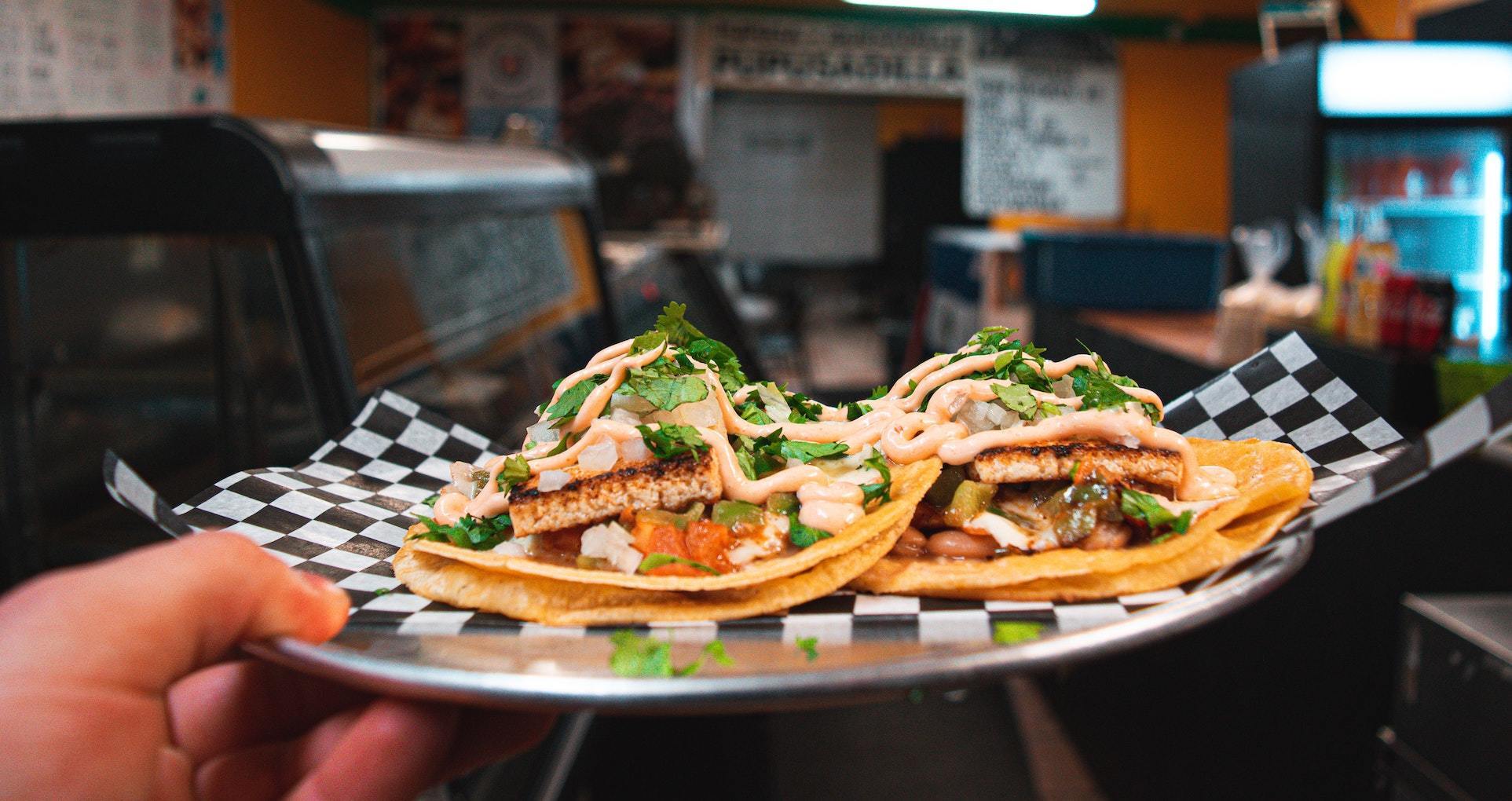
What Is a Limited-Service Restaurant? A Beginner's Guide
Limited service restaurants let customers order and pay before eating. Learn how they compare to full service and what makes them successful.
Autor
 RESOURCE
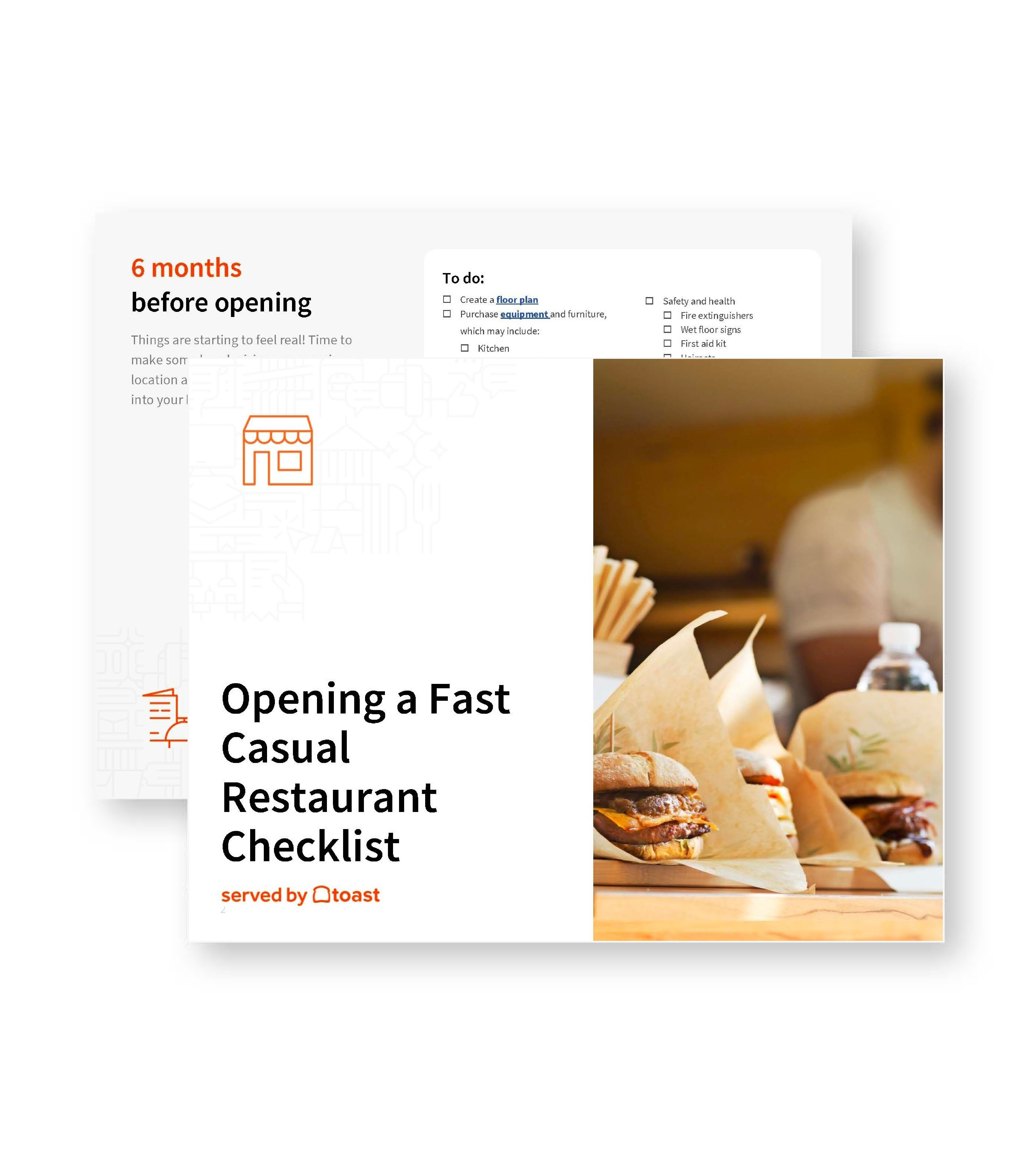
 Opening a Fast Casual Restaurant Checklist
So many things go into opening a fast casual restaurant. With this free PDF checklist, you'll set your new business up for success.
Obtener descarga gratisLimited service restaurants have become a dominant force in the U.S. dining landscape. In fact, the USDA reports that they accounted for the largest share of food-away-from-home spending in 2023.
While full service restaurants once led the way, limited service models surged ahead following the 2008 recession and again during the COVID-19 pandemic, thanks to their speed, convenience, and lower overhead.
But what exactly is a limited service restaurant, and how does it compare to other types of restaurants? Whether you’re thinking of opening your own concept or just want to better understand the industry, this guide breaks down how limited service restaurants work, their pros and cons, and what it takes to run one successfully.
Key takeaways
Limited service restaurants let customers order and pay before receiving their food, streamlining the dining experience.
They focus on speed, efficiency, and lower overhead, making them ideal for high-traffic, fast-paced environments.
Popular limited service formats include fast food, fast casual, buffets, food trucks, pop-ups, and ghost kitchens.
While they offer strong profit potential, limited service models come with trade-offs like lower ticket sizes and fewer upselling opportunities.
Success depends on smart execution, like a focused menu, smooth ordering flow, and consistent customer experience.
What is a limited service restaurant?
A limited service restaurant is a type of dining establishment where customers typically order and pay before receiving their food. These restaurants often feature counter ordering, self-service beverage stations, and minimal staff interaction beyond food preparation and delivery.
The goal of a limited service model is efficiency. By focusing on speed, convenience, and operational simplicity, these restaurants reduce overhead costs while serving more guests in less time.
Full service vs. limited service restaurants
Both full and limited service restaurants can succeed with the right concept, location, and target market. The key distinction between them lies in how food is ordered, delivered, and paid for. In a full service restaurant:
Guests are seated by a host.
A server takes the order and delivers food to the table.
Payment happens after the meal, often at the table.
The experience is centered around hospitality, ambiance, and attentive service.
On the other hand, in a limited service restaurant:
Customers order and pay at a counter or kiosk before receiving their food.
Food is either picked up by the customer or delivered to their table with minimal staff interaction.
The focus is on speed, convenience, and operational efficiency.
The atmosphere is typically more casual and fast-paced.
Overall, full service restaurants are ideal for leisurely dining and special occasions, while limited service restaurants thrive in high-traffic areas where quick turnaround and affordability matter most.
However, recent trends have put pressure on full service models. In 2024, several major sit-down chains—including Red Lobster, TGI Fridays, and Buca di Beppo—filed for bankruptcy. Not all full service chains are struggling, though. As Cheesecake Factory CFO Matt Clark explained:
“The reality is that if you execute really well with a really great product, people are going to pick you over your competition… that’s what you tend to see is a flight to quality. If you’re going out a little less, you want that to be a really great experience. I think that’s what we deliver.”
Types of limited service restaurants
Limited service restaurants come in a variety of formats, each tailored to different customer needs, price points, and dining environments. Here are some of the most common types:
Fast food/quick service restaurants (QSRs): Known for speed and consistency, fast food chains offer simple menus, standardized prep, and counter or drive-thru service. Think McDonald’s, Taco Bell, or Chick-fil-A.
Fast casual restaurants: A step up in quality and ambiance from traditional fast food, fast casual spots like Chipotle or Sweetgreen emphasize fresh ingredients and a more curated dining experience, without full table service.
Buffets: In buffet-style restaurants, guests serve themselves from a variety of hot and cold dishes for a fixed price. These operations rely on volume and efficiency, making them a classic example of the limited service model.
Food trucks: Food trucks operate at festivals, city streets, or private events, offering a focused menu with fast prep times. They require specialized licenses and often work best in high-foot-traffic areas.
Pop-ups: Temporary, often experimental dining concepts set up in borrowed spaces like bars, coffee shops, or event venues. Pop-ups are popular for testing new ideas or building buzz without committing to a permanent location.
Ghost kitchens and virtual brands: Operating without a traditional storefront, ghost kitchens prepare food exclusively for delivery or pickup. They often support multiple virtual brands from a single kitchen space, lowering overhead and increasing flexibility.
Opening a Fast Casual Restaurant Checklist
So many things go into opening a fast casual restaurant. With this free PDF checklist, you'll set your new business up for success.

Pros and cons of limited service restaurants
Limited service restaurants offer several advantages for both owners and customers, but they also come with a few trade-offs to consider.
Pros
Lower labor costs: With no need for table service or large front-of-house teams, limited service restaurants can operate with fewer staff members. According to data from the National Restaurant Association, labor costs represent a smaller share of sales in limited service (34%) compared to full service restaurants (36.5%).
Higher profit margins: Streamlined menus and lower overhead often translate to stronger margins compared to full service models. One report found that limited service models earned profit margins of 6-9%, while full service models earned 3-5%.
Faster service and table turnover: Guests order quickly and leave shortly after eating, allowing you to serve more people throughout the day.
Scalability: The operational simplicity of limited service makes it easier to replicate the concept across multiple locations or franchises.
Customer convenience: Many guests prefer the speed and ease of ordering at a counter or kiosk, especially for lunch, takeout, or delivery.
Cons
Less opportunity for upselling: Without traditional servers, it can be harder to encourage add-ons like appetizers, drinks, or desserts during the ordering process.
Lower average ticket sizes: Customers tend to spend less per visit compared to full service restaurants, especially in fast food or grab-and-go environments.
Reduced guest interaction: Limited service means fewer touchpoints to create memorable hospitality experiences or build long-term customer loyalty.
Menu constraints: Because speed and simplicity are key, limited service restaurants often need to keep menus short and avoid complex preparation.
Tips for running a successful limited service restaurant
Limited service restaurants thrive on efficiency, but success still requires thoughtful execution. Keep this advice in mind from Michael Skipworth, CEO of WingStop:
“What we have seen evolve over the last year or so is the consumer’s desire for quality and value as they’re becoming more selective about how to spend those discretionary dollars. And with Wingstop, it’s about an indulgent occasion. It’s about flavor and quality… When you create ease of access and you create the best-in-class guest ordering experience, you’re going to win more occasions.”
Here are a few strategies to help you run a smooth and profitable operation:
Streamline your menu: Keep offerings focused and easy to prepare. A limited, high-quality menu reduces complexity in the kitchen, speeds up service, and keeps food costs under control.
Design for flow: Optimize your space to support quick ordering, smooth pickup, and minimal bottlenecks—whether customers are dining in, taking out, or ordering ahead.
Invest in staff training: Even with minimal service, staff should be well-trained to handle orders quickly, answer questions, and keep the operation running efficiently. Use data to predict busy periods and adjust staffing accordingly.
Maintain consistency: Whether you’re running one location or ten, guests should receive the same experience every time. Consistency builds trust and keeps customers coming back.
Embrace customer convenience: Make it easy for guests to order, pay, and pick up their food. Offering multiple service channels, like self-ordering kiosks and online ordering, can go a long way.
Limited service restaurants succeed by prioritizing convenience
By focusing on efficiency, convenience, and streamlined operations, limited service restaurants meet the demands of today’s fast-paced lifestyles while offering strong business potential for operators.
Whether you’re launching a food truck, opening a fast casual concept, or testing a ghost kitchen, understanding the limited service model is key to making it successful. With the right strategy and execution, it can be both a crowd favorite and a profitable venture.
¿Es útil este artículo?
AVISO LEGAL: Esta información se proporciona solo con fines informativos generales y su publicación no constituye un aval. Toast no garantiza la precisión ni la integridad de la información, el texto, los gráficos, los enlaces y otros elementos que incluye este contenido. Toast no garantiza que alcanzarás ningún resultado específico si sigues los consejos que aparecen aquí. Te recomendamos consultar con un profesional, como un abogado, contador o asesor comercial, para recibir asesoramiento específico para tu situación.
 Tendencias

Subscribe to On the line
Sign up to get industry intel, advice, tools, and honest takes from real people tackling their restaurants' greatest challenges.
Al enviar, aceptas recibir correos electrónicos de marketing de Toast. Trataremos tu información de acuerdo con nuestra declaración de privacidad. Información adicional disponible para residentes de California aquí.