
TCO in Business: TCO in Business: A Simple Guide to Total Cost of Ownership
TCO in business means total cost of ownership, including expenses beyond the initial purchase. Learn how to calculate TCO and improve planning.
Autor
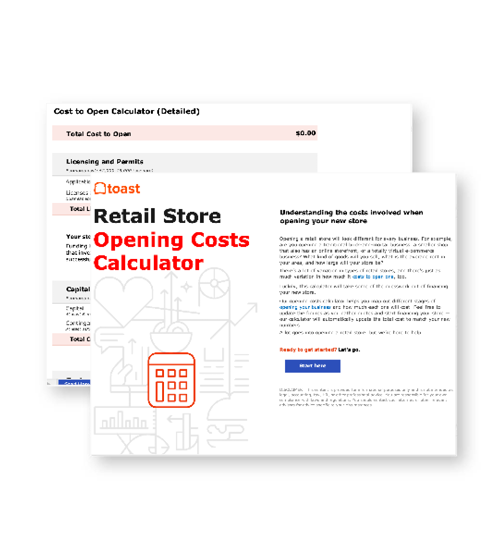
 RESOURCE
 Retail Store Opening Costs Calculator
This free calculator lays out some of the fundamental financial costs of opening a retail store, so you can start planning and bring your dream business to life.
Obtener descarga gratisTCO, or total cost of ownership, is a way to evaluate the full cost of a product, service, or system over time—not just the upfront price. For businesses, focusing only on initial costs can lead to decisions that seem cheaper at first but become more expensive in the long run.
This is especially true for technology investments. For example, a content management system (CMS)—the software used to build and manage your website—can vary widely in long-term cost depending on the platform you choose.
Research shows that open-source platforms like WordPress can offer up to 44% lower total cost of ownership compared to proprietary alternatives. As Jason Teichman, Chief Operating Officer of WP Engine, explains:
“Digital experiences have evolved from marketing touchpoints to mission-critical business assets… Yet many companies still underestimate the long-term costs associated with their CMS and infrastructure choices.”
By understanding TCO, you can make more informed decisions about where to invest your money and how those choices will impact your operations over time. In this guide, you’ll learn what TCO means, what costs are included, when to calculate it, and how to use it to compare options more effectively.
Key takeaways
TCO in business helps you evaluate the full cost of a product or system over time, not just the upfront price.
Looking beyond initial cost can prevent expensive surprises from maintenance, labor, and inefficiencies.
Calculating TCO allows you to compare options more accurately and make smarter long-term decisions.
TCO includes both direct and indirect costs, from setup and operations to downtime and upgrades.
Using TCO in planning helps businesses budget more effectively and choose solutions that scale sustainably.
One Pager Template
Use this easy-to-edit template to create a polished one-pager that highlights the most important details about your business.

What is TCO in business?
TCO in business stands for total cost of ownership, which refers to the full cost of a product, service, or system over its entire lifecycle—not just the initial purchase price. It includes upfront costs as well as ongoing expenses like maintenance, labor, training, and potential inefficiencies.
For example, a lower-cost piece of equipment may seem like a smart purchase, but if it requires frequent repairs or has a shorter lifespan, maintenance and replacement costs can add up over time. Investing in more durable equipment can reduce long-term expenses and downtime.
Understanding TCO helps businesses evaluate the true financial impact of a decision. Instead of focusing only on what something costs today, TCO looks at what it will cost to operate, maintain, and support over time.
TCO vs. upfront cost
Upfront cost is the initial price you pay to purchase a product or service, while total cost of ownership includes all costs associated with using it over time. A lower upfront cost may seem appealing, but it can lead to higher long-term expenses if ongoing costs are higher.
Upfront cost: The initial purchase or setup cost.
Total cost of ownership (TCO): The full cost over time, including operation, maintenance, and support.
Key difference: TCO provides a more complete picture of value, helping businesses avoid decisions that are cheaper upfront but more expensive in the long run.
Why does TCO matter for businesses?
TCO matters because it helps businesses understand the true cost of a decision over time, not just the upfront price. By accounting for ongoing expenses and operational impact, TCO provides a clearer picture of value and long-term performance.
This is especially important for large system investments. For example, SEPTA’s Key Card system—a digital fare payment system used across Philadelphia transit—was initially expected to cost around $100 million but ultimately grew to well over $200 million as additional updates, infrastructure, and improvements were required over time.
Looking at total cost of ownership helps organizations anticipate these long-term costs and avoid underestimating the full financial impact of a decision.
Improves decision-making: Helps businesses compare options based on total value, not just initial cost.
Prevents hidden costs: Identifies ongoing expenses like maintenance, training, and inefficiencies that are easy to overlook.
Supports budgeting and forecasting: Provides a more accurate estimate of long-term costs.
Highlights cost-saving opportunities: Reveals where investing more upfront can reduce expenses over time.
Enables smarter scaling: Ensures systems and tools can support growth without unexpected costs.
What costs are included in TCO?
Total cost of ownership includes all direct and indirect costs associated with a product, service, or system, making it essential to smart business management.
Upfront costs: Purchase price, installation, and setup.
Operating costs: Ongoing expenses like labor, utilities, and day-to-day usage.
Maintenance and support: Repairs, updates, service contracts, and technical support.
Training costs: Time and resources needed to onboard and train staff.
Downtime and inefficiency costs: Lost productivity, delays, or errors caused by system limitations.
Upgrade and replacement costs: Future investments needed to scale, upgrade, or replace the system.
When should you calculate TCO?
You should calculate total cost of ownership any time you’re making a decision that involves a long-term investment. Looking at TCO upfront helps you avoid unexpected costs and choose options that deliver better value over time.
Before making a major purchase: Evaluate equipment, software, or systems beyond just the initial price.
When comparing vendors or solutions: Use TCO to identify which option is more cost-effective in the long run.
During budgeting and planning: Estimate future expenses more accurately by accounting for ongoing costs.
When scaling your business: Ensure new tools or systems can grow with you without increasing costs disproportionately.
When replacing or upgrading systems: Assess whether switching options will reduce long-term costs or improve efficiency.
How to calculate total cost of ownership
While the exact formula can vary, the goal of calculating total cost of ownership is to account for both upfront and ongoing expenses to understand which option delivers the best long-term value.
Identify upfront costs: Include the purchase price, installation, and setup.
Estimate ongoing costs: Factor in operating expenses like labor, utilities, and usage.
Add maintenance and support costs: Include repairs, updates, and service agreements.
Account for indirect costs: Consider training, downtime, and inefficiencies.
Project costs over time: Estimate expenses over a set period, such as 1 to 5 years.
Compare total costs across options: Use the full cost estimate to evaluate which option delivers the best long-term value.
More than meets the price
By accounting for upfront, ongoing, and indirect expenses, TCO gives you a clearer picture of value over time. This is especially relevant as businesses evaluate emerging technologies like AI.
For instance, many organizations are now weighing the tradeoffs between open-source and commercial tools—not just based on upfront cost, but on factors like infrastructure, maintenance, and long-term scalability.
Using TCO as part of your decision-making process allows you to compare options and plan for the full impact of your choices.
FAQ
What does TCO stand for in business?
TCO stands for total cost of ownership, which refers to the full cost of a product, service, or system over its entire lifecycle, not just the upfront price.
Why is TCO important for retail operators?
TCO helps retail operators understand the true cost of decisions over time, including expenses like labor, maintenance, and inefficiencies. This makes it easier to choose solutions that improve margins and avoid unexpected costs.
What is typically included in a TCO calculation?
A TCO calculation includes upfront costs, operating expenses, maintenance and support, training, downtime, and future upgrade or replacement costs.
How long a period should a retail TCO analysis cover?
A retail TCO analysis typically covers one to five years, depending on the type of investment and how long the product or system is expected to be used.
Is TCO the same as ROI?
No, TCO measures the total cost of an investment, while ROI (return on investment) measures the financial return generated from that investment.
Can TCO analysis apply to small retail businesses?
Yes, TCO analysis is useful for businesses of all sizes, as it helps them make more informed decisions and manage costs more effectively over time.

¿Es útil este artículo?
AVISO LEGAL: Esta información se proporciona solo con fines informativos generales y su publicación no constituye un aval. Toast no garantiza la precisión ni la integridad de la información, el texto, los gráficos, los enlaces y otros elementos que incluye este contenido. Toast no garantiza que alcanzarás ningún resultado específico si sigues los consejos que aparecen aquí. Te recomendamos consultar con un profesional, como un abogado, contador o asesor comercial, para recibir asesoramiento específico para tu situación.
 Tendencias

Subscribe to On the line
Sign up to get industry intel, advice, tools, and honest takes from real people tackling their restaurants' greatest challenges.
Al enviar, aceptas recibir correos electrónicos de marketing de Toast. Trataremos tu información de acuerdo con nuestra declaración de privacidad. Información adicional disponible para residentes de California aquí.