
Tbsp vs. Tsp: What's the Difference?
Confused about tbsp vs. tsp? This guide explains conversions, visual cues, and tips to get your measurements right every time.

Autor
 RECURSO
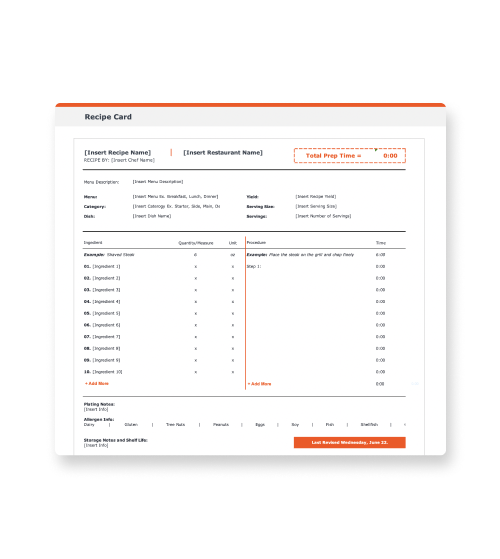
 Plantilla de fichas de recetas
Capacita a tu equipo con esta plantilla de fichas de recetas, una planilla de Excel personalizable donde se describe todo lo que los chefs y el personal de servicio necesitan para preparar una receta.
Obtener descarga gratisUnderstanding the difference between tablespoons (tbsp) and teaspoons (tsp) is fundamental to cooking and baking success. These two measuring units might seem interchangeable, but confusing them can lead to culinary disasters, from oversalted dishes to failed baked goods. Getting measurements right is especially crucial in baking, where precision determines whether your cookies turn out perfectly chewy or disappointingly flat. Still, more than 65% of home cooks admit to “guestimating” measurements instead of using proper tools — a habit that can easily throw off a recipe’s balance.
Bottom line: A tablespoon equals exactly 3 teaspoons. This simple 3:1 ratio is the foundation for accurate cooking measurements and successful recipe scaling.
The fundamental difference
The difference between tablespoons and teaspoons goes far beyond just their names — it's a matter of volume, usage, and precision. Mixing them up can drastically change the outcome of your recipe.
Size and volume comparison
At its core, the distinction is all about volume:
1 teaspoon (tsp) = 5 milliliters (ml) = 1/6 fluid ounce
1 tablespoon (tbsp) = 15 milliliters (ml) = 1/2 fluid ounce
Conversion ratio: 1 tablespoon = 3 teaspoons
This 3:1 ratio is simple, but powerful — and it's the foundation for accurate cooking measurements and recipe scaling.
This difference becomes critical when recipes specify precise measurements for ingredients like salt, baking powder, or vanilla extract — small changes can lead to big consequences in both flavor and texture.
Visual identification
When working with measuring spoons, the tablespoon is always the largest spoon in a standard set.
Most measuring spoon sets include:
1/4 teaspoon
1/2 teaspoon
1 teaspoon
1/2 tablespoon
1 tablespoon
These are usually nested together by size, making it easier to identify at a glance.
Plantilla de fichas de recetas
Capacita a tu equipo con esta plantilla de fichas de recetas, una planilla de Excel personalizable donde se describe todo lo que los chefs y el personal de servicio necesitan para preparar una receta.

When to use each measurement
Different ingredients — and different cooking situations — call for specific tools.
Teaspoon applications
Teaspoons are perfect for small, potent amounts where accuracy is key:
Spices and seasonings: Salt, pepper, cinnamon, nutmeg, or chili powder
Baking essentials: Baking powder, baking soda, or yeast
Flavor extracts: Vanilla extract, almond extract, or lemon juice
Small liquid amounts: Medicine doses or concentrated flavorings
The smaller size helps prevent accidentally overwhelming your dish with strong flavors. For example, if a recipe calls for 1 teaspoon of dried oregano and you mistakenly use a tablespoon, your sauce could end up tasting bitter or overly herbal — especially since dried herbs are far more concentrated than fresh.
Even a small misstep — like using a tablespoon of salt instead of a teaspoon — can result in an inedible, oversalted dish.
Tablespoon applications
Tablespoons are made for larger volumes of both liquid and dry ingredients:
Cooking oils: Olive oil, vegetable oil, or melted butter
Sauces and condiments: Soy sauce, honey, maple syrup, or peanut butter
Bulk dry ingredients: Sugar, flour (for small amounts), or cocoa powder
Liquid additions: Milk, cream, or broth in recipes
If the teaspoon is for nuance, the tablespoon is for substance. Classic vinaigrette recipes use a 3:1 oil-to-vinegar ratio — typically 3 tablespoons of olive oil to 1 tablespoon of vinegar. Getting that ratio right ensures balanced flavor and proper emulsification.
Common measurement mistakes — and how to avoid them
Even seasoned cooks slip up — especially when rushing or multitasking.
Pastry chef and “Nailed It!” judge Jacques Torres understands how even the pros don’t always get it right on the first try. He shared, “Even as professionals, the first time that we make a recipe, we might not fail, but it’s not going to be our best result. The next time, it’s going to be better, and the following time it’s going to be even better. So, don’t expect to have a perfect result the first time.”
This reminder is especially helpful when small measurement errors throw things off. Learning to measure accurately takes a little practice — but like anything else in the kitchen, you’ll get better each time.
What happens when you mix them up
Using a tablespoon instead of a teaspoon means tripling the amount — and in some recipes, that small mistake has big consequences.
For example, many recipes call for 1 teaspoon of salt per quart of water for boiling pasta. Add a tablespoon instead, and you’ve just tripled the salt, which can make the pasta water (and the pasta itself) overly salty.
Here’s how this mix-up can affect other ingredients:
Baking powder: Too much makes baked goods bitter and dense
Salt: Can render food inedible
Vanilla extract: Overwhelms the dish and masks other flavors
Spices: Throws off balance and can create harsh, overpowering results
How to prevent it
Avoiding these mistakes is simple with the right habits:
Read carefully: Tsp and tbsp look similar — slow down and double-check
Use the right tools: Skip dinner spoons — their sizes vary too much
Double-check key ingredients: Especially salt, baking soda, and baking powder
Helpful shortcuts: Use “b for big” = tablespoon (tbsp) and “p for petite” = teaspoon (tsp)
Conversion techniques and scaling
Mastering conversions makes it easier to adjust recipes, substitute ingredients, or scale portions up or down — all without second-guessing your math.
Basic conversion formulas
The 3:1 ratio between tablespoons and teaspoons makes conversions a breeze:
Teaspoons to tablespoons: Divide by 3 (9 teaspoons = 3 tablespoons)
Tablespoons to teaspoons: Multiply by 3 (2 tablespoons = 6 teaspoons)
Half tablespoon: Equals 1½ teaspoons
Quarter tablespoon: Equals ¾ teaspoon
Scaling recipes made simple
Understanding conversions simplifies scaling recipes up or down. Doubling or halving a recipe? Instead of measuring three separate teaspoons, just grab 1 tablespoon.
Larger measurement connections
Tablespoons also tie into larger kitchen measurements:
4 tablespoons = ¼ cup
1 tablespoon = ½ fluid ounce
1 tablespoon = 15 milliliters (for international conversions)
Tip: If you're cooking with a recipe from outside the U.S., metric conversions like milliliters will come in handy.
Measurement accuracy best practices
No matter how great your recipe is, technique matters.
Dry ingredient tips
For accurate dry measurements:
Level measurements: Use a flat edge (like the back of a knife) to level off ingredients for exact amounts.
Avoid packing: Unless the recipe says “packed” (like for brown sugar), spoon ingredients in loosely.
Fluff first: For flour and similar ingredients, fluff them with a fork before scooping to avoid over-measuring.
For example, adding a tablespoon of cocoa powder instead of a teaspoon in a mug cake can make the texture dry and the flavor overly bitter — cocoa is highly absorbent and concentrated, so even a little too much can throw off the balance.
Liquid ingredient tips
Liquid measurements require different approaches:
Fill to the brim: Make sure liquid reaches the top of the spoon without spilling over.
Check at eye level: Looking straight on gives you the most accurate read.
Clean spoons: Use dry, clean spoons — especially when switching between ingredients.
Dealing with sticky ingredients
For sticky ingredients like honey or peanut butter, spray measuring spoons with cooking spray so the ingredient slides off easily. This prevents waste and ensures accurate measurements.
International variations and considerations
While the 3:1 ratio of tablespoons to teaspoons holds true globally, the actual volume of each can vary depending on the measurement system.
Regional differences
Teaspoons and tablespoons are used around the world — but not always in the same sizes:
U.S. standard:
1 tsp = 4.93 ml
1 tbsp = 14.79 ml
Metric system:
1 tsp = 5 ml
1 tbsp = 15 ml
Imperial (UK) system: May vary slightly depending on the source
These differences are generally minor for everyday cooking, but they can matter in precise recipes like baked goods.
Adapting recipes across borders
Using a recipe from another country? Keep this in mind:
In casual cooking, the small variance usually won’t affect the outcome.
In baking, where accuracy is critical, consider switching to weight-based measurements (like grams) for maximum consistency.
Bonus tip: Digital kitchen scales are inexpensive and incredibly helpful for converting international recipes with confidence.
Emergency substitutions and alternatives
No measuring spoons? It happens. While not ideal, especially in baking, you can use rough visual guides in a pinch.
Approximate visual references
Here’s how to eyeball it when tools are missing:
¼ teaspoon ≈ size of a dime
½ teaspoon ≈ size of a nickel
1 tablespoon ≈ size of a bottle cap or ice cube
Dinner spoon ≈ about 1 tablespoon
Small spoon (like a coffee spoon) ≈ about 1 teaspoon
A word of caution
These estimates are fine for soups, dressings, or sauces — but skip them for baking.
Baking depends on precision, and even small miscalculations can lead to:
Sunken cakes
Tough cookies
Bitter or salty results
When in doubt: if the recipe requires chemistry (like rising, thickening, or emulsifying), reach for the real tools.
Final thoughts
Whether you're baking banana bread or whipping up a salad dressing, understanding the difference between teaspoons and tablespoons can make or break your dish. That simple 3:1 ratio — and knowing when to use each measurement — gives you the confidence to cook (and tweak recipes) with precision.
With the right tools, techniques, and a few helpful memory tricks, you’ll avoid common mistakes and keep your food tasting just the way it should — delicious.
FAQ
What happens if I accidentally use a tablespoon instead of a teaspoon?
You'll add three times the intended amount of the ingredient. For salt or baking powder, this could ruin the dish. For milder ingredients like vanilla, the flavor may be overpowering but not necessarily inedible. Always double-check measurements, especially for potent ingredients.
Can I use regular spoons from my silverware drawer?
While possible in emergencies, it's not recommended. Regular spoons vary in size between manufacturers and don't provide the precision needed for successful cooking and baking. Invest in a proper measuring spoon set for consistent results.
How do I remember which is bigger?
Try this simple trick: "b" for "big" in tablespoon (tbsp) and "p" for "petite" in teaspoon (tsp). The tablespoon is always the largest spoon in a measuring set.
Should I level off my measurements?
Yes, for dry ingredients, always level off with a straight edge unless the recipe specifically calls for "heaping" measurements. This ensures accuracy and consistency across different preparations of the same recipe.
¿Es útil este artículo?
AVISO LEGAL: Esta información se proporciona solo con fines informativos generales y su publicación no constituye un aval. Toast no garantiza la precisión ni la integridad de la información, el texto, los gráficos, los enlaces y otros elementos que incluye este contenido. Toast no garantiza que alcanzarás ningún resultado específico si sigues los consejos que aparecen aquí. Te recomendamos consultar con un profesional, como un abogado, contador o asesor comercial, para recibir asesoramiento específico para tu situación.
 Tendencias

Subscribe to On the line
Sign up to get industry intel, advice, tools, and honest takes from real people tackling their restaurants' greatest challenges.
Al enviar, aceptas recibir correos electrónicos de marketing de Toast. Trataremos tu información de acuerdo con nuestra declaración de privacidad. Información adicional disponible para residentes de California aquí.