How to Weigh the Costs and Benefits of Self Order Restaurant Kiosks
See how restaurant kiosk are affordable and can provide immense labor efficiency and order upsell potential.

Autor
 RECURSO
 Guía de control de costos para restaurantes
Usa esta guía para obtener más información sobre los costos de los restaurantes, cómo realizarles un seguimiento y las medidas que puedes tomar para maximizar tu rentabilidad.
Obtener descarga gratisSelf-ordering restaurant kiosks can help restaurant operators of all shapes and sizes increase ordering efficiency and boost guest satisfaction.
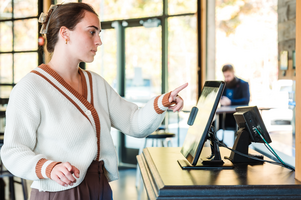
Many large restaurant groups have started implementing self-service kiosks — a move that can help them shrink long lines while allowing guests to see what they’re ordering and customize orders to their liking.
Restaurant operators may think self-ordering kiosk costs put this new touchscreen functionality and improved customer experience out of hand.
But restaurant kiosk prices may actually be more affordable than some operators think — and the benefits of digital kiosks and order upsell potential can help shorten the time to break even.
In this article, you’ll learn the benefits of self-ordering kiosks for restaurant businesses, understand the costs of implementing these interactive kiosks, and see how all operations — from fast food to quick-service restaurants — can use self-service kiosk solutions to offer guests an order operating system that’s integrated with their point-of-sale system.
Informe de estadísticas para operadores de restaurantes
Consulta las estadísticas de operadores de restaurantes reales que pueden ayudarte a comparar la infraestructura tecnológica actual y planificada de tu restaurante con la de tus competidores de cara al 2024 y en adelante.

Benefits of self-ordering kiosks for restaurant businesses
Self-ordering restaurant kiosks have emerged as a valuable tool for restaurant operators, regardless of their size and scale.
These interactive kiosks enhance ordering efficiency, streamline operations, and enhance guest satisfaction. While the implementation of self-service, touchscreen kiosks was initially seen in large restaurant groups, more establishments are realizing the benefits they can bring.
These kiosks can be one facet of a restaurant's switch to a New Steps of Service, which is the strategic implementation of Toast products that gives guests the power to order and pay as they please — while increasing the efficiency of your front-of-house staff by freeing them from terminals.
Here are a few benefits that can help justify the cost of self-ordering restaurant kiosks.
Enhanced ordering efficiency: Self-serve kiosks enable customers to browse menus, customize orders, and make payments at their own pace. This automation reduces wait times, decreases the likelihood of errors, and ultimately enhances operational efficiency.
Improved customer experience: Self-service kiosks allow guests to visually explore menu items, view nutritional information, and make personalized adjustments, enhancing their overall dining experience. This interactive approach empowers customers and provides them with a sense of control over their order.
Order accuracy: Similar to online ordering, directly inputting their orders through the kiosk allows customers to ensure that their preferences and dietary restrictions are accurately conveyed. This helps reduce order mistakes, enhances customer satisfaction, and builds trust in the establishment.
Upselling opportunities: Self-checkout kiosks can provide personalized add-on recommendations based on customer selections, leading to potential upselling opportunities. This feature can increase average order values and boost average restaurant revenue.
Labor optimization: Installing self-service kiosks enables restaurant operators to allocate their staff resources efficiently. With kiosks handling order placement and payment, employees can focus on other critical tasks, such as food preparation and providing personalized customer service.
Understanding self-ordering kiosks integrations with restaurant POS systems
A key consideration with self-serve kiosk systems is how the digital kiosk platform integrates with your existing restaurant POS system.
The kiosk ordering experience, including menu item customization, pricing, and more, has to sync with the backend of the POS system.
There are a few options in the restaurant industry when it comes to self-serve kiosks. Kiosk manufacturers can design their systems to integrate with popular POS systems. And then there’s also all-in-one self-serve kiosk systems that can work seamlessly from the same backend.
An all-in-one system — where your POS provider is also your kiosk provider — can make things easier for your operation. This route can help streamline credit card processing with integrated card readers.
Costs involved in implementing self-ordering kiosks
Here are some varying costs involved with adopting and implementing self-serve kiosks.
Kiosk hardware and software costs: The primary investment in kiosk systems lies in the kiosk software and hardware expenses. This includes the cost of kiosk units, touchscreens, processors, and operating systems. The price range will vary based on the nature of the kiosk — is it freestanding or countertop? Do you require a more hearty outdoor kiosk? Is a receipt printer add-on required?
Installation and integration expenses: Proper installation of self-ordering kiosks and their integration with existing point-of-sale (POS) systems require professional expertise. These services may incur additional costs but are essential for seamless operations and data synchronization. For example, business owners may require their kiosk to run on an android system or an iPad OS.
Maintenance and support: Regular maintenance, software updates, and technical support are ongoing costs associated with self-service kiosks. It is crucial to factor these expenses into the budget to ensure the kiosks operate optimally and remain secure. Restaurant operators can consider adding any available warranty options for their new kiosk systems, though those costs should be considered as well.
Self-ordering kiosks for various restaurant operations
Self-ordering kiosks can be a fit for most any restaurant service model. Quick-service restaurants (QSRs), full-service restaurants (FSRs), and more can benefit from these fully self-serve ordering options — very similar to the benefits provided from QR code ordering systems.
Here’s a deeper dive on how self-serve kiosks can work across multiple restaurant types.
Fast food chains: Self-ordering kiosks have become commonplace in fast food chains to expedite the ordering process and reduce long queues. Customers can quickly place their orders, customize their meals, and move through the line efficiently, enhancing their overall dining experience.
Quick-service restaurants: Self-service kiosks are equally beneficial for quick-service restaurants, allowing customers to order, pay, and pick up their meals seamlessly. These kiosks promote speed, convenience, and order accuracy, meeting the fast-paced demands of these establishments.
Cafes and coffee shops: Self-ordering kiosks in cafés and coffee shops enable customers to place their orders for beverages and snacks efficiently. This frees up staff to focus on creating high-quality products and delivering exceptional customer service.
Calculadora de margen de ganancia para restaurantes
Esta calculadora gratuita de margen de ganancia para restaurantes te ayudará a determinar con qué nivel de eficiencia estás transformando tus ingresos por ventas en ganancias.
Calculating return on investment (ROI) and break-even point for restaurant self-service kiosks
To determine the viability of implementing self-ordering kiosks, restaurant operators need to calculate the ROI and break-even point:
ROI calculation: Calculate the anticipated increase in revenue from upselling opportunities and the potential labor cost savings due to optimized staffing. Compare these estimated gains against the initial investment and ongoing costs to calculate the ROI.
Break-even point: Determine the point at which the cumulative gains from upselling and labor savings outweigh the initial investment and cumulative expenses. This helps identify the timeframe required to reach the break-even point.
Embracing self-ordering kiosks for a successful future
Self-ordering restaurant kiosks have become an innovative and cost-effective solution for enhancing operational efficiency and improving guest satisfaction.
By carefully evaluating the benefits, upfront costs, ongoing expenses, and potential ROI, restaurant operators can make informed decisions about integrating these interactive kiosks into their establishments.
As technology continues to shape the dining experience, self-service kiosk solutions offer a clear path to increased efficiency, accuracy, and revenue growth. With the flexibility to cater to different types of restaurants, self-ordering kiosks have the potential to revolutionize the industry and provide guests with a seamless and personalized ordering experience.
Embracing this technology can help restaurant operators position their businesses at the forefront of modern dining trends and ensure long-term success.
Lista de verificación para abrir un restaurante
Abrir un restaurante implica un montón de cosas. Usa esta lista de verificación en PDF gratuita para que tu nuevo restaurante tenga éxito.
Where do you go from here?
The greatest takeaway from this article is the importance of ongoing, consistent restaurant cost breakdowns — for franchise costs and beyond.
This cost analysis doesn’t exist in a vacuum. As a restaurant operator, you’ve bought the ticket. Now it’s time to take the ride. The first best action you can take is to assess your current costing process and the systems you can employ for conducting a cost breakdown — especially for more controllable variable costs like food and labor.
While something is better than nothing, and manual calculations are something, your ability to accurately, consistently breakdown costs at scale is dependent on proper technology.
At the end of the day, profitability is the name of this game — not sales or revenue. A laser-focus on profitability requires a laser-focus on your costs — and a laser-focus on costs requires actionable, pinpoint accurate restaurant cost breakdowns.
Combining Toast and xtraCHEF can help all types of restaurants access reports on daily sales, costs, and how they’re impacting profitability.
xtraCHEF by Toast empowers you to drill into line-item level detail for every ingredient on each of your supplier invoices.
Together, these tools can automate and simplify the process of creating restaurant cost breakdowns.
 TECNOLOGÍA DE TOAST
 Built for restaurants just like yours.
La tecnología para restaurantes de Toast incluye punto de venta, sistema de pantallas de cocina, fidelidad, análisis y nómina, entre otros.
¿Es útil este artículo?
AVISO LEGAL: Esta información se proporciona solo con fines informativos generales y su publicación no constituye un aval. Toast no garantiza la precisión ni la integridad de la información, el texto, los gráficos, los enlaces y otros elementos que incluye este contenido. Toast no garantiza que alcanzarás ningún resultado específico si sigues los consejos que aparecen aquí. Te recomendamos consultar con un profesional, como un abogado, contador o asesor comercial, para recibir asesoramiento específico para tu situación.
 Tendencias

Subscribe to On the line
Sign up to get industry intel, advice, tools, and honest takes from real people tackling their restaurants' greatest challenges.
Al enviar, aceptas recibir correos electrónicos de marketing de Toast. Trataremos tu información de acuerdo con nuestra declaración de privacidad. Información adicional disponible para residentes de California aquí.