
Net Operating Income: How to Calculate NOI for Business Owners
Learn how to calculate net operating income (NOI) and use it to improve your business's profitability.
Autor
 RESOURCE
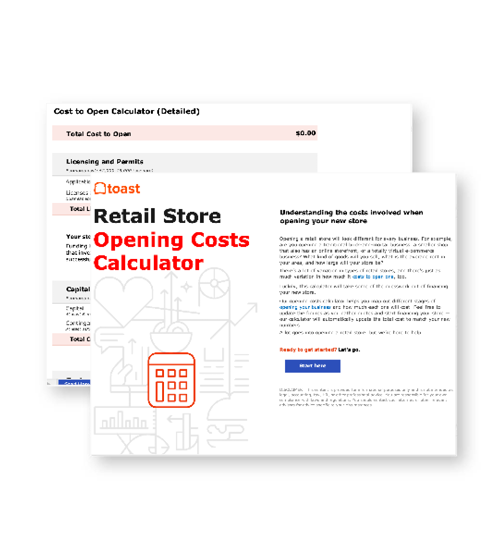
 Retail Store Opening Costs Calculator
This free calculator lays out some of the fundamental financial costs of opening a retail store, so you can start planning and bring your dream business to life.
Obtener descarga gratisUnderstanding the financial health of your business might not be the most thrilling task on your to-do list, but it's crucial to keep your brand afloat. According to Revenued, the average net profit margin is only about 10%.
Net operating income (NOI) is one of the most important metrics for evaluating operational profitability. It helps you identify what’s working, what needs improvement, and where to focus your efforts.
This comprehensive, step-by-step guide explains what NOI is, how to calculate it for your business, and how to use it, along with helpful tools and strategies to increase efficiency, reduce costs, and improve your bottom line.
Let's get into it!
Disclaimer: This article is for informational purposes only and should not be considered financial or legal advice.
Key Takeaways
Net operating income (NOI) is the profitability of a business after subtracting operating expenses, but before taxes, interest, depreciation, and amortization.
Formula: NOI = Total Revenue − Operating Expenses
NOI helps business owners evaluate operational efficiency, secure financing, and determine business value.
Costs excluded from NOI include interest payments, income taxes, depreciation, amortization, and one-time expenses.
Improving NOI requires a combination of increasing revenue and reducing controllable operating costs.
What is net operating income?
Net operating income (NOI) represents the profitability of your business after accounting for all operating expenses, but before considering taxes, interest payments, depreciation, and amortization.
For business owners, NOI offers a clear picture of how efficiently your core operations generate profit. It’s one of the most direct ways to evaluate your operational performance.
Unlike net profit (which includes everything from taxes to loan payments), NOI determines the revenue and profitability after subtracting necessary operating costs.
This focus is crucial for retailers, as decisions about staffing and inventory can dramatically impact profitability.
Business Loan Calculator
Use this free calculator to understand how different loan amounts, interest rates, and terms will impact your payments and overall costs.

Why NOI matters for business owners
Understanding your net operating income is vital for several reasons:
Evaluating business performance
A profit & loss report ultimately reveals whether your strategies translate into profit or loss. NOI is a key part of that analysis.
Tracking NOI over time allows you to:
Spot performance trends beyond just top-line revenue
Identify seasonal fluctuations in profitability
Evaluate how business changes (menu updates, staffing, etc.) affect results
These insights empower data-driven decision-making that improves operational performance.
Chick-fil-A generates an average of $4 million per location annually — significantly higher than many fast food competitors. This performance is fueled by a tight menu, exceptional operational efficiency, and high customer loyalty — all of which contribute to a strong, consistent NOI across its franchise network.
Securing financing
When seeking loans or investment capital, lenders and investors will likely carefully evaluate your NOI. According to JANOVER, if a NOI is not sufficiently positive to cover future mortgage payments, a creditor may have concerns over a borrower's ability to service debt.
A strong, consistent NOI typically demonstrates that your business has the operational capacity to generate sufficient income, which can commonly make you a more attractive prospect for financial support.
Valuing your business
If you're considering selling your business, NOI will be a significant factor in determining its value.
The first step is to determine your Seller's Discretionary Earnings (SDE). This metric is equivalent to a business's yearly net income, which is its pre-tax income after operating costs are deducted.
For retail businesses specifically, industry valuation multiples are applied to your SDE to establish a market value. According to Retail Insider, for smaller stores, this typically falls between 1.5x and 3x, depending on how stable and transferable the business is.
Consider a single-location retail shop in Canada generating $850,000 in annual revenue and $120,000 in SDE. Given moderate risk and some owner reliance, a multiple of 2.2x is applied, resulting in a business value of roughly $264,000. Adding inventory at cost (approximately $90,000) brings the total estimated value to around $354,000. The valuation was supported by loyal customers and consistent sales, but tempered by the owner's involvement and some seasonal variation.
How to calculate net operating income for businesses
The basic formula for calculating NOI is straightforward:
NOI = Total Revenue - Operating Expenses
Revenue is the money that comes into your business through any of your revenue streams. However, for business owners, it's important to understand exactly what should be included in each category.
NOI Calculation Example
Here is a step-by-step example using realistic figures for a small restaurant or retail business:
Identify total revenue: Add up all income streams for the period. Example: $500,000 in total annual revenue.
Identify total operating expenses: Add up all day-to-day operating costs (labor, rent, inventory, utilities, etc.). Example: $350,000 in total operating expenses.
Apply the formula: NOI = Total Revenue − Operating Expenses
Calculate: $500,000 − $350,000 = $150,000 NOI
Calculate NOI margin: ($150,000 ÷ $500,000) × 100 = 30% NOI margin
This means the business retains $0.30 of every dollar in revenue after covering operating costs — before taxes, interest, and depreciation.
Total revenue for businesses
For other retail businesses, revenue might include:
Product sales: Income from selling physical or digital products, whether through an online store, retail location, or marketplaces like Etsy or Amazon.
Service fees: Payments for services provided — such as graphic design, landscaping, personal training, or accounting.
Subscription revenue: Recurring payments from customers who subscribe to ongoing offerings like monthly product boxes, software access, or exclusive content.
Licensing or royalty income: Revenue earned from licensing your intellectual property, like music, artwork, or proprietary processes, to other businesses.
Consulting fees: Earnings from offering expert advice or strategic support in areas like marketing, HR, operations, or business development.
Operating expenses for businesses
Operating expenses include all costs directly associated with running your business day-to-day:
Inventory costs: Purchasing and storing products or raw materials needed to sell or produce goods.
Production materials: Supplies or components used to manufacture your product — such as fabrics, electronics, or packaging.
Shipping and fulfillment: Costs related to order processing, packaging, postage, or third-party fulfillment services.
Software subscriptions: Recurring fees for tools like customer relationship management (CRM), accounting, design, or productivity apps.
Professional development: Expenses for training, certifications, workshops, or industry conferences that support employee growth.
What's not included in NOI calculations
It's equally important to understand what should not be included in your NOI calculation:
Interest expenses: Payments on loans or credit lines, which relate to how your business is financed, not how it operates.
Income taxes: Federal, state, or local taxes owed on your business’s net income.
Depreciation and amortization: Non-cash accounting adjustments for long-term assets like equipment, vehicles, or software.
Capital expenditures: Large, one-time purchases like new equipment or major renovations.
Owner's compensation: Any salary or distributions beyond a reasonable, market-rate wage for work performed.
One-time or extraordinary expenses: Unusual costs that don’t represent typical operations, like emergency repairs or legal settlements.
By excluding these non-operational expenses, NOI provides a clearer picture of your business's core operating efficiency, regardless of how it's financed or structured.
Using NOI to evaluate your restaurant or business performance
Once you've calculated your NOI, here are several ways to use it to gain insight and guide strategic decisions:
1. NOI margin
Convert your NOI into a percentage of total revenue to assess how efficiently your business converts sales into profit.
Formula: NOI Margin = (NOI ÷ Total Revenue) × 100
Tip: Tracking NOI margin over time helps you measure improvements in operational efficiency, not just revenue growth.
2. Industry benchmarking
Compare your NOI margin to industry averages to understand how your performance stacks up.
A higher NOI margin indicates stronger operational efficiency and cost control.
A lower NOI margin may reveal areas for improvement, such as food waste, overstaffing, or underpricing.
Insight: Benchmarking isn’t just about comparison. It’s also a powerful tool for setting goals and identifying where to focus cost-cutting or revenue-growing strategies. For example, Toast Benchmarking helps you get valuable insights into local market trends, so you can capitalize on trends and plan ahead.
3. Trend analysis
Tracking your NOI over time can help you spot performance patterns and evaluate the results of specific business changes.
Ask questions like:
Is your NOI growing month-over-month or year-over-year?
How does seasonal variation (e.g., holidays, weather, local events) impact your NOI?
Did specific business decisions — like pricing adjustments or staffing shifts — cause noticeable increases or declines?
Tip: Keep a simple dashboard or spreadsheet to visualize NOI trends and tie them to operational decisions or calendar events.
4. Break-even analysis
You can also use your NOI data to calculate your break-even point — the amount of revenue needed to cover all fixed operating expenses.
Break-even point formula:
Break-even point = Fixed Operating Expenses ÷ Contribution Margin Percentage
Where:
Fixed operating expenses are costs that don’t vary with sales (e.g., rent, salaried staff).
Contribution margin percentage is the percent of each dollar of revenue that remains after variable costs are covered.
Tip: Knowing your break-even point helps with pricing strategy, cost control, and planning for slow periods.
Strategies to improve NOI for businesses
Now that you understand how to calculate and interpret NOI, here are practical ways to improve it by increasing revenue and optimizing operations:
Increase revenue
Expand revenue streams
Diversify your offerings to increase sales and reduce reliance on a single income source.
Sell branded retail products: Develop house-made sauces, spice blends, or other packaged goods.
Build customer loyalty: Implement a rewards program to drive repeat visits and long-term retention.
Reduce operating expenses
Control inventory costs
Reduce waste and improve profit margins through smarter purchasing.
Track inventory closely: Implement inventory management systems to reduce over-purchasing and theft.
Negotiate with vendors: Seek better pricing or bulk discounts from your suppliers.
Optimize labor costs
Labor is one of your largest expenses — optimize schedules and staffing to improve efficiency.
Forecast staffing needs: Use sales data to create accurate, lean staffing schedules.
Cross-train team members: Train employees to cover multiple roles and fill gaps more flexibly.
Automate where possible: Use technology (like scheduling or payroll tools) to reduce manual admin.
Given how much of your revenue goes to payroll, streamlining your staff schedules is an easy way to ensure your store is sufficiently staffed to meet customer demand at any hour of the day.
Reduce utility expenses
Lower monthly utility bills by investing in efficient equipment and regular maintenance.
Use energy-efficient equipment: Upgrade appliances to reduce electricity and gas usage.
Conserve water: Install low-flow faucets.
Renegotiate fixed costs
Revisit recurring expenses to find hidden savings over time.
Review lease terms: Negotiate rent reductions or favorable renewal terms if possible.
Shop for insurance: Compare rates to ensure you’re not overpaying for coverage.
Consolidate software tools: Eliminate redundant tech and combine services where possible.
Using technology to track and improve NOI
Modern business management technology can significantly streamline the process of tracking and improving NOI:
Point of sale (POS) systems
A modern POS system is essential for tracking revenue accurately and understanding sales performance across categories.
What it does: Captures detailed sales data and categorizes revenue streams, making it easy to calculate total revenue for your NOI formula.
Why it matters: With centralized reporting, you can identify top-performing items, spot sales trends, and uncover opportunities to grow profit.
Toast is a POS system that helps businesses streamline operations, increase sales, and enhance the guest experience — all of which can support a healthier NOI.
Inventory management software
Effective inventory tracking is key to protecting your bottom line.
What it does: Monitors stock levels in real time.
Why it matters: Tight inventory control can significantly reduce unnecessary spending and improve NOI.
Pro tip: Choose a system that integrates with your POS to automatically update inventory as items are sold.
Labor management platforms
Labor costs are often your largest controllable expense — smart scheduling can make a major impact on NOI.
What it does: Uses historical sales data and forecasts to build optimized staffing schedules, ensuring you’re neither over- nor understaffed.
Why it matters: Efficient scheduling reduces payroll waste, prevents burnout, and aligns labor costs with actual demand.
Pro tip: Look for platforms that offer real-time labor tracking and alerts when labor costs exceed budgeted thresholds.
Financial reporting tools
Robust reporting tools help you understand the financial health of your business and identify exactly what’s driving or draining your profits.
What it does: Provides detailed income statements, expense breakdowns, and NOI reports to highlight which areas of your operation are most (or least) profitable.
Why it matters: Clear, actionable financial data allows you to make informed decisions that directly improve NOI.
Bottom line: Integrated reporting tools reduce time spent on manual calculations and reveal opportunities to boost operational efficiency.
Retail POS Comparison Tool
This customizable Retail POS Comparison Tool enables you to research, evaluate, and compare point of sale systems side by side in one Excel spreadsheet.
Common NOI calculation mistakes to avoid
Avoid these common pitfalls when calculating your small business NOI:
Including non-operating expenses: Make sure to exclude interest payments, income taxes, depreciation, amortization, and one-time expenses from your NOI calculation.
Using inconsistent time periods: Ensure all revenue and expense figures cover the same time period for an accurate comparison.
Overlooking or misclassifying expenses: Be meticulous about categorizing expenses correctly, particularly in distinguishing between operating and non-operating costs.
Mixing personal and business expenses: Small business owners sometimes blur the line between personal and business expenses, which can distort NOI calculations.
Failing to account for seasonal variations: Many restaurants experience significant seasonal fluctuations, so ensure you're comparing appropriate time periods.
FAQ about net operating income for business owners
How often should I calculate my business's NOI?
Most business owners calculate NOI monthly to track performance regularly and make timely adjustments. Quarterly and annual NOI calculations are also important for longer-term analysis and financial reporting.
Is a high NOI always better?
While a higher NOI generally indicates stronger operational performance, context matters. Sometimes, temporarily accepting a lower NOI to invest in customer experience, staff training, or new technology can lead to higher NOI in the long run.
How can I use NOI when applying for a business loan?
When applying for financing, prepare to provide NOI calculations for several periods to demonstrate consistent operational profitability. Lenders typically want to see that your NOI is sufficient to cover proposed debt payments with a comfortable margin.
Business Loan Calculator
Use this free calculator to understand how different loan amounts, interest rates, and terms will impact your payments and overall costs.
Should I include the owner's salary in NOI calculations?
If you work in the business, include a market-rate salary for your role as an operating expense. However, additional distributions or compensation beyond the market rate should be excluded from NOI calculations.
How does NOI relate to EBITDA?
NOI and EBITDA (Earnings Before Interest, Taxes, Depreciation, and Amortization) are similar concepts, but EBITDA is more commonly used in corporate contexts and may include some non-operational income and expenses that NOI excludes.
How can I improve my NOI during slow seasons?
During predictable slow periods, focus on reducing variable costs (like labor and inventory), implementing special promotions to drive traffic, and developing alternative revenue streams (like catering or events) that can offset seasonal declines in core business.
Toast is built for busy businesses like yours
Net operating income is a powerful metric that provides critical insights into your restaurant or small business's operational efficiency and financial health. By regularly calculating and analyzing your NOI, you can identify opportunities for improvement, make informed business decisions, and ultimately build a more profitable and sustainable business. Whether you're managing cash flow, planning for growth, or preparing for financing, a clear understanding of your NOI will serve as a foundation for your business's financial strategy.
Connect every part of your store from net operating income to marketing with Toast, an all-in-one platform that brings more convenience, more variety, and more delightful customer experiences. Request a demo today.
Retail Store Opening and Closing Checklist
Use this free PDF checklist to set your staff up for success, every shift.
¿Es útil este artículo?
AVISO LEGAL: Esta información se proporciona solo con fines informativos generales y su publicación no constituye un aval. Toast no garantiza la precisión ni la integridad de la información, el texto, los gráficos, los enlaces y otros elementos que incluye este contenido. Toast no garantiza que alcanzarás ningún resultado específico si sigues los consejos que aparecen aquí. Te recomendamos consultar con un profesional, como un abogado, contador o asesor comercial, para recibir asesoramiento específico para tu situación.
 Tendencias


Subscribe to On the line
Sign up to get industry intel, advice, tools, and honest takes from real people tackling their restaurants' greatest challenges.
Al enviar, aceptas recibir correos electrónicos de marketing de Toast. Trataremos tu información de acuerdo con nuestra declaración de privacidad. Información adicional disponible para residentes de California aquí.