
8 Bartender Upselling Techniques That Don’t Feel Pushy
A helpful drink suggestion can add value to any bar order. Learn eight bartender upselling techniques with scripts that don’t feel pushy.

Autor
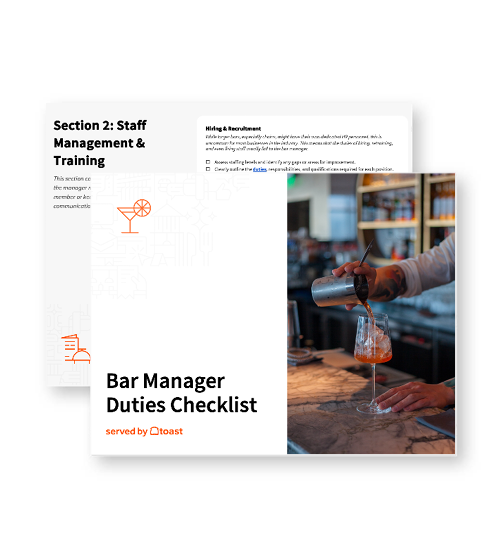
 RESOURCE
 Bartender Training Checklist
Use this free Bartender Training Checklist to help streamline your training process and set your new bartenders up for success.
Obtener descarga gratisBartender upselling techniques encourage guests to choose a higher-priced drink or upgrade through helpful, personalized recommendations. The best approach is simple: find out what someone likes, explain an option and its price, and leave the choice to them.
Those conversations can lead to a different spirit, a custom cocktail, or a food pairing—all details the team needs to get right. Toast’s bar POS system keeps those choices connected to orders, tabs, and payments, helping bartenders handle requests without slowing service.
Here are eight techniques with example scripts to help your team make recommendations that feel natural, useful, and easy to accept—or decline.
Key takeaways
Match recommendations to the guest’s tastes, explain the price, and accept their decision.
Describe how a spirit upgrade changes the drink rather than simply calling it “premium.”
Food pairings and alcohol-free drinks can increase order value without encouraging more alcohol consumption.
Use guest feedback and remembered preferences to make suggestions more personal.
Train bartenders on menu details and measure profitability alongside guest satisfaction.
Hoja de cálculo de ingeniería de menús
Usa esta hoja de cálculo de ingeniería de menús, que contiene fórmulas de ingeniería de menús de alta complejidad, para determinar los puntos fuertes y débiles de tu menú.

How do bartenders upsell without being pushy?
Ask what the guest likes, recommend something relevant, explain any additional cost, and accept their decision. One helpful suggestion is usually enough. Not every recommendation is technically an upsell. Bartenders often combine three approaches:
Approach | What it means | Bar example |
Upselling | Offering a higher-priced version of the intended purchase | Suggesting a different gin for an additional $3 |
Cross-selling | Suggesting a complementary item | Recommending an appetizer with a beer |
Suggestive selling | Helping a guest choose through a relevant recommendation | Describing a house cocktail that matches their preferences |
Effective restaurant upselling techniques depend on knowing the menu and listening to the guest. They should never involve surprise substitutions, hidden charges, or repeated pressure after someone declines.
Responsible service comes first. Increasing the value of an order doesn’t have to mean increasing its alcohol content or encouraging another round.
8 bartender upselling techniques
Start with drinks and food your team knows well. Clear menu design supports the conversation by making ingredients, options, and prices easy to find.
1. Ask one useful question before recommending anything
A short question can reveal more than a long description of your best-selling cocktail. Find out what the guest enjoys before deciding what to suggest. Listening is one of the most useful bartender communication skills, especially when someone wants guidance but does not know the terminology.
Ask about flavor: Give the guest an easy choice, such as refreshing versus rich.
Use familiar drinks: Asking what they usually order gives you a starting point.
Keep it brief: One useful answer may be enough to make a recommendation.
Try saying: “Do you prefer something citrusy and refreshing, or something richer and spirit-forward?”
If the guest already knows exactly what they want, take the order without making them defend it.
2. Explain a spirit upgrade in terms of taste
“Premium” doesn’t tell a guest how their drink will change. A more floral gin or oakier bourbon gives them something specific to consider.
Know the starting point: Understand the flavor of your house or well spirits.
Explain one difference: Choose a characteristic that matches the guest’s preferences.
State the upcharge: Confirm the additional cost before changing the spirit.
Try saying: “We can make that with the oakier bourbon for $3 more if you’d prefer that flavor.”
In a January 2026 analysis, NIQ reported that 67% of spirits drinkers were willing to pay more for higher-quality drinks. That doesn’t guarantee an upgrade sale, but it supports explaining what the additional money buys.
3. Recommend a specific house cocktail
When someone asks what’s good, naming half the menu gives them another decision to work through. Offer one drink that matches something they’ve told you. Knowing what goes into developing cocktail recipes helps employees explain a house drink without reciting every ingredient.
Connect it to a preference: Start with the flavor or spirit the guest mentioned.
Describe the experience: Use clear words such as tart, herbal, smoky, or lightly sweet.
Include the price: Let the guest evaluate the whole recommendation.
Try saying: “If you like tart drinks, our $14 grapefruit cocktail could be a good fit—it’s citrus-forward rather than sweet.”
Recommend the house cocktail because it suits the guest, not simply because it’s the item employees have been told to push.
4. Offer a short, clearly priced choice
Two relevant options can make a decision easier. Explain the difference, give both prices, and leave room for the guest to choose either one.
Compare like with like: Two gin-and-tonic options are easier to evaluate than several unrelated drinks.
Keep prices clear: Use the actual amounts from your bar menu pricing.
Respect the budget: Present the less expensive choice as a valid option.
Try saying: “The house gin and tonic is $10, or the more floral gin is $13. Which sounds better?”
In an interview with Bar & Restaurant, Severance beverage director and owner Evan Charest advised staff not to “over-complicate the sale by adding knowledge the guest doesn’t necessarily need.”
Once the guest decides, Toast Go handhelds let employees enter the selected spirit and modifiers at the point of service, helping the prepared drink match the conversation.
5. Suggest food that fits the existing order
A snack or appetizer can add value without another alcoholic drink. This is cross-selling: suggesting something that complements what the guest already wants. Choose food menu items that make sense for the occasion, appetite, and number of people sharing.
Make a specific suggestion: Name one item instead of asking a vague question about food.
Check practical details: Consider dietary needs, portion size, and kitchen availability.
Make the price clear: Guests should know what they’re adding to the tab.
Try saying: “If you’re looking for something to snack on, the $8 pretzel goes well with that lager.”
6. Give alcohol-free options the same attention
Someone choosing not to drink alcohol may still want an interesting, carefully prepared beverage. Describe those options with the same enthusiasm and detail you give cocktails.
In a 2025 Toast survey, 25% of respondents considered unique ingredients and flavors the most appealing part of a mocktail. That gives bartenders a useful place to start: what the drink tastes like.
Lead with flavor: Describe citrus, herbs, spice, texture, or sweetness.
Offer a specific drink: Don’t assume soda is the only option they want.
Check the ingredients: Verify alcohol content when someone needs a completely alcohol-free drink.
Try saying: “If you’d like something citrusy, we have a $9 grapefruit-and-rosemary mocktail.”
Accept a request for water or another simple option just as readily. Guests don’t need to explain why they’re not drinking alcohol.
7. Use the check-back to guide the next order
Before recommending another drink, find out whether the first one suited the guest. A quick check-back can reveal that they wanted something less sweet, more refreshing, or entirely different.
Listening to guest feedback makes the next recommendation more useful and gives the team a chance to address a problem.
Ask about the drink: Focus on whether it matched their preferences.
Use the answer: Adjust the recommendation instead of repeating the original suggestion.
Follow their lead: Discuss another alcoholic drink only when they want one and continued service is appropriate.
Start with: “How did that one work for you?”
If they want another drink: “You mentioned wanting something less sweet. The $13 citrus highball might suit you better.”
8. Remember preferences without assuming the order
Recognizing a regular’s tastes can make a recommendation feel personal. Toast’s 2026 Regulars Report found that 48% of surveyed guests felt most valued when employees remembered them, including their name or usual order.
Remember a useful detail: A preferred spirit, flavor, or alcohol-free option can guide the conversation.
Offer rather than assume: Ask whether they want their usual or something different.
Keep today’s visit in mind: Their budget, plans, and preferences may have changed.
Try saying: “You liked the dry white last time. There’s a similar by-the-glass special for $12 if you’d like to hear about it.”
How to help your bar team use upselling techniques consistently
Your bartender training program should give employees enough product knowledge to make recommendations in their own words. The aim is confident conversation, not identical pitches from every bartender.
Teach the menu: Cover ingredients, flavors, serving sizes, allergens, and prices.
Practice short conversations: Role-play a recommendation, a budget question, and a polite refusal.
Use pre-shift briefings: Review availability, specials, and one useful pairing or substitution.
Keep handoffs accurate: Record the guest’s choice so another employee can prepare the intended drink.
Review the dollars: A $3 upgrade with $1 in additional beverage cost leaves $2 before other expenses; higher sales alone don’t tell the whole profitability story.
Watch the guest response: Review complaints, remakes, and surprise-charge concerns alongside sales.
Protect responsible service: Avoid incentives based on the volume of alcohol sold.
Explain pooled tips: Make sure employees understand how tip-distribution rules apply to their team. Toast Tips Manager supports customizable tip-pool rules, automated calculations, and reporting, helping operators explain how distributions are determined.
Keep good recommendations part of great service
A thoughtful suggestion can help a guest discover a new favorite while adding value to their order. Keep it relevant, be clear about the price, and let them decide.
Once they choose, your team needs to get the details right. Toast’s bar POS system keeps drink choices, modifiers, tabs, and payments organized, so bartenders can spend less time sorting out orders and more time making guests feel welcome.
Lista de verificación para capacitación de meseros
Usa esta lista de verificación completa para optimizar tu proceso de capacitación y abarcar todas las tareas fundamentales que los nuevos meseros deben aprender, desde los pasos básicos del servicio hasta las tareas secundarias.
FAQ
How do bartenders upsell without being pushy?
Ask what the guest likes, suggest a relevant option, explain any additional cost, and accept their decision without repeating the pitch.
When is the best time to upsell as a bartender?
The best time is when a guest asks for guidance or is choosing a drink; a check-back can also guide their next order if they want one and continued service is appropriate.
What are examples of bartender upselling?
Examples include offering a different gin for an added charge or recommending a higher-priced house cocktail that matches the guest’s tastes, with the price clearly explained.
What skills does upselling require?
Upselling requires active listening, menu knowledge, clear flavor descriptions, price awareness, and the judgment to recognize when a recommendation is welcome.
Does upselling actually increase tips?
Upselling can increase the tip amount when a guest tips a percentage of a larger bill, but results depend on the guest’s tipping choices, service experience, and any tip-pooling rules.
What's the difference between upselling and cross-selling?
Upselling offers a higher-priced version of the intended purchase, such as a spirit upgrade, while cross-selling adds a complementary item, such as an appetizer with a beer.
¿Es útil este artículo?
AVISO LEGAL: Esta información se proporciona solo con fines informativos generales y su publicación no constituye un aval. Toast no garantiza la precisión ni la integridad de la información, el texto, los gráficos, los enlaces y otros elementos que incluye este contenido. Toast no garantiza que alcanzarás ningún resultado específico si sigues los consejos que aparecen aquí. Te recomendamos consultar con un profesional, como un abogado, contador o asesor comercial, para recibir asesoramiento específico para tu situación.
 Tendencias
Subscribe to On the line
Sign up to get industry intel, advice, tools, and honest takes from real people tackling their restaurants' greatest challenges.
Al enviar, aceptas recibir correos electrónicos de marketing de Toast. Trataremos tu información de acuerdo con nuestra declaración de privacidad. Información adicional disponible para residentes de California aquí.