
How To Start a Cooking Business: Your 11-Step Roadmap
Autor
 RECURSO
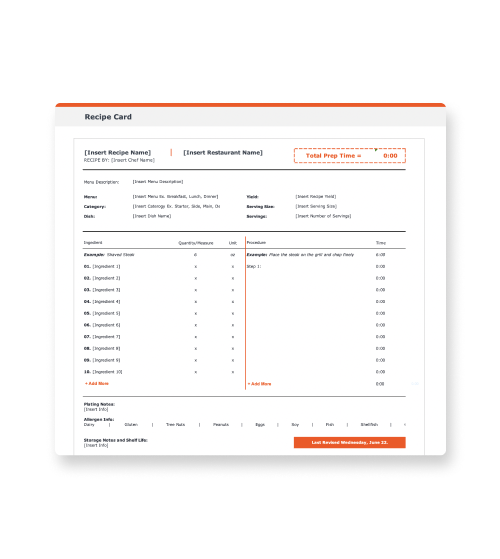
 Plantilla de fichas de recetas
Capacita a tu equipo con esta plantilla de fichas de recetas, una planilla de Excel personalizable donde se describe todo lo que los chefs y el personal de servicio necesitan para preparar una receta.
Obtener descarga gratisHow To Start a Cooking Business: Your 11-Step Roadmap
While great recipes go a long way in starting your own cooking business, managing operations and delivering a great customer experience are just as important. Creativity and passion drive the best food businesses, but success comes from strategic planning and execution.
Plenty of today’s successful food entrepreneurs started small. Melissa Ben-Ishay, for example, launched Baked by Melissa out of her New York apartment, turning her bite-sized cupcake idea into a national brand. Similarly, Black Leaf Vegan began as a small food truck in Indianapolis, gaining traction through local support before expanding into a brick-and-mortar café.
Their journeys prove that with the right approach, a small cooking business can grow into something big. Whether you’re starting a catering business, meal prep service, or food truck, this guide will walk you through how to start a cooking business step by step.
Key takeaways
Whether it’s catering, meal prep, a food truck, or a pop-up, select a concept that fits your resources and market demand.
Understanding your target audience, analyzing competitors, and testing demand helps you refine your offerings and stand out.
Obtain the right permits, licenses, and insurance to protect your business and ensure smooth operations.
Building a strong online presence, leveraging social media, and engaging with customers are key to attracting and retaining clients.
Estimate startup costs, set competitive pricing, and develop efficient processes to successfully sustain and scale your business.
Chef Training Checklist
Use this free checklist to help streamline your training process and set your new chefs up for success.

11 steps to starting a cooking business
1. Choose your concept
There are lots of ways to turn your passion for cooking into a business! The first step is choosing a model that aligns with your skills, resources, and target audience. Below are some of the most common types of cooking businesses you can pursue:
Catering: Cook in bulk and serve at events like weddings, corporate gatherings, and private parties.
Meal prep service: Focus on creating healthy, ready-to-eat meals that customers can order weekly.
Personal chef service: Cook customized meals for clients in their homes or prepare meals for them to enjoy throughout the week.
Ghost kitchen: A ghost kitchen operates solely for delivery or pickup orders, often run from a shared commercial kitchen space.
Pop-up: Set up temporary dining experiences at events, markets, or partner restaurants.
Food truck or street food: If you want a mobile approach, a food truck or street food business can be a flexible and high-reach option.
Baked goods or specialty foods: Create specialty food items like sauces, jams, or spice blends to sell online, at farmers' markets, or through retail partnerships.
Cooking classes or online content creation: Turn your cooking skills into education by offering in-person or virtual cooking classes. You can also build an online audience and monetize through sponsorships, digital products, and memberships.
Once you’ve chosen your concept, define your unique selling proposition (USP)—what sets you apart from competitors. This could be a unique menu, sustainable sourcing, or exceptional service.
2. Conduct market research
Before launching, you need to validate your business idea and understand your target market. Effective market research helps you assess demand, analyze competitors, and refine your offerings.
Identify your target market: Use surveys, social media polls, and online forums to gather insights about what potential customers want. Define your ideal customer by considering demographics, lifestyles, and cooking trends.
Analyze the competition: Finding gaps in the market—whether it’s more affordable options, better customer service, or a unique niche—can help you position your business effectively. Research other businesses offering similar services, and identify:
What they offer–their menu, pricing, and unique features.
Who they serve–their target customers and branding approach.
What customers say–read online reviews to find strengths and weaknesses.
Assess demand for your concept: Test your idea by hosting a small pop-up event, offering limited-time orders, or partnering with a local business to get early feedback.
3. Outline your services
Once you’ve chosen your business model and researched the market, it’s time to clearly establish the services or products you’ll offer:
Menu and pricing: Will you provide à la carte meals, subscription meal plans, catering packages, or made-to-order options? Set pricing that reflects your costs, competitor rates, and perceived value.
Service area and delivery model: If you’re offering meal prep or catering, will you deliver? If so, what’s your delivery radius, and will you use in-house drivers or third-party services like DoorDash or Uber Eats?
Customization options: Will you accommodate dietary restrictions (vegan, gluten-free, keto, etc.) or offer personalized meal plans?
Event or order minimums: If catering, set clear policies for minimum order sizes, advance booking times, and cancellation fees.
Remember, refining your product or service is an ongoing process. Even the most successful food businesses evolve over time, making small improvements along the way. Lo Yost, co-founder of Bears Bagels, recalls the trial and error that eventually led to a standout product:
"They didn't look the greatest, but they tasted great... Every time we made a batch, it was like, 'If you can fix this one little thing.' Fix the appearance, fix the crumb, fix the crust. You could see the evolution happening. And then finally, one day, I'll never forget: We were like, 'These look like real bagels, and they taste like real bagels. Yeah, you could actually sell these.'"
Lo Yost
Co-founder of Bears Bagels
4. Determine where you’ll cook
The right kitchen setup depends on your business model, budget, and legal requirements, so choose based on your business model and long-term goals.
Home kitchen (cottage food laws): If your state allows, you can operate from home, typically limited to non-perishable foods like baked goods.
Personal chef (client’s kitchen): Cook meals on-site in clients’ homes for meal prep services, private events, or dietary-specific cooking.
Commercial kitchen: Use a shared-use or commissary kitchen with professional equipment and health department approvals.
Restaurant kitchen or ghost kitchen: Rent a restaurant’s kitchen during off-hours or operate in a delivery-only ghost kitchen.
5. Research licenses and permits
Food businesses must meet specific legal requirements which vary by location. If you’re operating out of a commercial kitchen or selling prepared foods, your local health department may require an inspection before you begin operations.
Business license: Required for legally operating any business.
Food handler certification: Often required for anyone preparing or handling food.
Health department permit: Mandatory for commercial kitchens, catering, and meal prep businesses to ensure compliance with food safety laws.
Cottage food permit: If selling homemade goods, check if your state requires registration under cottage food laws.
Sales tax permit: If selling food directly to consumers, you may need to collect and remit sales tax.
Zoning and home occupation permits: If you’re running a food business from home, ensure your local zoning laws allow it.
Insurance: Getting insurance helps protect your business, and may even be a legal requirement in some instances. Consider general liability insurance, product liability insurance, and commercial property insurance.
6. Develop standard operating procedures
Standard operating procedures (SOPs) help you maximize efficiency, which will ultimately allow you to scale your business.
Food preparation and safety: Define how ingredients will be sourced, stored, and prepped to meet health standards.
Packaging and presentation: Will you use eco-friendly containers, vacuum sealing, or heat-retaining packaging? Ensure consistency in branding and labeling.
Order management: Will customers order through a website, app, or direct contact? Consider using a POS system for streamlined processing.
Customer service and policies: Set guidelines for handling customer inquiries, complaints, and refunds.
7. Build your brand and marketing strategy
A strong marketing strategy will set your cooking business apart and attract loyal customers. Focus on branding, online presence, and promotional efforts to build recognition and grow your customer base.
Define your brand identity: Your brand should reflect your values, target audience, and USP. Think about your business name and logo, brand messaging (tagline, mission statement, etc.) and visual identity.
Create an online presence: Include your menu, pricing, ordering options, and contact information on your website. Consider using an online ordering system if applicable. Think about how to leverage social media and email marketing.
Example: Private chef Meredith Hayden has 2.2 million followers on TikTok and 1.2 million on Instagram, where she shares her culinary journey.
Marketing and promotion: Use multiple channels to reach your audience and build brand awareness. Consider a combination of local outreach, SEO and online directories, loyalty programs, and limited-time promotions.
8. Develop a financial plan
A solid financial plan will help you estimate startup costs, manage cash flow, and set realistic revenue goals. Outline expenses, pricing strategies, and funding options to keep your business financially sustainable.
Estimate startup costs: Your initial investment depends on your business model, but common costs include:
Licenses and permits
Kitchen setup
Marketing and branding
Initial inventory and packaging
Determine pricing and revenue goals: Set pricing that covers costs while remaining competitive. Calculate the cost of ingredients, labor, and overhead, then add a profit margin. Meal prep businesses and catering services can offer bundled pricing for steady income.
Plan for ongoing expenses, such as:
Food and supply costs
Rent and utilities
Marketing and advertising
Insurance and taxes
Explore funding options: If you need financial support to get started, consider personal savings, small business loans or grants, or crowdfunding.
9. Tie everything together with a business plan
A business plan organizes your ideas and strategies, helping you stay on track (and even attract potential investors or lenders). Here are the key sections to include:
Executive summary: One to two sentence overview of your business, including your mission, concept, and goals.
Company overview: Business name, location, legal structure, and a brief description of your products or services.
Industry and market analysis: Overview of industry trends, target market demographics, and competitive analysis.
Marketing plan: Branding strategy, marketing channels, pricing structure, and promotional tactics.
Operations plan: Where you’ll cook (home, commercial kitchen, food truck), sourcing ingredients, daily operations, and staffing needs (if applicable).
Financial analysis: Estimated startup costs, pricing strategy, projected income and expenses, and potential funding sources.
10. Register your business
Registering your business properly ensures compliance, protects your assets, and sets your business up for long-term success.
Choose a business structure: Decide between a sole proprietorship, LLC, or corporation for tax and liability purposes.
Register your business name: Check name availability and register a DBA (Doing Business As) if needed.
Obtain an EIN (Employer Identification Number): Required for hiring employees and opening a business bank account (apply for free through the IRS).
Open a business bank account: Keeps personal and business finances separate, making tax filing and expense tracking easier.
11. Prepare for launch
With your business plan, legal requirements, and operations in place, it's time to get everything ready for your official launch!
Ensure compliance and safety: Double-check that all licenses, permits, and food safety measures are in place before serving customers.
Finalize your offerings and pricing: Ensure your products or services are cost-effective, profitable, and appealing to your target audience.
Set up your equipment: Stock up on ingredients, packaging, and kitchen tools. Test your workflow to ensure efficiency.
Build an online presence: Launch your website, social media pages, and online ordering system (if applicable). Optimize your Google Business profile.
Start a marketing push: Announce your launch with promotions, email campaigns, social media ads, and local partnerships.
Test operations and soft launch: Do a trial run by fulfilling a small batch of orders or hosting a soft opening to gather feedback.
Launch your business and cook up something special
Starting a cooking business is an exciting journey combining passion with strategy. By carefully planning your concept and building a strong brand, you’ll set yourself up for success.
Stay adaptable, listen to customer feedback, and continuously refine your offerings. With dedication and the right approach, your cooking business can thrive—so take the first step and start cooking up your dream today!
Listas de verificación de apertura y cierre para la cocina
Con estas listas de verificación de apertura y cierre para la cocina, que puedes personalizar según tu conveniencia, tu personal no dejará nada librado al azar.
¿Es útil este artículo?
AVISO LEGAL: Esta información se proporciona solo con fines informativos generales y su publicación no constituye un aval. Toast no garantiza la precisión ni la integridad de la información, el texto, los gráficos, los enlaces y otros elementos que incluye este contenido. Toast no garantiza que alcanzarás ningún resultado específico si sigues los consejos que aparecen aquí. Te recomendamos consultar con un profesional, como un abogado, contador o asesor comercial, para recibir asesoramiento específico para tu situación.

Subscribe to On the line
Sign up to get industry intel, advice, tools, and honest takes from real people tackling their restaurants' greatest challenges.
Al enviar, aceptas recibir correos electrónicos de marketing de Toast. Trataremos tu información de acuerdo con nuestra declaración de privacidad. Información adicional disponible para residentes de California aquí.