7 Simple Ways to Improve Your Restaurant Customer Experience
Restaurant customer experience is the sum of every interaction a guest has with your restaurant, from discovering your brand online to leaving after their visit.
作者
 RESTAURANT RESOURCE
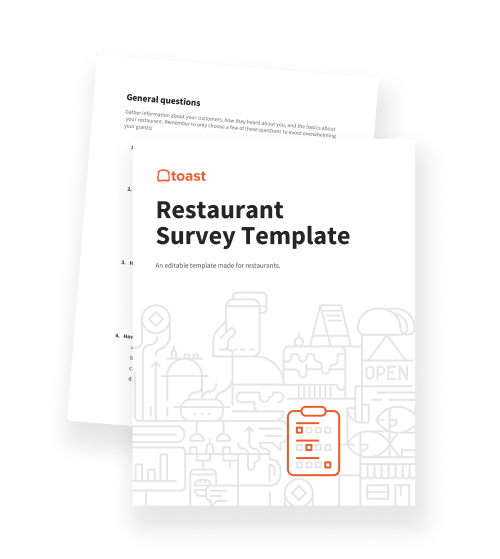
 Restaurant Survey Template
Use this template to ask your guests about their experiences in your restaurant. These survey questions will give you the data you need to make informed changes and improve the overall dining experience.
免费下载Restaurant customer experience refers to every interaction a guest has with your restaurant—from discovering your brand online to leaving after their visit.
While 60% of diners consider themselves regulars, 35% say faster service would improve their experience—highlighting that even loyal guests still expect better. As Leah Leachman, senior director analyst at Gartner, notes:
“Folks are thinking about, ‘How am I spending my money?’… Quality and customer service are things that come up time and time again.”
And as Wendy’s CFO, Ken Cook, puts it:
“Delivering an exceptional customer experience… is a critical step to increasing customer frequency.”
In this guide, you’ll learn practical ways to improve restaurant customer experience across every stage of the guest journey—from first impression to long-term loyalty.
Key takeaways
Audit every touchpoint – Restaurant customer experience spans online discovery to post-visit follow-up.
Prioritize speed and accuracy – Faster, more accurate service is one of the biggest drivers of guest satisfaction—even among loyal customers.
Communicate clearly – Clear communication before and during the visit helps reduce friction and improve the overall experience.
Invest in personalization – Personalization and follow-up turn one-time guests into repeat customers and long-term loyalists.
Leverage the right technology – The right technology and staffing systems help your team deliver smoother, more consistent service.
Training Manual Template
Use this restaurant training manual template, a customizable Word Doc, to provide your staff with the rules, guidelines, and clarity they need to do their jobs efficiently.

1. Make a strong first impression online
Your customer experience starts before a guest ever walks through the door. When someone is deciding where to eat, your website is often their first interaction with your brand, and it needs to be fast, clear, and easy to use.
Website as the first touchpoint: Guests often check your menu, hours, and vibe online before choosing where to dine.
Mobile-friendly menus: Most guests browse on their phones, so your menu should be easy to read and navigate on a small screen.
Simple navigation: Make it easy to find key information like location, reservations, and ordering options.
Tools like Toast Websites are built specifically for restaurants, offering mobile-optimized menus and layouts that make it easy for guests to explore your offerings and decide to visit.
2. Simplify reservations and set clear expectations before guests arrive
Long wait times and uncertainty before arrival can create a negative first impression. A streamlined reservation and waitlist system helps reduce confusion, set expectations, and keep service running smoothly from the start.
Reduce lobby chaos: Organize guests with a digital waitlist instead of managing crowds manually.
Provide accurate wait times: Use real-time data to give guests better estimates.
Send confirmations and updates: Keep guests informed with texts about reservations and wait status.
Reduce no-shows: Clear communication helps guests follow through or adjust plans.
Platforms like Toast Tables integrate directly with your POS system and send real-time updates, giving hosts better visibility and helping guests arrive with clear expectations.
3. Speed up service and improve order accuracy
Once guests are seated, speed and accuracy become critical. Improving how orders are taken and communicated helps keep service moving while reducing mistakes.
Faster ordering: Take orders directly at the table without extra trips.
Fewer errors: Eliminate miscommunication by sending orders straight to the kitchen.
Better pacing: Keep courses flowing smoothly across the meal.
Aligned teams: Ensure FOH and BOH are working from the same real-time information.
Devices like Toast Go 3 handhelds send orders directly from the table to the kitchen, helping your team stay in sync while delivering faster, more consistent service.
4. Personalize the guest experience and build long-term relationships
Great customer experience doesn’t end when the meal does. Personalization, communication, and feedback help turn one-time guests into loyal regulars—and give you a chance to recover issues before they escalate.
Recognize repeat guests: Use data to understand preferences and past visits.
Tailor offers: Send targeted promotions, rewards, and incentives.
Stay connected: Reach guests with email and SMS between visits.
Capture real-time feedback: Address issues before they turn into negative reviews.
Encourage repeat visits: Bring guests back with relevant, timely outreach.
Toast’s Guest CRM provides AI-powered insights to help you spot patterns in guest behavior, so you know when and how to engage. Details from Guest Profiles can sync across Toast Tables, Guest CRM, POS terminals, handhelds, and Toast Marketing — including opt-in Loyalty and Email Marketing (available as added features with POS).
5. Create a seamless online and in-store ordering experience
Today’s guests expect flexibility in how they order—whether that’s from their phone, at the table, or ahead of time. A smooth ordering experience reduces friction, speeds up service, and gives guests more control.
Offer flexible ordering options: Let guests order in the way that’s most convenient for them, whether dine-in or mobile.
Reduce wait times: Eliminate bottlenecks by allowing guests to order without waiting on staff.
Keep service flowing: Free up servers to focus on hospitality instead of order-taking.
Technology like Toast Mobile Order & Pay allows guests to browse menus, order, and pay directly from their phone. QR code solutions let guests scan, pay, and tip whenever they’re ready—eliminating the wait for the check and helping your team turn tables more efficiently.
Toast also offers both: launch a fully branded app under your restaurant's name in the app store and reach new guests through Toast Local's shared marketplace.
6. Support your staff with better scheduling and staffing tools
Great customer experiences start with a well-supported team. When staff are properly scheduled, trained, and not overworked, they’re more likely to deliver consistent, high-quality service.
Optimize scheduling: Align staffing levels with demand to avoid rushed or understaffed shifts.
Improve retention: Give employees more predictable schedules and better work-life balance.
Streamline hiring and onboarding: Build a stronger team faster with better tools and processes.
Tools like Toast Sling help restaurants manage scheduling, shift changes, and team communication in one place, making it easier to keep staff organized, supported, and focused on delivering great service.
7. Use technology to support—not replace—hospitality
Technology should enhance your team’s ability to deliver great service—not take away from it. The goal isn’t to automate the human element, but to remove friction so your staff can focus on guests.
Support your staff: Give your team tools that make their jobs easier and more efficient.
Avoid robotic experiences: Use technology to streamline operations while keeping service personal.
Improve overall flow: Better systems lead to smoother service, fewer errors, and happier guests.
Restaurant customer experience strategy summary
Strategy | Key Benefit | Example Action |
Make a strong first impression online | Converts browsers into diners | Optimize website for mobile with prominent menu display |
Simplify reservations and set expectations | Reduces no-shows and lobby chaos | Implement digital waitlist with real-time text updates |
Speed up service and improve accuracy | Increases guest satisfaction | Use tableside handhelds to send orders directly to kitchen |
Personalize the guest experience | Builds long-term loyalty | Send targeted offers based on past visit data |
Create seamless ordering options | Gives guests control and flexibility | Offer QR code ordering and mobile payment |
Support staff with better tools | Ensures consistent service quality | Use scheduling software to match staffing to demand |
Use technology to support hospitality | Frees staff to focus on guests | Automate routine tasks while keeping service personal |
From one-time guest to go-to spot
Your restaurant guests’ experience is shaped by every interaction—from the first click on your website to the moment they leave your restaurant. Teneshia Murray, owner of T’s Brunch Bar, explains the “secret sauce” of excellent service:
“My staff are trained to provide top-notch service on every visit. We call it the “Saks” or “Neiman Marcus” experience by making sure all of our customers feel special and important by listening closely to their feedback. We stay apprised of new software for ordering, payment, customer loyalty, reward programs, and new food trends are considered to be sure the entire dining experience from menu to ambience to customer service is exceptional.”
By improving how guests discover you, book a table, order, and stay connected after their visit, you can create an unforgettable experience.
Restaurant Review Response Template
Use this free template to easily respond to various types of restaurant reviews: positive, negative, mixed, and those without comments.
FAQ
What is a restaurant guest experience?
Restaurant guest experience refers to every interaction a customer has with your restaurant, from discovering your brand online to dining in and following up after their visit.
What is the most important factor in restaurant guest experience?
Consistency is key—guests expect reliable service, accurate orders, and a smooth experience every time they visit.
How do you measure restaurant guest experience?
You can measure it through customer feedback, online reviews, repeat visit rates, average spend, and survey responses after a visit.
How does technology improve the restaurant guest experience?
Technology helps streamline ordering, reduce wait times, improve accuracy, and keep guests informed, creating a faster and more seamless experience.
How should restaurants handle negative guest feedback?
Respond quickly, acknowledge the issue, and offer a solution—addressing problems early can turn a negative experience into a positive one.
What role does staff training play in guest experience?
Well-trained staff deliver more consistent service, communicate clearly, and handle issues effectively, all of which directly impact the guest experience.
How can I improve my restaurant's customer service quickly?
Start with the highest-impact changes: train staff on greeting guests warmly, reduce wait times with better communication between FOH and BOH, and respond promptly to all online reviews.
What are the most important factors in restaurant guest satisfaction?
The top factors include food quality, service speed, order accuracy, staff friendliness, and a clean, comfortable environment. Consistency across all these areas can drive repeat visits.
餐厅运营手册模板
使用这份免费模板,您可以轻松列出所有运营程序,并确保日常运营尽可能一致。


这篇文章有帮助吗?
免责声明:此信息仅作为一般性参考,发布并不构成认可。Toast 不保证本内容中包含的任何信息、文本、图形、链接或其他项目的准确性或完整性。Toast 不保证如果您遵循本文的任何建议,就能取得任何特定结果。您可能需要咨询专业人士,如律师、会计师或商业顾问,以获取针对您情况的具体建议。
 趋势
趋势