
The Complete Guide to Online Ordering for Restaurants
Everything restaurant operators need to know about online ordering, from choosing a platform to training staff and increasing direct sales.

作者
 资源
资源 What is the best online ordering for restaurants?
Toast Online Ordering is a great option for restaurants that want to avoid third-party fees. Restaurants using Toast Online Ordering with Marketing Suite drive 56% more direct online sales*.
Online ordering for restaurants is a system that lets customers purchase meals through a restaurant's website or app for pickup or delivery. It's a core revenue channel for restaurants.
The numbers back that up. According to Grand View Research, the online food delivery industry is projected to reach $505 billion by 2030. And Toast Data also shows that 40% of guests use food delivery apps or order takeout 3-5 times a month.
Whether you're setting up online ordering for the first time or optimizing an existing system, this guide covers everything you need to run it well.
How to set up online ordering for your restaurant
1. Choose the right online ordering system
Your online ordering platform is the foundation of your off-premise strategy. It should integrate directly with your POS and kitchen display system so orders flow automatically. Your goal is to have no manual re-entry and, therefore, no missed tickets.
Look for a system that offers:
A branded, mobile-optimized experience — most customers order from their phones
Direct POS and kitchen integration — orders route automatically to the right station
Upsell and loyalty integrations — tools to increase order value and drive repeat business
Reporting and analytics — visibility into what's selling and when
Toast Online Ordering, for example, connects directly with the Toast POS, routes orders to the kitchen, and gives restaurants full ownership of the guest relationship, including customer data that third-party platforms typically keep for themselves. Restaurants using Toast Online Ordering with Marketing Suite drive 56% more direct online sales.* And now, Toast IQ can recommend menu item pairings based on sales data.
2. Build an online ordering menu
Your online menu doesn't need to mirror your full dine-in menu, and in many cases, it shouldn't. A streamlined menu built for off-premise makes your kitchen more efficient, reduces waste, and creates a better customer experience.
Start with a minimum viable menu (MVM): your most profitable, most popular, and most delivery-friendly items. When deciding what to include, evaluate each item on three factors:
Profitability — Keep items with strong margins or that stretch existing inventory
Popularity — Use sales data and customer feedback to identify your top performers
Deliverability — Cut anything that doesn't travel well (soggy fries, spilled soups)
Use clear descriptions, high-quality photos, and modifiers that let customers customize orders without calling in. This reduces friction and increases conversion.
菜单工程课程
参加本课程,充分发挥菜单的作用。学习菜单心理学与设计、在线菜单管理,以及如何调整菜单以提升销售额。

3. Decide on delivery: First-party vs. third-party
Third-party platforms like DoorDash, Uber Eats, and Grubhub can help expand your reach, but they come at a cost. Commission rates typically run 15–30% per order, and these platforms retain customer data that could otherwise fuel your own marketing.
Third-party apps are a useful acquisition channel, especially for restaurants building brand awareness. But relying on them exclusively means giving up margin and guest relationships every time someone orders.
First-party delivery through your own website or an app lets you keep the revenue, own the data, and control the experience. Toast Delivery Services offers a flat delivery fee with no unpredictable commissions, fully integrated with Toast Online Ordering and the Toast TakeOut app. In fact, restaurants using Toast Online Ordering that have adopted Toast Delivery Services earn 20%+ more in sales per month than Toast restaurants using only Toast Online Ordering.**
For most restaurants, the smartest approach is a hybrid one: use third-party marketplaces to attract new diners, then guide repeat customers to direct ordering channels you own. That balance helps operators expand reach without sacrificing long-term profitability or guest relationships.
The challenge is that not every POS platform supports both strategies equally well. Clover Hospitality, for example, charges diners a $0.99 service fee on every online order. SpotOn offers a shared marketplace experience, but no fully branded consumer app. Toast gives restaurants both options: a custom-branded mobile app under your restaurant’s name in the App Store, plus exposure to new guests through Toast Local’s shared marketplace.
4. Design the off-premise guest experience
Off-premise diners can't experience your dining room, your staff, or your ambiance. That doesn't mean they can't feel connected to your brand. It just requires intentional effort.
Build your restaurant's personality into every order:
Branded packaging and takeout containers
A handwritten note or personal touch (Flour Bakery in Boston, for example, writes "have a great day" on every order)
A loyalty card or QR code that drives guests back to your website
A feedback mechanism — receipt link, survey, or follow-up email — so you can recover from mistakes and hear what's working
Also, have a plan for when things go wrong. Mistakes that used to be fixed with a comped appetizer need a different approach when the guest is at home. A proactive outreach process for order issues protects your reputation and builds loyalty.
5. Market your online ordering
Getting the system live is step one – getting customers to use it and to order directly is the ongoing work.
Start with the basics:
Add a prominent "Order Online" CTA to your website homepage
Link to your ordering page in all social media bios (Instagram, TikTok, Facebook)
Enable Google ordering integration through your Google Business Profile
Include your ordering link on receipts, packaging, and in-store signage
Send an announcement to your email list and loyalty members
For repeat customers specifically, make the case for ordering direct: faster reorder experience, loyalty points, better pricing. Platforms like Toast make it easy to surface these advantages at every touchpoint.
With Toast IQ Grow, you own the data from every transaction, so you control your guest relationships and can optimize your marketing with each order. Toast customers who used Marketing Agent [BETA] to send a “Slow Days” email saw an average of over $2,500 in sales driven by the campaign.1
餐厅营销计划
使用这份可定制的营销手册模板和互动日历,制作一份能促顾客户反复光顾的营销计划。
6. Train your staff
Online ordering adds a new workflow to your kitchen and front-of-house operations. Without clear training, it can lead to wrong orders, missed handoffs, and frustrated customers.
Before going live:
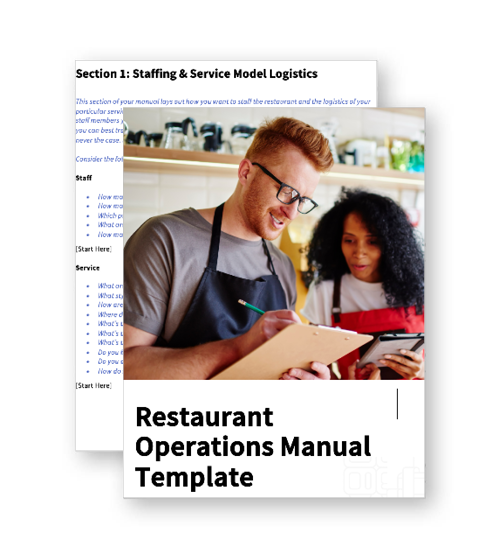
Create an off-premise training manual that covers every touchpoint from order receipt to pickup or handoff
Hold a team walkthrough with everyone involved, from line cooks to hosts
Assign clear ownership for packing, labeling, and managing the pickup area
Consider a dedicated staff member for order fulfillment during high-volume periods
Clear labels, standardized packing procedures, and a defined pickup process reduce errors and protect food quality — both of which directly affect your online reviews.
7. Track performance and improve
Your POS reporting is one of your most valuable tools for refining your online ordering operation over time.
Key metrics to monitor:
Top-selling items — Identify what's driving revenue and optimize your menu accordingly
Order volume by time of day — Use this to staff appropriately and set realistic prep times
Break-even point — Recalculate this as online ordering becomes a larger part of your revenue mix
Prime cost — Track labor and COGS as your off-premise volume scales
Use this data to make decisions: remove underperforming items, adjust your ordering hours, update prep time estimates, and refine your upsell strategy. Toast IQ helps operators not only make informed decisions across their entire business, but also take action without leaving the chat.
Online ordering best practices
Once your system is live, these practices keep it running efficiently and help you grow direct order volume over time.
Keep your menu simple and easy to navigate
Limit clutter and organize items into clear categories. On mobile — where most online orders happen — a streamlined menu reduces drop-off and helps customers find what they want faster.
Make ordering fast and frictionless
Every extra step in the checkout process costs you conversions. Offer guest checkout, minimize required fields, and keep the UX intuitive. As Ipsos's Brad Christian puts it: "The experience needs to help save you time or skip the line, and you also need to be able to customize your order almost as effectively as if you were ordering in person."
Integrate online ordering with your POS
Orders that flow directly into your kitchen system eliminate manual entry, reduce errors, and keep your data centralized. This is non-negotiable for high-volume operations.
Ensure order accuracy and quality control
Double-check orders before handoff. Use checklists for packers. Choose packaging that preserves temperature and presentation. You control what goes in the bag — make sure it's right every time.
Use upsells strategically
Suggest sides, drinks, and upgrades at the right moment in the ordering flow. Keep recommendations relevant and easy to accept with one tap. This is one of the most effective ways to increase average order value without adding friction.
Restaurant Email Marketing Templates
Download our easy-to-use Microsoft Word templates to create compelling restaurant newsletters and marketing emails.
Set ordering hours and availability based on capacity
Only accept orders when your kitchen can handle them. Toast's order snoozing feature lets restaurants throttle incoming order volume during peak times — a simple tool that prevents bottlenecks and protects food quality during your busiest hours.
Optimize pickup and delivery logistics
Clear pickup instructions, labeled orders, and separated workflows for pickup vs. delivery vs. dine-in reduce confusion for staff and customers alike. A smooth handoff is the last impression your restaurant makes on every off-premise order.
Frequently Asked Questions
What is online ordering for restaurants? Online ordering for restaurants is a digital system that allows customers to purchase meals through a restaurant's website or app for pickup or delivery. It's become a core revenue channel, with the online food delivery market projected to reach $505 billion by 2030.
What is the best online ordering system for restaurants? Toast Online Ordering is a strong option for restaurants that want to avoid third-party fees and own their guest data. Restaurants using Toast Online Ordering with Marketing Suite drive 56% more direct online sales.
How much does online ordering cost for restaurants? Costs vary by model. First-party platforms typically charge a flat monthly fee, while third-party marketplaces like DoorDash, Uber Eats, and Grubhub take 15–30% commission per order. Most restaurants use a combination of both.
How do I set up online ordering for my restaurant? 1. Choose a platform that integrates with your POS. 2. Build a menu optimized for off-premise. 3. Decide on your delivery approach — first-party, third-party, or both. 4. Train your staff. 5. Market your ordering link consistently across every channel.
Should my online menu be different from my dine-in menu? Usually, yes. An online menu should prioritize profitable, popular, and delivery-friendly items. Simplifying your menu improves kitchen efficiency and creates a better ordering experience.
How important is POS integration for online ordering? Critical. POS integration ensures orders are routed directly to the kitchen, eliminates manual entry, and keeps your reporting centralized. Without it, errors and inefficiencies compound quickly at scale.
How do I get more customers to order directly instead of through DoorDash or Uber Eats? Make direct ordering more visible and more rewarding than third-party apps. Promote your ordering link on your website, packaging, and in-store signage, and offer incentives — faster reordering, loyalty rewards, or exclusive deals — to shift repeat customers toward your own channel.
What is first-party delivery? First-party delivery is delivery managed directly by the restaurant, either through its own drivers or via an integrated service like Toast Delivery Services, without paying commissions to a third-party marketplace.
*Based on internal Toast data from 1/1/25 - 8/31/25. Individual results will vary.
**Based on 2025 internal Toast data. 30-day comparison of Toast customers using Toast Online Ordering that also processed at least one transaction on Toast Delivery Services to Toast customers using only Toast Online Ordering. Individual results will vary.
1 Based on Toast data for 3/1/26-4/1/26. Individual results will vary.

这篇文章有帮助吗?
免责声明:此信息仅作为一般性参考,发布并不构成认可。Toast 不保证本内容中包含的任何信息、文本、图形、链接或其他项目的准确性或完整性。Toast 不保证如果您遵循本文的任何建议,就能取得任何特定结果。您可能需要咨询专业人士,如律师、会计师或商业顾问,以获取针对您情况的具体建议。
 趋势
趋势

