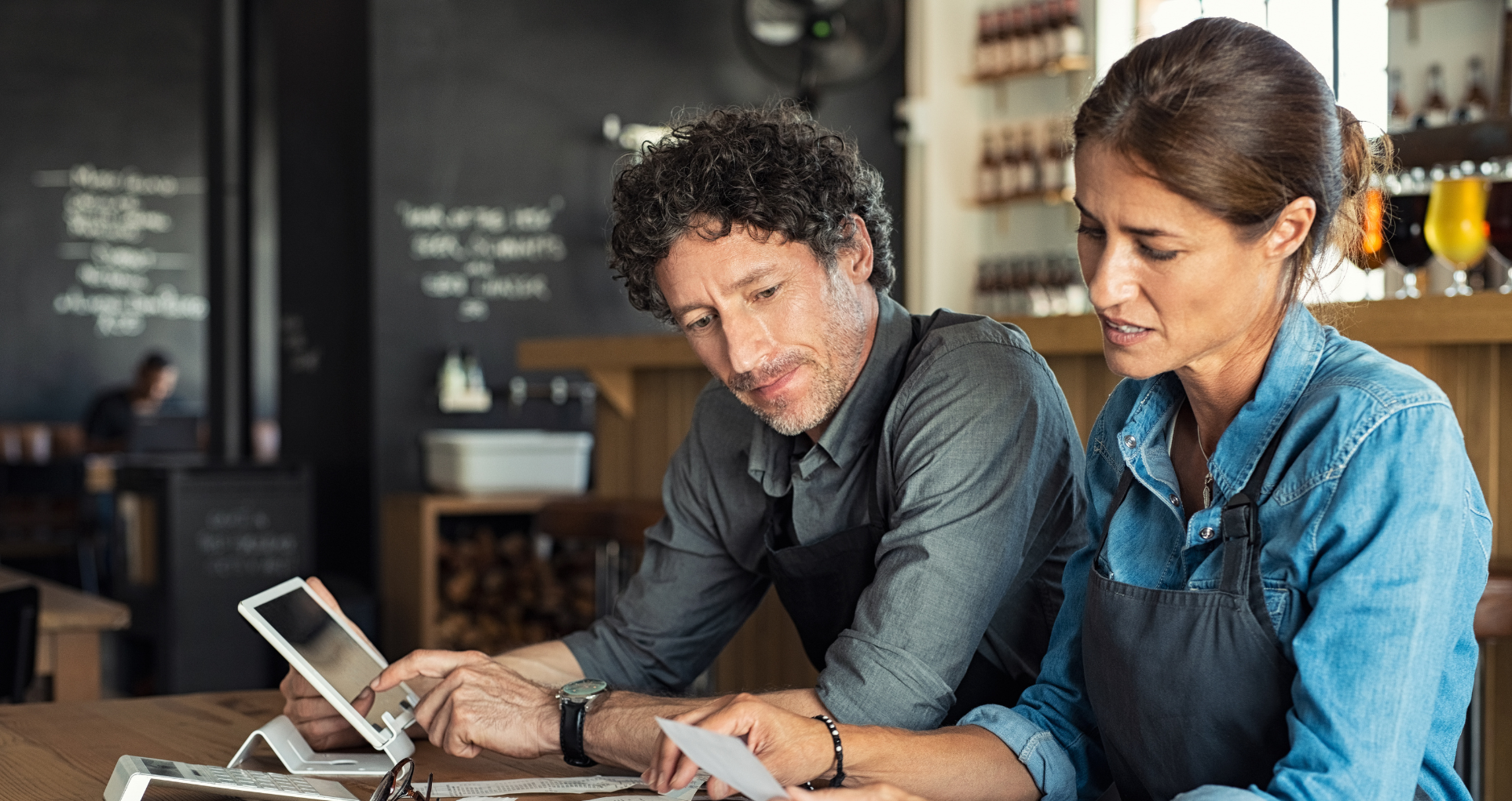
What Is Tablet Hell in Restaurants and How to Fix It
Managing multiple delivery apps causes unnecessary errors and stress. Learn how to fix things with integrated ordering in the UK.
Author
Every extra delivery app solves one problem and creates another.
Customers get more ways to order. Staff get another tablet to watch, another login to remember, and another stream of orders that has to find its way into the kitchen. Before long, the pass is lined with screens. That’s why staff call it tablet hell.
Delivery is no longer a side hustle for most operators. It is core revenue. When something matters that much to the top line, the way you manage it stops being a minor operational quirk and starts being a genuine business risk.
Growth pulls one way, the kitchen pulls the other
Every delivery app you add is, in theory, another door customers can walk through. Deliveroo brings one audience, Uber Eats another, Just Eat a third. Each one is a reasonable decision on its own. The problem is what happens when you stack three or four of those decisions on top of each other inside a kitchen that is also trying to run dine-in service at the same time.
This is the trade-off UK operators keep running into. Every additional platform widens your reach, but it also adds another screen someone has to watch, another interface staff have to learn, another place an order can get missed or duplicated.
Voice of the UK Restaurant Industry data names managing multiple service channels as one of the top technology challenges facing UK operators, right alongside accessing sales data and replacing worn-out hardware. That is not a coincidence. The three problems are related. When your systems do not talk to each other, everything downstream gets harder, from staffing to reporting to simply knowing what happened on a Friday night.
Why the traditional workaround stops working at scale
For a single-site operator with modest delivery volume, tablet hell is frustrating but manageable. Staff glance between two screens, enter orders into the till by hand, and keep service moving. It is far from ideal, but it works.
Bring in a second site, a packed Friday service, or a third delivery platform, and that approach starts to break down. The hidden cost comes from manual re-entry. Every order typed from a delivery tablet into a separate POS is another opportunity for the wrong dish, a missed modifier, or a duplicate ticket.
A recent overview of UK and European restaurant technology adoption found that fragmentation across separate apps and systems, one for POS, another for delivery, another for reservations, was a common complaint among operators, and that juggling multiple tablets and re-entering data between systems had become a daily source of errors, particularly for independents without dedicated IT support. That fragmentation was flagged as a top pain point in a UK survey of hundreds of restaurants, which gives some sense of how widespread the issue has become rather than a problem confined to a handful of struggling sites.
The staffing impact matters as much as the technical one. A front of house team member juggling three delivery tablets during a busy Saturday dinner service is effectively doing two jobs at once. They are serving the guests in front of them while manually routing orders arriving on screens they can barely hear over the noise from the kitchen.
What integration actually changes
The operators seeing the biggest improvements have simplified the process. Rather than bolting delivery onto existing operations, they route every order through the same system that already runs the kitchen. Third-party orders arrive directly in the POS and kitchen display system, so there is no manual re-entry. That cuts out a common cause of errors and lets staff focus on a single ticket rail.
The value of direct ordering goes beyond protecting margins. It reduces the number of screens behind the pass and gives restaurants more control over the customer experience once an order is placed. Orders move straight into the kitchen, avoiding the mistakes that come with manual entry. Restaurants can also create an ordering experience that feels like their own instead of blending into a marketplace filled with nearby competitors.
Third-party platforms are still useful for attracting new customers. Many operators keep them while encouraging loyal guests to order direct. What matters is that every order, no matter where it starts, arrives in one connected system rather than another tablet on the counter.
What the data suggests about where this is heading
UK consumers are not stepping back from delivery and online ordering, which is part of why this problem is not going away on its own. Our consumer research on dining habits found that 17.5% of UK diners now discover new restaurants specifically through food delivery apps, putting it ahead of online reviews as a discovery channel.
Separate consumer data on ordering habits shows that just over half of UK diners order delivery or eat out at least once a week, with only a small minority saying they never do.
Looking specifically at ordering method, 12% of UK consumers currently order via delivery and 6% via online ordering for pickup, against 68.5% who still order dine-in, but that split is expected to shift.
The same research found consumers expect to use delivery more often in 2026, with delivery rising to around 16% and online pickup to around 14%. It also points to growing interest in delivery-only restaurants, with around 40% of consumers saying they would definitely or probably try one if the food matched their tastes.
There is little sign that third-party delivery demand is slowing down. The opposite looks more likely. As order volumes grow, the cost of managing delivery through disconnected tablets only grows with them. Operators who accept that setup as business as usual are accepting those costs too.
The strategic takeaway
Tablet hell starts when delivery expands but integration does not keep up. Each new delivery platform helps customers place orders, but it also adds another task for staff unless everything works together. The operators staying ahead have systems that route orders straight to the kitchen instead of depending on someone to move them across by hand.
If you’re looking to grow delivery sales without adding more operational pressure, ask yourself one question. Can your current setup handle another delivery channel, or will it need another tablet on the counter?
FAQ
What is tablet hell in a restaurant?
Tablet hell is the everyday term for running several delivery platforms through separate tablets that do not talk to each other or to the main POS. Staff end up watching multiple screens and manually re-entering orders, which slows service and increases the chance of mistakes.
Why do restaurants use multiple delivery apps instead of just one?
Each platform, Deliveroo, Uber Eats, and Just Eat, tends to reach a slightly different customer base, so operators often join more than one to maximise visibility. The trade-off is that every additional platform usually means another device and another workflow for staff to manage.
How do I stop juggling multiple delivery tablets?
The most effective fix is routing every delivery order into your existing POS and kitchen display system, so orders land on one ticket rail instead of several separate screens. Some operators also consolidate delivery through their own direct ordering channel to reduce reliance on third-party apps altogether.
Does integrating delivery orders into a POS actually reduce errors?
Yes, largely because it removes the manual re-entry step where mistakes tend to happen, such as a missed modifier or a duplicated ticket. Orders route straight to the kitchen the same way a dine-in order would, so the process becomes far less dependent on someone catching every notification in time.
Is it worth using third-party delivery apps if they create this much extra work?
For most restaurants, yes, since delivery platforms bring in customers who would not otherwise find the business. The goal is not to abandon them but to connect them to a single system so the extra reach does not come with extra chaos in the kitchen.
Is this article helpful?
DISCLAIMER: This information is provided for general informational purposes only, and publication does not constitute an endorsement. Toast does not warrant the accuracy or completeness of any information, text, graphics, links, or other items contained within this content. Toast does not guarantee you will achieve any specific results if you follow any advice herein. It may be advisable for you to consult with a professional such as a lawyer, accountant, or business advisor for advice specific to your situation.

Subscribe to On the line
Sign up to get industry intel, advice, tools, and honest takes from real people tackling their restaurants' greatest challenges.
By submitting, you agree to receive marketing emails from Toast. We’ll handle your info according to our privacy statement. Additional information for California residents available here.