How to Design a Pizzeria Menu in the UK (Free Template)
In the crowded restaurant space, your pizzeria menu has to stand out to win a slice of the UK market. Read our actionable advice to get a jump on the competition.

Author
Your restaurant menu is one of your most powerful business tools. It introduces your brand, shapes first impressions, and influences what guests order — and how much they spend. In this article, we’ll walk through 10 tips UK restaurateurs can use to design menus that are both on-brand and bottom-line boosting.
Restaurant Menu Templates
Use these menu templates as a starting point for your menu design or to give your menus a refresh.

1. Understand Where Guests Look First
Your guests don’t read menus top to bottom. Eye-tracking studies suggest they tend to focus on the top left, top right, and centre of a menu first — known as the “Golden Triangle”. This is where your high-margin dishes should go.
According to the Toast Consumer Preferences Survey 2025, 51.5% of UK diners say they sometimes notice strategic menu placement, while 14% say they always do.
Tip: Place your most profitable dishes in these prime positions to catch attention quickly.
2. Embrace White Space
Menus that feel cluttered overwhelm guests. Clean spacing can improve readability and guide ordering decisions. Studies show that white space can improve comprehension by up to 30%.
Tip: Use margins and section spacing to help guests navigate smoothly — and leave them feeling confident in their choices.
3. Highlight With Boxes and Colour
If there’s a dish you want guests to notice — highlight it. Visual cues like shaded boxes, icons, or coloured text can direct diners’ attention to high-margin items.
A striking example of this in action is Brother Marcus, a UK brunch restaurant chain whose playful, visually engaging menus reflect both their brand and sales strategy.
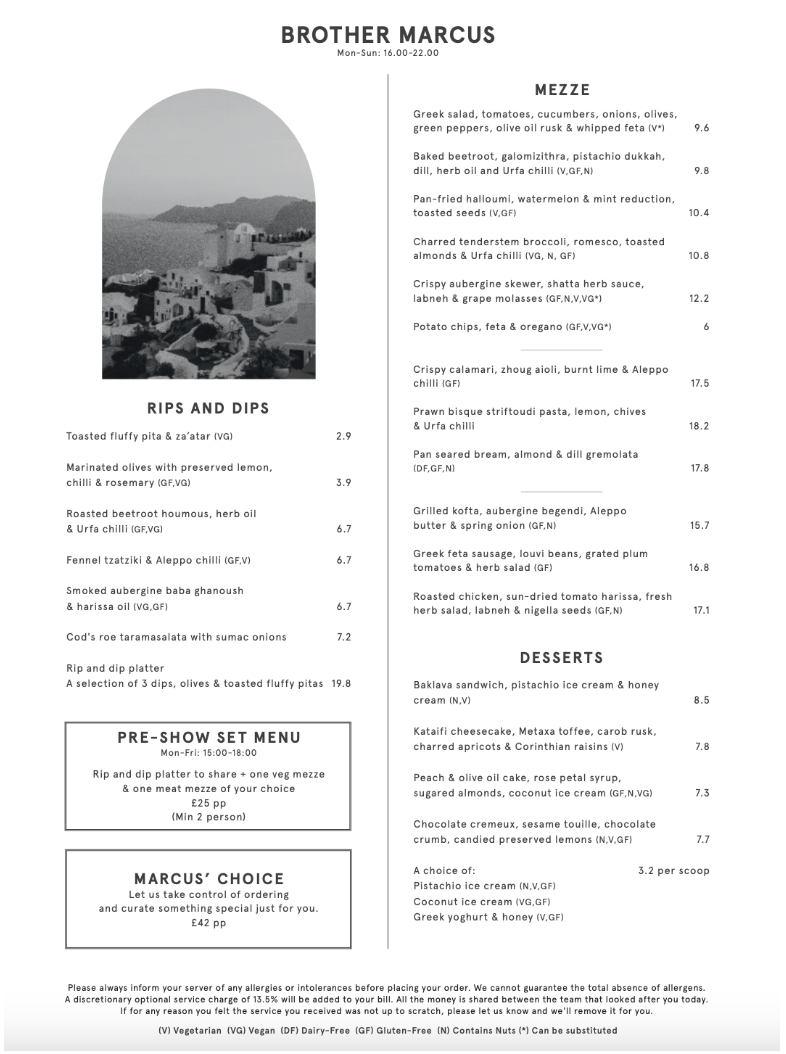
Tip: Work with a designer to balance visual flair with brand identity.
4. Consider Removing Pound Signs
Research from Cornell University shows that including currency symbols (like £) can trigger “spending pain” in diners. Removing them can subtly boost average order value.
Tip: Consider removing pound symbols and avoid listing prices in a single column to reduce direct price comparisons.
5. Avoid Overloading the Menu
The Toast Consumer Preferences Survey 2025 found that 46% of UK diners prefer 6–8 items per menu category, and 78% said too many options were among their top annoyances.
Tip: Focus on clarity and distinctiveness — if two dishes feel too similar, you may be diluting your profits.
6. Use Descriptive Language That Sells
Menu language makes a difference. To ensure you’ve got the best chance of boosting sales, use descriptive, evocative, sensory-rich language to describe menu items.
Tip: Use sensory words like “chargrilled”, “silky”, or “zesty”, and highlight sustainability or sourcing: “locally smoked trout” or “organic vine tomatoes”.
7. Add High-Quality Photos (Sparingly)
When done well, food photography can increase sales by up to 30%, according to the Toast Consumer Preferences Survey 2025. But bad photos do more harm than good. Interestingly, 36.5% of UK consumers surveyed said that photos in restaurant menus are very important.
Tip: Consider adding a QR code linking to your Instagram or online menu, where guests can view high-resolution dish previews.
8. Make Menus Accessible
Design with all guests in mind. Use readable fonts, strong contrast, and a manageable page size. If your menu is wall-mounted or digital, offer printed versions with large fonts on request.
Tip: Provide a digital version accessible via QR code — especially useful for guests with visual impairments or screen reader needs.
9. Reflect Your Brand Personality
Your menu should reflect your restaurant’s vibe — whether it’s a rustic pub, chic cocktail bar, or family-run trattoria.
Tip: Fonts, illustrations, and colour schemes should all feel like extensions of your in-house experience.
10. Don’t Neglect the Digital Experience
Most UK diners browse menus online before booking, and many restaurateurs expect to grow in 2025 by improving their digital presence.
Tip: Avoid uploading just a PDF. Ensure your menu is written in HTML and mobile-optimised. Include alt text for screen readers and use high-quality images.
UK Pizzeria menu examples
UK pizzerias are blending bold personality with clever design — showing how strong branding, clear sections, and a little wit go a long way.
The ultimate in rustic-meets-modern. Franco Manca’s menus are printed on recycled stock with a handwritten aesthetic that’s clean, friendly, and functional. Daily specials are chalked onto wallboards, and digital menus are mobile-optimised without losing the handmade feel. Toppings are laid out clearly, sourdough origin is explained briefly, and allergens are marked tastefully.
This East London favourite embraces fun. The menu is full of personality — think playful names like “TSB” (Tenderstem Broccoli) and cheeky copy like “Pizza worth leaving the house for.” A bright red and white colour scheme carries across web and print menus, and guests are invited to scan a QR to read pizza origin stories and staff recommendations. It’s not just a menu — it’s an experience.
A masterclass in multimedia integration. Pizza Pilgrims’ menus are part printed, part digital, and full of rich storytelling. Pies are grouped by style — Margherita, White Base, Guest Pie — and many feature origin notes, like “from a Napoli alleyway to your plate.” The printed version has a friendly, hand-sketched aesthetic, while the digital version adds animated callouts and pairing suggestions.
 TOAST TECH
 Built for restaurants just like yours.
Toast’s restaurant technology includes point of sale, kitchen display screens, online ordering and more.
Is this article helpful?
DISCLAIMER: This information is provided for general informational purposes only, and publication does not constitute an endorsement. Toast does not warrant the accuracy or completeness of any information, text, graphics, links, or other items contained within this content. Toast does not guarantee you will achieve any specific results if you follow any advice herein. It may be advisable for you to consult with a professional such as a lawyer, accountant, or business advisor for advice specific to your situation.

Subscribe to On the line
Sign up to get industry intel, advice, tools, and honest takes from real people tackling their restaurants' greatest challenges.
By submitting, you agree to receive marketing emails from Toast. We’ll handle your info according to our privacy statement. Additional information for California residents available here.